&Scaron et al. (JUL 2013)
Journal of immunology (Baltimore,Md. : 1950) 191 2 828--36
CD160 activation by herpesvirus entry mediator augments inflammatory cytokine production and cytolytic function by NK cells.
Lymphocyte activation is regulated by costimulatory and inhibitory receptors,of which both B and T lymphocyte attenuator (BTLA) and CD160 engage herpesvirus entry mediator (HVEM). Notably,it remains unclear how HVEM functions with each of its ligands during immune responses. In this study,we show that HVEM specifically activates CD160 on effector NK cells challenged with virus-infected cells. Human CD56(dim) NK cells were costimulated specifically by HVEM but not by other receptors that share the HVEM ligands LIGHT,Lymphotoxin-α,or BTLA. HVEM enhanced human NK cell activation by type I IFN and IL-2,resulting in increased IFN-γ and TNF-α secretion,and tumor cell-expressed HVEM activated CD160 in a human NK cell line,causing rapid hyperphosphorylation of serine kinases ERK1/2 and AKT and enhanced cytolysis of target cells. In contrast,HVEM activation of BTLA reduced cytolysis of target cells. Together,our results demonstrate that HVEM functions as a regulator of immune function that activates NK cells via CD160 and limits lymphocyte-induced inflammation via association with BTLA.
View Publication
产品类型:
产品号#:
19055
19055RF
产品名:
EasySep™人NK细胞富集试剂盒
RoboSep™ 人NK细胞富集试剂盒含滤芯吸头
Al-Jaderi Z and Maghazachi AA (NOV 2013)
Toxins 5 11 1932--47
Effects of vitamin D3, calcipotriol and FTY720 on the expression of surface molecules and cytolytic activities of human natural killer cells and dendritic cells.
We describe here the effects of three drugs that are either approved or have the potential for treating multiple sclerosis (MS) patients through the in vitro activities of human natural killer (NK) cells and dendritic cells (DCs). Our results indicate that 1,25(OH)2D3,the biologically active metabolite of vitamin D3,calcipotriol and FTY720 augment IL-2-activated NK cell lysis of K562 and RAJI tumor cell lines as well as immature (i) and mature (m) DCs,with variable efficacies. These results are corroborated with the ability of the drugs to up-regulate the expression of NK cytotoxicity receptors NKp30 and NKp44,as well as NKG2D on the surfaces of NK cells. Also,they down-regulate the expression of the killer inhibitory receptor CD158. The three drugs down-regulate the expression of CCR6 on the surface of iDCs,whereas vitamin D3 and calcipotriol tend to up-regulate the expression of CCR7 on mDCs,suggesting that they may influence the migration of DCs into the lymph nodes. Finally,vitamin D3,calcipotriol and FTY720 enhance NK17/NK1 cell lysis of K562 cells,suggesting that a possible mechanism of action for these drugs is via activating these newly described cells. In conclusion,our results show novel mechanisms of action for vitamin D3,calcipotriol and FTY720 on cells of the innate immune system.
View Publication
产品类型:
产品号#:
18055
18055RF
15025
15065
15028
15068
产品名:
RosetteSep™人NK细胞富集抗体混合物
RosetteSep™人NK细胞富集抗体混合物
RosetteSep™ 人单核细胞富集抗体混合物
RosetteSep™人单核细胞富集抗体混合物
Tang MLF et al. ( 2014)
The European Journal of Immunology 44 4 1108--1118
The DNA damage response induces antigen presenting cell-like functions in fibroblasts
The DNA damage response (DDR) alerts the immune system to the danger posed by DNA damage through the induction of damage-associated molecular pattern molecules,chemokines,and ligands for activating immune receptors such as lymphocyte function-associated antigen 1 (LFA-1),NKG2D,and DNAX accessory molecule 1 (DNAM-1). Here we provide evidence that OVA(257-264) -pulsed fibroblasts gain the ability to activate naïve OT-I CD8(+) T cells in response to DNA damage. The ability of fibroblasts to activate OT-I CD8(+) T cells depended on the upregulation of ICAM-1 on fibroblasts and DNAM-1 expression of CD8(+) T cells. OVA(257-264) -pulsed fibroblasts were able to induce a protective T-cell response against B16-OVA cells in a DDR-dependent manner. Hence,the DDR may alert the immune system to the presence of potentially dangerous cells by upregulating the expression of ligands that can induce the activation of innate and adaptive immune cells.
View Publication
产品类型:
产品号#:
19853
19853RF
产品名:
EasySep™小鼠CD8+ T细胞分选试剂盒
RoboSep™ 小鼠CD8+ T细胞分选试剂盒
Voo KS et al. (JUL 2014)
The Journal of Immunology 193 2 627--34
Targeting of TLRs inhibits CD4+ regulatory T cell function and activates lymphocytes in human peripheral blood mononuclear cells.
Accumulating evidence suggests elements within tumors induce exhaustion of effector T cells and infiltration of immunosuppressive regulatory T cells (Tregs),thus preventing the development of durable antitumor immunity. Therefore,the discovery of agents that simultaneously block Treg suppressive function and reinvigorate effector function of lymphocytes is key to the development of effective cancer immunotherapy. Previous studies have shown that TLR ligands (TLRLs) could modulate the function of these T cell targets; however,those studies relied on cell-free or accessory cell-based assay systems that do not accurately reflect in vivo responses. In contrast,we used a human PBMC-based proliferation assay system to simultaneously monitor the effect of TLRLs on T cells (CD4(+),CD8(+),Tregs),B cells,and NK cells,which gave different and even conflicting results. We found that the TLR7/8L:CL097 could simultaneously activate CD8(+) T cells,B cells,and NK cells plus block Treg suppression of T cells and B cells. The TLRLs TLR1/2L:Pam3CSK4,TLR5L:flagellin,TLR4L:LPS,and TLR8/7L:CL075 also blocked Treg suppression of CD4(+) or CD8(+) T cell proliferation,but not B cell proliferation. Besides CL097,TLR2L:PGN,CL075,and TLR9L:CpG-A,CpG-B,and CpG-C) were strong activators of NK cells. Importantly,we found that Pam3CSK4 could: 1) activate CD4(+) T cell proliferation,2) inhibit the expansion of IL-10(+) naturally occurring FOXP3(+) Tregs and induction of IL-10(+) CD4(+) Tregs (IL-10-producing type 1 Treg),and 3) block naturally occurring FOXP3(+) Tregs suppressive function. Our results suggest these agents could serve as adjuvants to enhance the efficacy of current immunotherapeutic strategies in cancer patients.
View Publication
产品类型:
产品号#:
19052
19052RF
19055
19055RF
产品名:
EasySep™人CD4+ T细胞富集试剂盒
RoboSep™ 人CD4+ T细胞富集试剂盒含滤芯吸头
EasySep™人NK细胞富集试剂盒
RoboSep™ 人NK细胞富集试剂盒含滤芯吸头
Xu X et al. ( 2014)
The Journal of Immunology 193 8 4125--4136
IFN-Stimulated Gene LY6E in Monocytes Regulates the CD14/TLR4 Pathway but Inadequately Restrains the Hyperactivation of Monocytes during Chronic HIV-1 Infection
Owing to ongoing recognition of pathogen-associated molecular patterns,immune activation and upregulation of IFN-stimulated genes (ISGs) are sustained in the chronically infected host. Albeit most ISGs are important effectors for containing viral replication,some might exert compensatory immune suppression to limit pathological dysfunctions,although the mechanisms are not fully understood. In this study,we report that the ISG lymphocyte Ag 6 complex,locus E (LY6E) is a negative immune regulator of monocytes. LY6E in monocytes negatively modulated CD14 expression and subsequently dampened the responsiveness to LPS stimulation in vitro. In the setting of chronic HIV infection,the upregulation of LY6E was correlated with reduced CD14 level on monocytes; however,the immunosuppressive effect of LY6E was not adequate to remedy the hyperresponsiveness of activated monocytes. Taken together,the regulatory LY6E pathway in monocytes represents one of negative feedback mechanisms that counterbalance monocyte activation,which might be caused by LPS translocation through the compromised gastrointestinal tract during persistent HIV-1 infection and may serve as a potential target for immune intervention.
View Publication


 EasySep™小鼠TIL(CD45)正选试剂盒




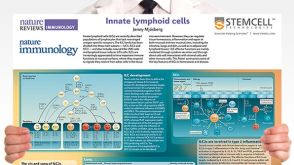 挂图Innate Lymphoid Cells Overview of innate lymphoid cells (ILCs) development, classification, plasticity and functional diversity
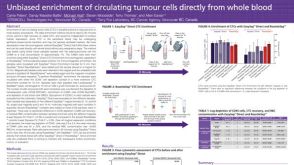 科学海报Unbiased Enrichment of Circulating Tumour Cells Directly from Whole Blood
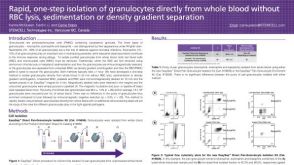 科学海报Rapid, one-step isolation of granulocytes directly from whole blood without RBC lysis, sedimentation or density spearation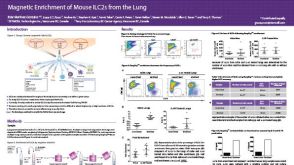
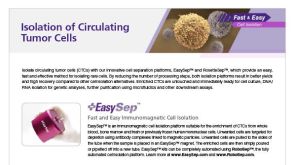 产品手册循环肿瘤细胞的分离
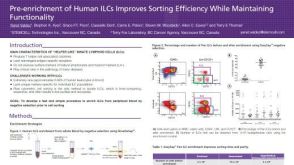 科学海报Pre-enrichment of Human ILCs Improves Sorting Efficiency While Maintaining Functionality

 沪公网安备31010102008431号