Bao X et al. ( 2016)
Methods in molecular biology (Clifton,N.J.) 1481 183--196
Directed Endothelial Progenitor Differentiation from Human Pluripotent Stem Cells Via Wnt Activation Under Defined Conditions.
Efficient derivation of endothelial cells and their progenitors from human pluripotent stem cells (hPSCs) can facilitate studies of human vascular development,disease modeling,drug discovery,and cell-based therapy. Here we provide a detailed protocol for directing hPSCs to functional endothelial cells and their progenitors in a completely defined,growth factor- and serum-free system by temporal modulation of Wnt/$$-catenin signaling via small molecules. We demonstrate a 10-day,two-stage process that recapitulates endothelial cell development,in which hPSCs first differentiate to endothelial progenitors that then generate functional endothelial cells and smooth muscle cells. Methods to characterize endothelial cell identity and function are also described.
View Publication
产品类型:
产品号#:
05850
05857
05870
05875
05940
85850
85857
85870
85875
产品名:
mTeSR™1
mTeSR™1
Krakstad C et al. (SEP 2004)
Journal of leukocyte biology 76 3 641--7
cAMP protects neutrophils against TNF-alpha-induced apoptosis by activation of cAMP-dependent protein kinase, independently of exchange protein directly activated by cAMP (Epac).
It is unclear by which receptor cyclic adenosine monophosphate (cAMP) acts to promote neutrophil survival. We found that 8-(4-chlorophenylthio)-2'-O-methyl-cAMP,a specific activator of the recently discovered cAMP receptor,cAMP-regulated guanosine 5'-triphosphate exchange protein directly activated by cAMP,failed to protect human neutrophils from cell death. In contrast,specific activators of cAMP-dependent protein kinase type I (cA-PKI) could protect against death receptor [tumor necrosis factor receptor 1 (TNFR-1),Fas]-mediated apoptosis as well as cycloheximide-accelerated spontaneous" apoptosis. A novel "caged" cA-PK-activating analog�
View Publication
产品类型:
产品号#:
73602
73604
产品名:
8-Bromo-cAMP
8-Bromo-cAMP
Li X-J et al. (APR 2008)
Stem cells (Dayton,Ohio) 26 4 886--93
Directed differentiation of ventral spinal progenitors and motor neurons from human embryonic stem cells by small molecules.
Specification of distinct cell types from human embryonic stem cells (hESCs) is key to the potential application of these naïve pluripotent cells in regenerative medicine. Determination of the nontarget differentiated populations,which is lacking in the field,is also crucial. Here,we show an efficient differentiation of motor neurons ( approximately 50%) by a simple sequential application of retinoid acid and sonic hedgehog (SHH) in a chemically defined suspension culture. We also discovered that purmorphamine,a small molecule that activates the SHH pathway,could replace SHH for the generation of motor neurons. Immunocytochemical characterization indicated that cells differentiated from hESCs were nearly completely restricted to the ventral spinal progenitor fate (NKX2.2+,Irx3+,and Pax7-),with the exception of motor neurons (HB9+) and their progenitors (Olig2+). Thus,the directed neural differentiation system with small molecules,even without further purification,will facilitate basic and translational studies using human motoneurons at a minimal cost.
View Publication
产品类型:
产品号#:
72202
72204
100-1049
产品名:
Purmorphamine
Purmorphamine
Purmorphamine
McCabe KL et al. (DEC 2015)
PloS one 10 12 e0145266
Efficient Generation of Human Embryonic Stem Cell-Derived Corneal Endothelial Cells by Directed Differentiation.
AIM To generate human embryonic stem cell derived corneal endothelial cells (hESC-CECs) for transplantation in patients with corneal endothelial dystrophies. MATERIALS AND METHODS Feeder-free hESC-CECs were generated by a directed differentiation protocol. hESC-CECs were characterized by morphology,expression of corneal endothelial markers,and microarray analysis of gene expression. RESULTS hESC-CECs were nearly identical morphologically to primary human corneal endothelial cells,expressed Zona Occludens 1 (ZO-1) and Na+/K+ATPase$\$1 (ATPA1) on the apical surface in monolayer culture,and produced the key proteins of Descemet's membrane,Collagen VIII$\$1 and VIII$\$2 (COL8A1 and 8A2). Quantitative PCR analysis revealed expression of all corneal endothelial pump transcripts. hESC-CECs were 96% similar to primary human adult CECs by microarray analysis. CONCLUSION hESC-CECs are morphologically similar,express corneal endothelial cell markers and express a nearly identical complement of genes compared to human adult corneal endothelial cells. hESC-CECs may be a suitable alternative to donor-derived corneal endothelium.
View Publication
产品类型:
产品号#:
05850
05857
05870
05875
85850
85857
85870
85875
产品名:
mTeSR™1
mTeSR™1
Raju R et al. (FEB 2017)
Stem cells and development 26 4 274--284
Cell Expansion During Directed Differentiation of Stem Cells Toward the Hepatic Lineage.
The differentiation of human pluripotent stem cells toward the hepatocyte lineage can potentially provide an unlimited source of functional hepatocytes for transplantation and extracorporeal bioartificial liver applications. It is anticipated that the quantities of cells needed for these applications will be in the order of 10(9)-10(10) cells,because of the size of the liver. An ideal differentiation protocol would be to enable directed differentiation to the hepatocyte lineage with simultaneous cell expansion. We introduced a cell expansion stage after the commitment of human embryonic stem cells to the endodermal lineage,to allow for at least an eightfold increase in cell number,with continuation of cell maturation toward the hepatocyte lineage. The progressive changes in the transcriptome were measured by expression array,and the expression dynamics of certain lineage markers was measured by mass cytometry during the differentiation and expansion process. The findings revealed that while cells were expanding they were also capable of progressing in their differentiation toward the hepatocyte lineage. In addition,our transcriptome,protein and functional studies,including albumin secretion,drug-induced CYP450 expression and urea production,all indicated that the hepatocyte-like cells obtained with or without cell expansion are very similar. This method of simultaneous cell expansion and hepatocyte differentiation should facilitate obtaining large quantities of cells for liver cell applications.
View Publication
产品类型:
产品号#:
05850
05857
05870
05875
85850
85857
85870
85875
产品名:
mTeSR™1
mTeSR™1
Ma R et al. (FEB 2017)
Thyroid : official journal of the American Thyroid Association 27 2 292--299
TAZ Induction Directs Differentiation of Thyroid Follicular Cells from Human Embryonic Stem Cells.
OBJECTIVE The differentiation program for human thyroid follicular cells (TFCs) relies on the interplay between sequence-specific transcription factors and transcriptional co-regulators. Transcriptional co-activator with PDZ-binding motif (TAZ) is a co-activator that regulates several transcription factors,including PAX8 and NKX2-1,which play a central role in thyroid-specific gene transcription. TAZ and PAX8/NKX2-1 are co-expressed in the nuclei of thyroid cells,and TAZ interacts directly with both PAX8 and NKX2-1,leading to their enhanced transcriptional activity on the thyroglobulin (TG) promoter and additional genes. METHODS The use of a small molecule,ethacridine,recently identified as a TAZ activator,in the differentiation of thyroid cells from human embryonic stem (hES) cells was studied. First,endodermal cells were derived from hES cells using Activin A,followed by induction of differentiation into thyroid cells directed by ethacridine and thyrotropin (TSH). RESULTS The expression of TAZ was increased in the Activin A-derived endodermal cells by ethacridine in a dose-dependent manner and followed by increases in PAX8 and NKX2-1 when assessed by both quantitative polymerase chain reaction and immunostaining. Following further differentiation with the combination of ethacridine and TSH,the thyroid-specific genes TG,TPO,TSHR,and NIS were all induced in the differentiated hES cells. When these cells were cultured with extracellular matrix-coated dishes,thyroid follicle formation and abundant TG protein expression were observed. Furthermore,such hES cell-derived thyroid follicles showed a marked TSH-induced and dose-dependent increase in radioiodine uptake and protein-bound iodine accumulation. CONCLUSION These data show that fully functional human thyroid cells can be derived from hES cells using ethacridine,a TAZ activator,which induces thyroid-specific gene expression and promotes thyroid cell differentiation from the hES cells. These studies again demonstrate the importance of transcriptional regulation in thyroid cell development. This approach also yields functional human thyrocytes,without any gene transfection or complex culture conditions,by directly manipulating the transcriptional machinery without interfering with intermediate signaling events.
View Publication
产品类型:
产品号#:
05850
05857
05870
05875
85850
85857
85870
85875
产品名:
mTeSR™1
mTeSR™1
Swartz EW et al. (NOV 2016)
STEM CELLS Translational Medicine 5 11 1461--1472
A Novel Protocol for Directed Differentiation of C9orf72-Associated Human Induced Pluripotent Stem Cells Into Contractile Skeletal Myotubes
Induced pluripotent stem cells (iPSCs) offer an unlimited resource of cells to be used for the study of underlying molecular biology of disease,therapeutic drug screening,and transplant-based regenerative medicine. However,methods for the directed differentiation of skeletal muscle for these purposes remain scarce and incomplete. Here,we present a novel,small molecule-based protocol for the generation of multinucleated skeletal myotubes using eight independent iPSC lines. Through combinatorial inhibition of phosphoinositide 3-kinase (PI3K) and glycogen synthase kinase 3β (GSK3β) with addition of bone morphogenic protein 4 (BMP4) and fibroblast growth factor 2 (FGF2),we report up to 64% conversion of iPSCs into the myogenic program by day 36 as indicated by MYOG+ cell populations. These cells began to exhibit spontaneous contractions as early as 34 days in vitro in the presence of a serum-free medium formulation. We used this protocol to obtain iPSC-derived muscle cells from frontotemporal dementia (FTD) patients harboring C9orf72 hexanucleotide repeat expansions (rGGGGCC),sporadic FTD,and unaffected controls. iPSCs derived from rGGGGCC carriers contained RNA foci but did not vary in differentiation efficiency when compared to unaffected controls nor display mislocalized TDP-43 after as many as 120 days in vitro. This study presents a rapid,efficient,and transgene-free method for generating multinucleated skeletal myotubes from iPSCs and a resource for further modeling the role of skeletal muscle in amyotrophic lateral sclerosis and other motor neuron diseases. SIGNIFICANCE Protocols to produce skeletal myotubes for disease modeling or therapy are scarce and incomplete. The present study efficiently generates functional skeletal myotubes from human induced pluripotent stem cells using a small molecule-based approach. Using this strategy,terminal myogenic induction of up to 64% in 36 days and spontaneously contractile myotubes within 34 days were achieved. Myotubes derived from patients carrying the C9orf72 repeat expansion show no change in differentiation efficiency and normal TDP-43 localization after as many as 120 days in vitro when compared to unaffected controls. This study provides an efficient,novel protocol for the generation of skeletal myotubes from human induced pluripotent stem cells that may serve as a valuable tool in drug discovery and modeling of musculoskeletal and neuromuscular diseases.
View Publication
Warren L et al. (NOV 2010)
Cell stem cell 7 5 618--630
Highly efficient reprogramming to pluripotency and directed differentiation of human cells with synthetic modified mRNA
Clinical application of induced pluripotent stem cells (iPSCs) is limited by the low efficiency of iPSC derivation and the fact that most protocols modify the genome to effect cellular reprogramming. Moreover,safe and effective means of directing the fate of patient-specific iPSCs toward clinically useful cell types are lacking. Here we describe a simple,nonintegrating strategy for reprogramming cell fate based on administration of synthetic mRNA modified to overcome innate antiviral responses. We show that this approach can reprogram multiple human cell types to pluripotency with efficiencies that greatly surpass established protocols. We further show that the same technology can be used to efficiently direct the differentiation of RNA-induced pluripotent stem cells (RiPSCs) into terminally differentiated myogenic cells. This technology represents a safe,efficient strategy for somatic cell reprogramming and directing cell fate that has broad applicability for basic research,disease modeling,and regenerative medicine. ?? 2010 Elsevier Inc.
View Publication
产品类型:
产品号#:
04434
04444
05850
05857
05870
05875
07913
27100
27150
85850
85857
85870
85875
产品名:
MethoCult™H4434经典
MethoCult™H4434经典
Dispase(5 U/mL)
35 mm培养皿
35 mm培养皿
mTeSR™1
mTeSR™1
Spence JR et al. (FEB 2010)
Nature 470 7332 105--109
Directed differentiation of human pluripotent stem cells into intestinal tissue in vitro
Studies in embryonic development have guided successful efforts to direct the differentiation of human embryonic and induced pluripotent stem cells (PSCs) into specific organ cell types in vitro. For example,human PSCs have been differentiated into monolayer cultures of liver hepatocytes and pancreatic endocrine cells that have therapeutic efficacy in animal models of liver disease and diabetes,respectively. However,the generation of complex three-dimensional organ tissues in vitro remains a major challenge for translational studies. Here we establish a robust and efficient process to direct the differentiation of human PSCs into intestinal tissue in vitro using a temporal series of growth factor manipulations to mimic embryonic intestinal development. This involved activin-induced definitive endoderm formation,FGF/Wnt-induced posterior endoderm pattering,hindgut specification and morphogenesis,and a pro-intestinal culture system to promote intestinal growth,morphogenesis and cytodifferentiation. The resulting three-dimensional intestinal 'organoids' consisted of a polarized,columnar epithelium that was patterned into villus-like structures and crypt-like proliferative zones that expressed intestinal stem cell markers. The epithelium contained functional enterocytes,as well as goblet,Paneth and enteroendocrine cells. Using this culture system as a model to study human intestinal development,we identified that the combined activity of WNT3A and FGF4 is required for hindgut specification whereas FGF4 alone is sufficient to promote hindgut morphogenesis. Our data indicate that human intestinal stem cells form de novo during development. We also determined that NEUROG3,a pro-endocrine transcription factor that is mutated in enteric anendocrinosis,is both necessary and sufficient for human enteroendocrine cell development in vitro. PSC-derived human intestinal tissue should allow for unprecedented studies of human intestinal development and disease.
View Publication
产品类型:
产品号#:
05850
05857
05870
05875
85850
85857
85870
85875
产品名:
mTeSR™1
mTeSR™1
Bone HK et al. (JUN 2011)
Journal of cell science 124 Pt 12 1992--2000
A novel chemically directed route for the generation of definitive endoderm from human embryonic stem cells based on inhibition of GSK-3.
The use of small molecules to 'chemically direct' differentiation represents a powerful approach to promote specification of embryonic stem cells (ESCs) towards particular functional cell types for use in regenerative medicine and pharmaceutical applications. Here,we demonstrate a novel route for chemically directed differentiation of human ESCs (hESCs) into definitive endoderm (DE) exploiting a selective small-molecule inhibitor of glycogen synthase kinase 3 (GSK-3). This GSK-3 inhibitor,termed 1m,when used as the only supplement to a chemically defined feeder-free culture system,effectively promoted differentiation of ESC lines towards primitive streak (PS),mesoderm and DE. This contrasts with the role of GSK-3 in murine ESCs,where GSK-3 inhibition promotes pluripotency. Interestingly,1m-mediated induction of differentiation involved transient NODAL expression and Nodal signalling. Prolonged treatment of hESCs with 1m resulted in the generation of a population of cells displaying hepatoblast characteristics,that is expressing α-fetoprotein and HNF4α. Furthermore,1m-induced DE had the capacity to mature and generate hepatocyte-like cells capable of producing albumin. These findings describe,for the first time,the utility of GSK-3 inhibition,in a chemically directed approach,to a method of DE generation that is robust,potentially scalable and applicable to different hESC lines.
View Publication


 EasySep™小鼠TIL(CD45)正选试剂盒




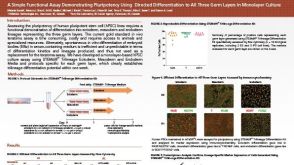 科学海报A Simple Functional Assay Demonstrating Pluripotency Using Directed Differentiation to All Three Germ Layers in Monolayer Culture
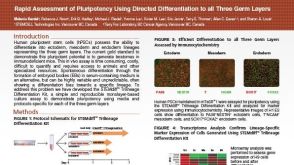 科学海报Rapid Assessment of Pluripotency Using Directed Differentiation to all Three Germ Layers
 沪公网安备31010102008431号