Zhang S et al. (APR 2014)
Biomaterials 35 12 3786--3793
The influence of a spatiotemporal 3D environment on endothelial cell differentiation of human induced pluripotent stem cells.
Current EC differentiation protocols are inefficient,and the phenotypes of the differentiated ECs are only briefly stable,which significantly inhibits their utility for basic science research. Here,a remarkably more efficient hiPSC-EC differentiation protocol that incorporates a three-dimensional (3D) fibrin scaffold is presented. With this protocol,up to 45% of the differentiated hiPSCs assumed an EC phenotype,and after purification,greater than 95% of the cells displayed the EC phenotype (based on CD31 expression). The hiPSC-ECs continued to display EC characteristics for 4 weeks invitro. Gene and protein expression levels of CD31,CD144 and von Willebrand factor-8 (vWF-8) were significantly up-regulated in differentiated hiPSC-ECs. hiPSC-ECs also have biological function to up-take Dil-conjugated acetylated LDL (Dil-ac-LDL) and form tubular structures on Matrigel. Collectively,these data demonstrate that a 3D differentiation protocol can efficiently generate ECs from hiPSCs and,furthermore,the differentiated hiPSC-ECs are functional and can maintain EC fate up to 4 weeks invitro. ?? 2014 Elsevier Ltd.
View Publication
产品类型:
产品号#:
85850
85857
产品名:
mTeSR™1
mTeSR™1
Mehta A et al. (NOV 2014)
Biochimica et biophysica acta 1843 11 2394--2402
Phasic modulation of Wnt signaling enhances cardiac differentiation in human pluripotent stem cells by recapitulating developmental ontogeny.
Cardiomyocytes (CMs) derived from human pluripotent stem cells (hPSCs) offer immense value in studying cardiovascular regenerative medicine. However,intrinsic biases and differential responsiveness of hPSCs towards cardiac differentiation pose significant technical and logistic hurdles that hamper human cardiomyocyte studies. Tandem modulation of canonical and non-canonical Wnt signaling pathways may play a crucial role in cardiac development that can efficiently generate cardiomyocytes from pluripotent stem cells. Our Wnt signaling expression profiles revealed that phasic modulation of canonical/non-canonical axis enabled orderly recapitulation of cardiac developmental ontogeny. Moreover,evaluation of 8 hPSC lines showed marked commitment towards cardiac-mesoderm during the early phase of differentiation,with elevated levels of canonical Wnts (Wnt3 and 3a) and Mesp1. Whereas continued activation of canonical Wnts was counterproductive,its discrete inhibition during the later phase of cardiac differentiation was accompanied by significant up-regulation of non-canonical Wnt expression (Wnt5a and 11) and enhanced Nkx2.5(+) (up to 98%) populations. These Nkx2.5(+) populations transited to contracting cardiac troponin T-positive CMs with up to 80% efficiency. Our results suggest that timely modulation of Wnt pathways would transcend intrinsic differentiation biases of hPSCs to consistently generate functional CMs that could facilitate their scalable production for meaningful clinical translation towards personalized regenerative medicine.
View Publication
PDX1 binds and represses hepatic genes to ensure robust pancreatic commitment in differentiating human embryonic stem cells.
Inactivation of the Pancreatic and Duodenal Homeobox 1 (PDX1) gene causes pancreatic agenesis,which places PDX1 high atop the regulatory network controlling development of this indispensable organ. However,little is known about the identity of PDX1 transcriptional targets. We simulated pancreatic development by differentiating human embryonic stem cells (hESCs) into early pancreatic progenitors and subjected this cell population to PDX1 chromatin immunoprecipitation sequencing (ChIP-seq). We identified more than 350 genes bound by PDX1,whose expression was upregulated on day 17 of differentiation. This group included known PDX1 targets and many genes not previously linked to pancreatic development. ChIP-seq also revealed PDX1 occupancy at hepatic genes. We hypothesized that simultaneous PDX1-driven activation of pancreatic and repression of hepatic programs underlie early divergence between pancreas and liver. In HepG2 cells and differentiating hESCs,we found that PDX1 binds and suppresses expression of endogenous liver genes. These findings rebrand PDX1 as a context-dependent transcriptional repressor and activator within the same cell type.
View Publication
产品类型:
产品号#:
85850
85857
产品名:
mTeSR™1
mTeSR™1
(Apr 2025)
Biotechnology Journal 20 4
Cell Seeding Strategy Influences Metabolism and Differentiation Potency of Human Induced Pluripotent Stem Cells Into Pancreatic Progenitors
ABSTRACTHuman induced pluripotent stem cells (iPSCs) are an invaluable endless cell source for generating various therapeutic cells and tissues. However,their differentiation into specific cell lineages,such as definitive endoderm (DE) and pancreatic progenitor (PP),often suffers from poor reproducibility,due partially to their pluripotency. In this work,we investigated the impact of iPSC confluency during cell self?renewal and seeding density on cell metabolic activity,glycolysis to oxidative phosphorylation shift,and differentiation potential toward DE and PP lineages. Our findings demonstrated that cell seeding strategy influences cellular metabolic activity and the robustness of iPSC differentiation. iPSCs maintained at higher seeding density exhibited lower initial oxygen consumption rate (OCR) and metabolic activity. There is an optimal seeding density to ensure sufficient oxygen consumption during differentiation and to yield high expression of SOX17 in the DE lineage and high PDX1/NKX6.1 dual?positive cells in PPs. Interestingly,we found that cell confluency at the time of harvest has less impact on the efficacy of pancreatic lineage formation or metabolic activity. This study sheds light on the interplay between metabolic activity and iPSC lineage specification,offering new insights into the robustness of iPSC self?renewal and differentiation for creating human tissues. Graphical Abstract and Lay SummaryHuman induced pluripotent stem cell (iPSC) differentiation into specific cell lineages often shows poor reproducibility due to cell pluripotency. This study demonstrated impact of iPSC seeding strategy on metabolic activity and differentiation potential,offering new insights into the robustness of iPSC self?renewal and differentiation for creating human tissues.
View Publication
产品类型:
产品号#:
85850
85857
产品名:
mTeSR™1
mTeSR™1
K. Butcher et al. (Dec 2024)
Biomolecules 14 12
PLGA-Nano-Encapsulated Disulfiram Inhibits Cancer Stem Cells and Targets Non-Small Cell Lung Cancer In Vitro and In Vivo
Cancer stem cells (CSCs) play a key role in non-small cell lung cancer (NSCLC) chemoresistance and metastasis. In this study,we used two NSCLC cell lines to investigate the regulating effect of hypoxia in the induction and maintenance of CSC traits. Our study demonstrated hypoxia-induced stemness and chemoresistance at levels comparable to those in typical CSC sphere culture. Activation of the NF-κB pathway (by transfection of NF-κB-p65) plays a key role in NSCLC CSCs and chemoresistance. Disulfiram (DS),an anti-alcoholism drug,showed a strong in vitro anti-CSC effect. It blocked cancer cell sphere reformation and clonogenicity,synergistically enhanced the cytotoxicity of four anti-NSCLC drugs (doxorubicin,gemcitabine,oxaliplatin and paclitaxel) and reversed hypoxia-induced resistance. The effect of DS on CSCs is copper-dependent. A very short half-life in the bloodstream is the major limitation for the translation of DS into a cancer treatment. Our team previously developed a poly lactic-co-glycolic acid (PLGA) nanoparticle encapsulated DS (DS-PLGA) with a long half-life in the bloodstream. Intra venous injection of DS-PLGA in combination with the oral application of copper gluconate has strong anticancer efficacy in a metastatic NSCLC mouse model. Further study may be able to translate DS-PLGA into cancer applications.
View Publication
产品类型:
产品号#:
01700
产品名:
ALDEFLUOR™ 试剂盒
R. Guerrero-López et al. (Feb 2025)
Scientific Reports 15 1
Premature ageing of lung alveoli and bone marrow cells from Terc deficient mice with different telomere lengths
Telomeres are terminal protective chromosome structures. Genetic variants in genes coding for proteins required for telomere maintenance cause rare,life-threatening Telomere Biology Disorders (TBDs) such as dyskeratosis congenita,aplastic anemia or pulmonary fibrosis. The more frequently used mice strains have telomeres much longer than the human ones which question their use as in vivo models for TBDs. One mice model with shorter telomeres based on the CAST/EiJ mouse strain carrying a mutation in the Terc gene,coding for the telomerase RNA component,has been studied in comparison with C57BL/6J mice,carrying the same mutation and long telomeres. The possible alterations produced in lungs and the haematopoietic system,frequently affected in TBD patients,were determined at different ages of the mice. Homozygous mutant mice presented a very shortened life span,more notorious in the short-telomeres CAST/EiJ strain. The lungs of mutant mice presented a transitory increase in fibrosis and a significant decrease in the relative amount of the alveolar epithelial type 2 cells from six months of age. This decrease was larger in mutant homozygous animals but was also observed in heterozygous animals. On the contrary the expression of the senescence-related protein P21 increased from six months of age in mutant mice of both strains. The analysis of the haematopoietic system indicated a decrease in the number of megakaryocyte-erythroid progenitors in homozygous mutants and an increase in the clonogenic potential of bone marrow and LSK cells. Bone marrow cells from homozygous mutant animals presented decreasing in vitro expansion capacity. The alterations observed are compatible with precocious ageing of lung alveolar cells and the bone marrow cells that correlate with the alterations observed in TBD patients. The alterations seem to be more related to the genotype of the animals that to the basal telomere length of the strains although they are more pronounced in the short-telomere CAST/EiJ-derived strain than in C57BL/6J animals. Therefore,both animal models,at ages over 6–8 months,could represent valuable and convenient models for the study of TBDs and for the assay of new therapeutic products.
View Publication
产品类型:
产品号#:
03534
产品名:
MethoCult™GF M3534
O. V. Volodina et al. (Aug 2025)
International Journal of Molecular Sciences 26 16
Prime Editing Modification with FEN1 Improves F508del Variant Editing in the CFTR Gene in Airway Basal Cells
Prime editing is a promising approach for correcting pathogenic variants,but its efficiency remains variable across genomic contexts. Here,we systematically evaluated 12 modifications of the PEmax system for correcting the CFTR F508del pathogenic variant that caused cystic fibrosis in patient-derived airway basal cells. We chose EXO1 and FEN1 nucleases to improve the original system. While all tested variants showed comparatively low efficiency in this AT-rich genomic region,4-FEN modification demonstrated significantly improved editing rates (up to 2.13 fold) compared to standard PEmax. Our results highlight two key findings: first,the persistent challenge of AT-rich target sequence correction even with optimized editors,and second,the performance of 4-FEN suggests its potential value for other genomic targets.
View Publication
产品类型:
产品号#:
05040
产品名:
PneumaCult™-Ex Plus 培养基
J. Yao et al. ( 2020)
Stem cells international 2020 6489396
Human Supernumerary Teeth-Derived Apical Papillary Stem Cells Possess Preferable Characteristics and Efficacy on Hepatic Fibrosis in Mice.
Dental tissue has been acknowledged as an advantaged source for high-quality dental pulp stem cell (DPSC) preparation. However,despite the accomplishment of the separation of DPSCs from permanent teeth and supernumerary teeth,the deficiency of rigorous and systematic clarification on the signatures and efficacy will hinder their prospects in regenerative medicine. In this study,we primitively isolated permanent teeth-derived DPSCs and supernumerary teeth-derived apical papillary stem cells (SCAP-Ss) with parental consent. Immunophenotype of DPSCs and SCAP-Ss was determined by a flow cytometry assay,and the cell viability was verified by multidimensional detections including cell proliferation,cell cycle,apoptosis,and senescence. The migration and clonogenic capacity were examined by a wound healing test and crystal violet staining,respectively. The multilineage differentiation potential was quantitated by utilizing Oil Red O staining and Alizarin Red staining,together with real-time PCR analysis. The efficacy on a mouse hepatic fibrosis model was evaluated by using histologic sections and liver function tests. Herein,we showed that SCAP-Ss exhibited comparable immunophenotype and adipogenic differentiation capacity as DPSCs. However,different from DPSCs,SCAP-Ss exhibited superiority in cell viability and osteogenic differentiation. Simultaneously,injection of DPSCs and SCAP-Ss significantly reduced inflammatory infiltration,enhanced liver-associated gene expression,and finally relieved symptoms of hepatic fibrosis. In conclusion,SCAP-Ss possess preferable characteristics and efficacy on hepatic fibrosis in mice. Our findings suggest that SCAP-Ss are an easily accessible postnatal stem cell source with multifaceted characteristics for regenerative medicine.
View Publication
Noel JG et al. ( )
The Journal of burn care & rehabilitation 23 2 75--86
Changes in bone marrow-derived myeloid cells from thermally injured rats reflect changes in the progenitor cell population.
Bone marrow progenitor cells develop into mature tissue myeloid cells under the influence of colony-stimulating factors. Cytokines that are elevated post-thermal injury have been shown to influence this process. We hypothesize that thermal injury alters myelopoiesis at the level of the progenitor cell. These differences should be visible after in vitro cultures that include colony-stimulating factors. Prior to culture,bone marrow at postburn day 1 (PBD1) was assessed for cell surface markers and the levels of myeloid progenitors. After culture in granulocyte/macrophage-stimulating colony-stimulating factor,the cell surface markers of the cultured cells were determined. PBD1 marrow from thermally injured rats had more progenitor cells responsive to granulocyte/macrophage-stimulating colony-stimulating factor than did sham. Cultured PBD1 marrow produced more CD90(br) MY(br) CD45(dim) CD4(-) MHCII(-) CD11b(dim) eosinophils than did sham. Cultured bone marrow from thermally injured animals produces myeloid cells with an altered phenotype. Similar changes in myelopoiesis may take place in vivo.
View Publication


 EasySep™小鼠TIL(CD45)正选试剂盒




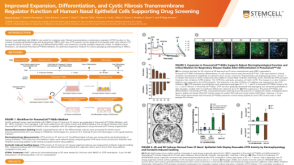 科学海报Improved Expansion, Differentiation, and Cystic Fibrosis Transmembrane Regulator Function of Human Nasal Epithelial Cells Supporting Drug Screening

 沪公网安备31010102008431号