The primate-specific noncoding RNA HPAT5 regulates pluripotency during human preimplantation development and nuclear reprogramming.
Long intergenic noncoding RNAs (lincRNAs) are derived from thousands of loci in mammalian genomes and are frequently enriched in transposable elements (TEs). Although families of TE-derived lincRNAs have recently been implicated in the regulation of pluripotency,little is known of the specific functions of individual family members. Here we characterize three new individual TE-derived human lincRNAs,human pluripotency-associated transcripts 2,3 and 5 (HPAT2,HPAT3 and HPAT5). Loss-of-function experiments indicate that HPAT2,HPAT3 and HPAT5 function in preimplantation embryo development to modulate the acquisition of pluripotency and the formation of the inner cell mass. CRISPR-mediated disruption of the genes for these lincRNAs in pluripotent stem cells,followed by whole-transcriptome analysis,identifies HPAT5 as a key component of the pluripotency network. Protein binding and reporter-based assays further demonstrate that HPAT5 interacts with the let-7 microRNA family. Our results indicate that unique individual members of large primate-specific lincRNA families modulate gene expression during development and differentiation to reinforce cell fate.
View Publication
产品类型:
产品号#:
85850
85857
产品名:
mTeSR™1
mTeSR™1
Joanne P et al. (FEB 2016)
Biomaterials 80 157--168
Nanofibrous clinical-grade collagen scaffolds seeded with human cardiomyocytes induces cardiac remodeling in dilated cardiomyopathy.
Limited data are available on the effects of stem cells in non-ischemic dilated cardiomyopathy (DCM). Since the diffuse nature of the disease calls for a broad distribution of cells,this study investigated the scaffold-based delivery of human induced pluripotent stem cell-derived cardiomyocytes (hiPS-CM) in a mouse model of DCM. Nanofibrous scaffolds were produced using a clinical grade atelocollagen which was electrospun and cross-linked under different conditions. As assessed by scanning electron microscopy and shearwave elastography,the optimum crosslinking conditions for hiPS-CM colonization proved to be a 10% concentration of citric acid crosslinking agent and 150 min of post-electrospinning baking. Acellular collagen scaffolds were first implanted in both healthy mice and those with induced DCM by a cardiac-specific invalidation of serum response factor (SRF). Seven and fourteen days after implantation,the safety of the scaffold was demonstrated by echocardiography and histological assessments. The subsequent step of implantation of the scaffolds seeded with hiPS-CM in DCM induced mice,using cell-free scaffolds as controls,revealed that after fourteen days heart function decreased in controls while it remained stable in the treated mice. This pattern was associated with an increased number of endothelial cells,in line with the greater vascularity of the scaffold. Moreover,a lesser degree of fibrosis consistent with the upregulation of several genes involved in extracellular matrix remodeling was observed. These results support the interest of the proposed hiPS-CM seeded electrospun scaffold for the stabilization of the DCM outcome with potential for its clinical use in the future.
View Publication
Pig Induced Pluripotent Stem Cell-Derived Neural Rosettes Parallel Human Differentiation Into Sensory Neural Subtypes.
The pig is the large animal model of choice for study of nerve regeneration and wound repair. Availability of porcine sensory neural cells would conceptually allow for analogous cell-based peripheral nerve regeneration in porcine injuries of similar severity and size to those found in humans. After recently reporting that porcine (or pig) induced pluripotent stem cells (piPSCs) differentiate into neural rosette (NR) structures similar to human NRs,here we demonstrate that pig NR cells could differentiate into neural crest cells and other peripheral nervous system-relevant cell types. Treatment with either bone morphogenetic protein 4 or fetal bovine serum led to differentiation into BRN3A-positive sensory cells and increased expression of sensory neuron TRK receptor gene family: TRKA,TRKB,and TRKC. Porcine sensory neural cells would allow determination of parallels between human and porcine cells in response to noxious stimuli,analgesics,and reparative mechanisms. In vitro differentiation of pig sensory neurons provides a novel model system for neural cell subtype specification and would provide a novel platform for the study of regenerative therapeutics by elucidating the requirements for innervation following injury and axonal survival.
View Publication
产品类型:
产品号#:
85850
85857
产品名:
mTeSR™1
mTeSR™1
Avery S et al. (MAY 2010)
Stem Cells 28 5 863--73
The role of SMAD4 in human embryonic stem cell self-renewal and stem cell fate.
Transforming growth factor (TGF)-beta superfamily proteins play a key role in the regulation of human embryonic stem cells (hESCs). Those of the TGFbeta/activin/nodal branch seem to support self-renewal and pluripotency,whereas those of the bone morphogenic protein (BMP) branch induce differentiation. In contrast to this generalization,we found that hESC remained undifferentiated after knockdown of SMAD4 with inducible short hairpin RNA interference,although the knockdown inhibited TGFbeta signaling and rendered the cells nonresponsive to BMP-induced differentiation. Moreover,the rapid differentiation of hESC after pharmacological inhibition of TGFbeta/activin/nodal receptor signaling was restricted after SMAD4 knockdown. These results suggest that TGFbeta/activin/nodal signaling supports the undifferentiated phenotype of hESC by suppressing BMP activity. During long-term culture,SMAD4 knockdown cell populations became less stable and more permissive to neural induction,a situation that was rescued by re-establishment of SMAD4 expression. These results suggest that SMAD4 is not required for maintenance of the undifferentiated state of hESC,but rather to stabilize that state.
View Publication
Induction of a human pluripotent state with distinct regulatory circuitry that resembles preimplantation epiblast
Human embryonic stem cells (hESCs) are derived from the inner cell mass of the blastocyst. Despite sharing the common property of pluripotency,hESCs are notably distinct from epiblast cells of the preimplantation blastocyst. Here we use a combination of three small-molecule inhibitors to sustain hESCs in a LIF signaling-dependent hESC state (3iL hESCs) with elevated expression of NANOG and epiblast-enriched genes such as KLF4,DPPA3,and TBX3. Genome-wide transcriptome analysis confirms that the expression signature of 3iL hESCs shares similarities with native preimplantation epiblast cells. We also show that 3iL hESCs have a distinct epigenetic landscape,characterized by derepression of preimplantation epiblast genes. Using genome-wide binding profiles of NANOG and OCT4,we identify enhancers that contribute to rewiring of the regulatory circuitry. In summary,our study identifies a distinct hESC state with defined regulatory circuitry that will facilitate future analysis of human preimplantation embryogenesis and pluripotency.
View Publication
产品类型:
产品号#:
85850
85857
产品名:
mTeSR™1
mTeSR™1
Hur J et al. (AUG 2014)
Molecular therapy : the journal of the American Society of Gene Therapy 22 8 1518--29
Human podoplanin-positive monocytes and platelets enhance lymphangiogenesis through the activation of the podoplanin/CLEC-2 axis.
Emerging studies suggested that murine podoplanin-positive monocytes (PPMs) are involved in lymphangiogenesis. The goal of this study was to demonstrate the therapeutic lymphangiogenesis of human PPMs by the interaction with platelets. Aggregation culture of human peripheral blood mononuclear cells (PBMCs) resulted in cellular aggregates termed hematospheres. During 5-day culture,PPMs expanded exponentially and expressed several lymphatic endothelial cell-specific markers including vascular endothelial growth factor receptor (VEGFR)-3 and well-established lymphangiogenic transcription factors. Next,we investigated the potential interaction of PPMs with platelets that had C-type lectin-like receptor-2 (CLEC-2),a receptor of podoplanin. In vitro coculture of PPMs and platelets stimulated PPMs to strongly express lymphatic endothelial markers and upregulate lymphangiogenic cytokines. Recombinant human CLEC-2 also stimulated PPMs through Akt and Erk signaling. Likewise,platelets in coculture with PPMs augmented secretion of a lymphangiogenic cytokine,interleukin (IL)-1-β,via podoplanin/CLEC-2 axis. The supernatant obtained from coculture was able to enhance the migration,viability,and proliferation of lymphatic endothelial cell. Local injection of hematospheres with platelets significantly increased lymphatic neovascularization and facilitated wound healing in the full-thickness skin wounds of nude mice. Cotreatment with PPMs and platelets augments lymphangiogenesis through podoplanin/CLEC-2 axis,which thus would be a promising novel strategy of cell therapy to treat human lymphatic vessel disease.
View Publication
产品类型:
产品号#:
85850
85857
产品名:
mTeSR™1
mTeSR™1
C. Bouffi et al. (Jun 2023)
Nature biotechnology 41 824-831
In vivo development of immune tissue in human intestinal organoids transplanted into humanized mice.
Human intestinal organoids (HIOs) derived from pluripotent stem cells provide a valuable model for investigating human intestinal organogenesis and physiology,but they lack the immune components required to fully recapitulate the complexity of human intestinal biology and diseases. To address this issue and to begin to decipher human intestinal-immune crosstalk during development,we generated HIOs containing immune cells by transplanting HIOs under the kidney capsule of mice with a humanized immune system. We found that human immune cells temporally migrate to the mucosa and form cellular aggregates that resemble human intestinal lymphoid follicles. Moreover,after microbial exposure,epithelial microfold cells are increased in number,leading to immune cell activation determined by the secretion of IgA antibodies in the HIO lumen. This in vivo HIO system with human immune cells provides a framework for future studies on infection- or allergen-driven intestinal diseases.
View Publication
产品类型:
产品号#:
06010
产品名:
IntestiCult™ 类器官生长培养基 (人)
(Jul 2025)
Scientific Reports 15 suppl 3
Chronic haloperidol exposure impairs neurodevelopment via Notch1 signaling in human stem cell-derived brain organoids
Haloperidol is a typical antipsychotic used to treat schizophrenia and induces dopamine D2 receptor antagonism. Long-term use of haloperidol can reduce brain size in animals and humans; however,the underlying mechanism of this effect remains unclear. Notch1 signaling regulates the development and function of the nervous system by balancing stem cell proliferation and differentiation. Therefore,we investigated the effects of long-term exposure to haloperidol on human-derived brain organoids,which served as sophisticated in vitro models of human brain development. Long-term exposure to haloperidol reduced the size of brain organoids and decreased the ventricular zone and Notch1 signaling. When propionate,which protects against haloperidol-induced toxicity,was combined with haloperidol,it rescued both the overall size of brain organoids and Notch1 expression levels. Additionally,treatment with valproic acid,a Notch1 activator,partially restored the size of brain organoids and the thickness of the ventricular layer. Taken together,these data suggest that long-term exposure to haloperidol impairs neurodevelopment via Notch1 signaling in brain organoids. These findings contribute to our understanding of antipsychotic drug safety and provide information for new neurodevelopmental toxicity assessments.Supplementary InformationThe online version contains supplementary material available at 10.1038/s41598-025-08855-w.
View Publication
产品类型:
产品号#:
34811
34815
34821
34825
34850
34860
05990
产品名:
AggreWell™ 800 24孔板,1个
AggreWell™ 800 24孔板,5个
AggreWell™ 800 6孔板,1个
AggreWell™ 800 6孔板,5个
AggreWell™ 800 24孔板启动套装
AggreWell™ 800 6孔板启动套装
TeSR™-E8™
(Aug 2024)
Cell Death & Disease 15 8
Heterozygous knockout of Synaptotagmin13 phenocopies ALS features and TP53 activation in human motor neurons
Spinal motor neurons (MNs) represent a highly vulnerable cellular population,which is affected in fatal neurodegenerative diseases such as amyotrophic lateral sclerosis (ALS) and spinal muscular atrophy (SMA). In this study,we show that the heterozygous loss of SYT13 is sufficient to trigger a neurodegenerative phenotype resembling those observed in ALS and SMA. SYT13+/? hiPSC-derived MNs displayed a progressive manifestation of typical neurodegenerative hallmarks such as loss of synaptic contacts and accumulation of aberrant aggregates. Moreover,analysis of the SYT13+/? transcriptome revealed a significant impairment in biological mechanisms involved in motoneuron specification and spinal cord differentiation. This transcriptional portrait also strikingly correlated with ALS signatures,displaying a significant convergence toward the expression of pro-apoptotic and pro-inflammatory genes,which are controlled by the transcription factor TP53. Our data show for the first time that the heterozygous loss of a single member of the synaptotagmin family,SYT13,is sufficient to trigger a series of abnormal alterations leading to MN sufferance,thus revealing novel insights into the selective vulnerability of this cell population.
View Publication
产品类型:
产品号#:
100-0276
100-1130
产品名:
mTeSR™ Plus
mTeSR™ Plus
(Apr 2025)
Scientific Reports 15
Unique N-glycosylation signatures in human iPSC derived microglia activated by A? oligomer and lipopolysaccharide
Microglia are the immune cells in the central nervous system (CNS) and become pro-inflammatory/activated in Alzheimer’s disease (AD). Cell surface glycosylation plays an important role in immune cells; however,the N-glycosylation and glycosphingolipid (GSL) signatures of activated microglia are poorly understood. Here,we study comprehensively combined transcriptomic and glycomic profiles using human induced pluripotent stem cells-derived microglia (hiMG). Distinct changes in N-glycosylation patterns in amyloid-? oligomer (A?O) and LPS-treated hiMG were observed. In A?O-treated cells,the relative abundance of bisecting N-acetylglucosamine (GlcNAc) N-glycans decreased,corresponding with a downregulation of MGAT3. The sialylation of N-glycans increased in response to A?O,accompanied by an upregulation of genes involved in N-glycan sialylation (ST3GAL4 and 6). Unlike A?O-induced hiMG,LPS-induced hiMG exhibited a decreased abundance of complex-type N-glycans,aligned with downregulation of mannosidase genes (MAN1A1,MAN2A2,and MAN1C1) and upregulation of ER degradation related-mannosidases (EDEM1-3). Fucosylation increased in LPS-induced hiMG,aligned with upregulated fucosyltransferase 4 (FUT4) and downregulated alpha-L-fucosidase 1 (FUCA1) gene expression,while sialofucosylation decreased,aligned with upregulated neuraminidase 4 (NEU4). Inhibition of sialylation and fucosylation in A?O- and LPS-induced hiMG alleviated pro-inflammatory responses. However,the GSL profile did not exhibit significant changes in response to A?O or LPS activation,at least in the 24-hour stimulation timeframe. A?O- and LPS- specific glycosylation changes could contribute to impaired microglia function,highlighting glycosylation pathways as potential therapeutic targets for AD.Supplementary InformationThe online version contains supplementary material available at 10.1038/s41598-025-96596-1.
View Publication
产品类型:
产品号#:
34811
34815
34821
34825
34850
34860
100-0276
100-1130
85850
85857
产品名:
AggreWell™ 800 24孔板,1个
AggreWell™ 800 24孔板,5个
AggreWell™ 800 6孔板,1个
AggreWell™ 800 6孔板,5个
AggreWell™ 800 24孔板启动套装
AggreWell™ 800 6孔板启动套装
mTeSR™ Plus
mTeSR™ Plus
mTeSR™1
mTeSR™1
(Jan 2025)
Cells 14 2
Derivation and Characterization of Isogenic OPA1 Mutant and Control Human Pluripotent Stem Cell Lines
Dominant optic atrophy (DOA) is the most commonly inherited optic neuropathy. The majority of DOA is caused by mutations in the OPA1 gene,which encodes a dynamin-related GTPase located to the mitochondrion. OPA1 has been shown to regulate mitochondrial dynamics and promote fusion. Within the mitochondrion,proteolytically processed OPA1 proteins form complexes to maintain membrane integrity and the respiratory chain complexity. Although OPA1 is broadly expressed,human OPA1 mutations predominantly affect retinal ganglion cells (RGCs) that are responsible for transmitting visual information from the retina to the brain. Due to the scarcity of human RGCs,DOA has not been studied in depth using the disease affected neurons. To enable studies of DOA using stem-cell-derived human RGCs,we performed CRISPR-Cas9 gene editing to generate OPA1 mutant pluripotent stem cell (PSC) lines with corresponding isogenic controls. CRISPR-Cas9 gene editing yielded both OPA1 homozygous and heterozygous mutant ESC lines from a parental control ESC line. In addition,CRISPR-mediated homology-directed repair (HDR) successfully corrected the OPA1 mutation in a DOA patient’s iPSCs. In comparison to the isogenic controls,the heterozygous mutant PSCs expressed the same OPA1 protein isoforms but at reduced levels; whereas the homozygous mutant PSCs showed a loss of OPA1 protein and altered mitochondrial morphology. Furthermore,OPA1 mutant PSCs exhibited reduced rates of oxygen consumption and ATP production associated with mitochondria. These isogenic PSC lines will be valuable tools for establishing OPA1-DOA disease models in vitro and developing treatments for mitochondrial deficiency associated neurodegeneration.
View Publication


 EasySep™小鼠TIL(CD45)正选试剂盒




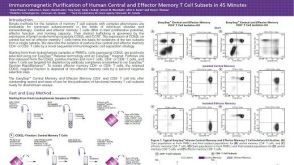 科学海报Immunomagnetic Purification of Human Central and Effector Memory T Cell Subsets in 45 Minutes

 沪公网安备31010102008431号