Kansy BA et al. (NOV 2017)
Cancer research 77 22 6353--6364
PD-1 Status in CD8+ T Cells Associates with Survival and Anti-PD-1 Therapeutic Outcomes in Head and Neck Cancer.
Improved understanding of expression of immune checkpoint receptors (ICR) on tumor-infiltrating lymphocytes (TIL) may facilitate more effective immunotherapy in head and neck cancer (HNC) patients. A higher frequency of PD-1+ TIL has been reported in human papillomavirus (HPV)+ HNC patients,despite the role of PD-1 in T-cell exhaustion. This discordance led us to hypothesize that the extent of PD-1 expression more accurately defines T-cell function and prognostic impact,because PD-1high T cells may be more exhausted than PD-1low T cells and may influence clinical outcome and response to anti-PD-1 immunotherapy. In this study,PD-1 expression was indeed upregulated on HNC patient TIL,and the frequency of these PD-1+ TIL was higher in HPV+ patients (P = 0.006),who nonetheless experienced significantly better clinical outcome. However,PD-1high CD8+ TILs were more frequent in HPV- patients and represented a more dysfunctional subset with compromised IFN-γ secretion. Moreover,HNC patients with higher frequencies of PD-1high CD8+ TIL showed significantly worse disease-free survival and higher hazard ratio for recurrence (P < 0.001),while higher fractions of PD-1low T cells associated with HPV positivity and better outcome. In a murine HPV+ HNC model,anti-PD-1 mAb therapy differentially modulated PD-1high/low populations,and tumor rejection associated with loss of dysfunctional PD-1high CD8+ T cells and a significant increase in PD-1low TIL. Thus,the extent of PD-1 expression on CD8+ TIL provides a potential biomarker for anti-PD-1-based immunotherapy. Cancer Res; 77(22); 6353-64. textcopyright2017 AACR.
View Publication
产品类型:
产品号#:
19051
19051RF
产品名:
EasySep™人T细胞富集试剂盒
RoboSep™ 人T细胞富集试剂盒含滤芯吸头
Maurer MH et al. (MAR 2007)
Journal of proteome research 6 3 1198--208
Glycogen synthase kinase 3beta (GSK3beta) regulates differentiation and proliferation in neural stem cells from the rat subventricular zone.
On the basis of its inhibition by SB216763,we identified the multifunctional enzyme Glycogen Synthase Kinase 3beta (GSK3beta) as a central regulator for differentiation and cell survival of adult neural stem cells. Detected by proteomic approaches,members of the Wnt/beta-catenin signaling pathway appear to participate in enhanced neuronal differentiation and activated transcription of beta-catenin target genes during GSK3beta inhibition,associated with decreased apoptosis.
View Publication
产品类型:
产品号#:
72872
产品名:
SB216763
Imbeault M et al. (JAN 2009)
Retrovirology 6 5
Microarray study reveals that HIV-1 induces rapid type-I interferon-dependent p53 mRNA up-regulation in human primary CD4+ T cells.
BACKGROUND: Infection with HIV-1 has been shown to alter expression of a large array of host cell genes. However,previous studies aimed at investigating the putative HIV-1-induced modulation of host gene expression have been mostly performed in established human cell lines. To better approximate natural conditions,we monitored gene expression changes in a cell population highly enriched in human primary CD4+ T lymphocytes exposed to HIV-1 using commercial oligonucleotide microarrays from Affymetrix. RESULTS: We report here that HIV-1 influences expression of genes related to many important biological processes such as DNA repair,cellular cycle,RNA metabolism and apoptosis. Notably,expression of the p53 tumor suppressor and genes involved in p53 homeostasis such as GADD34 were up-regulated by HIV-1 at the mRNA level. This observation is distinct from the previously reported p53 phosphorylation and stabilization at the protein level,which precedes HIV-1-induced apoptosis. We present evidence that the HIV-1-mediated increase in p53 gene expression is associated with virus-mediated induction of type-I interferon (i.e. IFN-alpha and IFN-beta). CONCLUSION: These observations have important implications for our understanding of HIV-1 pathogenesis,particularly in respect to the virus-induced depletion of CD4+ T cells.
View Publication
产品类型:
产品号#:
15022
15062
产品名:
RosetteSep™人CD4+ T细胞富集抗体混合物
RosetteSep™人CD4+ T细胞富集抗体混合物
Wakimoto H et al. (APR 2009)
Cancer research 69 8 3472--81
Human glioblastoma-derived cancer stem cells: establishment of invasive glioma models and treatment with oncolytic herpes simplex virus vectors.
Glioblastoma,the most malignant type of primary brain tumor,is one of the solid cancers where cancer stem cells have been isolated,and studies have suggested resistance of those cells to chemotherapy and radiotherapy. Here,we report the establishment of CSC-enriched cultures derived from human glioblastoma specimens. They grew as neurospheres in serum-free medium with epidermal growth factor and fibroblast growth factor 2,varied in the level of CD133 expression and very efficiently formed highly invasive and/or vascular tumors upon intracerebral implantation into immunodeficient mice. As a novel therapeutic strategy for glioblastoma-derived cancer stem-like cells (GBM-SC),we have tested oncolytic herpes simplex virus (oHSV) vectors. We show that although ICP6 (UL39)-deleted mutants kill GBM-SCs as efficiently as wild-type HSV,the deletion of gamma34.5 significantly attenuated the vectors due to poor replication. However,this was significantly reversed by the additional deletion of alpha47. Infection with oHSV G47Delta (ICP6(-),gamma34.5(-),alpha47(-)) not only killed GBM-SCs but also inhibited their self-renewal as evidenced by the inability of viable cells to form secondary tumor spheres. Importantly,despite the highly invasive nature of the intracerebral tumors generated by GBM-SCs,intratumoral injection of G47Delta significantly prolonged survival. These results for the first time show the efficacy of oHSV against human GBM-SCs,and correlate this cytotoxic property with specific oHSV mutations. This is important for designing new oHSV vectors and clinical trials. Moreover,the new glioma models described in this study provide powerful tools for testing experimental therapeutics and studying invasion and angiogenesis.
View Publication
产品类型:
产品号#:
05707
产品名:
NeuroCult™化学解离试剂盒(小鼠)
R. Yamin et al. (feb 2019)
Scientific reports 9 1 1351
High percentages and activity of synovial fluid NK cells present in patients with advanced stage active Rheumatoid Arthritis.
Rheumatoid Arthritis (RA) causes chronic inflammation of joints. The cytokines TNFalpha and IFNgamma are central players in RA,however their source has not been fully elucidated. Natural Killer (NK) cells are best known for their role in elimination of viral-infected and transformed cells,and they secrete pro-inflammatory cytokines. NK cells are present in the synovial fluids (SFs) of RA patients and are considered to be important in bone destruction. However,the phenotype and function of NK cells in the SFs of patients with erosive deformative RA (DRA) versus non-deformative RA (NDRA) is poorly characterized. Here we characterize the NK cell populations present in the blood and SFs of DRA and NDRA patients. We demonstrate that a distinct population of activated synovial fluid NK (sfNK) cells constitutes a large proportion of immune cells found in the SFs of DRA patients. We discovered that although sfNK cells in both DRA and NDRA patients have similar phenotypes,they function differently. The DRA sfNK secrete more TNFalpha and IFNgamma upon exposure to IL-2 and IL-15. Consequently,we suggest that sfNK cells may be a marker for more severely destructive RA disease.
View Publication
产品类型:
产品号#:
19055
19055RF
产品名:
EasySep™人NK细胞富集试剂盒
RoboSep™ 人NK细胞富集试剂盒含滤芯吸头
Menendez P et al. (DEC 2009)
The Journal of experimental medicine 206 13 3131--41
Bone marrow mesenchymal stem cells from infants with MLL-AF4+ acute leukemia harbor and express the MLL-AF4 fusion gene.
MLL-AF4 fusion is a hallmark genetic abnormality in infant B-acute lymphoblastic leukemia (B-ALL) known to arise in utero. The cellular origin of leukemic fusion genes during human development is difficult to ascertain. The bone marrow (BM) microenvironment plays an important role in the pathogenesis of several hematological malignances. BM mesenchymal stem cells (BM-MSC) from 38 children diagnosed with cytogenetically different acute leukemias were screened for leukemic fusion genes. Fusion genes were absent in BM-MSCs of childhood leukemias carrying TEL-AML1,BCR-ABL,AML1-ETO,MLL-AF9,MLL-AF10,MLL-ENL or hyperdiploidy. However,MLL-AF4 was detected and expressed in BM-MSCs from all cases of MLL-AF4(+) B-ALL. Unlike leukemic blasts,MLL-AF4(+) BM-MSCs did not display monoclonal Ig gene rearrangements. Endogenous or ectopic expression of MLL-AF4 exerted no effect on MSC culture homeostasis. These findings suggest that MSCs may be in part tumor-related,highlighting an unrecognized role of the BM milieu on the pathogenesis of MLL-AF4(+) B-ALL. MLL-AF4 itself is not sufficient for MSC transformation and the expression of MLL-AF4 in MSCs is compatible with a mesenchymal phenotype,suggesting a differential impact in the hematopoietic system and mesenchyme. The absence of monoclonal rearrangements in MLL-AF4(+) BM-MSCs precludes the possibility of cellular plasticity or de-differentiation of B-ALL blasts and suggests that MLL-AF4 might arise in a population of prehematopoietic precursors.
View Publication
产品类型:
产品号#:
05401
05402
05411
产品名:
MesenCult™ MSC基础培养基 (人)
MesenCult™ MSC 刺激补充剂(人)
MesenCult™ 增殖试剂盒(人)
Tio M et al. (JAN 2010)
PloS one 5 2 e9398
Roles of db-cAMP, IBMX and RA in aspects of neural differentiation of cord blood derived mesenchymal-like stem cells.
Mesenchymal stem cells (MSCs) have multilineage differentiation potential which includes cell lineages of the central nervous system; hence MSCs might be useful in the treatment of neurodegenerative diseases such as Parkinson's disease. Although mesenchymal stem cells have been shown to differentiate into the neural lineage,there is still little knowledge about the underlying mechanisms of differentiation particularly towards specialized neurons such as dopaminergic neurons. Here,we show that MSCs derived from human umbilical cord blood (MSC(hUCBs)) are capable of expressing tyrosine hydroxylase (TH) and Nurr1,markers typically associated with DA neurons. We also found differential phosphorylation of TH isoforms indicating the presence of post-translational mechanisms possibly activating and modifying TH in MSC(hUCB). Furthermore,functional dissection of components in the differentiation medium revealed that dibutyryl-cAMP (db-cAMP),3-isobutyl-1-methylxanthine (IBMX) and retinoic acid (RA) are involved in the regulation of Nurr1 and Neurofilament-L expression as well as in the differential phosphorylation of TH. We also demonstrate a possible inhibitory role of the protein kinase A signaling pathway in the phosphorylation of specific TH isoforms.
View Publication
产品类型:
产品号#:
72762
72764
产品名:
IBMX
IBMX
Zou J et al. (MAY 2011)
Blood 117 21 5561--5572
Oxidase-deficient neutrophils from X-linked chronic granulomatous disease iPS cells: functional correction by zinc finger nuclease-mediated safe harbor targeting.
We have developed induced pluripotent stem cells (iPSCs) from a patient with X-linked chronic granulomatous disease (X-CGD),a defect of neutrophil microbicidal reactive oxygen species (ROS) generation resulting from gp91(phox) deficiency. We demonstrated that mature neutrophils differentiated from X-CGD iPSCs lack ROS production,reproducing the pathognomonic CGD cellular phenotype. Targeted gene transfer into iPSCs,with subsequent selection and full characterization to ensure no off-target changes,holds promise for correction of monogenic diseases without the insertional mutagenesis caused by multisite integration of viral or plasmid vectors. Zinc finger nuclease-mediated gene targeting of a single-copy gp91(phox) therapeutic minigene into one allele of the safe harbor" AAVS1 locus in X-CGD iPSCs without off-target inserts resulted in sustained expression of gp91(phox) and substantially restored neutrophil ROS production. Our findings demonstrate how precise gene targeting may be applied to correction of X-CGD using zinc finger nuclease and patient iPSCs."
View Publication
产品类型:
产品号#:
09600
09650
85850
85857
产品名:
StemSpan™ SFEM
StemSpan™ SFEM
mTeSR™1
mTeSR™1
Zimmer SN et al. (JUL 2011)
Blood 118 1 69--79
Crebbp haploinsufficiency in mice alters the bone marrow microenvironment, leading to loss of stem cells and excessive myelopoiesis.
CREB-binding protein (CREBBP) is important for the cell-autonomous regulation of hematopoiesis,including the stem cell compartment. In the present study,we show that CREBBP plays an equally pivotal role in microenvironment-mediated regulation of hematopoiesis. We found that the BM microenvironment of Crebbp(+/-) mice was unable to properly maintain the immature stem cell and progenitor cell pools. Instead,it stimulates myeloid differentiation,which progresses into a myeloproliferation phenotype. Alterations in the BM microenvironment resulting from haploinsufficiency of Crebbp included a marked decrease in trabecular bone that was predominantly caused by increased osteoclastogenesis. Although CFU-fibroblast (CFU-F) and total osteoblast numbers were decreased,the bone formation rate was similar to that found in wild-type mice. At the molecular level,we found that the known hematopoietic modulators matrix metallopeptidase-9 (MMP9) and kit ligand (KITL) were decreased with heterozygous levels of Crebbp. Lastly,potentially important regulatory proteins,endothelial cell adhesion molecule 1 (ESAM1) and cadherin 5 (CDH5),were increased on Crebbp(+/-) endothelial cells. Our findings reveal that a full dose of Crebbp is essential in the BM microenvironment to maintain proper hematopoiesis and to prevent excessive myeloproliferation.
View Publication
产品类型:
产品号#:
03434
03444
03630
28600
产品名:
MethoCult™GF M3434
MethoCult™GF M3434
MethoCult™M3630
L-Calc™有限稀释软件
Minami I et al. (NOV 2012)
Cell reports 2 5 1448--60
A small molecule that promotes cardiac differentiation of human pluripotent stem cells under defined, cytokine- and xeno-free conditions.
Human pluripotent stem cells (hPSCs),including embryonic stem cells and induced pluripotent stem cells,are potentially useful in regenerative therapies for heart disease. For medical applications,clinical-grade cardiac cells must be produced from hPSCs in a defined,cost-effective manner. Cell-based screening led to the discovery of KY02111,a small molecule that promotes differentiation of hPSCs to cardiomyocytes. Although the direct target of KY02111 remains unknown,results of the present study suggest that KY02111 promotes differentiation by inhibiting WNT signaling in hPSCs but in a manner that is distinct from that of previously studied WNT inhibitors. Combined use of KY02111 and WNT signaling modulators produced robust cardiac differentiation of hPSCs in a xeno-free,defined medium,devoid of serum and any kind of recombinant cytokines and hormones,such as BMP4,Activin A,or insulin. The methodology has potential as a means for the practical production of human cardiomyocytes for regeneration therapies.
View Publication
产品类型:
产品号#:
72122
72124
72582
产品名:
IWP-2
IWP-2
KY02111
Hassan KA et al. (APR 2013)
Clinical cancer research : an official journal of the American Association for Cancer Research 19 8 1972--1980
Notch pathway activity identifies cells with cancer stem cell-like properties and correlates with worse survival in lung adenocarcinoma.
PURPOSE The cancer stem cell theory postulates that tumors contain a subset of cells with stem cell properties of self-renewal,differentiation,and tumor initiation. The purpose of this study is to determine the role of Notch activity in identifying lung cancer stem cells. EXPERIMENTAL DESIGN We investigated the role of Notch activity in lung adenocarcinoma using a Notch GFP reporter construct and a $$-secretase inhibitor (GSI),which inhibits Notch pathway activity. RESULTS Transduction of lung cancer cells with Notch GFP reporter construct identified a subset of cells with high Notch activity (GFP-bright). GFP-bright cells had the ability to form more tumor spheres in serum-free media and were able to generate both GFP-bright and GFP-dim (lower Notch activity) cell populations. GFP-bright cells were resistant to chemotherapy and were tumorigenic in serial xenotransplantation assays. Tumor xenografts of mice treated with GSI had decreased expression of downstream effectors of Notch pathway and failed to regenerate tumors upon reimplantation in NOD/SCID mice. Using multivariate analysis,we detected a statistically significant correlation between poor clinical outcome and Notch activity (reflected in increased Notch ligand expression or decreased expression of the negative modulators),in a group of 443 patients with lung adenocarcinoma. This correlation was further confirmed in an independent group of 89 patients with adenocarcinoma in which Hes-1 overexpression correlated with poor overall survival. CONCLUSIONS Notch activity can identify lung cancer stem cell-like population and its inhibition may be an appropriate target for treating lung adenocarcinoma.
View Publication


 EasySep™小鼠TIL(CD45)正选试剂盒




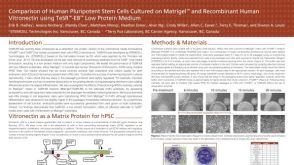 科学海报Comparison of Human Pluripotent Stem Cells Cultured on Matrigel™ and Recombinant Human Vitronectin Using TeSR™-E8™ Low Protein Medium

 沪公网安备31010102008431号