Initial WNT/β-Catenin or BMP Activation Modulates Inflammatory Response of Mesodermal Progenitors Derived from Human Induced Pluripotent Stem Cells
Wound healing in adults largely depends on the functional state of multipotent mesenchymal stromal cells (MSCs). Human fetal tissues at the early stages of development are known to heal quickly with a full-quality restoration of the original structure. The differences in the molecular mechanisms that determine the functional activity of mesodermal cells in fetuses and adults remain virtually unknown. Using two independent human induced pluripotent stem cell (iPSC) lines,we examined the effects of the initial WNT and BMP activation on the differentiation of iPSCs via mesodermal progenitors into MSCs and highlighted the functions of these cells that are altered by the proinflammatory microenvironment. The WNT-induced mesoderm commitment of the iPSCs enhanced the expression of paraxial mesoderm (PM)-specific markers,while the BMP4-primed iPSCs exhibited increased levels of lateral mesoderm (LM)-specific genes. The inflammatory status and migration rate of the isogenic iPSC-derived mesoderm cells were assessed via gene expression analysis and scratch assay under the receptor-dependent activation of the proinflammatory IFN-γ or TNF-α signaling pathway. Reduced IDO1 and ICAM1 expression levels were detected in the WNT- and BMP-induced MSC progenitors compared to the isogenic MSCs in response to stimulation with IFN-γ and TNF-α. The WNT- and BMP-induced MSC progenitors exhibited a higher migration rate than isogenic MSCs upon IFN-γ exposure. The established isogenic cellular model will provide new opportunities to elucidate the mechanisms of regeneration and novel therapeutics for wound healing.
View Publication
产品类型:
产品号#:
100-0483
100-0484
产品名:
Hausser Scientificᵀᴹ 明线血球计数板
ReLeSR™
F. Chen et al. ( 2018)
American journal of cancer research 8 8 1466--1482
Axl inhibitor R428 induces apoptosis of cancer cells by blocking lysosomal acidification and recycling independent of Axl inhibition.
R428 (BGB324) is an anti-cancer drug candidate under clinical investigation. It inhibits the receptor tyrosine kinase Axl and induces apoptosis of many types of cancer cells,but the relationship between the two has not been well established. We investigated the molecular mechanisms of the R428-induced apoptosis and found that R428 induced extensive cytoplasmic vacuolization and caspase activation,independent of its inhibitory effects on Axl. Further analyses revealed that R428 blocked lysosomal acidification and recycling,accumulated autophagosomes and lysosomes,and induced cell apoptosis. Inhibition of autophagy by autophagy inhibitors or autophagic gene-knockout alleviated the R428-induced vacuoles formation and cell apoptosis. Our study uncovered a novel function and mechanism of R428 in addition to its ability to inhibit Axl. These data will help to better direct the application of R428 as an anti-cancer reagent. It also adds new knowledge to understand the regulation of autophagy and apoptosis.
View Publication
Wang D et al. (OCT 2013)
Transfusion 53 10 2134--40
Antibody-mediated glycophorin C coligation on K562 cells induces phosphatidylserine exposure and cell death in an atypical apoptotic process.
BACKGROUND Glycophorin C (GPC) is necessary in the maintenance of red blood cell structure. Severe autoimmune hemolytic anemia and hemolytic disease of the fetus and newborn (HDFN) have been associated with Gerbich (Ge) blood group system antigens expressed on GPC. Previous in vitro studies with cord blood progenitor cells have shown that anti-Ge suppresses erythropoiesis. STUDY DESIGN AND METHODS Here,we evaluated the K562 erythroleukemic cell line to study the cellular effects of a murine anti-GPC. Cell proliferation was evaluated after treatment with anti-GPC. Flow cytometry was used to evaluate exofacial phosphatidylserine (PS) expression and cell viability (propidium iodide binding). Cell morphology was evaluated under light microscopy with cytospin preparations stained with May-Grünwald Giemsa. RESULTS Anti-GPC dramatically inhibited K562 proliferation and increased PS expression,consistent with cytoplasmic blebbing,suggesting evidence of apoptosis. Z-VAD-FMK,an inhibitor of classical apoptosis,was unable to reverse the suppressive effect of anti-GPC. However,hemin was able to attenuate growth suppression. CONCLUSION Together,the data suggest that anti-GPC suppresses erythroid proliferation through the induction of nonclassical apoptosis.
View Publication
产品类型:
产品号#:
200-0000
200-0001
200-0002
70008
70008.1
70008.2
70008.3
70008.4
70008.5
产品名:
冻存的人脐带血CD34+细胞
冻存的人脐带血CD34+细胞
冻存的人脐带血CD34+细胞
冻存的人脐带血CD34+细胞
冻存的人脐带血CD34+细胞
冻存的人脐带血CD34+细胞
冻存的人脐带血CD34+细胞
冻存的人脐带血CD34+细胞
冻存的人脐带血CD34+细胞
Davis RP et al. (JUL 2013)
Differentiation 86 1–2 30--37
Generation of induced pluripotent stem cells from human foetal fibroblasts using the Sleeping Beauty transposon gene delivery system
Transposon gene delivery systems offer an alternative,non-viral-based approach to generate induced pluripotent stem cells (iPSCs). Here we used the Sleeping Beauty (SB) transposon to generate four human iPSC lines from foetal fibroblasts. In contrast to other gene delivery systems,the SB transposon does not exhibit an integration bias towards particular genetic elements,thereby reducing the risk of insertional mutagenesis. Furthermore,unlike the alternative transposon piggyBac,SB has no SB-like elements within the human genome,minimising the possibility of mobilising endogenous transposon elements. All iPSC lines exhibited the expected characteristics of pluripotent human cells,including the ability to differentiate to derivatives of all three germ layers in vitro. Re-expression of the SB transposase in the iPSCs after reprogramming resulted in the mobilisation of some of the transposons. These results indicate that the SB transposon system is a useful addition to methods for generating human iPSCs,both for basic and applied biomedical research,and in the context of future therapeutic application. textcopyright 2013 International Society of Differentiation.
View Publication
产品类型:
产品号#:
85850
85857
产品名:
mTeSR™1
mTeSR™1
Tareen SU et al. (MAR 2014)
Molecular therapy : the journal of the American Society of Gene Therapy 22 3 575--87
Design of a novel integration-deficient lentivector technology that incorporates genetic and posttranslational elements to target human dendritic cells.
As sentinels of the immune system,dendritic cells (DCs) play an essential role in regulating cellular immune responses. One of the main challenges of developing DC-targeted therapies includes the delivery of antigen to DCs in order to promote the activation of antigen-specific effector CD8 T cells. With the goal of creating antigen-directed immunotherapeutics that can be safely administered directly to patients,Immune Design has developed a platform of novel integration-deficient lentiviral vectors that target and deliver antigen-encoding nucleic acids to human DCs. This platform,termed ID-VP02,utilizes a novel genetic variant of a Sindbis virus envelope glycoprotein with posttranslational carbohydrate modifications in combination with Vpx,a SIVmac viral accessory protein,to achieve efficient targeting and transduction of human DCs. In addition,ID-VP02 incorporates safety features in its design that include two redundant mechanisms to render ID-VP02 integration-deficient. Here,we describe the characteristics that allow ID-VP02 to specifically transduce human DCs,and the advances that ID-VP02 brings to conventional third-generation lentiviral vector design as well as demonstrate upstream production yields that will enable manufacturing feasibility studies to be conducted.
View Publication
产品类型:
产品号#:
70034
70042
200-0167
200-0166
产品名:
冻存的人外周血单核细胞
冻存的人外周血巨噬细胞
人外周血单核细胞,冷冻
人外周血单核细胞,冷冻
Saitta B et al. (JUL 2014)
Stem cells and development 23 13 1464--1478
Patient-derived skeletal dysplasia induced pluripotent stem cells display abnormal chondrogenic marker expression and regulation by BMP2 and TGFβ1.
Skeletal dysplasias (SDs) are caused by abnormal chondrogenesis during cartilage growth plate differentiation. To study early stages of aberrant cartilage formation in vitro,we generated the first induced pluripotent stem cells (iPSCs) from fibroblasts of an SD patient with a lethal form of metatropic dysplasia,caused by a dominant mutation (I604M) in the calcium channel gene TRPV4. When micromasses were grown in chondrogenic differentiation conditions and compared with control iPSCs,mutant TRPV4-iPSCs showed significantly (Ptextless0.05) decreased expression by quantitative real-time polymerase chain reaction of COL2A1 (IIA and IIB forms),SOX9,Aggrecan,COL10A1,and RUNX2,all of which are cartilage growth plate markers. We found that stimulation with BMP2,but not TGF$\$1,up-regulated COL2A1 (IIA and IIB) and SOX9 gene expression,only in control iPSCs. COL2A1 (Collagen II) expression data were confirmed at the protein level by western blot and immunofluorescence microscopy. TRPV4-iPSCs showed only focal areas of Alcian blue stain for proteoglycans,while in control iPSCs the stain was seen throughout the micromass sample. Similar staining patterns were found in neonatal cartilage from control and patient samples. We also found that COL1A1 (Collagen I),a marker of osteogenic differentiation,was significantly (Ptextless0.05) up-regulated at the mRNA level in TRPV4-iPSCs when compared with the control,and confirmed at the protein level. Collagen I expression in the TRPV4 model also may correlate with abnormal staining patterns seen in patient tissues. This study demonstrates that an iPSC model can recapitulate normal chondrogenesis and that mutant TRPV4-iPSCs reflect molecular evidence of aberrant chondrogenic developmental processes,which could be used to design therapeutic approaches for disorders of cartilage.
View Publication
产品类型:
产品号#:
85850
85857
产品名:
mTeSR™1
mTeSR™1
Voo KS et al. (JUL 2014)
The Journal of Immunology 193 2 627--34
Targeting of TLRs inhibits CD4+ regulatory T cell function and activates lymphocytes in human peripheral blood mononuclear cells.
Accumulating evidence suggests elements within tumors induce exhaustion of effector T cells and infiltration of immunosuppressive regulatory T cells (Tregs),thus preventing the development of durable antitumor immunity. Therefore,the discovery of agents that simultaneously block Treg suppressive function and reinvigorate effector function of lymphocytes is key to the development of effective cancer immunotherapy. Previous studies have shown that TLR ligands (TLRLs) could modulate the function of these T cell targets; however,those studies relied on cell-free or accessory cell-based assay systems that do not accurately reflect in vivo responses. In contrast,we used a human PBMC-based proliferation assay system to simultaneously monitor the effect of TLRLs on T cells (CD4(+),CD8(+),Tregs),B cells,and NK cells,which gave different and even conflicting results. We found that the TLR7/8L:CL097 could simultaneously activate CD8(+) T cells,B cells,and NK cells plus block Treg suppression of T cells and B cells. The TLRLs TLR1/2L:Pam3CSK4,TLR5L:flagellin,TLR4L:LPS,and TLR8/7L:CL075 also blocked Treg suppression of CD4(+) or CD8(+) T cell proliferation,but not B cell proliferation. Besides CL097,TLR2L:PGN,CL075,and TLR9L:CpG-A,CpG-B,and CpG-C) were strong activators of NK cells. Importantly,we found that Pam3CSK4 could: 1) activate CD4(+) T cell proliferation,2) inhibit the expansion of IL-10(+) naturally occurring FOXP3(+) Tregs and induction of IL-10(+) CD4(+) Tregs (IL-10-producing type 1 Treg),and 3) block naturally occurring FOXP3(+) Tregs suppressive function. Our results suggest these agents could serve as adjuvants to enhance the efficacy of current immunotherapeutic strategies in cancer patients.
View Publication
产品类型:
产品号#:
19052
19052RF
19055
19055RF
产品名:
EasySep™人CD4+ T细胞富集试剂盒
RoboSep™ 人CD4+ T细胞富集试剂盒含滤芯吸头
EasySep™人NK细胞富集试剂盒
RoboSep™ 人NK细胞富集试剂盒含滤芯吸头
Prè et al. (JUL 2014)
PLoS ONE 9 7 e103418
A time course analysis of the electrophysiological properties of neurons differentiated from human induced Pluripotent Stem Cells (iPSCs)
Many protocols have been designed to differentiate human embryonic stem cells (ESCs) and human induced pluripotent stem cells (iPSCs) into neurons. Despite the relevance of electrophysiological properties for proper neuronal function,little is known about the evolution over time of important neuronal electrophysiological parameters in iPSC-derived neurons. Yet,understanding the development of basic electrophysiological characteristics of iPSC-derived neurons is critical for evaluating their usefulness in basic and translational research. Therefore,we analyzed the basic electrophysiological parameters of forebrain neurons differentiated from human iPSCs,from day 31 to day 55 after the initiation of neuronal differentiation. We assayed the developmental progression of various properties,including resting membrane potential,action potential,sodium and potassium channel currents,somatic calcium transients and synaptic activity. During the maturation of iPSC-derived neurons,the resting membrane potential became more negative,the expression of voltage-gated sodium channels increased,the membrane became capable of generating action potentials following adequate depolarization and,at day 48-55,50% of the cells were capable of firing action potentials in response to a prolonged depolarizing current step,of which 30% produced multiple action potentials. The percentage of cells exhibiting miniature excitatory post-synaptic currents increased over time with a significant increase in their frequency and amplitude. These changes were associated with an increase of Ca2+ transient frequency. Co-culturing iPSC-derived neurons with mouse glial cells enhanced the development of electrophysiological parameters as compared to pure iPSC-derived neuronal cultures. This study demonstrates the importance of properly evaluating the electrophysiological status of the newly generated neurons when using stem cell technology,as electrophysiological properties of iPSC-derived neurons mature over time.
View Publication
产品类型:
产品号#:
85850
85857
产品名:
mTeSR™1
mTeSR™1
Madison JM et al. (JUN 2015)
Molecular Psychiatry 20 November 2013 703--17
Characterization of bipolar disorder patient-specific induced pluripotent stem cells from a family reveals neurodevelopmental and mRNA expression abnormalities.
Bipolar disorder (BD) is a common neuropsychiatric disorder characterized by chronic recurrent episodes of depression and mania. Despite evidence for high heritability of BD,little is known about its underlying pathophysiology. To develop new tools for investigating the molecular and cellular basis of BD,we applied a family-based paradigm to derive and characterize a set of 12 induced pluripotent stem cell (iPSC) lines from a quartet consisting of two BD-affected brothers and their two unaffected parents. Initially,no significant phenotypic differences were observed between iPSCs derived from the different family members. However,upon directed neural differentiation,we observed that CXCR4 (CXC chemokine receptor-4) expressing central nervous system (CNS) neural progenitor cells (NPCs) from both BD patients compared with their unaffected parents exhibited multiple phenotypic differences at the level of neurogenesis and expression of genes critical for neuroplasticity,including WNT pathway components and ion channel subunits. Treatment of the CXCR4(+) NPCs with a pharmacological inhibitor of glycogen synthase kinase 3,a known regulator of WNT signaling,was found to rescue a progenitor proliferation deficit in the BD patient NPCs. Taken together,these studies provide new cellular tools for dissecting the pathophysiology of BD and evidence for dysregulation of key pathways involved in neurodevelopment and neuroplasticity. Future generation of additional iPSCs following a family-based paradigm for modeling complex neuropsychiatric disorders in conjunction with in-depth phenotyping holds promise for providing insights into the pathophysiological substrates of BD and is likely to inform the development of targeted therapeutics for its treatment and ideally prevention.
View Publication
产品类型:
产品号#:
85850
85857
产品名:
mTeSR™1
mTeSR™1
Pozzi S et al. (JUL 2006)
Experimental hematology 34 7 934--42
Donor multipotent mesenchymal stromal cells may engraft in pediatric patients given either cord blood or bone marrow transplantation.
OBJECTIVE: Multipotent mesenchymal stromal cells (MSCs) are endowed with multilineage differentiative potential and immunomodulatory properties. It is still a matter of debate whether donor MSCs have sustained engraftment potential in host bone marrow (BM) after allogeneic hematopoietic stem cell transplantation (allo-HSCT). The aim of this study was to analyze the donor/recipient origin of MSCs in children receiving allogeneic either BM or cord blood (CB) transplantation. METHODS: Thirty-seven pediatric patients undergoing allo-HSCT for either a malignant or a nonmalignant disorder were enrolled in the study; 19 received CB and 18 BM transplantation. Results were compared with those obtained in 14 adults given BM transplantation for either malignant or nonmalignant disorders. MSCs were grown from BM aspirates obtained 1-17 and 2-192 months after allo-HSCT in pediatric and adult patients,respectively. MSC samples at the third-fourth passage were phenotypically characterized. Donor/recipient origin of MSCs was assessed by amelogenin assay and microsatellite analysis. RESULTS: MSCs could be grown from 30 of 37 children; at the third-fourth passage MSCs resulted positive (textgreater or = 98%) for CD73,CD105,CD106,CD29,CD13,CD44 and negative (textless or = 1%) for CD34,CD45,CD14. Mixed chimerism with donor cells was observed in 4 BM and 5 CB transplantation recipients,respectively; full recipient chimerism was detected in the remaining children. Full recipient MSC chimerism was observed also in all assessable (12/14) adult patients. CONCLUSIONS: BM of pediatric patients might be a more favorable milieu than that of adults for sustained engraftment of transplanted MSCs. MSCs able to engraft in the host can be transferred with cryopreserved CB units.
View Publication
产品类型:
产品号#:
05401
05402
05411
产品名:
MesenCult™ MSC基础培养基 (人)
MesenCult™ MSC 刺激补充剂(人)
MesenCult™ 增殖试剂盒(人)
Burger R et al. ( 2009)
Molecular Cancer Therapeutics 8 1 26--35
Janus kinase inhibitor INCB20 has antiproliferative and apoptotic effects on human myeloma cells in vitro and in vivo
Protein tyrosine kinases of the Janus kinase (JAK) family are associated with many cytokine receptors,which,on ligand binding,regulate important cellular functions such as proliferation,survival,and differentiation. In multiple myeloma,JAKs may be persistently activated due to a constant stimulation by interleukin (IL)-6,which is produced in the bone marrow environment. INCB20 is a synthetic molecule that potently inhibits all members of the JAK family with a 100- to 1,000-fold selectivity for JAKs over textgreater70 other kinases. Treatment of multiple myeloma cell lines and patient tumor cells with INCB20 resulted in a significant and dose-dependent inhibition of spontaneous as well as IL-6-induced cell growth. Importantly,multiple myeloma cell growth was inhibited in the presence of bone marrow stromal cells. The IL-6 dependent cell line INA-6 was particularly sensitive to the drug (IC50textless1 micromol/L). Growth suppression of INA-6 correlated with an increase in the percentage of apoptotic cells and inhibition of signal transducer and activator of transcription 3 phosphorylation. INCB20 also abrogated the protective effect of IL-6 against dexamethasone by blocking phosphorylation of SHP-2 and AKT. In contrast,AKT phosphorylation induced by insulin-like growth factor-I remained unchanged,showing selectivity of the compound. In a s.c. severe combined immunodeficient mouse model with INA-6,INCB20 significantly delayed INA-6 tumor growth. Our studies show that disruption of JAKs and downstream signaling pathways may both inhibit multiple myeloma cell growth and survival and overcome cytokine-mediated drug resistance,thereby providing the preclinical rationale for the use of JAK inhibitors as a novel therapeutic approach in multiple myeloma.
View Publication


 EasySep™小鼠TIL(CD45)正选试剂盒




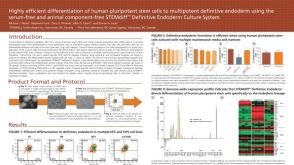 科学海报Highly Efficient Differentiation of Human Pluripotent Stem Cells to Multipotent Definitive Endoderm Using STEMdiff™ Definitive Endoderm Culture System
 沪公网安备31010102008431号