ROR1 CAR-T cells and ferroptosis inducers orchestrate tumor ferroptosis via PC-PUFA2
BackgroundLung cancer,particularly non-small cell lung cancer (NSCLC),has high recurrence rates and remains a leading cause of cancer-related death,despite recent advances in its treatment. Emerging therapies,such as chimeric antigen receptor (CAR)-T cell therapy,have shown promise but face significant challenges in targeting solid tumors. This study investigated the potential of combining receptor tyrosine kinase-like orphan receptor 1 (ROR1)-targeting CAR-T cells with ferroptosis inducers to promote ferroptosis of tumor cells and enhance anti-tumor efficacy.MethodsRNA-seq data and immunofluorescence analysis of relapsed NSCLC patient samples were used to explore ROR1 expression. In addition,ROR1-targeting CAR-T cells were developed to assess cytotoxic activity against ROR1+ tumor cells,and the effect of cytokine stimulation on their efficacy was evaluated. Lipidomics,immunofluorescent histochemistry,and western blotting were used to explore the observed effects. Ferroptosis indicators,including levels of reactive oxygen species,were used to detect the combined effect of CAR-T cells and ferroptosis-inducing drugs. Finally,tumor-bearing mice were used to validate the in vivo efficacy of the combination therapy strategy.ResultsTumor cells treated with ferroptosis inducers showed increased sensitivity to Interferon gamma (IFN-γ) secreted by ROR1 CAR-T cells. Furthermore,ROR1 CAR-T cells enhanced the production of phosphatidylcholine with diacyl-polyunsaturated fatty acid tails (PC-PUFA2) by working in tandem with IFN-γ. This enhancement promoted the expression of acyl-CoA synthetase long chain family member 4 (ACSL4),which in turn strengthened the overall anti-tumor response.ConclusionsCombining ROR1 CAR-T cells with ferroptosis inducers enhanced anti-tumor efficacy in NSCLC by promoting ferroptosis through increased lipid peroxidation.Supplementary InformationThe online version contains supplementary material available at 10.1186/s40364-025-00730-0.
View Publication
产品类型:
产品号#:
17951
100-0695
17951RF
产品名:
EasySep™人T细胞分选试剂盒
EasySep™人T细胞分选试剂盒
RoboSep™ 人T细胞分选试剂盒
(Jul 2025)
Nature Communications 16
Antigen specificity shapes distinct aging trajectories of memory CD8⁺ T cells
Memory T cells are a highly heterogeneous collection of antigen-experienced cells that undergo dynamic adaptations upon antigen re-encounter and environmental signals. This heterogeneity hinders studies on memory T cell durability and age-related dysfunction. Using chronic Epstein-Barr virus (EBV) infection and barcode-enabled antigen tracing,we assess the influence of age on memory states at the level of single antigen-specific CD8+ T cells. In young adults (<40 years),EBV-specific CD8+ T cells recognizing different antigenic peptides assume divergent preferred differentiation phenotypes. In older adults (>65-years),antigen-specific cells show largely distinct phenotypic and transcriptomic aging trajectories. Common to many albeit not all antigen-specific populations are maintained TCR diversity,gained natural killer cell-like,innate signatures and lost stem-like features while no evidence is seen for cellular senescence or exhaustion. TCR avidity contributes to these phenotypic differences and aging-related changes. Collectively,our data uncover divergent antigen-guided aging shifts in memory T cell phenotypes,which are informative for antigen selection in optimizing vaccine design and adoptive T cell therapy. Homeostasis of memory T cells is modulated by each antigen encounter,thereby creating a heterogeneous population preventing precise tracking. Here,the authors use barcode-assisted tracing of Epstein-Barr virus-specific CD8+ memory T cells of young and older individuals to find antigen-guided,clonally divergent aging trajectories.
View Publication
Hypoimmune gene edited human pluripotent stem cells (hPSCs) are a promising platform for developing reparative cellular therapies that evade immune rejection. Existing first-generation hypoimmune strategies have used CRISPR/Cas9 editing to modulate genes associated with adaptive (e.g.,T cell) immune responses,but have largely not addressed the innate immune cells (e.g.,monocytes,neutrophils) that mediate inflammation and rejection processes occurring early after graft transplantation. We identified the adhesion molecule ICAM-1 as a novel hypoimmune target that plays multiple critical roles in both adaptive and innate immune responses post-transplantation. In a series of studies,we found that ICAM-1 blocking or knock-out (KO) in hPSC-derived cardiovascular therapies imparted significantly diminished binding of multiple immune cell types. ICAM-1 KO resulted in diminished T cell proliferation responses in vitro and in longer in vivo retention/protection of KO grafts following immune cell encounter in NeoThy humanized mice. The ICAM-1 KO edit was also introduced into existing first-generation hypoimmune hPSCs and prevented immune cell binding,thereby enhancing the overall hypoimmune capacity of the cells. This novel hypoimmune editing strategy has the potential to improve the long-term efficacy and safety profiles of regenerative therapies for cardiovascular pathologies and a number of other diseases. Graphical Abstract ICAM-1 Knock-out in Transendothelial Migration and at the Immune Synapse. Abbreviations: PSC-EC - pluripotent stem cell-derived endothelial cells; KO – knock-out; dSMAC – distal supramolecular activation complex; pSMAC – peripheral supramolecular activation complex; cSMAC – central supramolecular activation complex.
View Publication
产品类型:
产品号#:
19666
18002
18000
100-0404
产品名:
EasySep™ Direct人中性粒细胞分选试剂盒
Easy50 EasySep™磁极
EasySep™磁极
RoboSep™ 人中性粒细胞分选试剂盒
N. Li et al. (Oct 2025)
Journal of Cellular and Molecular Medicine 29 19
BNIP3L/BNIP3‐Mediated Mitophagy Contributes to the Maintenance of Ovarian Cancer Stem Cells
Ovarian cancer remains the most lethal gynaecological malignancy,with tumour recurrence and chemoresistance posing significant therapeutic challenges. Emerging evidence suggests that cancer stem cells (CSCs),a rare subpopulation within tumours with self‐renewal and differentiation capacities,contribute to these hurdles. Therefore,elucidating the mechanisms that sustain CSCs is critical for improving treatment strategies. Mitophagy,a selective process for eliminating damaged mitochondria,plays a key role in maintaining cellular homeostasis,including CSC survival. Our study demonstrates that ovarian CSCs exhibit enhanced mitophagy,accompanied by elevated expression of the mitochondrial outer membrane receptors BNIP3 and BNIP3L. Knockdown of BNIP3 or BNIP3L significantly reduces mitophagy and impairs CSC self‐renewal,indicating that receptor‐mediated mitophagy is essential for CSC maintenance. Mechanistically,we identify that hyperactivated NF‐κB signalling drives the upregulation of BNIP3 and BNIP3L in ovarian CSCs. Inhibition of NF‐κB signalling,either via p65 knockdown or pharmacological inhibitors,effectively suppresses mitophagy. Furthermore,we demonstrate that elevated DNA‐PK expression contributes to the constitutive activation of NF‐κB signalling,thereby promoting mitophagy in ovarian CSCs. In summary,our findings establish that BNIP3/BNIP3L‐mediated mitophagy,driven by DNA‐PK‐dependent NF‐κB hyperactivation,is essential for CSC maintenance. Targeting the DNA‐PK/NF‐κB/BNIP3L‐BNIP3 axis to disrupt mitochondrial quality control in CSCs represents a promising therapeutic strategy to prevent ovarian cancer recurrence and metastasis.
View Publication
产品类型:
产品号#:
01700
产品名:
ALDEFLUOR™ 试剂盒
T. Hideshima et al. (apr 2020)
Leukemia
Immunomodulatory drugs activate NK cells via both Zap-70 and cereblon-dependent pathways.
Immunomodulatory drugs (IMiDs) lenalidomide and pomalidomide show remarkable antitumor activity in multiple myeloma (MM) via directly inhibiting MM-cell growth in the bone marrow (BM) microenvironment and promoting immune effector cell function. They are known to bind to the ubiquitin 3 ligase CRBN complex and thereby triggering degradation of IKZF1/3. In this study,we demonstrate that IMiDs also directly bind and activate zeta-chain-associated protein kinase-70 (Zap-70) via its tyrosine residue phosphorylation in T cells. IMiDs also triggered phosphorylation of Zap-70 in natural killer (NK) cells. Importantly,increased granzyme-B (GZM-B) expression and NK-cell activity triggered by IMiDs is associated with Zap-70 activation and inhibited by Zap-70 knockdown (KD),independent of CRBN. We also demonstrate a second mechanism whereby IMiDs trigger GZM-B and NK cytotoxicity which is CRBN and IKZF3 mediated,and inhibited or enhanced by KD of CRBN or IKZF3,respectively,independent of Zap-70. Our studies therefore show that IMiDs can enhance NK and T-cell cytotoxicity in (1) ZAP-70-mediated CRBN independent,as well as (2) CRBN-mediated ZAP-70 independent mechanisms; and provide the framework for developing novel therapeutics to activate Zap-70 and thereby enhance T and NK anti-MM cytotoxicity.
View Publication
Matsumoto K et al. (JAN 2000)
Stem cells (Dayton,Ohio) 18 3 196--203
In vitro proliferation potential of AC133 positive cells in peripheral blood.
AC133 antigen is a novel marker for human hematopoietic stem/progenitor cells. In this study,we examined the expression and proliferation potential of AC133(+) cells obtained from steady-state peripheral blood (PB). The proportion of AC133(+) cells in the CD34(+) subpopulation of steady-state PB was significantly lower than that of cord blood (CB),although that of cytokine-mobilized PB was higher than that of CB. The proliferation potential of AC133(+)CD34(+) and AC133(-)CD34(+) cells was examined by colony-forming analysis and analysis of long-term culture-initiating cells (LTC-IC). Although the total number of colony-forming cells was essentially the same in the AC133(+)CD34(+) fraction as in the AC133(-)CD34(+) fraction,the proportion of LTC-IC was much higher in the AC133(+)CD34(+) fraction. Virtually no LTC-IC were detected in the AC133(-)CD34(+) fraction. In addition,the features of the colonies grown from these two fractions were quite different. Approximately 70% of the colonies derived from the AC133(+)CD34(+) fraction were granulocyte-macrophage colonies,whereas more than 90% of the colonies derived from the AC133(-)CD34(+) fraction were erythroid colonies. Furthermore,an ex vivo expansion study observed expansion of colony-forming cells only in the AC133(+)CD34(+) population,and not in the AC133(-)CD34(+) population. These findings suggest that to isolate primitive hematopoietic cells from steady-state PB,selection by AC133 expression is better than selection by CD34 expression.
View Publication
产品类型:
产品号#:
04034
04044
产品名:
MethoCult™H4034 Optimum
MethoCult™H4034 Optimum
Lane ME et al. ( 2001)
Cancer research 61 16 6170--6177
A novel cdk2-selective inhibitor, SU9516, induces apoptosis in colon carcinoma cells.
Recent studies have indicated that the development of cyclin-dependent kinase (cdk)2 inhibitors that deregulate E2F are a plausible pharmacological strategy for novel antineoplastic agents. We show here that 3-[1-(3H-Imidazol-4-yl)-meth-(Z)-ylidene]-5-methoxy-1,3-dihydro-indol-2-one (SU9516),a novel 3-substituted indolinone compound,binds to and selectively inhibits the activity of cdk2. This inhibition results in a time-dependent decrease (4-64%) in the phosphorylation of the retinoblastoma protein pRb,an increase in caspase-3 activation (5-84%),and alterations in cell cycle resulting in either a G(0)-G(1) or a G(2)-M block. We also report here cell line differences in the cdk-dependent phosphorylation of pRb. These findings demonstrate that SU9516 is a selective cdk2 inhibitor and support the theory that compounds that inhibit cdk2 are viable resources in the development of new antineoplastic agents.
View Publication
产品类型:
产品号#:
73452
产品名:
SU9516
Wu X et al. (DEC 2002)
Journal of the American Chemical Society 124 49 14520--1
A small molecule with osteogenesis-inducing activity in multipotent mesenchymal progenitor cells.
Purmorphamine,which is a 2,6,9-trisubstituted purine compound,was discovered through cell-based high-throughput screening from a heterocycle combinatorial library. It differentiates multipotent mesenchymal progenitor cells into an osteoblast lineage. It will serve as a unique chemical tool to study the molecular mechanisms of osteogenesis of stem cells and bone development.
View Publication
产品类型:
产品号#:
72202
72204
100-1049
产品名:
Purmorphamine
Purmorphamine
Purmorphamine
Merling RK et al. (APR 2013)
Blood 121 14 e98--107
Transgene-free iPSCs generated from small volume peripheral blood nonmobilized CD34+ cells.
Demonstrates efficient reprogramming of iPS cells from CD34+ stem cells enriched from a small volume of peripheral blood.
View Publication


 EasySep™小鼠TIL(CD45)正选试剂盒




 研究综述Mesenchymal Stromal Cells: Markers, Isolation and Culture, Differentiation, and Therapeutic Potential
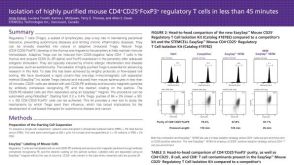 科学海报Isolation of Highly Purified Mouse CD4+CD25+Foxp3+ Regulatory T Cells in Less

 沪公网安备31010102008431号