Hansson ML et al. (FEB 2015)
Journal of Biological Chemistry 290 9 5661--5672
Efficient delivery and functional expression of transfected modified mRNA in human embryonic stem cell-derived retinal pigmented epithelial cells
Gene- and cell-based therapies are promising strategies for the treatment of degenerative retinal diseases such as age-related macular degeneration,Stargardt disease,and retinitis pigmentosa. Cellular engineering before transplantation may allow the delivery of cellular factors that can promote functional improvements,such as increased engraftment or survival of transplanted cells. A current challenge in traditional DNA-based vector transfection is to find a delivery system that is both safe and efficient,but using mRNA as an alternative to DNA can circumvent these major roadblocks. In this study,we show that both unmodified and modified mRNA can be delivered to retinal pigmented epithelial (RPE) cells with a high efficiency compared with conventional plasmid delivery systems. On the other hand,administration of unmodified mRNA induced a strong innate immune response that was almost absent when using modified mRNA. Importantly,transfection of mRNA encoding a key regulator of RPE gene expression,microphthalmia-associated transcription factor (MITF),confirmed the functionality of the delivered mRNA. Immunostaining showed that transfection with either type of mRNA led to the expression of roughly equal levels of MITF,primarily localized in the nucleus. Despite these findings,quantitative RT-PCR analyses showed that the activation of the expression of MITF target genes was higher following transfection with modified mRNA compared with unmodified mRNA. Our findings,therefore,show that modified mRNA transfection can be applied to human embryonic stem cell-derived RPE cells and that the method is safe,efficient,and functional.
View Publication
产品类型:
产品号#:
85850
85857
产品名:
mTeSR™1
mTeSR™1
C. Kropp et al. (Oct 2016)
Stem cells translational medicine 5 1289-1301
Impact of Feeding Strategies on the Scalable Expansion of Human Pluripotent Stem Cells in Single-Use Stirred Tank Bioreactors.
The routine application of human pluripotent stem cells (hPSCs) and their derivatives in biomedicine and drug discovery will require the constant supply of high-quality cells by defined processes. Culturing hPSCs as cell-only aggregates in (three-dimensional [3D]) suspension has the potential to overcome numerous limitations of conventional surface-adherent (two-dimensional [2D]) cultivation. Utilizing single-use instrumented stirred-tank bioreactors,we showed that perfusion resulted in a more homogeneous culture environment and enabled superior cell densities of 2.85 X 10(6) cells per milliliter and 47% higher cell yields compared with conventional repeated batch cultures. Flow cytometry,quantitative reverse-transcriptase polymerase chain reaction,and global gene expression analysis revealed a high similarity across 3D suspension and 2D precultures,underscoring that matrix-free hPSC culture efficiently supports maintenance of pluripotency. Interestingly,physiological data and gene expression assessment indicated distinct changes of the cells' energy metabolism,suggesting a culture-induced switch from glycolysis to oxidative phosphorylation in the absence of hPSC differentiation. Our data highlight the plasticity of hPSCs' energy metabolism and provide clear physiological and molecular targets for process monitoring and further development. This study paves the way toward more efficient GMP-compliant cell production and underscores the enormous process development potential of hPSCs in suspension culture. SIGNIFICANCE Human pluripotent stem cells (hPSCs) are a unique source for the,in principle,unlimited production of functional human cell types in vitro,which are of high value for therapeutic and industrial applications. This study applied single-use,clinically compliant bioreactor technology to develop advanced,matrix-free,and more efficient culture conditions for the mass production of hPSCs in scalable suspension culture. Using extensive analytical tools to compare established conditions with this novel culture strategy,unexpected physiological features of hPSCs were discovered. These data allow a more rational process development,providing significant progress in the field of translational stem cell research and medicine.
View Publication
产品类型:
产品号#:
85850
85857
产品名:
mTeSR™1
mTeSR™1
A. A. Kajani et al. (nov 2022)
RSC advances 12 51 32834--32843
Facile, rapid and efficient isolation of circulating tumor cells using aptamer-targeted magnetic nanoparticles integrated with a microfluidic device.
Facile and sensitive detection and isolation of circulating tumor cells (CTCs) was achieved using the aptamer-targeted magnetic nanoparticles (Apt-MNPs) in conjugation with a microfluidic device. Apt-MNPs were developed by the covalent attachment of anti-MUC1 aptamer to the silica-coated magnetic nanoparticles via the glutaraldehyde linkers. Apt-MNPs displayed high stability and functionality after 6 months of storage at 4 °C. The specific microfluidic device consisting of mixing,sorting and separation modules was fabricated through conventional photo- and soft-lithography by using polydimethylsiloxane. The capture efficiency of Apt-MNPs was first studied in vitro on MCF-7 and MDA-MB-231 cancer cell lines in the bulk and microfluidic platforms. The cell capture yields of more than 91% were obtained at the optimum condition after 60 minutes of exposure to 50 $\mu$g mL-1 Apt-MNPs with 10 to 106 cancer cells in different media. CTCs were also isolated efficiently from the blood samples of breast cancer patients and successfully propagated in vitro. The isolated CTCs were further characterized using immunofluorescence staining. The overall results indicated the high potential of the present method for the detection and capture of CTCs.
View Publication
产品类型:
产品号#:
19657
产品名:
EasySep™ Direct 人CTC富集试剂盒
A. Ly et al. (nov 2019)
Cell reports 29 8 2257--2269.e6
Transcription Factor T-bet in B Cells Modulates Germinal Center Polarization and Antibody Affinity Maturation in Response to Malaria.
Despite the key role that antibodies play in protection,the cellular processes mediating the acquisition of humoral immunity against malaria are not fully understood. Using an infection model of severe malaria,we find that germinal center (GC) B cells upregulate the transcription factor T-bet during infection. Molecular and cellular analyses reveal that T-bet in B cells is required not only for IgG2c switching but also favors commitment of B cells to the dark zone of the GC. T-bet was found to regulate the expression of Rgs13 and CXCR3,both of which contribute to the impaired GC polarization observed in the absence of T-bet,resulting in reduced IghV gene mutations and lower antibody avidity. These results demonstrate that T-bet modulates GC dynamics,thereby promoting the differentiation of B cells with increased affinity for antigen.
View Publication
产品类型:
产品号#:
06005
产品名:
IntestiCult™ 肠道类器官生长培养基 (小鼠)
(Apr 2024)
Communications Biology 7
Dynamic molecular network analysis of iPSC-Purkinje cells differentiation delineates roles of ISG15 in SCA1 at the earliest stage
Better understanding of the earliest molecular pathologies of all neurodegenerative diseases is expected to improve human therapeutics. We investigated the earliest molecular pathology of spinocerebellar ataxia type 1 (SCA1),a rare familial neurodegenerative disease that primarily induces death and dysfunction of cerebellum Purkinje cells. Extensive prior studies have identified involvement of transcription or RNA-splicing factors in the molecular pathology of SCA1. However,the regulatory network of SCA1 pathology,especially central regulators of the earliest developmental stages and inflammatory events,remains incompletely understood. Here,we elucidated the earliest developmental pathology of SCA1 using originally developed dynamic molecular network analyses of sequentially acquired RNA-seq data during differentiation of SCA1 patient-derived induced pluripotent stem cells (iPSCs) to Purkinje cells. Dynamic molecular network analysis implicated histone genes and cytokine-relevant immune response genes at the earliest stages of development,and revealed relevance of ISG15 to the following degradation and accumulation of mutant ataxin-1 in Purkinje cells of SCA1 model mice and human patients. Molecular changes in neurodegeneration occur much earlier than previously expected. In this study,dynamic molecular network analysis of iPSC differentiation uncovers a temporal pathway from histone to ISG15 with the earliest molecular changes of SCA1.
View Publication
产品类型:
产品号#:
05990
产品名:
TeSR™-E8™
(Dec 2024)
Clinical and Translational Medicine 14 12
LRH‐1/NR5A2 targets mitochondrial dynamics to reprogram type 1 diabetes macrophages and dendritic cells into an immune tolerance phenotype
Background: The complex aetiology of type 1 diabetes (T1D),characterised by a detrimental cross-talk between the immune system and insulin-producing beta cells,has hindered the development of effective disease-modifying therapies. The discovery that the pharmacological activation of LRH-1/NR5A2 can reverse hyperglycaemia in mouse models of T1D by attenuating the autoimmune attack coupled to beta cell survival/regeneration prompted us to investigate whether immune tolerisation could be translated to individuals with T1D by LRH-1/NR5A2 activation and improve islet survival. Methods: Peripheral blood mononuclear cells (PBMCs) were isolated from individuals with and without T1D and derived into various immune cells,including macrophages and dendritic cells. Cell subpopulations were then treated or not with BL001,a pharmacological agonist of LRH-1/NR5A2,and processed for: (1) Cell surface marker profiling,(2) cytokine secretome profiling,(3) autologous T-cell proliferation,(4) RNAseq and (5) proteomic analysis. BL001-target gene expression levels were confirmed by quantitative PCR. Mitochondrial function was evaluated through the measurement of oxygen consumption rate using a Seahorse XF analyser. Co-cultures of PBMCs and iPSCs-derived islet organoids were performed to assess the impact of BL001 on beta cell viability. Results: LRH-1/NR5A2 activation induced a genetic and immunometabolic reprogramming of T1D immune cells,marked by reduced pro-inflammatory markers and cytokine secretion,along with enhanced mitohormesis in pro-inflammatory M1 macrophages and mitochondrial turnover in mature dendritic cells. These changes induced a shift from a pro-inflammatory to an anti-inflammatory/tolerogenic state,resulting in the inhibition of CD4+ and CD8+ T-cell proliferation. BL001 treatment also increased CD4+/CD25+/FoxP3+ regulatory T-cells and Th2 cells within PBMCs while decreasing CD8+ T-cell proliferation. Additionally,BL001 alleviated PBMC-induced apoptosis and maintained insulin expression in human iPSC-derived islet organoids. Conclusion: These findings demonstrate the potential of LRH-1/NR5A2 activation to modulate immune responses and support beta cell viability in T1D,suggesting a new therapeutic approach. Key points: LRH-1/NR5A2 activation in inflammatory cells of individuals with type 1 diabetes (T1D) reduces pro-inflammatory cell surface markers and cytokine release. LRH-1/NR5A2 promotes a mitohormesis-induced immuno-resistant phenotype to pro-inflammatory macrophages. Mature dendritic cells acquire a tolerogenic phenotype via LRH-1/NR5A2-stimulated mitochondria turnover. LRH-1/NR5A2 agonistic activation expands a CD4+/CD25+/FoxP3+ T-cell subpopulation. Pharmacological activation of LRH-1/NR5A2 improves the survival iPSC-islets-like organoids co-cultured with PBMCs from individuals with T1D.
View Publication
产品类型:
产品号#:
17858
17952
17858RF
100-0694
17952RF
100-0696
产品名:
EasySep™人CD14正选试剂盒II
EasySep™人CD4+ T细胞分选试剂盒
RoboSep™ 人CD14正选试剂盒II
EasySep™人CD14正选试剂盒II
RoboSep™ 人CD4+ T细胞分选试剂盒
EasySep™人CD4+ T细胞分离试剂盒
P. Klaihmon et al. (Feb 2024)
Scientific Reports 14 3
Inhibition of LATS kinases reduces tumorigenicity and increases the sensitivity of human chronic myelogenous leukemia cells to imatinib
Chronic myelogenous leukemia (CML) is a clonal hematologic malignancy of the myeloid lineage caused by the oncogenic BCR/ABL fusion protein that promotes CML cell proliferation and protects them against drug-induced apoptosis. In this study,we determine LATS1 and LATS2 expression in CML cells derived from patients who are resistant to imatinib (IM) treatment. Significant upregulation of LATS1 and LATS2 was found in these CML patients compared to healthy donors. To further explore whether the expression of LATS1/2 contributes to the IM-resistant phenotype,IM-resistant CML cell lines generated by culturing CML-derived erythroblastic K562 cells in increasing concentrations of IM were used as in vitro models. Up-regulation of LATS1 and LATS2 was observed in IM-resistant K562 cells. Reduction of LATS using either Lats-IN-1 (TRULI),a specific LATS inhibitor,or shRNA targeting LATS1/2 significantly reduced clonogenicity,increased apoptosis and induced differentiation of K562 cells to late-stage erythroid cells. Furthermore,depletion of LATS1 and LATS2 also increased the sensitivity of K562 cells to IM. Taken together,our results suggest that LATS could be one of the key factors contributing to the rapid proliferation,reduced apoptosis,and IM resistance of CML cells. Targeting LATS could be a promising treatment to enhance the therapeutic effect of a conventional BCR/ABL tyrosine kinase inhibitor such as IM.
View Publication
Turan S et al. (APR 2016)
Molecular Therapy 24 October 2015 1--12
Precise correction of disease mutations in induced pluripotent stem cells derived from patients with limb girdle muscular dystrophy
Limb girdle muscular dystrophies types 2B (LGMD2B) and 2D (LGMD2D) are degenerative muscle diseases caused by mutations in the dysferlin and alpha-sarcoglycan genes,respectively. Using patient-derived induced pluripotent stem cells (iPSC),we corrected the dysferlin nonsense mutation c.5713CtextgreaterT; p.R1905X and the most common alpha-sarcoglycan mutation,missense c.229CtextgreaterT; p.R77C,by single-stranded oligonucleotide-mediated gene editing,using the CRISPR/Cas9 gene editing system to enhance the frequency of homology-directed repair. We demonstrated seamless,allele-specific correction at efficiencies of 0.7-1.5%. As an alternative,we also carried out precise gene addition strategies for correction of the LGMD2B iPSC by integration of wild-type dysferlin cDNA into the H11 safe harbor locus on chromosome 22,using dual integrase cassette exchange (DICE) or TALEN-assisted homologous recombination for insertion precise (THRIP). These methods employed TALENs and homologous recombination,and DICE also utilized site-specific recombinases. With DICE and THRIP,we obtained targeting efficiencies after selection of ˜20%. We purified iPSC corrected by all methods and verified rescue of appropriate levels of dysferlin and alpha-sarcoglycan protein expression and correct localization,as shown by immunoblot and immunocytochemistry. In summary,we demonstrate for the first time precise correction of LGMD iPSC and validation of expression,opening the possibility of cell therapy utilizing these corrected iPSC.Molecular Therapy (2016); doi:10.1038/mt.2016.40.
View Publication
产品类型:
产品号#:
85850
85857
产品名:
mTeSR™1
mTeSR™1
Hasehira K et al. (JUN 2016)
Glycoconjugate Journal 1--10
Structural and quantitative evidence of ??2???6-sialylated N-glycans as markers of the differentiation potential of human mesenchymal stem cells
Human somatic stem cells such as mesenchymal stem cells (hMSCs) have the capacity to differentiate into mesenchymal tissue lineages and to alter immune regulatory functions. As such,they hold promise for use in stem cell-based therapies. However,no method is currently available to evaluate the actual differentiation capacity of hMSCs prior to cell transplantation. Previously,we performed a comprehensive glycan profiling of adipose-derived hMSCs using high-density lectin microarray and demonstrated that $$2-6-sialylation is a marker of the differentiation potential of these cells. Nevertheless,no information was available about the structural details of these of $$2-6-sialylated glycans. Here we used high performance liquid chromatography (HPLC) analysis combined with mass spectrometry (MS) to perform a structural and quantitative glycome analysis targeting both N- and O-glycans derived from early (with differentiation ability) and late (without differentiation ability) passages of adipose tissue-derived hMSCs. Findings in these cells were compared with those from human induced pluripotent stem cells (hiPSCs),human dermal fibroblasts (hFibs) and cartilage tissue-derived chondrocytes. A higher percentage of $$2-6-sialylated N-glycans was detected in early passage cells (24-28 % of sialylated N-glycans) compared with late passage cells (13-15 %). A major $$2-6-sialylated N-glycan structure detected in adipose-derived hMSCs was that of mono-sialylated biantennary N-glycan. Similar results were obtained for the cartilage tissue-derived chondrocytes,Yub621c (28 % for passage 7 and 5 % for passage 28). In contrast,no significant differences were observed between early and late passage hMSCs with respect to $$2-6-sialylated O-glycan percentages. These results demonstrate that levels of $$2-6-sialylated N-glycans,but not O-glycans,could be used as markers of the differential potential of hMSCs.
View Publication
产品类型:
产品号#:
85850
85857
产品名:
mTeSR™1
mTeSR™1
Papait A et al. (NOV 2016)
Journal of tissue engineering and regenerative medicine
Allogeneic platelet-rich plasma affects monocyte differentiation to dendritic cells causing an anti-inflammatory microenvironment putatively fostering the wound healing.
Autologous platelet rich plasma (PRP) is clinically used to induce repair of different tissues through the release of bioactive molecules. In some patients,the production of an efficient autologous PRP is unfeasible due to their compromised health. We developed an allogeneic PRP mismatched for AB0 and Rh antigens. To broadcast its clinical applications avoiding side effects the outcome of allogeneic PRP on immune response should be defined. Thus,we investigated whether PRP affected the differentiation of peripheral blood monocytes to dendritic cells upon stimulation with granulocyte monocyte colony stimulating factor and interleukin-4. Indeed,these cells are the main players of immune response and tissue repair. PRP inhibited the differentiation of monocytes to CD1a(+) dendritic cells and favored the expansion of phagocytic CD163(+) CD206(+) fibrocyte-like cells. These cells produced inteleukin-10 and prostaglandin-E2,but not interferon-γ,upon stimulation with lipopolysaccharides. Moreover,they promoted the expansion of regulatory CD4(+) CD25(+) FoxP3(+) T cells upon allostimulation or antigen specific priming. Finally,the conditioned medium harvested from monocytes differentiated with PRP triggered a strong chemotactic effect on mesenchymal cells in both scratch and transwell migration assays. These results strongly suggest that allogeneic PRP can foster the differentiation of monocytes to a regulatory anti-inflammatory population possibly favoring wound healing.
View Publication
产品类型:
产品号#:
15022
15028
15062
15068
产品名:
RosetteSep™人CD4+ T细胞富集抗体混合物
RosetteSep™ 人单核细胞富集抗体混合物
RosetteSep™人CD4+ T细胞富集抗体混合物
RosetteSep™人单核细胞富集抗体混合物
Zheng X et al. (MAY 2004)
Blood 103 9 3535--43
Gamma-catenin contributes to leukemogenesis induced by AML-associated translocation products by increasing the self-renewal of very primitive progenitor cells.
Acute myeloid leukemia (AML) is characterized by the block of differentiation,deregulated apoptosis,and an increased self-renewal of hematopoietic precursors. It is unclear whether the self-renewal of leukemic blasts results from the cumulative effects of blocked differentiation and impaired apoptosis or whether there are mechanisms directly increasing self-renewal. The AML-associated translocation products (AATPs) promyelocytic leukemia/retinoic acid receptor alpha (PML/RAR alpha),promyelocytic leukemia zinc finger (PLZF)/RAR alpha (X-RAR alpha),and AML-1/ETO block hematopoietic differentiation. The AATPs activate the Wnt signaling by up-regulating gamma-catenin. Activation of the Wnt signaling augments self-renewal of hematopoietic stem cells (HSCs). Therefore,we investigated how AATPs influence self-renewal of HSCs and evaluated the role of gamma-catenin in the determination of the phenotype of HSCs expressing AATPs. Here we show that the AATPs directly activate the gamma-catenin promoter. The crucial role of gamma-catenin in increasing the self-renewal of HSCs upon expression of AATPs is demonstrated by (i) the abrogation of replating efficiency upon hindrance of gamma-catenin expression through RNA interference,and (ii) the augmentation of replating efficiency of HSCs upon overexpression of gamma-catenin itself. In addition,the inoculation of gamma-catenin-transduced HSCs into irradiated recipient mice establishes the clinical picture of AML. These data provide the first evidence that the aberrant activation of Wnt signaling by the AATP decisively contributes to the pathogenesis of AML.
View Publication


 EasySep™小鼠TIL(CD45)正选试剂盒




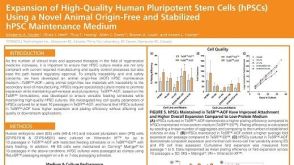 科学海报Expansion of High-Quality Human Pluripotent Stem Cells (hPSCs) Using a Novel Animal Origin-Free and Stabilized hPSC Maintenance Medium
 沪公网安备31010102008431号