Li W et al. (MAY 2011)
Proceedings of the National Academy of Sciences of the United States of America 108 20 8299--8304
Rapid induction and long-term self-renewal of primitive neural precursors from human embryonic stem cells by small molecule inhibitors.
Human embryonic stem cells (hESCs) hold enormous promise for regenerative medicine. Typically,hESC-based applications would require their in vitro differentiation into a desirable homogenous cell population. A major challenge of the current hESC differentiation paradigm is the inability to effectively capture and,in the long-term,stably expand primitive lineage-specific stem/precursor cells that retain broad differentiation potential and,more importantly,developmental stage-specific differentiation propensity. Here,we report synergistic inhibition of glycogen synthase kinase 3 (GSK3),transforming growth factor β (TGF-β),and Notch signaling pathways by small molecules can efficiently convert monolayer cultured hESCs into homogenous primitive neuroepithelium within 1 wk under chemically defined condition. These primitive neuroepithelia can stably self-renew in the presence of leukemia inhibitory factor,GSK3 inhibitor (CHIR99021),and TGF-β receptor inhibitor (SB431542); retain high neurogenic potential and responsiveness to instructive neural patterning cues toward midbrain and hindbrain neuronal subtypes; and exhibit in vivo integration. Our work uniformly captures and maintains primitive neural stem cells from hESCs.
View Publication
产品类型:
产品号#:
72052
72054
100-1042
产品名:
CHIR99021
CHIR99021
CHIR99021
Inamdar AA et al. (JAN 2012)
Mycopathologia 173 1 13--20
A Model to Evaluate the Cytotoxicity of the Fungal Volatile Organic Compound 1-octen-3-ol in Human Embryonic Stem Cells
Microbial growth in damp indoor environments has been correlated with risks to human health. This study was aimed to determine the cytotoxicity of 1-octen-3-ol (mushroom alcohol")�
View Publication
产品类型:
产品号#:
07920
07922
85850
85857
产品名:
ACCUTASE™
ACCUTASE™
mTeSR™1
mTeSR™1
Hackett C et al. ( 2014)
American journal of translational research 6 2 119--28
Transplantation of Fas-deficient or wild-type neural stem/progenitor cells (NPCs) is equally efficient in treating experimental autoimmune encephalomyelitis (EAE).
Studies have shown that neural stem/progenitor cell (NPC) transplantation is beneficial in experimental autoimmune encephalomyelitis (EAE),an established animal model of multiple sclerosis (MS). It is unclear whether NPCs have the ability to integrate into the host CNS to replace lost cells or if their main mechanism of action is via bystander immunomodulation. Understanding the mechanisms by which NPCs exert their beneficial effects as well as exploring methods to increase post-transplantation survival and differentiation is critical to advancing this treatment strategy. Using the EAE model and Fas-deficient (lpr) NPCs,we investigated the effects of altering the Fas system in NPC transplantation therapy. We show that transplantation of NPCs into EAE mice ameliorates clinical symptoms with greater efficacy than sham treatments regardless of cell type (wt or lpr). NPC transplantation via retro-orbital injections significantly decreased inflammatory infiltrates at the acute time point,with a similar trend at the chronic time point. Both wt and lpr NPCs injected into mice with EAE were able to home to sites of CNS inflammation in the periventricular brain and lumbar spinal cord. Both wt and lpr NPCs have the same capacity for inducing apoptosis of Th1 and Th17 cells,and minimal numbers of NPCs entered the CNS. These cells did not express terminal differentiation markers,suggesting that NPCs exert their effects mainly via bystander peripheral immunomodulation.
View Publication
产品类型:
产品号#:
05715
产品名:
NeuroCult™成年中枢神经系统(CNS)组织酶解试剂盒(小鼠和大鼠)
F. A. H. Cooles et al. ( 2018)
Frontiers in immunology 9 755
Phenotypic and Transcriptomic Analysis of Peripheral Blood Plasmacytoid and Conventional Dendritic Cells in Early Drug Na\ive Rheumatoid Arthritis."
Objective Dendritic cells (DCs) are key orchestrators of immune function. To date,rheumatoid arthritis (RA) researchers have predominantly focused on a potential pathogenic role for CD1c+ DCs. In contrast,CD141+ DCs and plasmacytoid DCs (pDCs) have not been systematically examined,at least in early RA. In established RA,the role of pDCs is ambiguous and,since disease duration and treatment both impact RA pathophysiology,we examined pDCs,and CD1c+ and CD141+ conventional DCs (cDCs),in early,drug-na{\{i}}ve RA (eRA) patients. Methods We analyzed the frequency and phenotype of pDCs
View Publication
产品类型:
产品号#:
07811
07861
18060
18061
产品名:
Lymphoprep™
Lymphoprep™
Lymphoprep™
Lymphoprep™
A. Srinivasan et al. (JUN 2018)
Biomaterials 167 153--167
Substrate stiffness modulates the multipotency of human neural crest derived ectomesenchymal stem cells via CD44 mediated PDGFR signaling.
Mesenchymal stem cells (MSCs) have been isolated from various mesodermal and ectodermal tissues. While the phenotypic and functional heterogeneity of MSCs stemming from their developmental origins has been acknowledged,the genetic and environmental factors underpinning these differences are not well-understood. Here,we investigated whether substrate stiffness mediated mechanical cues can directly modulate the development of ectodermal MSCs (eMSCs) from a precursor human neural crest stem cell (NCSC) population. We showed that NCSC-derived eMSCs were transcriptionally and functionally distinct from mesodermal bone marrow MSCs. eMSCs derived on lower substrate stiffness specifically increased their expression of the MSC marker,CD44 in a Rho-ROCK signaling dependent manner,which resulted in a concomitant increase in the eMSCs' adipogenic and chondrogenic differentiation potential. This mechanically-induced effect can only be maintained for short-term upon switching back to a stiff substrate but can be sustained for longer-term when the eMSCs were exclusively maintained on soft substrates. We also discovered that CD44 expression modulated eMSC self-renewal and multipotency via the downregulation of downstream platelet-derived growth factor receptor beta (PDGFRbeta$) signaling. This is the first instance demonstrating that substrate stiffness not only influences the differentiation trajectories of MSCs but also their derivation from upstream progenitors,such as NCSCs.
View Publication
X.-Y. Zhang et al. (feb 2022)
Human molecular genetics 31 4 638--650
Exosomal transfer of activated neutrophil-derived lncRNA CRNDE promotes proliferation and migration of airway smooth muscle cells in asthma.
Activated neutrophil-derived exosomes reportedly contribute to the proliferation of airway smooth muscle cells (ASMCs),thereby aggravating the airway wall remodeling during asthma; however,the specific mechanism remains unclear. Lipopolysaccharide (LPS)-EXO and si-CRNDE-EXO were extracted from the media of human neutrophils treated with LPS and LPS??+??si-CRNDE (a siRNA targets long non-coding RNA CRNDE),respectively. Human ASMCs were co-cultured with LPS-EXO or si-CRNDE-EXO,and cell viability,proliferation and migration were measured. The interplay of colorectal neoplasia differentially expressed (CRNDE),inhibitor of nuclear factor kappa B kinase subunit beta (IKK$\beta$) and nuclear receptor subfamily 2 group C member 2 (TAK1) was explored using RNA immunoprecipitation (RIP) and Co-IP assays. A mouse model of asthma was induced using ovalbumin. CRNDE was upregulated in LPS-EXO and successfully transferred from LPS-treated neutrophils to ASMCs through exosome. Mechanically,CRNDE loaded in LPS-EXO reinforced TAK1-mediated IKK$\beta$ phosphorylation,thereby activating the nuclear factor kappa B (NF-$\kappa$B) pathway. Functionally,silencing CRNDE in LPS-EXO,an IKK$\beta$ inhibitor,and an NF-$\kappa$B inhibitor all removed the upregulation of cell viability,proliferation and migration induced by LPS-EXO in ASMCs. In the end,the in vivo experiment demonstrated that CRNDE knockdown in neutrophils effectively reduced the thickness of bronchial smooth muscle in a mouse model for asthma. Activated neutrophils-derived CRNDE was transferred to ASMCs through exosomes and activated the NF-$\kappa$B pathway by enhancing IKK$\beta$ phosphorylation. The latter promoted the proliferation and migration of ASMCs and then contributed to airway remodeling in asthma.
View Publication
产品类型:
产品号#:
17957
20144
17957RF
产品名:
EasySep™人中性粒细胞分选试剂盒
EasySep™缓冲液
RoboSep™ 人中性粒细胞分选试剂盒
E. Vamva et al. (mar 2022)
STAR protocols 3 1 101228
An optimized measles virus glycoprotein-pseudotyped lentiviral vector production system to promote efficient transduction of human primary B cells.
Measles virus envelope pseudotyped LV (MV-LV) can achieve high B cell transduction rates (up to 50%),but suffers from low titers. To overcome current limitations,we developed an optimized MV-LV production protocol that achieved consistent B cell transduction efficiency up to 75%. We detail this protocol along with analytical assays to assess the results of MV-LV mediated B cell transduction,including flow cytometry for B cell phenotypic characterization and measurement of transduction efficiency,and ddPCR for VCN analysis.
View Publication
产品类型:
产品号#:
17954
20144
17954RF
100-0971
产品名:
EasySep™人B细胞分选试剂盒
EasySep™缓冲液
RoboSep™ 人B细胞分选试剂盒
EasySep™人B细胞分离试剂盒
(Sep 2024)
International Journal of Molecular Sciences 25 19
Evaluating the Reparative Potential of Secretome from Patient-Derived Induced Pluripotent Stem Cells during Ischemia–Reperfusion Injury in Human Cardiomyocytes
During a heart attack,ischemia causes losses of billions of cells; this is especially concerning given the minimal regenerative capability of cardiomyocytes (CMs). Heart remuscularization utilizing stem cells has improved cardiac outcomes despite little cell engraftment,thereby shifting focus to cell-free therapies. Consequently,we chose induced pluripotent stem cells (iPSCs) given their pluripotent nature,efficacy in previous studies,and easy obtainability from minimally invasive techniques. Nonetheless,using iPSC secretome-based therapies for treating injured CMs in a clinical setting is ill-understood. We hypothesized that the iPSC secretome,regardless of donor health,would improve cardiovascular outcomes in the CM model of ischemia–reperfusion (IR) injury. Episomal-generated iPSCs from healthy and dilated cardiomyopathy (DCM) donors,passaged 6–10 times,underwent 24 h incubation in serum-free media. Protein content of the secretome was analyzed by mass spectroscopy and used to treat AC16 immortalized CMs during 5 h reperfusion following 24 h of hypoxia. IPSC-derived secretome content,independent of donor health status,had elevated expression of proteins involved in cell survival pathways. In IR conditions,iPSC-derived secretome increased cell survival as measured by metabolic activity (p < 0.05),cell viability (p < 0.001),and maladaptive cellular remodelling (p = 0.052). Healthy donor-derived secretome contained increased expression of proteins related to calcium contractility compared to DCM donors. Congruently,only healthy donor-derived secretomes improved CM intracellular calcium concentrations (p < 0.01). Heretofore,secretome studies mainly investigated differences relating to cell type rather than donor health. Our work suggests that healthy donors provide more efficacious iPSC-derived secretome compared to DCM donors in the context of IR injury in human CMs. These findings illustrate that the regenerative potential of the iPSC secretome varies due to donor-specific differences.
View Publication
产品类型:
产品号#:
100-0276
100-1130
05990
产品名:
mTeSR™ Plus
mTeSR™ Plus
TeSR™-E8™
(Mar 2025)
Molecular Medicine 31 1
PKN2 enhances the immunosuppressive activity of polymorphonuclear myeloid-derived suppressor cells in esophageal carcinoma by mediating fatty acid oxidation
BackgroundMyeloid-derived suppressor cells (MDSCs) in tumor microenvironment reduce the efficacy of immunotherapy. PKN2 plays a role in colon cancer,but its function in esophageal cancer (EC) remains unclear. This study investigated PKN2 expression in MDSCs derived from EC tissues and determined whether PKN2 regulates immunosuppressive activity of MDSCs by mediating fatty acid oxidation (FAO).Materials and methodsPKN2 expression was determined in GEO database,EC patients,and 4-NQO-induced EC mice,as well as in different types of immune cells. The effect of PKN2 on the function of polymorphonuclear myeloid-derived suppressor cells (PMN-MDSCs) was investigated by co-culture of PMN-MDSCs and CD4+/CD8+ T cells. The co-culture of patient-derived organoids and autologous immune cells was performed to observe the effect of PKN2 on the immunosuppressive function of PMN-MDSCs.ResultsPKN2 is highly expressed in EC tumor tissues compared to normal tissues,especially in tumor-infiltrated PMN-MDSCs. Overexpressing PKN2 in PMN-MDSCs contributes to the immunosuppressive activity of PMN-MDSCs in vitro. PKN2-overexpressing PMN-MDSCs inhibited the killing ability of cytotoxic T lymphocytes and promoted EC organoid growth. PKN2 promotes FAO in PMN-MDSCs via CPT1B (a key enzyme of FAO). Mechanistically,PKN2 promotes CPT1B transcription by upregulating STAT3 phosphorylation.ConclusionsPKN2 expression was increased in PMN-MDSCs derived from human and mouse EC tissues. PKN2 plays a role in enhancing the immunosuppressive activity of PMN-MDSCs by facilitating STAT3 phosphorylation and CPT1B transcription,which in turn leads to increased CPT1B-mediated FAO in PMN-MDSCs. Targeted inhibition of PKN2 is expected to improve immunotherapeutic efficacy in EC patients.Supplementary InformationThe online version contains supplementary material available at 10.1186/s10020-025-01132-6.
View Publication
产品类型:
产品号#:
19861
19861RF
产品名:
EasySep™小鼠单核细胞分选试剂盒
RoboSep™ 小鼠单核细胞分选试剂盒
(Jun 2024)
Cancer Research Communications 4 6
B7-H3–Targeting Chimeric Antigen Receptors Epstein-Barr Virus–specific T Cells Provides a Tumor Agnostic Off-The-Shelf Therapy Against B7-H3–positive Solid Tumors
AbstractEncouraged by the observations of significant B7-H3 protein overexpression in many human solid tumors compared to healthy tissues,we directed our focus towards targeting B7-H3 using chimeric antigen receptor (CAR) T cells. We utilized a nanobody as the B7-H3–targeting domain in our CAR construct to circumvent the stability issues associated with single-chain variable fragment–based domains. In efforts to expand patient access to CAR T-cell therapy,we engineered our nanobody-based CAR into human Epstein-Barr virus–specific T cells (EBVST),offering a readily available off-the-shelf treatment. B7H3.CAR-armored EBVSTs demonstrated potent in vitro and in vivo activities against multiple B7-H3–positive human tumor cell lines and patient-derived xenograft models. Murine T cells expressing a murine equivalent of our B7H3.CAR exhibited no life-threatening toxicities in immunocompetent mice bearing syngeneic tumors. Further in vitro evaluation revealed that while human T,B,and natural killer cells were unaffected by B7H3.CAR EBVSTs,monocytes were targeted because of upregulation of B7-H3. Such targeting of myeloid cells,which are key mediators of cytokine release syndrome (CRS),contributed to a low incidence of CRS in humanized mice after B7H3.CAR EBVST treatment. Notably,we showed that B7H3.CAR EBVSTs can target B7-H3–expressing myeloid-derived suppressor cells (MDSC),thereby mitigating MDSC-driven immune suppression. In summary,our data demonstrate that our nanobody-based B7H3.CAR EBVSTs are effective as an off-the-shelf therapy for B7-H3–positive solid tumors. These cells also offer an avenue to modulate the immunosuppressive tumor microenvironment,highlighting their promising clinical potential in targeting solid tumors.Significance:Clinical application of EBVSTs armored with B7-H3–targeting CARs offer an attractive solution to translate off-the-shelf CAR T cells as therapy for solid tumors.
View Publication
产品类型:
产品号#:
19851
19851RF
产品名:
EasySep™小鼠T细胞分选试剂盒
RoboSep™ 小鼠T细胞分选试剂盒
(Oct 2024)
Frontiers in Immunology 15 50
Toll-like receptor 7 protects against intestinal inflammation and restricts the development of colonic tissue-resident memory CD8+ T cells
Introduction: The maintenance of intestinal homeostasis depends on a complex interaction between the immune system,intestinal epithelial barrier,and microbiota. Alteration in one of these components could lead to the development of inflammatory bowel diseases (IBD). Variants within the autophagy gene ATG16L1 have been implicated in susceptibility and severity of Crohn's disease (CD). Individuals carrying the risk ATG16L1 T300A variant have higher caspase 3-dependent degradation of ATG16L1 resulting in impaired autophagy and increased cellular stress. ATG16L1-deficiency induces enhanced IL-1β secretion in dendritic cells in response to bacterial infection. Infection of ATG16L1-deficient mice with a persistent strain of murine norovirus renders these mice highly susceptible to dextran sulfate sodium colitis. Moreover,persistent norovirus infection leads to intestinal virus specific CD8+ T cells responses. Both Toll-like receptor 7 (TLR7),which recognizes single-stranded RNA viruses,and ATG16L1,which facilitates the delivery of viral nucleic acids to the autolysosome endosome,are required for anti-viral immune responses. Results and discussion: However,the role of the enteric virome in IBD is still poorly understood. Here,we investigate the role of TLR7 and ATG16L1 in intestinal homeostasis and inflammation. At steady state,Tlr7-/- mice have a significant increase in large intestinal lamina propria (LP) granzyme B+ tissue-resident memory CD8+ T (TRM) cells compared to WT mice,reminiscent of persistent norovirus infection. Deletion of Atg16l1 in myeloid (Atg16l1ΔLyz2 ) or dendritic cells (Atg16l1ΔCd11c ) leads to a similar increase of LP TRM. Furthermore,Tlr7-/- and Atg16l1ΔCd11c mice were more susceptible to dextran sulfate sodium colitis with an increase in disease activity index,histoscore,and increased secretion of IFN-γ and TNF-α. Treatment of Atg16l1ΔCd11c mice with the TLR7 agonist Imiquimod attenuated colonic inflammation in these mice. Our data demonstrate that ATG16L1-deficiency in myeloid and dendritic cells leads to an increase in LP TRM and consequently to increased susceptibility to colitis by impairing the recognition of enteric viruses by TLR7. Conclusion: In conclusion,the convergence of ATG16L1 and TLR7 signaling pathways plays an important role in the immune response to intestinal viruses. Our data suggest that activation of the TLR7 signaling pathway could be an attractive therapeutic target for CD patients with ATG16L1 risk variants.
View Publication


 EasySep™小鼠TIL(CD45)正选试剂盒




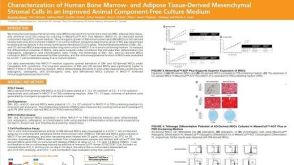 科学海报Characterization of Human Bone Marrow- and Adipose Tissue-Derived Mesenchymal Stromal Cells in an Improved Animal Component-Free Culture Medium
 沪公网安备31010102008431号