Inhibition of B cell receptor signaling induced by the human adenovirus species D E3/49K protein
IntroductionThe early transcription unit 3 (E3) of human adenoviruses (HAdVs) encodes several immunoevasins,including the E3/49K protein,which is unique for species D of HAdVs. It is expressed as surface transmembrane protein and shed. E3/49K of HAdV-D64 binds to the protein tyrosine phosphatase surface receptor CD45,thereby modulating activation of T and NK cells.MethodsConsidering that E3/49K represents the most polymorphic viral protein among species D HAdVs,we demonstrate here that all tested E3/49K orthologs bind to the immunologically important regulator CD45. Thus,this feature is conserved regardless of the pathological associations of the respective HAdV types.ResultsIt appeared that modulation of CD45 is a unique property restricted to HAdVs of species D. Moreover,E3/49K treatment inhibited B cell receptor (BCR) signaling and impaired BCR signal phenotypes. The latter were highly comparable to B cells having defects in the expression of CD45,suggesting E3/49K as a potential tool to investigate CD45 specific functions.ConclusionWe identified B cells as new direct target of E3/49K-mediated immune modulation,representing a novel viral immunosubversive mechanism.
View Publication
产品类型:
产品号#:
17954
17954RF
100-0971
产品名:
EasySep™人B细胞分选试剂盒
RoboSep™ 人B细胞分选试剂盒
EasySep™人B细胞分离试剂盒
B. R. Groveman et al. (Sep 2025)
NPJ dementia 1 1
Infecting human brain organoids with FFI or sCJD preserves prion traits regardless of host genotype
Prion diseases,such as sporadic Creutzfeldt-Jakob Disease (sCJD),are neurodegenerative disorders caused by misfolding of the prion protein (PrP). The D178N mutation in the PrP gene causes Fatal Familial Insomnia (FFI). Here we show that both sCJD and FFI prions can infect human cerebral organoids with or without the D178N mutation,and that the resulting infection is dictated by the inoculating prion and not the host organoid genotype.
View Publication
产品类型:
产品号#:
85850
85857
产品名:
mTeSR™1
mTeSR™1
R. I. McGeachan et al. (Apr 2025)
Nature Communications 16
Divergent actions of physiological and pathological amyloid-β on synapses in live human brain slice cultures
In Alzheimer’s disease,amyloid beta (Aβ) and tau pathology are thought to drive synapse loss. However,there is limited information on how endogenous levels of tau,Aβ and other biomarkers relate to patient characteristics,or how manipulating physiological levels of Aβ impacts synapses in living adult human brain. Using live human brain slice cultures,we report that Aβ 1-40 and tau release levels vary with donor age and brain region,respectively. Release of other biomarkers such as KLK-6,NCAM-1,and Neurogranin vary between brain region,while TDP-43 and NCAM-1 release is impacted by sex. Pharmacological manipulation of Aβ in either direction results in a loss of synaptophysin puncta,with increased physiological Aβ triggering potentially compensatory synaptic transcript changes. In contrast,treatment with Aβ-containing Alzheimer’s disease brain extract results in post-synaptic Aβ uptake and pre-synaptic puncta loss without affecting synaptic transcripts. These data reveal distinct effects of physiological and pathological Aβ on synapses in human brain tissue. Subject terms: Alzheimer's disease,Alzheimer's disease
View Publication
产品类型:
产品号#:
05790
产品名:
BrainPhys™神经元培养基
D. Barozzi et al. (Jul 2025)
Cell Reports Methods 5 7
Dynamic stimulation promotes functional tissue-like organization of a 3D human lymphoid microenvironment model in vitro
This work focused on generating a three-dimensional (3D) in vitro dynamic model to study chronic lymphocytic leukemia (CLL) cell dissemination,homing,and mechanisms of therapy resistance. We used a gelatin-based,hard porous biomaterial as a support matrix to develop 3D tissue-like models of the human lymph node and bone marrow,which were matured inside bioreactors under dynamic perfusion of medium. Comparing static and dynamic cultures of these 3D constructs revealed that perfusion promoted a tissue-like internal organization of cells,characterized by the expression of specific functional markers and deposition of an intricate extracellular matrix protein network. Recirculation of CLL cells within the dynamic system led to changes in leukemic cell behavior and in the expression of key markers involved in tumor progression. These findings suggest that the model is well suited for investigating the pathophysiological mechanisms of CLL and potentially other hematological malignancies.
View Publication
产品类型:
产品号#:
05448
产品名:
MesenCult™-ACF Plus培养试剂盒
Lemieux ME et al. (AUG 1997)
Experimental hematology 25 9 951--7
Differential ability of flt3-ligand, interleukin-11, and Steel factor to support the generation of B cell progenitors and myeloid cells from primitive murine fetal liver cells.
A variety of factors produced by stromal fibroblasts,including Flt3-ligand (FL),interleukin-11 (IL-11),Steel factor (SF),and IL-7,have been implicated in stimulating the production of pre-B cells and myeloid cells from primitive hematopoietic precursors. To investigate their relative roles in this process,either as single-acting or synergistic agents,we compared the yield and types of cells produced after 2 weeks from small numbers of Sca-1+ Lin- (i.e.,B220-,Ly-1-,Gr-1-,and Ter-119-) day 14.5 murine fetal liver cells placed in stromal cell-free cultures containing all possible combinations of FL,SF,IL-7,and IL-11. None of these factors alone supported the production (or survival) of any cells beyond 1 week: only pairs of factors consisting of either FL or SF plus either IL-11 or IL-7 were effective in this regard,with FL plus IL-11 being the most potent pair (approximately 7 x 10(4) cells obtained per 100 Sca-1+ Lin- input cells). The maximum numbers of cells were produced in the presence of FL,IL-11,and IL-7: these included both B220+ and Mac-1+/Gr-1+ cells (approximately 10(6) and approximately 2 x 10(5),respectively,per 100 Sca-1+ Lin- input cells). Both of these lineages were also obtained with each of the other possible three-factor combinations,albeit with variable effectiveness. Omission of either FL or IL-7 caused the greatest reduction in the yield of B220+ cells (approximately 130-fold and approximately 80-fold,respectively). Omission of IL-11 and,to a lesser extent,FL caused the greatest reduction in the yield of Mac-1+/Gr-1+ cells (approximately 90-fold and approximately 3-fold,respectively). When fetal calf serum was replaced with a defined serum substitute,the out put of B220+ cells remained the same but myelopoiesis was consistently enhanced (approximately 5- to 20-fold). These findings support a model involving factor redundancy in the extracellular signals required to stimulate the production and amplification of both lymphoid and myeloid cells from early Sca-1+ Lin- cells. They also reveal quantitative differences in the abilities of different competent factor combinations to promote this process,which may be further modulated by the presence of undefined serum components.
View Publication
S. Belluschi et al. ( 2018)
Nature communications 9 1 4100
Myelo-lymphoid lineage restriction occurs in the human haematopoietic stem cell compartment before lymphoid-primed multipotent progenitors.
Capturing where and how multipotency is lost is crucial to understand how blood formation is controlled. Blood lineage specification is currently thought to occur downstream of multipotent haematopoietic stem cells (HSC). Here we show that,in human,the first lineage restriction events occur within the CD19-CD34+CD38-CD45RA-CD49f+CD90+ (49f+) HSC compartment to generate myelo-lymphoid committed cells with no erythroid differentiation capacity. At single-cell resolution,we observe a continuous but polarised organisation of the 49f+ compartment,where transcriptional programmes and lineage potential progressively change along a gradient of opposing cell surface expression of CLEC9A and CD34. CLEC9AhiCD34lo cells contain long-term repopulating multipotent HSCs with slow quiescence exit kinetics,whereas CLEC9AloCD34hi cells are restricted to myelo-lymphoid differentiation and display infrequent but durable repopulation capacity. We thus propose that human HSCs gradually transition to a discrete lymphoid-primed state,distinct from lymphoid-primed multipotent progenitors,representing the earliest entry point into lymphoid commitment.
View Publication
产品类型:
产品号#:
22001
22005
22006
22007
22008
22009
22011
22012
产品名:
STEMvision™ 人脐带血7-天CFU分析包
STEMvision™ 彩色人脐带血14-天CFU分析包
STEMvision™ 彩色人骨髓14-天CFU分析包
STEMvision™ 彩色人动员外周血14-天CFU分析包
STEMvision™ 小鼠总CFU分析包
STEMvision™ 小鼠髓系CFU分析包
STEMvision™ 小鼠红系CFU分析包
STEMvision™ 小鼠CFU分析包(髓系和红系)
Ranga U et al. (MAR 2004)
Journal of virology 78 5 2586--90
Tat protein of human immunodeficiency virus type 1 subtype C strains is a defective chemokine.
Human immunodeficiency virus type 1 (HIV-1)-associated dementia (HAD) is correlated with increased monocyte migration to the brain,and the incidence of HAD among otherwise asymptomatic subjects appears to be lower in India than in the United States and Europe (1 to 2% versus 15 to 30%). Because of the genetic differences between HIV-1 strains circulating in these regions,we sought to identify viral determinants associated with this difference. We targeted Tat protein for these studies in view of its association with monocyte chemotactic function. Analyses of Tat sequences representing nine subtypes revealed that at least six amino acid residues are differentially conserved in subtype C Tat (C-Tat). Of these,cysteine (at position 31) was highly (textgreater99%) conserved in non-subtype C viruses and more than 90% of subtype C viruses encoded a serine. We hypothesized a compromised chemotactic function of C-Tat due to the disruption of CC motif and tested it with the wild type C-Tat (CS) and its two isogenic variants (CC and SC) derived by site-directed mutagenesis. We found that the CS natural variant was defective for monocyte chemotactic activity without a loss in the transactivation property. While the CC mutant is functionally competent for both the functions,in contrast,the SC mutant was defective in both. Therefore,the loss of the C-Tat chemotactic property may underlie the reduced incidence of HAD; although not presenting conclusive evidence,this study provides the first evidence for a potential epidemiologic phenomenon associated with biological differences in the subtype C viruses.
View Publication
产品类型:
产品号#:
15028
15068
产品名:
RosetteSep™ 人单核细胞富集抗体混合物
RosetteSep™人单核细胞富集抗体混合物
Masaki H et al. (NOV 2008)
Stem Cell Research 1 2 105--115
Heterogeneity of pluripotent marker gene expression in colonies generated in human iPS cell induction culture
Induction of pluripotent stem cells from human fibroblasts has been achieved by the ectopic expression of two different sets of four genes. However,the mechanism of the pluripotent stem cell induction has not been elucidated. Here we identified a marked heterogeneity in colonies generated by the four-gene (Oct3/4,Sox2,c-Myc,and Klf4) transduction method in human neonatal skin-derived cells. The four-gene transduction gave a higher probability of induction for archetypal pluripotent stem cell marker genes (Nanog,TDGF,and Dnmt3b) than for marker genes that are less specific for pluripotent stem cells (CYP26A1 and TERT) in primary induction culture. This tendency may reflect the molecular mechanism underlying the induction of human skin-derived cells into pluripotent stem cells. Among the colonies induced by the four-gene transduction,small cells with a high nucleus-to-cytoplasm ratio could be established by repeated cloning. Subsequently established cell lines were similar to human embryonic stem cells as well as human induced pluripotent stem (iPS) cells derived from adult tissue in morphology,gene expression,long-term self-renewal ability,and teratoma formation. Genome-wide single-nucleotide polymorphism array analysis of the human iPS cell line indicates that the induction process did not induce DNA mutation. ?? 2008 Elsevier B.V. All rights reserved.
View Publication
产品类型:
产品号#:
85850
85857
产品名:
mTeSR™1
mTeSR™1
A. Leonard et al. (MAY 2018)
Journal of molecular and cellular cardiology 118 147--158
Afterload promotes maturation of human induced pluripotent stem cell derived cardiomyocytes in engineered heart tissues.
Human induced pluripotent stem cell-derived cardiomyocytes (hiPSC-CM) grown in engineered heart tissue (EHT) can be used for drug screening,disease modeling,and heart repair. However,the immaturity of hiPSC-CMs currently limits their use. Because mechanical loading increases during development and facilitates cardiac maturation,we hypothesized that afterload would promote maturation of EHTs. To test this we developed a system in which EHTs are suspended between a rigid post and a flexible one,whose resistance to contraction can be modulated by applying braces of varying length. These braces allow us to adjust afterload conditions over two orders of magnitude by increasing the flexible post resistance from 0.09 up to 9.2 mu$N/mu$m. After three weeks in culture,optical tracking of post deflections revealed that auxotonic twitch forces increased in correlation with the degree of afterload,whereas twitch velocities decreased with afterload. Consequently,the power and work of the EHTs were maximal under intermediate afterloads. When studied isometrically,the inotropy of EHTs increased with afterload up to an intermediate resistance (0.45 mu$N/mu$m) and then plateaued. Applied afterload increased sarcomere length,cardiomyocyte area and elongation,which are hallmarks of maturation. Furthermore,progressively increasing the level of afterload led to improved calcium handling,increased expression of several key markers of cardiac maturation,including a shift from fetal to adult ventricular myosin heavy chain isoforms. However,at the highest afterload condition,markers of pathological hypertrophy and fibrosis were also upregulated,although the bulk tissue stiffness remained the same for all levels of applied afterload tested. Together,our results indicate that application of moderate afterloads can substantially improve the maturation of hiPSC-CMs in EHTs,while high afterload conditions may mimic certain aspects of human cardiac pathology resulting from elevated mechanical overload.
View Publication
产品类型:
产品号#:
85850
85857
产品名:
mTeSR™1
mTeSR™1
Titmarsh DM et al. ( 2016)
Scientific reports 6 April 24637
Induction of Human iPSC-Derived Cardiomyocyte Proliferation Revealed by Combinatorial Screening in High Density Microbioreactor Arrays.
Inducing cardiomyocyte proliferation in post-mitotic adult heart tissue is attracting significant attention as a therapeutic strategy to regenerate the heart after injury. Model animal screens have identified several candidate signalling pathways,however,it remains unclear as to what extent these pathways can be exploited,either individually or in combination,in the human system. The advent of human cardiac cells from directed differentiation of human pluripotent stem cells (hPSCs) now provides the ability to interrogate human cardiac biology in vitro,but it remains difficult with existing culture formats to simply and rapidly elucidate signalling pathway penetrance and interplay. To facilitate high-throughput combinatorial screening of candidate biologicals or factors driving relevant molecular pathways,we developed a high-density microbioreactor array (HDMA) - a microfluidic cell culture array containing 8100 culture chambers. We used HDMAs to combinatorially screen Wnt,Hedgehog,IGF and FGF pathway agonists. The Wnt activator CHIR99021 was identified as the most potent molecular inducer of human cardiomyocyte proliferation,inducing cell cycle activity marked by Ki67,and an increase in cardiomyocyte numbers compared to controls. The combination of human cardiomyocytes with the HDMA provides a versatile and rapid tool for stratifying combinations of factors for heart regeneration.
View Publication
产品类型:
产品号#:
85850
85857
产品名:
mTeSR™1
mTeSR™1
Balakrishnan SK et al. (AUG 2012)
PLoS ONE 7 8 e42424
Functional and molecular characterization of the role of CTCF in human embryonic stem cell biology.
The CCCTC-binding factor CTCF is the only known vertebrate insulator protein and has been shown to regulate important developmental processes such as imprinting,X-chromosome inactivation and genomic architecture. In this study,we examined the role of CTCF in human embryonic stem cell (hESC) biology. We demonstrate that CTCF associates with several important pluripotency genes,including NANOG,SOX2,cMYC and LIN28 and is critical for hESC proliferation. CTCF depletion impacts expression of pluripotency genes and accelerates loss of pluripotency upon BMP4 induced differentiation,but does not result in spontaneous differentiation. We find that CTCF associates with the distal ends and internal sites of the co-regulated 160 kb NANOG-DPPA3-GDF3 locus. Each of these sites can function as a CTCF-dependent enhancer-blocking insulator in heterologous assays. In hESCs,CTCF exists in multisubunit protein complexes and can be poly(ADP)ribosylated. Known CTCF cofactors,such as Cohesin,differentially co-localize in the vicinity of specific CTCF binding sites within the NANOG locus. Importantly,the association of some cofactors and protein PARlation selectively changes upon differentiation although CTCF binding remains constant. Understanding how unique cofactors may impart specialized functions to CTCF at specific genomic locations will further illuminate its role in stem cell biology.
View Publication


 EasySep™小鼠TIL(CD45)正选试剂盒




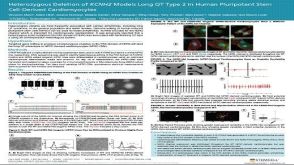 科学海报Heterozygous Deletion of KCNH2 Models Long QT Type 2 in Human Pluripotent Stem Cell-Derived Cardiomyocytes
 沪公网安备31010102008431号