McCabe KL et al. (DEC 2015)
PloS one 10 12 e0145266
Efficient Generation of Human Embryonic Stem Cell-Derived Corneal Endothelial Cells by Directed Differentiation.
AIM To generate human embryonic stem cell derived corneal endothelial cells (hESC-CECs) for transplantation in patients with corneal endothelial dystrophies. MATERIALS AND METHODS Feeder-free hESC-CECs were generated by a directed differentiation protocol. hESC-CECs were characterized by morphology,expression of corneal endothelial markers,and microarray analysis of gene expression. RESULTS hESC-CECs were nearly identical morphologically to primary human corneal endothelial cells,expressed Zona Occludens 1 (ZO-1) and Na+/K+ATPase$\$1 (ATPA1) on the apical surface in monolayer culture,and produced the key proteins of Descemet's membrane,Collagen VIII$\$1 and VIII$\$2 (COL8A1 and 8A2). Quantitative PCR analysis revealed expression of all corneal endothelial pump transcripts. hESC-CECs were 96% similar to primary human adult CECs by microarray analysis. CONCLUSION hESC-CECs are morphologically similar,express corneal endothelial cell markers and express a nearly identical complement of genes compared to human adult corneal endothelial cells. hESC-CECs may be a suitable alternative to donor-derived corneal endothelium.
View Publication
产品类型:
产品号#:
05850
05857
05870
05875
85850
85857
85870
85875
产品名:
mTeSR™1
mTeSR™1
Raju R et al. (FEB 2017)
Stem cells and development 26 4 274--284
Cell Expansion During Directed Differentiation of Stem Cells Toward the Hepatic Lineage.
The differentiation of human pluripotent stem cells toward the hepatocyte lineage can potentially provide an unlimited source of functional hepatocytes for transplantation and extracorporeal bioartificial liver applications. It is anticipated that the quantities of cells needed for these applications will be in the order of 10(9)-10(10) cells,because of the size of the liver. An ideal differentiation protocol would be to enable directed differentiation to the hepatocyte lineage with simultaneous cell expansion. We introduced a cell expansion stage after the commitment of human embryonic stem cells to the endodermal lineage,to allow for at least an eightfold increase in cell number,with continuation of cell maturation toward the hepatocyte lineage. The progressive changes in the transcriptome were measured by expression array,and the expression dynamics of certain lineage markers was measured by mass cytometry during the differentiation and expansion process. The findings revealed that while cells were expanding they were also capable of progressing in their differentiation toward the hepatocyte lineage. In addition,our transcriptome,protein and functional studies,including albumin secretion,drug-induced CYP450 expression and urea production,all indicated that the hepatocyte-like cells obtained with or without cell expansion are very similar. This method of simultaneous cell expansion and hepatocyte differentiation should facilitate obtaining large quantities of cells for liver cell applications.
View Publication
产品类型:
产品号#:
05850
05857
05870
05875
85850
85857
85870
85875
产品名:
mTeSR™1
mTeSR™1
Ma R et al. (FEB 2017)
Thyroid : official journal of the American Thyroid Association 27 2 292--299
TAZ Induction Directs Differentiation of Thyroid Follicular Cells from Human Embryonic Stem Cells.
OBJECTIVE The differentiation program for human thyroid follicular cells (TFCs) relies on the interplay between sequence-specific transcription factors and transcriptional co-regulators. Transcriptional co-activator with PDZ-binding motif (TAZ) is a co-activator that regulates several transcription factors,including PAX8 and NKX2-1,which play a central role in thyroid-specific gene transcription. TAZ and PAX8/NKX2-1 are co-expressed in the nuclei of thyroid cells,and TAZ interacts directly with both PAX8 and NKX2-1,leading to their enhanced transcriptional activity on the thyroglobulin (TG) promoter and additional genes. METHODS The use of a small molecule,ethacridine,recently identified as a TAZ activator,in the differentiation of thyroid cells from human embryonic stem (hES) cells was studied. First,endodermal cells were derived from hES cells using Activin A,followed by induction of differentiation into thyroid cells directed by ethacridine and thyrotropin (TSH). RESULTS The expression of TAZ was increased in the Activin A-derived endodermal cells by ethacridine in a dose-dependent manner and followed by increases in PAX8 and NKX2-1 when assessed by both quantitative polymerase chain reaction and immunostaining. Following further differentiation with the combination of ethacridine and TSH,the thyroid-specific genes TG,TPO,TSHR,and NIS were all induced in the differentiated hES cells. When these cells were cultured with extracellular matrix-coated dishes,thyroid follicle formation and abundant TG protein expression were observed. Furthermore,such hES cell-derived thyroid follicles showed a marked TSH-induced and dose-dependent increase in radioiodine uptake and protein-bound iodine accumulation. CONCLUSION These data show that fully functional human thyroid cells can be derived from hES cells using ethacridine,a TAZ activator,which induces thyroid-specific gene expression and promotes thyroid cell differentiation from the hES cells. These studies again demonstrate the importance of transcriptional regulation in thyroid cell development. This approach also yields functional human thyrocytes,without any gene transfection or complex culture conditions,by directly manipulating the transcriptional machinery without interfering with intermediate signaling events.
View Publication
产品类型:
产品号#:
05850
05857
05870
05875
85850
85857
85870
85875
产品名:
mTeSR™1
mTeSR™1
Swartz EW et al. (NOV 2016)
STEM CELLS Translational Medicine 5 11 1461--1472
A Novel Protocol for Directed Differentiation of C9orf72-Associated Human Induced Pluripotent Stem Cells Into Contractile Skeletal Myotubes
Induced pluripotent stem cells (iPSCs) offer an unlimited resource of cells to be used for the study of underlying molecular biology of disease,therapeutic drug screening,and transplant-based regenerative medicine. However,methods for the directed differentiation of skeletal muscle for these purposes remain scarce and incomplete. Here,we present a novel,small molecule-based protocol for the generation of multinucleated skeletal myotubes using eight independent iPSC lines. Through combinatorial inhibition of phosphoinositide 3-kinase (PI3K) and glycogen synthase kinase 3β (GSK3β) with addition of bone morphogenic protein 4 (BMP4) and fibroblast growth factor 2 (FGF2),we report up to 64% conversion of iPSCs into the myogenic program by day 36 as indicated by MYOG+ cell populations. These cells began to exhibit spontaneous contractions as early as 34 days in vitro in the presence of a serum-free medium formulation. We used this protocol to obtain iPSC-derived muscle cells from frontotemporal dementia (FTD) patients harboring C9orf72 hexanucleotide repeat expansions (rGGGGCC),sporadic FTD,and unaffected controls. iPSCs derived from rGGGGCC carriers contained RNA foci but did not vary in differentiation efficiency when compared to unaffected controls nor display mislocalized TDP-43 after as many as 120 days in vitro. This study presents a rapid,efficient,and transgene-free method for generating multinucleated skeletal myotubes from iPSCs and a resource for further modeling the role of skeletal muscle in amyotrophic lateral sclerosis and other motor neuron diseases. SIGNIFICANCE Protocols to produce skeletal myotubes for disease modeling or therapy are scarce and incomplete. The present study efficiently generates functional skeletal myotubes from human induced pluripotent stem cells using a small molecule-based approach. Using this strategy,terminal myogenic induction of up to 64% in 36 days and spontaneously contractile myotubes within 34 days were achieved. Myotubes derived from patients carrying the C9orf72 repeat expansion show no change in differentiation efficiency and normal TDP-43 localization after as many as 120 days in vitro when compared to unaffected controls. This study provides an efficient,novel protocol for the generation of skeletal myotubes from human induced pluripotent stem cells that may serve as a valuable tool in drug discovery and modeling of musculoskeletal and neuromuscular diseases.
View Publication
Evaluation of the respiratory syncytial virus G-directed neutralizing antibody response in the human airway epithelial cell model.
Human respiratory syncytial virus (RSV) is a major cause of serious respiratory tract infections in infants and the elderly. Recently it was shown that the RSV G glycoprotein mediates attachment to cells using CX3CR1 as a receptor,and that G-specific neutralizing antibodies can be detected using human airway epithelial (HAE) cell cultures. To investigate the contributions of G-specific antibodies to RSV neutralization,we performed HAE neutralization assays on sera from RSV G-immunized mice or RSV-infected infants. We confirmed that G-specific neutralization using serum from mice or humans could only be detected on HAE cultures. We also found that RSV G-specific antibodies in infants were either subgroup specific or cross-neutralizing. Altogether,our results suggest that G is an important target for generating neutralizing antibodies and would be beneficial to include in an RSV vaccine. Further,inclusion of G antigens from both RSV subgroups may enhance the vaccine cross protection potency.
View Publication
F. Stehle et al. ( 2013)
The Journal of Biological Chemistry 288 16334-16347
Reduced immunosuppressive properties of axitinib in comparison with other tyrosine kinase inhibitors
The multikinase inhibitors sunitinib,sorafenib,and axitinib have an impact not only on tumor growth and angiogenesis,but also on the activity and function of immune effector cells. In this study,a comparative analysis of the growth inhibitory properties and apoptosis induction potentials of tyrosine kinase inhibitors on T cells was performed. Tyrosine kinase inhibitor treatment resulted in a dramatic decrease in T cell proliferation along with distinct impacts on the cell cycle progression. This was at least partially associated with an enhanced induction of apoptosis although triggered by distinct apoptotic mechanisms. In contrast to sunitinib and sorafenib,axitinib did not affect the mitochondrial membrane potential but resulted in an induction or stabilization of the induced myeloid leukemia cell differentiation protein (Mcl-1),leading to an irreversible arrest in the G2/M cell cycle phase and delayed apoptosis. Furthermore,the sorafenib-mediated suppression of immune effector cells,in particular the reduction of the CD8(+) T cell subset along with the down-regulation of key immune cell markers such as chemokine CC motif receptor 7 (CCR7),CD26,CD69,CD25,and CXCR3,was not observed in axitinib-treated immune effector cells. Therefore,axitinib rather than sorafenib seems to be suitable for implementation in complex treatment regimens of cancer patients including immunotherapy.
View Publication


 EasySep™小鼠TIL(CD45)正选试剂盒




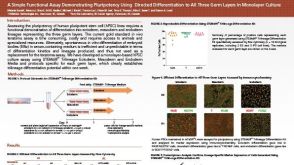 科学海报A Simple Functional Assay Demonstrating Pluripotency Using Directed Differentiation to All Three Germ Layers in Monolayer Culture
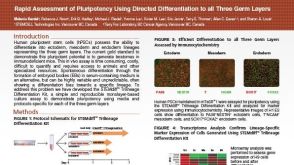 科学海报Rapid Assessment of Pluripotency Using Directed Differentiation to all Three Germ Layers
 科学海报Quick and Easy Isolation of Immune Cells From Large-Volume Samples



 沪公网安备31010102008431号