Vieillard V et al. (AUG 2005)
Proceedings of the National Academy of Sciences 102 31 10981--86
NK cytotoxicity against CD4+ T cells during HIV-1 infection: A gp41 peptide induces the expression of an NKp44 ligand
HIV infection leads to a state of chronic immune activation and progressive deterioration in immune function,manifested most recognizably by the progressive depletion of CD4+ T cells. A substantial percentage of natural killer (NK) cells from patients with HIV infection are activated and express the natural cytotoxicity receptor (NCR) NKp44. Here we show that a cellular ligand for NKp44 (NKp44L) is expressed during HIV-1 infection and is correlated with both the progression of CD4+ T cell depletion and the increase of viral load. CD4+ T cells expressing this ligand are highly sensitive to the NK lysis activity mediated by NKp44+ NK cells. The expression of NKp44L is induced by the linear motif NH2-SWSNKS-COOH of the HIV-1 envelope gp41 protein. This highly conserved motif appears critical to the sharp increase in NK lysis of CD4+ T cells from HIV-infected patients. These studies strongly suggest that induction of NKp44L plays a key role in the lysis of CD4+ T cells by activated NK cells in HIV infection and consequently provide a framework for considering how HIV-1 may use NK cell immune surveillance to trigger CD4+ T cells. Understanding this mechanism may help to develop future therapeutic strategies and vaccines against HIV-1 infection.
View Publication
产品类型:
产品号#:
03800
03801
03802
03803
03804
03805
03806
05150
15021
15061
产品名:
ClonaCell™-HY 杂交瘤试剂盒
ClonaCell™-HY Medium
ClonaCell™-HY Medium
ClonaCell™-HY Medium
ClonaCell™-HY Medium
ClonaCell™-HY Medium
ClonaCell™-HY PEG (融合)
MyeloCult™H5100
RosetteSep™人T细胞富集抗体混合物
RosetteSep™人T细胞富集抗体混合物
Neves H et al. (MAY 2006)
Stem cells (Dayton,Ohio) 24 5 1328--37
Effects of Delta1 and Jagged1 on early human hematopoiesis: correlation with expression of notch signaling-related genes in CD34+ cells.
It has been shown that Notch signaling mediated by ligands of both Jagged and Delta families expands the hematopoietic stem cell compartment while blocking or delaying terminal myeloid differentiation. Here we show that Delta1- and Jagged1-expressing stromal cells have distinct effects on the clonogenic and differentiation capacities of human CD34(+) CD38(+) cells. Jagged1 increases the number of bipotent colony-forming unit-granulocyte macrophage (CFU-GM) and unipotent progenitors (CFU-granulocytes and CFU-macrophages),without quantitatively affecting terminal cell differentiation,whereas Delta1 reduces the number of CFU-GM and differentiated monocytic cells. Expression analysis of genes coding for Notch receptors,Notch targets,and Notch signaling modulators in supernatant CD34(+) cells arising upon contact with Jagged1 and Delta1 shows dynamic and differential gene expression profiles over time. At early time points,modest upregulation of Notch1,Notch3,and Hes1 was observed in Jagged1-CD34(+) cells,whereas those in contact with Delta1 strikingly upregulated Notch3 and Hes1. Later,myeloid progenitors with strong clonogenic potential emerging upon contact with Jagged1 upregulated Notch1 and Deltex and downregulated Notch signaling modulators,whereas T/NK progenitors originated by Delta1 strikingly upregulated Notch3 and Deltex and,to a lesser extent,Hes1,Lunatic Fringe,and Numb. Together,the data unravel previously unrecognized expression patterns of Notch signaling-related genes in CD34(+) CD38(+) cells as they develop in Jagged1- or Delta1-stromal cell environments,which appear to reflect sequential maturational stages of CD34(+) cells into distinct cell lineages.
View Publication
产品类型:
产品号#:
04435
04445
产品名:
MethoCult™H4435富集
MethoCult™H4435富集
Sioud M et al. (DEC 2006)
Journal of molecular biology 364 5 945--54
Signaling through toll-like receptor 7/8 induces the differentiation of human bone marrow CD34+ progenitor cells along the myeloid lineage.
Toll-like receptors (TLRs) play a key role in pathogen recognition and regulation of the innate and adaptive immune responses. Although TLR expression and signaling have been investigated in blood cells,it is currently unknown whether their bone marrow ancestors express TLRs and respond to their ligands. Here we found that TLRs (e.g. TLR4,TLR7 and TLR8) were expressed by freshly isolated human bone marrow (BM) hematopoietic CD34+ progenitor cells. Incubation of these primitive cells with TLR ligands such as immunostimulatory small interfering RNAs and R848,a specific ligand for TLR7/8,induced cytokine production (e.g. IL1-beta,IL6,IL8,TNF-alpha,GM-CSF). Moreover,TLR7/8 signaling induced the differentiation of BM CD34+ progenitors into cells with the morphology of macrophages and monocytic dendritic precursors characterized by the expression of CD13,CD14 and/or CD11c markers. By contrast,R848 ligand did not induce the expression of glycophorin A,an early marker for erythropoiesis. Collectively,the data indicate for the first time that human BM CD34+ progenitor cells constitutively express functional TLR7/TLR8,whose ligation can induce leukopoiesis without the addition of any exogenous cytokines. Thus,TLR signaling may regulate BM cell development in humans.
View Publication
产品类型:
产品号#:
73782
73784
产品名:
R848
R848
Bruserud &O et al. (MAR 2007)
Haematologica 92 3 332--41
Subclassification of patients with acute myelogenous leukemia based on chemokine responsiveness and constitutive chemokine release by their leukemic cells.
BACKGROUND AND OBJECTIVES: Chemokines are soluble mediators involved in angiogenesis,cellular growth control and immunomodulation. In the present study we investigated the effects of various chemokines on proliferation of acute myelogenous leukemia (AML) cells and constitutive chemokine release by primary AML cells. DESIGN AND METHODS: Native human AML cells derived from 68 consecutive patients were cultured in vitro. We investigated AML cell proliferation (3H-thymidine incorporation,colony formation),chemokine receptor expression,constitutive chemokine release and chemotaxis of normal peripheral blood mononuclear cells. RESULTS: Exogenous chemokines usually did not have any effect on AML blast proliferation in the absence of hematopoietic growth factors,but when investigating growth factor-dependent (interleukin 3 + granulocyte-macrophage colony-stimulating factor + stem cell factor) proliferation in suspension cultures the following patient subsets were identified: (i) patients whose cells showed chemokine-induced growth enhancement (8 patients); (ii) divergent effects on proliferation (15 patients); and (iii) no effect (most patients). These patient subsets did not differ in chemokine receptor expression,but,compared to CD34- AML cells,CD34+ cells showed higher expression of several receptors. Chemokines also increased the proliferation of clonogenic AML cells from the first subset of patients. Furthermore,a broad constitutive chemokine release profile was detected for most patients,and the following chemokine clusters could be identified: CCL2-4/CXCL1/8,CCL5/CXCL9-11 (possibly also CCL23) and CCL13/17/22/24/CXCL5 (possibly also CXCL6). Only the CCL2-4/CXCL1/8 cluster showed significant correlations between corresponding mRNA levels and NFkB levels/activation. The chemotaxis of normal immunocompetent cells for patients without constitutive chemokine release was observed to be decreased. INTERPRETATION AND CONCLUSIONS: Differences in chemokine responsiveness as well as chemokine release contribute to patient heterogeneity in AML. Patients with AML can be classified into distinct subsets according to their chemokine responsiveness and chemokine release profile.
View Publication
产品类型:
产品号#:
04434
04444
09600
09650
产品名:
MethoCult™H4434经典
MethoCult™H4434经典
StemSpan™ SFEM
StemSpan™ SFEM
Ran D et al. (DEC 2009)
Experimental hematology 37 12 1423--34
Aldehyde dehydrogenase activity among primary leukemia cells is associated with stem cell features and correlates with adverse clinical outcomes.
OBJECTIVE: Animal models have provided evidence for the existence of leukemia stem cells (LSC). However,prospective isolation of human LSC from patients with acute myeloid leukemia (AML),as well as the assessment of their clinical significance,has remained a major challenge. MATERIALS AND METHODS: We have studied the functional characteristics of a subset of leukemia cells that expressed CD34 and high aldehyde dehydrogenase activity (ALDH(br)),which was freshly isolated from the mononuclear cells at the time of diagnosis from the marrow of 68 consecutive patients suffering from AML. RESULTS: The percentage of ALDH(br) cells ranged from 0.01% to 16.0% with a median of 0.5%. Compared to their counterparts with low aldehyde dehydrogenase activity from the same individual patients,the ALDH(br) population showed a significantly higher affinity to human mesenchymal stromal cells (n=12; ptextless0.01),a more than twofold higher proportion of slow-dividing and quiescent cells (n=4; ptextless0.05),higher numbers of long-term culture-initiating cell colonies in vitro (n=25; ptextless0.01),and an enhanced engraftment in the nonobese diabetic/severe combined immunodeficient mouse model (n=3; ptextless0.05). Above all,we found that the frequency of ALDH(br) cells correlated significantly with diminished survival probability (p=0.025) and with adverse cytogenetic factors (ptextless0.05). CONCLUSION: A small proportion of leukemia cells derived from the marrow of patients with AML were ALDH(br) and CD34(+). They demonstrated functional characteristics of LSC and high percentages of these cells among the leukemia cells correlated significantly with poor clinical outcome.
View Publication
产品类型:
产品号#:
01700
01702
01705
产品名:
ALDEFLUOR™ 试剂盒
ALDEFLUOR™测定缓冲液
ALDEFLUOR™ DEAB试剂
Valencic E et al. (APR 2010)
Cytotherapy 12 2 154--60
The immunosuppressive effect of Wharton's jelly stromal cells depends on the timing of their licensing and on lymphocyte activation.
BACKGROUND: Mesenchymal stromal cells (MSC) have been proven to have potent immunosuppressive action and hence have been proposed for the treatment of severe Graft Versus Host Disease. However,in most models,MSC were added at the same time of lymphocyte stimulation,which is quite different from what occurs in vivo. AIMS: To investigate how the timing of lymphocyte activation and the exposure to activation-related cytokines (licensing) can influence the immunosuppressive action of Wharton's jelly stromal cells (WJSC). METHODS: WJSC,licensed or not with activation-related cytokines,were added lymphocytes the same time or 24 hours after their stimulation with phytohaemoagglutinin. Proliferation of lymphocytes and cytokines production was measured after three days co-culture. RESULTS: Lymphocytes stimulated in the presence of WJSC displayed a dramatic decrease in proliferation and production of cytokines,in spite of normal expression of activation markers. The suppression was weakened when targeted lymphocytes were seperated by a membrane and partially rescued by the addition of exogenous l-tryptophan,suggesting a major role for indoleamine 2,3-dioxigenase with a probable paracrine effect. Licensing of WJSC increased the immunosuppressive effect,in both contact and non-contact settings. The timing of WJSC licensing was crucial for the immunosuppressive action. Lymphocytes pre-stimulated alone for 24 h,and added afterwards to non-licensed WJSC,showed normal or even increased proliferation. On the other hand,their proliferation was strongly inhibited by licensed WJSC. CONCLUSIONS: WJSC have a potent immunosuppressive function best realized with direct contact,and increased by licensing signals before and during lymphocyte stimulation. Our results could contribute to the set up of new WJSC-based therapies for severe autoimmuno disorders.
View Publication
产品类型:
产品号#:
产品名:
Valera E et al. (JAN 2010)
PLoS ONE 5 6 e11167
BMP-2/6 heterodimer is more effective than BMP-2 or BMP-6 homodimers as inductor of differentiation of human embryonic stem cells
Bone Morphogenetic Protein (BMP) signaling pathways are involved in differentiation of stem cells into diverse cell types,and thus BMPs can be used as main guidance molecules for in vitro differentiation of human stem cells.
View Publication
产品类型:
产品号#:
85850
85857
产品名:
mTeSR™1
mTeSR™1
Yañ et al. (NOV 2010)
Experimental cell research 316 19 3109--23
Prostaglandin E2 plays a key role in the immunosuppressive properties of adipose and bone marrow tissue-derived mesenchymal stromal cells.
Mesenchymal stromal cells (MSCs) have important immunosuppressive properties,but the mechanisms and soluble factors involved in these effects remain unclear. We have studied prostaglandin-E2 (PGE2) as a possible candidate implied in adipose tissue-derived MSCs (Ad-MSCs) immunosuppressive properties over dendritic cells and T lymphocytes,compared to bone marrow derived MSCs (BM-MSCs). We found that both MSCs inhibited the maturation of myeloid-DCs and plasmocytoid-DCs. High levels of PGE2 were detected in DCs/MSCs co-cultures. Its blockade with indomethacin (IDM) allowed plasmocytoid-DCs but not myeloid-DCs maturation. Additionally,high levels of PGE2 were found in co-cultures in which Ad-MSCs or BM-MSCs inhibited activated T cells proliferation and pro-inflammatory cytokines production. PGE2 blockade by IDM preserved T lymphocytes proliferation but did not restore the pro-inflammatory cytokines secretion. However,an increased expression of transcription factors and cytokines genes involved in the Th1/Th2 differentiation pathway was detected in the T cells co-cultured with Ad-MSCs,but not with BM-MSCs. In conclusion,we propose that PGE2 is a soluble factor mediating most of the immunosuppressive effects of Ad-MSCs and BM-MSCs over p-DCs maturation and activated T lymphocytes proliferation and cytokine secretion.
View Publication
产品类型:
产品号#:
05401
05402
05411
产品名:
MesenCult™ MSC基础培养基 (人)
MesenCult™ MSC 刺激补充剂(人)
MesenCult™ 增殖试剂盒(人)
Rizzino A (SEP 2010)
Regenerative medicine 5 5 799--807
Stimulating progress in regenerative medicine: improving the cloning and recovery of cryopreserved human pluripotent stem cells with ROCK inhibitors.
Until recently,culturing human pluripotent stem cells was hampered by three prominent technical problems: a high degree of unwanted cellular stress when the cells are passaged,unacceptably low cloning efficiency and poor recovery of cryopreserved stocks. This review discusses recent developments that address these problems. A major focus of the review is the use of p160 Rho-associated coiled-coil kinase inhibitors for improving both the cloning efficiency and the recovery of cryopreserved human embryonic stem cells and human induced pluripotent stem cells. An underlying theme of this review is that the three problems have a common cause: separation of human pluripotent stem cells from one another increases cellular stress,which greatly decreases their viability unless special steps are taken.
View Publication
产品类型:
产品号#:
85850
85857
产品名:
mTeSR™1
mTeSR™1
Stadtfeld M et al. (APR 2012)
Nature genetics 44 4 398--405,S1--2
Ascorbic acid prevents loss of Dlk1-Dio3 imprinting and facilitates generation of all-iPS cell mice from terminally differentiated B cells.
The generation of induced pluripotent stem cells (iPSCs) often results in aberrant epigenetic silencing of the imprinted Dlk1-Dio3 gene cluster,compromising the ability to generate entirely iPSC-derived adult mice ('all-iPSC mice'). Here,we show that reprogramming in the presence of ascorbic acid attenuates hypermethylation of Dlk1-Dio3 by enabling a chromatin configuration that interferes with binding of the de novo DNA methyltransferase Dnmt3a. This approach allowed us to generate all-iPSC mice from mature B cells,which have until now failed to support the development of exclusively iPSC-derived postnatal animals. Our data show that transcription factor-mediated reprogramming can endow a defined,terminally differentiated cell type with a developmental potential equivalent to that of embryonic stem cells. More generally,these findings indicate that culture conditions during cellular reprogramming can strongly influence the epigenetic and biological properties of the resultant iPSCs.
View Publication
产品类型:
产品号#:
72132
产品名:
抗坏血酸(Ascorbic Acid)
Fabian I et al. (JAN 1987)
Leukemia research 11 7 635--40
In-vitro growth and differentiation of marrow cells from myelodysplastic patients in the presence of a retinoidal benzoic acid derivative.
The proliferation and differentiation effects of the synthetic retinoid TTNPB and of 13-cis retinoic acid (RA) on hemopoietic progenitors from bone marrow of myelodysplastic syndrome (MDS) patients were compared. The addition of TTNPB or RA to culture plates containing MDS patient's marrow cells stimulated myeloid colony (CFU-C) growth and caused a significant increase in granulocytic colonies (CFU-G). In the presence of RA the increase in CFU-G was statistically insignificant. Cellular differentiation studies in liquid suspension culture revealed that the two retinoic acid analogues cause a marked decrease in immature granulocytes and an increase in mature granulocytes. There was further an increase in the number of cells that reacted positively with monoclonal antibodies (McAb) binding specifically to granulocytes (B4,3,B13,9 and Leu M4) and a decrease in the percentage of cells reacting with the McAb against Ia-like determinants. These findings indicate that TTNPB is as active as RA in stimulating the growth of hemopoietic progenitors from MDS patients and in enhancing granulocytic differentiation in liquid culture.
View Publication


 EasySep™小鼠TIL(CD45)正选试剂盒




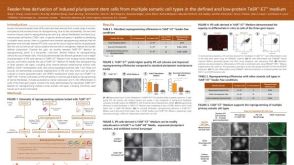 科学海报Feeder-Free Derivation of Induced Pluripotent Stem Cells from Multiple Somatic Cell Types in the Defined and Low-Protein TeSR™-E7™ Medium

 沪公网安备31010102008431号