Xia G et al. (JUN 2015)
Stem cells (Dayton,Ohio) 33 6 1829--38
Genome modification leads to phenotype reversal in human myotonic dystrophy type 1 induced pluripotent stem cell-derived neural stem cells.
Myotonic dystrophy type 1 (DM1) is caused by expanded CTG repeats in the 3'-untranslated region (3' UTR) of the DMPK gene. Correcting the mutation in DM1 stem cells would be an important step toward autologous stem cell therapy. The objective of this study is to demonstrate in vitro genome editing to prevent production of toxic mutant transcripts and reverse phenotypes in DM1 stem cells. Genome editing was performed in DM1 neural stem cells (NSCs) derived from human DM1 induced pluripotent stem (iPS) cells. An editing cassette containing SV40/bGH polyA signals was integrated upstream of the CTG repeats by TALEN-mediated homologous recombination (HR). The expression of mutant CUG repeats transcript was monitored by nuclear RNA foci,the molecular hallmarks of DM1,using RNA fluorescence in situ hybridization. Alternative splicing of microtubule-associated protein tau (MAPT) and muscleblind-like (MBNL) proteins were analyzed to further monitor the phenotype reversal after genome modification. The cassette was successfully inserted into DMPK intron 9 and this genomic modification led to complete disappearance of nuclear RNA foci. MAPT and MBNL 1,2 aberrant splicing in DM1 NSCs were reversed to normal pattern in genome-modified NSCs. Genome modification by integration of exogenous polyA signals upstream of the DMPK CTG repeat expansion prevents the production of toxic RNA and leads to phenotype reversal in human DM1 iPS-cells derived stem cells. Our data provide proof-of-principle evidence that genome modification may be used to generate genetically modified progenitor cells as a first step toward autologous cell transfer therapy for DM1.
View Publication
产品类型:
产品号#:
05833
05835
05839
产品名:
STEMdiff™神经前体细胞培养基
STEMdiff™ 神经诱导培养基
STEMdiff™ 神经诱导培养基
N. J. Ronaghan et al. ( 2022)
PloS one 17 10 e0276013
M1-like, but not M0- or M2-like, macrophages, reduce RSV infection of primary bronchial epithelial cells in a media-dependent fashion.
Respiratory syncytial virus (RSV) is a common childhood infection that in young infants can progress into severe bronchiolitis and pneumonia. Disease pathogenesis results from both viral mediated and host immune processes of which alveolar macrophages play an important part. Here,we investigated the role of different types of alveolar macrophages on RSV infection using an in vitro co-culture model involving primary tissue-derived human bronchial epithelial cells (HBECs) and human blood monocyte-derived M0-like,M1-like,or M2-like macrophages. It was hypothesized that the in vitro model would recapitulate previous in vivo findings of a protective effect of macrophages against RSV infection. It was found that macrophages maintained their phenotype for the 72-hour co-culture time period and the bronchial epithelial cells were unaffected by the macrophage media. HBEC infection with RSV was decreased by M1-like macrophages but enhanced by M0- or M2-like macrophages. The medium used during the co-culture also impacted the outcome of the infection. This work demonstrates that alveolar macrophage phenotypes may have differential roles during epithelial RSV infection,and demonstrates that an in vitro co-culture model could be used to further investigate the roles of macrophages during bronchial viral infection.
View Publication
产品类型:
产品号#:
05040
100-1079
19359
100-0697
19359RF
产品名:
PneumaCult™-Ex Plus 培养基
EasySep™ 总核酸提取试剂盒
EasySep™人单核细胞分选试剂盒
EasySep™人单核细胞分选试剂盒
RoboSep™ 人单核细胞分选试剂盒
P. Singh et al. (feb 2022)
Stem cell research & therapy 13 1 60
Additional evidence to support OCT-4 positive VSELs and EnSCs as the elusive tissue-resident stem/progenitor cells in adult mice uterus.
OBJECTIVE True identity and specific set of markers to enrich endometrial stem cells still remains elusive. Present study was undertaken to further substantiate that very small embryonic-like stem cells (VSELs) are the true and elusive stem cells in adult mice endometrium. METHODS This was achieved by undertaking three sets of experiments. Firstly,SSEA-1+ and Oct-4??+??positive VSELs,sorted from GFP mice,were transplanted into the uterine horns of wild-type Swiss mice and GFP uptake was studied within the same estrus cycle. Secondly,uterine lumen was scratched surgically and OCT-4 expressing stem/progenitor cells were studied at the site of injury after 24-72 h. Thirdly,OCT-4????expression was studied in the endometrium and myometrium of adult mice after neonatal exposure to estradiol (20 µg/pup/day on days 5-7 after birth). RESULTS GFP??+??ve VSELs expressing SSEA-1 and Oct-4 engrafted and differentiated into the epithelial cells lining the lumen as well as the glands during the estrus stage when maximum remodeling occurs. Mechanical scratching activated tissue-resident,nuclear OCT-4 positive VSELs and slightly bigger 'progenitors' endometrial stem cells (EnSCs,cytoplasmic OCT-4) which underwent clonal expansion and further differentiated into luminal and glandular epithelial cells. Neonatal exposure to endocrine disruption resulted in increased numbers of OCT-4 positive VSELs/EnSCs in adult endometrium. DISCUSSION Results support the presence of functionally active VSELs in adult endometrium. VSELs self-renew and give rise to EnSCs that further differentiate into epithelial cells under normal physiological conditions. Also,VSELs are vulnerable to endocrine insults. To conclude VSELs are true and elusive uterine stem cells that maintain life-long uterine homeostasis and their dysregulation may result in various pathologies.
View Publication
产品类型:
产品号#:
20144
产品名:
EasySep™缓冲液
(Sep 2024)
eBioMedicine 108 3
Global and single-cell proteomics view of the co-evolution between neural progenitors and breast cancer cells in a co-culture model
SummaryBackgroundPresence of nerves in tumours,by axonogenesis and neurogenesis,is gaining increased attention for its impact on cancer initiation and development,and the new field of cancer neuroscience is emerging. A recent study in prostate cancer suggested that the tumour microenvironment may influence cancer progression by recruitment of Doublecortin (DCX)-expressing neural progenitor cells (NPCs). However,the presence of such cells in human breast tumours has not been comprehensively explored.MethodsHere,we investigate the presence of DCX-expressing cells in breast cancer stromal tissue from patients using Imaging Mass Cytometry. Single-cell analysis of 372,468 cells across histopathological images of 107 breast cancers enabled spatial resolution of neural elements in the stromal compartment in correlation with clinicopathological features of these tumours. In parallel,we established a 3D in vitro model mimicking breast cancer neural progenitor-innervation and examined the two cell types as they co-evolved in co-culture by using mass spectrometry-based global proteomics.FindingsStromal presence of DCX + cells is associated with tumours of higher histological grade,a basal-like phenotype,and shorter patient survival in tumour tissue from patients with breast cancer. Global proteomics analysis revealed significant changes in the proteomic landscape of both breast cancer cells and neural progenitors in co-culture.InterpretationThese results support that neural involvement plays an active role in breast cancer and warrants further studies on the relevance of nerve elements for tumour progression.FundingThis work was supported by the 10.13039/501100005416Research Council of Norway through its Centre of Excellence funding scheme,project number 223250 (to L.A.A),the 10.13039/100008730Norwegian Cancer Society (to L.A.A. and H.V.),the Regional Health Trust Western Norway (Helse Vest) (to L.A.A.),the 10.13039/501100008728Meltzer Research Fund (to H.V.) and the 10.13039/100000002National Institutes of Health (NIH)/10.13039/100000057NIGMS grant R01 GM132129 (to J.A.P.).
View Publication
产品类型:
产品号#:
85850
85857
产品名:
mTeSR™1
mTeSR™1
(Sep 2024)
Nature Cancer 5 10
ISB 2001 trispecific T cell engager shows strong tumor cytotoxicity and overcomes immune escape mechanisms of multiple myeloma cells
Despite recent advances in immunotherapies targeting single tumor-associated antigens,patients with multiple myeloma eventually relapse. ISB 2001 is a CD3+ T cell engager (TCE) co-targeting BCMA and CD38 designed to improve cytotoxicity against multiple myeloma. Targeting of two tumor-associated antigens by a single TCE resulted in superior cytotoxic potency across a variable range of BCMA and CD38 tumor expression profiles mimicking natural tumor heterogeneity,improved resistance to competing soluble factors and exhibited superior cytotoxic potency on patient-derived samples and in mouse models. Despite the broad expression of CD38 across human tissues,ISB 2001 demonstrated a reduced T cell activation profile in the absence of tumor cells when compared to TCEs targeting CD38 only. To determine an optimal first-in-human dose for the ongoing clinical trial (NCT05862012),we developed an innovative quantitative systems pharmacology model leveraging preclinical data,using a minimum pharmacologically active dose approach,therefore reducing patient exposure to subefficacious doses of therapies. Perro and colleagues develop a CD3+ T cell engager co-targeting BCMA and CD38 to improve immunotherapy for multiple myeloma,demonstrate cytotoxicity in patient-derived samples and murine models and develop a quantitative systems pharmacology model.
View Publication
产品类型:
产品号#:
17951
100-0695
17951RF
产品名:
EasySep™人T细胞分选试剂盒
EasySep™人T细胞分选试剂盒
RoboSep™ 人T细胞分选试剂盒
Y. Gu et al. (May 2025)
Clinical and Experimental Medicine 25 1
Study on the impact of CD4 + T cells and their subsets on relapse in AML patients during remission
This study investigates the impact of minimal residual disease (MRD) on relapse in patients with acute myeloid leukemia (AML),focusing on its interaction with immune cells function. A total of 49 AML patients were enrolled in this prospective study and categorized into four groups: MRD − positive with relapse,MRD − positive without relapse,MRD − negative with relapse,and MRD − negative without relapse. Peripheral blood T lymphocyte subpopulations were analyzed using ten-color flow cytometry. CD4 + T cells were co-cultured with leukemia cell lines to assess the impact of CD4 + T cells on leukemia cell proliferation,apoptosis,and cytokine release. In MRD − positive patients,relapsed individuals exhibited significantly higher levels of CD4 + T cells,regulatory T (Treg) cells,and CD4 + CD45RA + naïve T cells compared to non-relapsed patients ( P < 0.0001,P = 0.0016,and P = 0.0066,respectively). Conversely,in MRD − negative patients,relapsed individuals showed a significantly lower percentage of Treg cells ( P = 0.0068). Furthermore,we observed that CD4 + T cells were associated with enhanced leukemia cell proliferation and reduced apoptosis,along with markedly increased IL-10 expression. The available data raise the possibility that CD4 + T cell-derived IL-10 participates in immune microenvironment regulation,a process that may have implications for MRD maintenance and disease recurrence in AML.
View Publication
产品类型:
产品号#:
100-0956
10981
产品名:
ImmunoCult™ XF培养基
ImmunoCult™ XF 人T细胞扩增培养基,500 mL
S-M. Gallert et al. (Oct 2025)
Cells 14 21
Proteomics of Duchenne Muscular Dystrophy Patient iPSC-Derived Skeletal Muscle Cells Reveal Differential Expression of Cytoskeletal and Extracellular Matrix Proteins
Proteomics of dystrophic muscle samples is limited by the amount of protein that can be extracted from patient biopsies. Cells and tissues derived from patient-derived induced pluripotent stem cells (iPSCs) can be an expandable alternative source. We have patterned iPSCs from three Duchenne muscular dystrophy (DMD) patient lines into skeletal muscle cells using a two-dimensional as well as our three-dimensional organoid differentiation system. Probes with sufficient protein amounts could be extracted and prepared for mass spectrometry. In total,3007 proteins in 2D and 2709 proteins in 3D were detected in DMD patient probes. A total of 83 proteins in 2D and 338 proteins in 3D can be described as differentially expressed between DMD and control patient probes in a post hoc test. We have identified and we propose Myosin-9,Collagen 18A,Tropomyosin 1,BASP1,RUVBL1,and NCAM1 as proteins specifically altered in their expression in DMD for further investigation. Proteomics of skeletal muscle organoids resulted in greater consistency of results between cell lines in comparison to the two-dimensional myogenic differentiation protocol.
View Publication
Daynac M et al. (FEB 2016)
Scientific reports 6 21505
Age-related neurogenesis decline in the subventricular zone is associated with specific cell cycle regulation changes in activated neural stem cells.
Although neural stem cells (NSCs) sustain continuous neurogenesis throughout the adult lifespan of mammals,they progressively exhibit proliferation defects that contribute to a sharp reduction in subventricular neurogenesis during aging. However,little is known regarding the early age-related events in neurogenic niches. Using a fluorescence-activated cell sorting technique that allows for the prospective purification of the main neurogenic populations from the subventricular zone (SVZ),we demonstrated an early decline in adult neurogenesis with a dramatic loss of progenitor cells in 4 month-old young adult mice. Whereas the activated and quiescent NSC pools remained stable up to 12 months,the proliferative status of activated NSCs was already altered by 6 months,with an overall extension of the cell cycle resulting from a specific lengthening of G1. Whole genome analysis of activated NSCs from 2- and 6-month-old mice further revealed distinct transcriptomic and molecular signatures,as well as a modulation of the TGFβ signalling pathway. Our microarray study constitutes a cogent identification of new molecular players and signalling pathways regulating adult neurogenesis and its early modifications.
View Publication
产品类型:
产品号#:
05700
05701
05702
产品名:
NeuroCult™ 基础培养基(小鼠&大鼠)
NeuroCult™ 扩增添加物 (小鼠&大鼠)
NeuroCult™ 扩增试剂盒 (小鼠&大鼠)
Verstovsek S et al. ( 2005)
Cancer 104 6 1230--1236
AMN107, a novel aminopyrimidine inhibitor of p190 Bcr-Abl activation and of in vitro proliferation of Philadelphia-positive acute lymphoblastic leukemia cells.
BACKGROUND: Previous studies have shown that patients with Bcr-Abl-positive acute lymphoblastic leukemia (ALL) either have primary disease that is refractory to imatinib mesylate or develop disease recurrence after an initial response. METHODS: The authors investigated the effects of a newly designed Bcr-Abl inhibitor,AMN107,by comparing its in vitro inhibitory potency on p190 Bcr-Abl ALL cell lines with that of imatinib. RESULTS: In two Philadelphia (Ph)-positive ALL cell lines,AMN107 was found to be 30-40 times more potent than imatinib in inhibiting cellular proliferation. AMN107 was also more effective than imatinib in inhibiting phosphorylation of p190 Bcr-Abl tyrosine kinase in cell lines and primary ALL cells. The inhibition of cellular proliferation was associated with the induction of apoptosis in only one of the cell lines. No activity was observed in cell lines lacking the BCR-ABL genotype. CONCLUSIONS: The results of the current study suggest the superior potency of AMN107 compared with imatinib in Ph-positive ALL and support clinical trials of AMN107 in patients with Ph-positive ALL.
View Publication
产品类型:
产品号#:
73302
73304
产品名:
Nilotinib
Nilotinib
Corti S et al. (JAN 2006)
Human molecular genetics 15 2 167--87
Transplanted ALDHhiSSClo neural stem cells generate motor neurons and delay disease progression of nmd mice, an animal model of SMARD1.
Spinal muscular atrophy with respiratory distress type 1 (SMARD1) is an infantile autosomal-recessive motor neuron disease caused by mutations in the immunoglobulin micro-binding protein 2. We investigated the potential of a spinal cord neural stem cell population isolated on the basis of aldehyde dehydrogenase (ALDH) activity to modify disease progression of nmd mice,an animal model of SMARD1. ALDH(hi)SSC(lo) stem cells are self-renewing and multipotent and when intrathecally transplanted in nmd mice generate motor neurons properly localized in the spinal cord ventral horns. Transplanted nmd animals presented delayed disease progression,sparing of motor neurons and ventral root axons and increased lifespan. To further investigate the molecular events responsible for these differences,microarray and real-time reverse transcription-polymerase chain reaction analyses of wild-type,mutated and transplanted nmd spinal cord were undertaken. We demonstrated a down-regulation of genes involved in excitatory amino acid toxicity and oxidative stress handling,as well as an up-regulation of genes related to the chromatin organization in nmd compared with wild-type mice,suggesting that they may play a role in SMARD1 pathogenesis. Spinal cord of nmd-transplanted mice expressed high transcript levels for genes related to neurogenesis such as doublecortin (DCX),LIS1 and drebrin. The presence of DCX-expressing cells in adult nmd spinal cord suggests that both exogenous and endogenous neurogeneses may contribute to the observed nmd phenotype amelioration.
View Publication


 EasySep™小鼠TIL(CD45)正选试剂盒




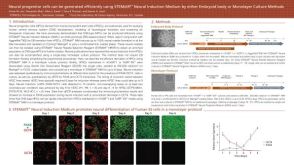 科学海报Neural Progenitor Cells can be Generated Efficiently Using STEMdiff™ Neural Induction Medium By Either Embryoid Body or Monolayer Culture Methods
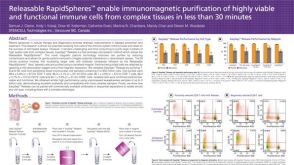 科学海报Releasable RapidSpheres Enable Immunomagnetic Purification of Highly Viable and Functional Immune Cells from Complex Tissues in Less Than 30 Minutes
 沪公网安备31010102008431号