Zhao S et al. (APR 2012)
Cancer letters 317 2 192--198
Activation of the aryl hydrocarbon receptor represses mammosphere formation in MCF-7 cells.
The aryl hydrocarbon receptor (AhR) is a ligand-activated transcription factor. Recent studies have reported the anti-tumor effects of the AhR in breast cancer. In this study,we investigated the anti-tumor effect of AhR activation based on the cancer stem cell hypothesis. We show that AhR activation suppressed mammosphere formation of MCF-7 cells and decreased the proportion of cells with high ALDH-1 (aldehyde dehydrogenase 1) activity. In addition,we also demonstrate that AhR activation regulates self-renewal signaling by down-regulating Wnt/$$-catenin and Notch.
View Publication
产品类型:
产品号#:
05620
产品名:
MammoCult™人培养基试剂盒
Dioum EM et al. ( 2011)
Proceedings of the National Academy of Sciences of the United States of America 108 51 20713--20718
A small molecule differentiation inducer increases insulin production by pancreatic β cells.
New drugs for preserving and restoring pancreatic β-cell function are critically needed for the worldwide epidemic of type 2 diabetes and the cure for type 1 diabetes. We previously identified a family of neurogenic 3,5-disubstituted isoxazoles (Isx) that increased expression of neurogenic differentiation 1 (NeuroD1,also known as BETA2); this transcription factor functions in neuronal and pancreatic β-cell differentiation and is essential for insulin gene transcription. Here,we probed effects of Isx on human cadaveric islets and MIN6 pancreatic β cells. Isx increased the expression and secretion of insulin in islets that made little insulin after prolonged ex vivo culture and increased expression of neurogenic differentiation 1 and other regulators of islet differentiation and insulin gene transcription. Within the first few hours of exposure,Isx caused biphasic activation of ERK1/2 and increased bulk histone acetylation. Although there was little effect on histone deacetylase activity,Isx increased histone acetyl transferase activity in nuclear extracts. Reconstitution assays indicated that Isx increased the activity of the histone acetyl transferase p300 through an ERK1/2-dependent mechanism. In summary,we have identified a small molecule with antidiabetic activity,providing a tool for exploring islet function and a possible lead for therapeutic intervention in diabetes.
View Publication
产品类型:
产品号#:
73202
产品名:
ISX-9
Roybal KT et al. (SEP 2016)
Cell 167 2 419--432.e16
Engineering T Cells with Customized Therapeutic Response Programs Using Synthetic Notch Receptors
Redirecting T cells to attack cancer using engineered chimeric receptors provides powerful new therapeutic capabilities. However,the effectiveness of therapeutic T cells is constrained by the endogenous T cell response: certain facets of natural response programs can be toxic,whereas other responses,such as the ability to overcome tumor immunosuppression,are absent. Thus,the efficacy and safety of therapeutic cells could be improved if we could custom sculpt immune cell responses. Synthetic Notch (synNotch) receptors induce transcriptional activation in response to recognition of user-specified antigens. We show that synNotch receptors can be used to sculpt custom response programs in primary T cells: they can drive a la carte cytokine secretion profiles,biased T cell differentiation,and local delivery of non-native therapeutic payloads,such as antibodies,in response to antigen. SynNotch T cells can thus be used as a general platform to recognize and remodel local microenvironments associated with diverse diseases.
View Publication
产品类型:
产品号#:
15022
15062
15023
15063
产品名:
RosetteSep™人CD4+ T细胞富集抗体混合物
RosetteSep™人CD4+ T细胞富集抗体混合物
RosetteSep™ 人CD8+ T细胞富集抗体混合物
RosetteSep™人CD8+ T细胞富集抗体混合物
Raju R et al. (FEB 2017)
Stem cells and development 26 4 274--284
Cell Expansion During Directed Differentiation of Stem Cells Toward the Hepatic Lineage.
The differentiation of human pluripotent stem cells toward the hepatocyte lineage can potentially provide an unlimited source of functional hepatocytes for transplantation and extracorporeal bioartificial liver applications. It is anticipated that the quantities of cells needed for these applications will be in the order of 10(9)-10(10) cells,because of the size of the liver. An ideal differentiation protocol would be to enable directed differentiation to the hepatocyte lineage with simultaneous cell expansion. We introduced a cell expansion stage after the commitment of human embryonic stem cells to the endodermal lineage,to allow for at least an eightfold increase in cell number,with continuation of cell maturation toward the hepatocyte lineage. The progressive changes in the transcriptome were measured by expression array,and the expression dynamics of certain lineage markers was measured by mass cytometry during the differentiation and expansion process. The findings revealed that while cells were expanding they were also capable of progressing in their differentiation toward the hepatocyte lineage. In addition,our transcriptome,protein and functional studies,including albumin secretion,drug-induced CYP450 expression and urea production,all indicated that the hepatocyte-like cells obtained with or without cell expansion are very similar. This method of simultaneous cell expansion and hepatocyte differentiation should facilitate obtaining large quantities of cells for liver cell applications.
View Publication
Effects of sodium butyrate, a new pharmacological agent, on cells in culture.
Sodium butyrate,at millimolar concentrations,when added to cell cultures produces many morphological and biochemical modifications in a reversible manner. Some of them occur in all cell lines. They concern regulatory mechanisms of gene expression and cell growth: an hyperacetylation of histone resulting from an inhibition of histone deacetylase and an arrest of cell proliferation are almost constantly observed. Some other modifications vary from one cell type to another: induction of proteins,including enzymes,hormones,hemoglobin,inhibition of cell differentiation,reversion of transformed characteristics of cells to normal morphological and biochemical pattern,increase in interferon antiviral efficiency and induction of integrated viruses. Most if not all these effects of butyrate could result from histone hyperacetylation,from changes in chromatin structures as measured by accessibility to DNases and from modifications in cytoskeleton assembly. We do not know at the present time whether butyrate acts on a very specific target site in cell or if it acts on several cell components.
View Publication
产品类型:
产品号#:
72242
产品名:
丁酸钠(Sodium Butyrate)
Rafalski VA et al. (JUN 2013)
Nature cell biology 15 6 614--24
Expansion of oligodendrocyte progenitor cells following SIRT1 inactivation in the adult brain.
Oligodendrocytes-the myelin-forming cells of the central nervous system-can be regenerated during adulthood. In adults,new oligodendrocytes originate from oligodendrocyte progenitor cells (OPCs),but also from neural stem cells (NSCs). Although several factors supporting oligodendrocyte production have been characterized,the mechanisms underlying the generation of adult oligodendrocytes are largely unknown. Here we show that genetic inactivation of SIRT1,a protein deacetylase implicated in energy metabolism,increases the production of new OPCs in the adult mouse brain,in part by acting in NSCs. New OPCs produced following SIRT1 inactivation differentiate normally,generating fully myelinating oligodendrocytes. Remarkably,SIRT1 inactivation ameliorates remyelination and delays paralysis in mouse models of demyelinating injuries. SIRT1 inactivation leads to the upregulation of genes involved in cell metabolism and growth factor signalling,in particular PDGF receptor α (PDGFRα). Oligodendrocyte expansion following SIRT1 inactivation is mediated at least in part by AKT and p38 MAPK-signalling molecules downstream of PDGFRα. The identification of drug-targetable enzymes that regulate oligodendrocyte regeneration in adults could facilitate the development of therapies for demyelinating injuries and diseases,such as multiple sclerosis.
View Publication
产品类型:
产品号#:
73654
产品名:
EX527
Tian L et al. ( 2016)
1353 271--283
In Vitro Modeling of Alcohol-Induced Liver Injury using Human-Induced Pluripotent Stem Cells
Alcohol consumption has long been associated with a majority of liver diseases and has been found to influence both fetal and adult liver functions. In spite of being one of the major causes of morbidity and mortality in the world,currently,there are no effective strategies that can prevent or treat alcoholic liver disease (ALD),due to a lack of human-relevant research models. Recent success in generation of functionally active mature hepatocyte-like cells from human-induced pluripotent cells (iPSCs) enables us to better understand the effects of alcohol on liver functions. Here,we describe the method and effect of alcohol exposure on multistage hepatic cell types derived from human iPSCs,in an attempt to recapitulate the early stages of liver tissue injury associated with ALD. We exposed different stages of iPSC-induced hepatic cells to ethanol at a pathophysiological concentration. In addition to stage-specific molecular markers,we measured several key cellular parameters of hepatocyte injury,including apoptosis,proliferation,and lipid accumulation.
View Publication
C9ORF72 patient-derived endothelial cells drive blood-brain barrier disruption and contribute to neurotoxicity
The blood-brain barrier (BBB) serves as a highly intricate and dynamic interface connecting the brain and the bloodstream,playing a vital role in maintaining brain homeostasis. BBB dysfunction has been associated with multiple neurodegenerative diseases,including amyotrophic lateral sclerosis (ALS); however,the role of the BBB in neurodegeneration is understudied. We developed an ALS patient-derived model of the BBB by using cells derived from 5 patient donors carrying C9ORF72 mutations. Brain microvascular endothelial-like cells (BMEC-like cells) derived from C9ORF72-ALS patients showed altered gene expression,compromised barrier integrity,and increased P-glycoprotein transporter activity. In addition,mitochondrial metabolic tests demonstrated that C9ORF72-ALS BMECs display a significant decrease in basal glycolysis accompanied by increased basal and ATP-linked respiration. Moreover,our study reveals that C9-ALS derived astrocytes can further affect BMECs function and affect the expression of the glucose transporter Glut-1. Finally,C9ORF72 patient-derived BMECs form leaky barriers through a cell-autonomous mechanism and have neurotoxic properties towards motor neurons.Graphical Abstract Supplementary InformationThe online version contains supplementary material available at 10.1186/s12987-024-00528-6.
View Publication
产品类型:
产品号#:
100-0276
100-1130
05990
05946
产品名:
mTeSR™ Plus
mTeSR™ Plus
TeSR™-E8™
TeSR™-E6
H. Steppuhn et al. (Aug 2025)
Frontiers in Immunology 16
Particulate matters such as diesel exhaust particles induce oxidative stress in cells and thereby have a negative impact on health. The aim of this study was to test whether the membrane-permeable,anti-inflammatory metabolite 4-Octyl Itaconate can counteract the oxidative stress induced by diesel exhaust particles and to analyze the downstream-regulated pathways both in human nasal epithelial cells and PBMCs. Human nasal epithelial cells were cultured from nasal swabs,and the response of the cells to diesel exhaust particles either alone or in combination with 4-Octyl Itaconatee was investigated using RNA sequencing,qPCR,and cytokine measurement. The presence of reactive oxygen species in the cells was analyzed using CellROX staining and flow cytometric DCFDA assay. Diesel exhaust particles caused an upregulation of CYP1A1 in nasal epithelial cells. The administration of 4-Octyl Itaconate reduced the reactive oxygen species and increased the expression of antioxidant genes regulated by the transcription factor NRF2,which was also confirmed in PBMCs. IL-6 secretion from NEC was elevated by diesel exhaust particles and reduced when 4-Octyl Itaconate was administered. 4-Octyl Itaconate can reduce the diesel-exhaust-particle-induced oxidative damage by the activation of NRF2-regulated antioxidative pathways.
View Publication
产品类型:
产品号#:
05040
产品名:
PneumaCult™-Ex Plus 培养基
J. Lee et al. (may 2020)
Biochemical and biophysical research communications 525 3 563--569
Induced pluripotency and spontaneous reversal of cellular aging in supercentenarian donor cells.
Supercentenarians (≥110-year-old,SC) are a uniquely informative population not only because they surpass centenarians in age,but because they appear to age more slowly with fewer incidences of chronic age-related disease than centenarians. We reprogramed donor B-lymphoblastoid cell lines (LCL) derived from a 114-year-old (SC),a 43-year-old healthy disease-free control (HDC) and an 8-year-old with a rapid aging disease (Hutchinson-Gilford progeria syndrome (HGPS)) and compared SC-iPSC to HDC-iPSC and HGPS-iPSCs. Reprogramming to pluripotency was confirmed by pluripotency marker expression and differentiation to 3 germ-layers. Each iPSC clone differentiated efficiently to mesenchymal progenitor cells (MPC) as determined by surface marker expression and RNAseq analysis. We identified supercentenarian and HGPS associated gene expression patterns in the differentiated MPC lines that were not evident in the parental iPSC lines. Importantly,telomere length resetting occurred in iPSC from all donors albeit at a lower incidence in supercentenarian iPSCs. These data indicate the potential to use reprogramming to reset both developmental state and cellular age in the oldest of the old." We anticipate that supercentenarian iPSC and their differentiated derivatives will be valuable tools for studying the underlying mechanisms of extreme longevity and disease resistance."
View Publication
产品类型:
产品号#:
05240
产品名:
STEMdiff™ 间充质祖细胞试剂盒
Hassiotou F et al. (OCT 2012)
Stem cells (Dayton,Ohio) 30 10 2164--2174
Breastmilk is a novel source of stem cells with multilineage differentiation potential.
The mammary gland undergoes significant remodeling during pregnancy and lactation,which is fuelled by controlled mammary stem cell (MaSC) proliferation. The scarcity of human lactating breast tissue specimens and the low numbers and quiescent state of MaSCs in the resting breast have hindered understanding of both normal MaSC dynamics and the molecular determinants that drive their aberrant self-renewal in breast cancer. Here,we demonstrate that human breastmilk contains stem cells (hBSCs) with multilineage properties. Breastmilk cells from different donors displayed variable expression of pluripotency genes normally found in human embryonic stem cells (hESCs). These genes included the transcription factors (TFs) OCT4,SOX2,NANOG,known to constitute the core self-renewal circuitry of hESCs. When cultured in the presence of mouse embryonic feeder fibroblasts,a population of hBSCs exhibited an encapsulated ESC-like colony morphology and phenotype and could be passaged in secondary and tertiary clonogenic cultures. While self-renewal TFs were found silenced in the normal resting epithelium,they were dramatically upregulated in breastmilk cells cultured in 3D spheroid conditions. Furthermore,hBSCs differentiated in vitro into cell lineages from all three germ layers. These findings provide evidence that breastmilk represents a novel and noninvasive source of patient-specific stem cells with multilineage potential and establish a method for expansion of these cells in culture. They also highlight the potential of these cells to be used as novel models to understand adult stem cell plasticity and breast cancer,with potential use in bioengineering and tissue regeneration.
View Publication


 EasySep™小鼠TIL(CD45)正选试剂盒




 27:57
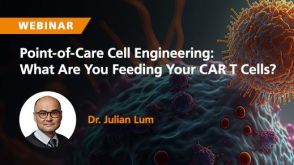
线上讲座Advances in Point-of-Care Cell Engineering—What Are You Feeding Your CAR T Cells?发布日期: 08/27/2024
27:57
线上讲座Advances in Point-of-Care Cell Engineering—What Are You Feeding Your CAR T Cells?发布日期: 08/27/2024
 沪公网安备31010102008431号