Wildum S et al. (AUG 2006)
Journal of virology 80 16 8047--59
Contribution of Vpu, Env, and Nef to CD4 down-modulation and resistance of human immunodeficiency virus type 1-infected T cells to superinfection.
Human immunodeficiency virus type 1 (HIV-1) utilizes Vpu,Env,and Nef to down-modulate its primary CD4 receptor from the cell surface,and this function seems to be critical for the pathogenesis of AIDS. The physiological relevance of CD4 down-modulation,however,is currently not well understood. In the present study,we analyzed the kinetics of CD4 down-modulation and the susceptibility of HIV-1-infected T cells to superinfection using proviral HIV-1 constructs containing individual and combined defects in vpu,env,and nef and expressing red or green fluorescent proteins. T cells infected with HIV-1 mutants containing functional nef genes expressed low surface levels of CD4 from the first moment that viral gene expression became detectable. In comparison,Vpu and Env had only minor to moderate effects on CD4 during later stages of infection. Consistent with these quantitative differences,Nef inhibited superinfection more efficiently than Vpu and Env. Notably,nef alleles from AIDS patients were more effective in preventing superinfection than those derived from a nonprogressor of HIV-1 infection. Our data suggest that protection against X4-tropic HIV-1 superinfection involves both CD4-independent and CD4-dependent mechanisms of HIV-1 Nef. X4 was effectively down-regulated by simian immunodeficiency virus and HIV-2 but not by HIV-1 Nef proteins. Thus,maximal protection seems to involve an as-yet-unknown mechanism that is independent of CD4 or coreceptor down-modulation. Finally,we demonstrate that superinfected primary T cells show enhanced levels of apoptosis. Accordingly,one reason that HIV-1 inhibits CD4 surface expression and superinfection is to prevent premature cell death in order to expand the period of effective virus production.
View Publication
产品类型:
产品号#:
15022
15062
产品名:
RosetteSep™人CD4+ T细胞富集抗体混合物
RosetteSep™人CD4+ T细胞富集抗体混合物
Snykers S et al. (JAN 2007)
BMC developmental biology 7 24
Chromatin remodeling agent trichostatin A: a key-factor in the hepatic differentiation of human mesenchymal stem cells derived of adult bone marrow.
BACKGROUND The capability of human mesenchymal stem cells (hMSC) derived of adult bone marrow to undergo in vitro hepatic differentiation was investigated. RESULTS Exposure of hMSC to a cocktail of hepatogenic factors [(fibroblast growth factor-4 (FGF-4),hepatocyte growth factor (HGF),insulin-transferrin-sodium-selenite (ITS) and dexamethasone)] failed to induce hepatic differentiation. Sequential exposure to these factors (FGF-4,followed by HGF,followed by HGF+ITS+dexamethasone),however,resembling the order of secretion during liver embryogenesis,induced both glycogen-storage and cytokeratin (CK)18 expression. Additional exposure of the cells to trichostatin A (TSA) considerably improved endodermal differentiation,as evidenced by acquisition of an epithelial morphology,chronological expression of hepatic proteins,including hepatocyte-nuclear factor (HNF)-3beta,alpha-fetoprotein (AFP),CK18,albumin (ALB),HNF1alpha,multidrug resistance-associated protein (MRP)2 and CCAAT-enhancer binding protein (C/EBP)alpha,and functional maturation,i.e. upregulated ALB secretion,urea production and inducible cytochrome P450 (CYP)-dependent activity. CONCLUSION hMSC are able to undergo mesenchymal-to-epithelial transition. TSA is hereby essential to promote differentiation of hMSC towards functional hepatocyte-like cells.
View Publication
产品类型:
产品号#:
72282
72284
产品名:
曲古抑菌素 A(Trichostatin A)
曲古抑菌素 A(Trichostatin A)
Hisatomi T et al. (MAR 2011)
Blood 117 13 3575--84
NK314 potentiates antitumor activity with adult T-cell leukemia-lymphoma cells by inhibition of dual targets on topoisomerase IIalpha and DNA-dependent protein kinase.
Adult T-cell leukemia-lymphoma (ATL) is an aggressive disease,incurable by standard chemotherapy. NK314,a new anticancer agent possessing inhibitory activity specific for topoisomerase IIα (Top2α),inhibited the growth of various ATL cell lines (50% inhibitory concentration: 23-70nM) with more potent activity than that of etoposide. In addition to the induction of DNA double-strand breaks by inhibition of Top2α,NK314 induced degradation of the catalytic subunit of DNA-dependent protein kinase (DNA-PKcs),resulting in impaired DNA double-strand break repair. The contribution of DNA-PK to inhibition of cell growth was affirmed by the following results: NK314 inhibited cell growth of M059J (a DNA-PKcs-deficient cell line) and M059K (a cell line with DNA-PKcs present) with the same potency,whereas etoposide exhibited weak inhibition of cell growth with M059K cells. A DNA-PK specific inhibitor,NU7026,enhanced inhibitory activity of etoposide on M059K as well as on ATL cells. These results suggest that NK314 is a dual inhibitor of Top2α and DNA-PK. Because ATL cells express a high amount of DNA-PKcs,NK314 as a dual molecular targeting anticancer agent is a potential therapeutic tool for treatment of ATL.
View Publication
产品类型:
产品号#:
04437
04447
产品名:
MethoCult™表达
MethoCult™表达
Gupta R et al. (MAY 2012)
Molecular endocrinology (Baltimore,Md.) 26 5 859--72
Squelching of ETS2 transactivation by POU5F1 silences the human chorionic gonadotropin CGA subunit gene in human choriocarcinoma and embryonic stem cells.
The subunit genes encoding human chorionic gonadotropin,CGA,and CGB,are up-regulated in human trophoblast. However,they are effectively silenced in choriocarcinoma cells by ectopically expressed POU domain class 5 transcription factor 1 (POU5F1). Here we show that POU5F1 represses activity of the CGA promoter through its interactions with ETS2,a transcription factor required for both placental development and human chorionic gonadotropin subunit gene expression,by forming a complex that precludes ETS2 from interacting with the CGA promoter. Mutation of a POU5F1 binding site proximal to the ETS2 binding site does not alter the ability of POU5F1 to act as a repressor but causes a drop in basal promoter activity due to overlap with the binding site for DLX3. DLX3 has only a modest ability to raise basal CGA promoter activity,but its coexpression with ETS2 can up-regulate it 100-fold or more. The two factors form a complex,and both must bind to the promoter for the combination to be transcriptionally effective,a synergy compromised by POU5F1. Similarly,in human embryonic stem cells,which express ETS2 but not CGA,ETS2 does not occupy its binding site on the CGA promoter but is found instead as a soluble complex with POU5F1. When human embryonic stem cells differentiate in response to bone morphogenetic protein-4 and concentrations of POU5F1 fall and hCG and DLX3 rise,ETS2 then occupies its binding site on the CGA promoter. Hence,a squelching mechanism underpins the transcriptional silencing of CGA by POU5F1 and could have general relevance to how pluripotency is maintained and how the trophoblast lineage emerges from pluripotent precursor cells.
View Publication
产品类型:
产品号#:
85850
85857
产品名:
mTeSR™1
mTeSR™1
D. Gonz\'alez-Serna et al. (jun 2023)
Arthritis & rheumatology (Hoboken,N.J.) 75 6 1007--1020
Identification of Mechanisms by Which Genetic Susceptibility Loci Influence Systemic Sclerosis Risk Using Functional Genomics in Primary T Cells and Monocytes.
OBJECTIVE Systemic sclerosis (SSc) is a complex autoimmune disease with a strong genetic component. However,most of the genes associated with the disease are still unknown because associated variants affect mostly noncoding intergenic elements of the genome. We used functional genomics to translate the genetic findings into a better understanding of the disease. METHODS Promoter capture Hi-C and RNA-sequencing experiments were performed in CD4+ T cells and CD14+ monocytes from 10 SSc patients and 5 healthy controls to link SSc-associated variants with their target genes,followed by differential expression and differential interaction analyses between cell types. RESULTS We linked SSc-associated loci to 39 new potential target genes and confirmed 7 previously known SSc-associated genes. We highlight novel causal genes,such as CXCR5,as the most probable candidate gene for the DDX6 locus. Some previously known SSc-associated genes,such as IRF8,STAT4,and CD247,showed cell type-specific interactions. We also identified 15 potential drug targets already in use in other similar immune-mediated diseases that could be repurposed for SSc treatment. Furthermore,we observed that interactions were directly correlated with the expression of important genes implicated in cell type-specific pathways and found evidence that chromatin conformation is associated with genotype. CONCLUSION Our study revealed potential causal genes for SSc-associated loci,some of them acting in a cell type-specific manner,suggesting novel biologic mechanisms that might mediate SSc pathogenesis.
View Publication
产品类型:
产品号#:
17858
17952
17858RF
100-0694
17952RF
100-0696
产品名:
EasySep™人CD14正选试剂盒II
EasySep™人CD4+ T细胞分选试剂盒
RoboSep™ 人CD14正选试剂盒II
EasySep™人CD14正选试剂盒II
RoboSep™ 人CD4+ T细胞分选试剂盒
EasySep™人CD4+ T细胞分离试剂盒
(Sep 2024)
Pathogens and Immunity 9 2
People Living With HIV Have More Intact HIV DNA in Circulating CD4+ T Cells if They Have History of Pulmonary Tuberculosis
Background:A primary barrier to curing HIV is the HIV reservoir. The leading infectious cause of death worldwide for people living with HIV is tuberculosis (TB),but we do not know how TB impacts the HIV reservoir.Methods:Participants in identification and validation cohorts were selected from previously enrolled studies at Groupe Haïtien d'Étude du Sarcome de Kaposi et des Infections Opportunistes (GHESKIO) in Port au Prince,Haiti. Intact and non-intact proviral DNA were quantified using droplet digital PCR of peripheral blood mononuclear cell (PBMC)-derived CD4+ T cells. Kruskal-Wallis tests were used to compare medians with tobit regression for censoring.Results:In the identification cohort,we found that people living with HIV with a history of active pulmonary TB (n=19) had higher levels of intact provirus than people living with HIV without a history of active TB (n=47) (median 762; IQR,183-1173 vs 117; IQR,24-279 intact provirus per million CD4,respectively; P=0.0001). This difference also was seen in the validation cohort (n=31),(median 102; IQR,0-737 vs 0; IQR,0-24.5 intact provirus per million CD4,P=0.03) for TB vs no-TB history groups,respectively. The frequencies of CD4+ T cells with any detectable proviral fragment was directly proportional to the levels of interleukin-1 beta (r=0.524,P= 0.0025) and interleukin-2 (r=0.622,P=0.0002).Conclusions:People living with HIV with a history of active pulmonary TB have more HIV pro-virus in their circulating CD4+ T cells,even years after TB cure. We need to characterize which CD4+ T cells are harboring intact provirus to consider the impact of T cell-targeting HIV cure interventions for people living in TB-endemic areas.
View Publication
产品类型:
产品号#:
19052
19052RF
产品名:
EasySep™人CD4+ T细胞富集试剂盒
RoboSep™ 人CD4+ T细胞富集试剂盒含滤芯吸头
S. B. Chia et al. (sep 2020)
Redox biology 37 101720
Glutaredoxin deficiency promotes activation of the transforming growth factor beta pathway in airway epithelial cells, in association with fibrotic airway remodeling.
S-glutathionylation of reactive protein cysteines is a post-translational event that plays a critical role in transducing signals from oxidants into biological responses. S-glutathionylation can be reversed by the deglutathionylating enzyme glutaredoxin (GLRX). We have previously demonstrated that ablation of Glrx sensitizes mice to the development of parenchymal lung fibrosis(1). It remains unclear whether GLRX also controls airway fibrosis,a clinical feature relevant to asthma and chronic obstructive pulmonary disease,and whether GLRX controls the biology of airway epithelial cells,which have been implicated in the pathophysiology of these diseases. In the present study we utilized a house dust mite (HDM) model of allergic airway disease in wild type (WT) and Glrx-/- mice on a C57BL/6 background prone to develop airway fibrosis,and tracheal basal stem cells derived from WT mice,global Glrx-/- mice,or bi-transgenic mice allowing conditional ablation of the Glrx gene. Herein we show that absence of Glrx led to enhanced HDM-induced collagen deposition,elevated levels of transforming growth factor beta 1 (TGFB1) in the bronchoalveolar lavage,and resulted in increases in airway hyperresponsiveness. Airway epithelial cells isolated from Glrx-/- mice or following conditional ablation of Glrx showed spontaneous increases in secretion of TGFB1. Glrx-/- basal cells also showed spontaneous TGFB pathway activation,in association with increased expression of mesenchymal genes,including collagen 1a1 and fibronectin. Overall,these findings suggest that GLRX regulates airway fibrosis via a mechanism(s) that involve the plasticity of basal cells,the stem cells of the airways.
View Publication
SFN 2016,Advances in Drug Discovery 2017,iForum 2017
产品号#:
05790
05792
05793
05794
05795
产品名:
BrainPhys™神经元培养基
BrainPhys™神经元培养基和SM1试剂盒
BrainPhys™ 神经元培养基N2-A和SM1试剂盒
BrainPhys™原代神经元试剂盒
BrainPhys™ hPSC 神经元试剂盒
M. Holliday et al. ( 2018)
Stem cell research 33 269--273
Development of induced pluripotent stem cells from a patient with hypertrophic cardiomyopathy who carries the pathogenic myosin heavy chain 7 mutation p.Arg403Gln.
Hypertrophic cardiomyopathy (HCM) is an inherited cardiomyopathy characterized by left ventricular hypertrophy ≥15 mm in the absence of loading conditions. HCM has a prevalence of up to one in 200,and can result in significant adverse outcomes including heart failure and sudden cardiac death. An induced pluripotent stem cell (iPSC) line was generated from peripheral blood mononuclear cells obtained from the whole blood of a 38-year-old female patient with HCM in which genetic testing identified the well-known pathogenic p.Arg403Gln mutation in myosin heavy chain 7. iPSCs express pluripotency markers,demonstrate trilineage differentiation capacity,and display a normal 46,XX female karyotype. This resource will allow further assessment of the pathophysiological development of HCM.
View Publication
产品类型:
产品号#:
05010
05924
85850
85857
产品名:
STEMdiff™ 心肌细胞分化培养基试剂盒
红系祖细胞重编程试剂盒
mTeSR™1
mTeSR™1
Trzonkowski P et al. (OCT 2009)
Clinical immunology (Orlando,Fla.) 133 1 22--6
First-in-man clinical results of the treatment of patients with graft versus host disease with human ex vivo expanded CD4+CD25+CD127- T regulatory cells.
Here,we describe a procedure and first-in-man clinical effects of adoptive transfer of ex vivo expanded CD4+CD25+CD127- T regulatory cells (Tregs) in the treatment of graft versus host disease (GvHD). The cells were sorted from buffy coats taken from two family donors,expanded ex vivo and transferred to respective recipients who suffered from either acute or chronic GvHD. The therapy allowed for significant alleviation of the symptoms and reduction of pharmacologic immunosuppression in the case of chronic GvHD,while in the case of grade IV acute GvHD it only transiently improved the condition,for the longest time within all immunosuppressants used nonetheless.
View Publication
产品类型:
产品号#:
19052
19052RF
产品名:
EasySep™人CD4+ T细胞富集试剂盒
RoboSep™ 人CD4+ T细胞富集试剂盒含滤芯吸头
Jan M et al. (MAR 2011)
Proceedings of the National Academy of Sciences of the United States of America 108 12 5009--14
Prospective separation of normal and leukemic stem cells based on differential expression of TIM3, a human acute myeloid leukemia stem cell marker.
Hematopoietic tissues in acute myeloid leukemia (AML) patients contain both leukemia stem cells (LSC) and residual normal hematopoietic stem cells (HSC). The ability to prospectively separate residual HSC from LSC would enable important scientific and clinical investigation including the possibility of purged autologous hematopoietic cell transplants. We report here the identification of TIM3 as an AML stem cell surface marker more highly expressed on multiple specimens of AML LSC than on normal bone marrow HSC. TIM3 expression was detected in all cytogenetic subgroups of AML,but was significantly higher in AML-associated with core binding factor translocations or mutations in CEBPA. By assessing engraftment in NOD/SCID/IL2Rγ-null mice,we determined that HSC function resides predominantly in the TIM3-negative fraction of normal bone marrow,whereas LSC function from multiple AML specimens resides predominantly in the TIM3-positive compartment. Significantly,differential TIM3 expression enabled the prospective separation of HSC from LSC in the majority of AML specimens with detectable residual HSC function.
View Publication
产品类型:
产品号#:
04435
04445
产品名:
MethoCult™H4435富集
MethoCult™H4435富集
West FD et al. (OCT 2011)
Stem Cells 29 10 1640--1643
Brief report: chimeric pigs produced from induced pluripotent stem cells demonstrate germline transmission and no evidence of tumor formation in young pigs.
The recent development of porcine induced pluripotent stem cells (piPSCs) capable of generating chimeric animals,a feat not previously accomplished with embryonic stem cells or iPSCs in a species outside of rodents,has opened the doors for in-depth study of iPSC tumorigenicity,autologous transplantation,and other key aspects to safely move iPSC therapies to the clinic. The study of iPSC tumorigenicity is critical as previous research in the mouse showed that iPSC-derived chimeras possessed large numbers of tumors,rising significant concerns about the safety of iPSC therapies. Additionally,piPSCs capable of generating germline chimeras could revolutionize the transgenic animal field by enabling complex genetic manipulations (e.g.,knockout or knockin of genes) to produce biomedically important large animal models or improve livestock production. In this study,we demonstrate for the first time in a nonrodent species germline transmission of iPSCs with the live birth of a transgenic piglet that possessed genome integration of the human POU5F1 and NANOG genes. In addition,gross and histological examination of necropsied porcine chimeras at 2,7,and 9 months showed that these animals lacked tumor formation and demonstrated normal development. Tissue samples positive for human POU5F1 DNA showed no C-MYC gene expression,further implicating C-MYC as a cause of tumorigenicity. The development of germline-competent porcine iPSCs that do not produce tumors in young chimeric animals presents an attractive and powerful translational model to study the efficacy and safety of stem cell therapies and perhaps to efficiently produce complex transgenic animals.
View Publication


 EasySep™小鼠TIL(CD45)正选试剂盒




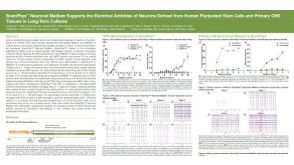 科学海报BrainPhys™ Neuronal Medium Supports the Electrical Activities of Neurons Derived from Human Pluripotent Stem Cells and Primary CNS Tissues in Long-Term Cultures
 沪公网安备31010102008431号