Song DH et al. (AUG 2000)
Journal of Biological Chemistry 275 31 23790--97
Endogenous protein kinase CK2 participates in Wnt signaling in mammary epithelial cells
Protein kinase CK2 (formerly casein kinase II) is a serine/threonine kinase overexpressed in many human tumors,transformed cell lines,and rapidly proliferating tissues. Recent data have shown that many cancers involve inappropriate reactivation of Wnt signaling through ectopic expression of Wnts themselves,as has been seen in a number of human breast cancers,or through mutation of intermediates in the Wnt pathway,such as adenomatous polyposis coli or beta-catenin,as described in colon and other cancers. Wnts are secreted factors that are important in embryonic development,but overexpression of certain Wnts,such as Wnt-1,leads to proliferation and transformation of cells. We report that upon stable transfection of Wnt-1 into the mouse mammary epithelial cell line C57MG,morphological changes and increased proliferation are accompanied by increased levels of CK2,as well as of beta-catenin. CK2 and beta-catenin co-precipitate with the Dvl proteins,which are Wnt signaling intermediates. A major phosphoprotein of the size of beta-catenin appears in in vitro kinase reactions performed on the Dvl immunoprecipitates. In vitro translated beta-catenin,Dvl-2,and Dvl-3 are phosphorylated by CK2. The selective CK2 inhibitor apigenin blocks proliferation of Wnt-1-transfected cells,abrogates phosphorylation of beta-catenin,and reduces beta-catenin and Dvl protein levels. These results demonstrate that endogenous CK2 is a positive regulator of Wnt signaling and growth of mammary epithelial cells.
View Publication
产品类型:
产品号#:
03800
03801
03802
03803
03804
03805
03806
产品名:
ClonaCell™-HY 杂交瘤试剂盒
ClonaCell™-HY Medium
ClonaCell™-HY Medium
ClonaCell™-HY Medium
ClonaCell™-HY Medium
ClonaCell™-HY Medium
ClonaCell™-HY PEG (融合)
Lee S-HH et al. (JUN 2000)
Nature biotechnology 18 6 675--9
Efficient generation of midbrain and hindbrain neurons from mouse embryonic stem cells.
Embryonic stem (ES) cells are clonal cell lines derived from the inner cell mass of the developing blastocyst that can proliferate extensively in vitro and are capable of adopting all the cell fates in a developing embryo. Clinical interest in the use of ES cells has been stimulated by studies showing that isolated human cells with ES properties from the inner cell mass or developing germ cells can provide a source of somatic precursors. Previous studies have defined in vitro conditions for promoting the development of specific somatic fates,specifically,hematopoietic,mesodermal,and neurectodermal. In this study,we present a method for obtaining dopaminergic (DA) and serotonergic neurons in high yield from mouse ES cells in vitro. Furthermore,we demonstrate that the ES cells can be obtained in unlimited numbers and that these neuron types are generated efficiently. We generated CNS progenitor populations from ES cells,expanded these cells and promoted their differentiation into dopaminergic and serotonergic neurons in the presence of mitogen and specific signaling molecules. The differentiation and maturation of neuronal cells was completed after mitogen withdrawal from the growth medium. This experimental system provides a powerful tool for analyzing the molecular mechanisms controlling the functions of these neurons in vitro and in vivo,and potentially for understanding and treating neurodegenerative and psychiatric diseases.
View Publication
产品类型:
产品号#:
07152
产品名:
N2 添加物-A
(Feb 2024)
Pathogens and Immunity 8 2
HIV Productively Infects Highly Differentiated and Exhausted CD4+ T Cells During AIDS
Background:Throughout HIV infection,productively infected cells generate billions of viral particles and are thus responsible for body-wide HIV dissemination,but their phenotype during AIDS is unknown. As AIDS is associated with immunological changes,analyzing the phenotype of productively infected cells can help understand HIV production during this terminal stage.Methods:Blood samples from 15 untreated viremic participants (recent infection,n=5; long-term infection,n=5; active opportunistic AIDS-defining disease,n=5) and 5 participants virologically controlled on antiretroviral therapy (ART) enrolled in the Analysis of the Persistence,Reservoir and HIV Latency (APRIL) study (NCT05752318) were analyzed. Cells expressing the capsid protein p24 (p24+ cells) after 18 hours of resting or 24 hours of stimulation (HIV-Flow) revealed productively infected cells from viremic participants or translation-competent reservoir cells from treated participants,respectively.Results:The frequency of productively infected cells tended to be higher during AIDS in comparison with recent and long-term infections (median,340,72,and 32/million CD4+ T cells,respectively) and correlated with the plasma viral load at all stages of infection. Altogether,these cells were more frequently CD4low,HLA-ABClow,CD45RA-,Ki67+,PD-1+,with a non-negligible contribution from pTfh (CXCR5+PD-1+) cells,and were not significantly enriched in HIV coreceptors CCR5 nor CXCR4 expression. The comparison markers expression between stages showed that productively infected cells during AIDS were enriched in memory and exhausted cells. In contrast,the frequencies of infected pTfh were lower during AIDS compared to non-AIDS stages. A UMAP analysis revealed that total CD4+ T cells were grouped in 7 clusters and that productive p24+ cells were skewed to given clusters throughout the course of infection. Overall,the preferential targets of HIV during the latest stages seemed to be more frequently highly differentiated (memory,TTD-like) and exhausted cells and less frequently pTfh-like cells. In contrast,translation-competent reservoir cells were less frequent (5/million CD4+ T cells) and expressed more frequently HLA-ABC and less frequently PD-1.Conclusions:In long-term infection and AIDS,productively infected cells were differentiated and exhausted. This could indicate that cells with these given features are responsible for HIV production and dissemination in an immune dysfunction environment occurring during the last stages of infection.
View Publication
产品类型:
产品号#:
19052
19052RF
产品名:
EasySep™人CD4+ T细胞富集试剂盒
RoboSep™ 人CD4+ T细胞富集试剂盒含滤芯吸头
Y. Zhang et al. (Mar 2024)
Cancer Cell International 24
β-hydroxybutyrate inhibits malignant phenotypes of prostate cancer cells through β-hydroxybutyrylation of indoleacetamide-N-methyltransferase
Prostate cancer (PCa) is one of the most prevalent cancers in men and is associated with high mortality and disability rates. β-hydroxybutyrate (BHB),a ketone body,has received increasing attention for its role in cancer. However,its role in PCa remains unclear. This study aimed to explore the mechanism and feasibility of BHB as a treatment alternative for PCa. Colony formation assay,flow cytometry,western blot assay,and transwell assays were performed to determine the effect of BHB on the proliferation and metastasis of PCa cells. Tumor sphere formation and aldehyde dehydrogenase assays were used to identify the impact of BHB or indoleacetamide-N-methyltransferase (INMT) on the stemness of PCa cells. N6-methyladenosine (m6A)–meRIP real-time reverse transcription polymerase chain reaction and dual luciferase assays were conducted to confirm INMT upregulation via the METTL3–m6A pathway. Co-IP assay was used to detect the epigenetic modification of INMT by BHB-mediated β-hydroxybutyrylation (kbhb) and screen enzymes that regulate INMT kbhb. Mouse xenograft experiments demonstrated the antitumor effects of BHB in vivo. BHB can inhibit the proliferation,migration,and invasion of PCa cells by suppressing their stemness. Mechanistically,INMT,whose expression is upregulated by the METTL3–m6A pathway,was demonstrated to be an oncogenic gene that promotes the stem-like characteristics of PCa cells. BHB can suppress the malignant phenotypes of PCa by kbhb of INMT,which in turn inhibits INMT expression. Our findings indicate a role of BHB in PCa metabolic therapy,thereby suggesting an epigenetic therapeutic strategy to target INMT in aggressive PCa. Not applicable. The online version contains supplementary material available at 10.1186/s12935-024-03277-6.
View Publication
产品类型:
产品号#:
01700
01702
产品名:
ALDEFLUOR™ 试剂盒
ALDEFLUOR™测定缓冲液
W. Ye et al. (Jul 2025)
Molecular Cancer 24 15
NSUN2-mediated cytosine-5 methylation of FSP1 protects acute myeloid leukemia cells from ferroptosis
RNA 5-methylcytosine (m 5 C),a prevalent epitranscriptomic modification that critically regulates gene expression and cellular homeostasis. While its roles in solid tumors have been increasingly recognized,the functional landscape of m 5 C in acute myeloid leukemia (AML) remains unexplored. Here,we identified NSUN2,the principal RNA m 5 C methyltransferase,as a key regulator of AML progression. NSUN2 was aberrantly upregulated in AML patient samples and correlated with poor prognosis. Functional studies demonstrated that NSUN2 promoted leukemic cell proliferation,enhanced tumor growth in xenograft models,and conferred resistance to ferroptosis—a regulated cell death process driven by lipid peroxidation. Mechanistically,NSUN2 catalyzed m⁵C deposition on the 3’UTR of FSP1 (ferroptosis suppressor protein 1) mRNA,facilitating its recognition and stabilization by the m 5 C reader protein YBX1. This NSUN2-YBX1-FSP1 axis protected AML cells from ferroptotic stress by suppressing lipid peroxidation and oxidative damage. Depletion of NSUN2 or FSP1 induced mitochondrial remodeling,which primed cells for ferroptosis. Reconstitution of wild-type NSUN2 or FSP1 rescued ferroptosis resistance,whereas catalytically inactive NSUN2 (C271A/C321A) or non-functional FSP1 mutants (G2A/E156A) failed to reverse this phenotype. Pharmacological inhibition of NSUN2 with MY-1B or targeting FSP1 with iFSP1 exhibited potent anti-leukemic effects,synergizing robustly with ferroptosis inducers,standard chemotherapy,and the BCL-2 inhibitor venetoclax. Our study unveils NSUN2 and FSP1 as prognostic biomarkers and therapeutic targets in AML. We highlight a novel epitranscriptomic mechanism linking RNA methylation to ferroptosis evasion,providing a dual-strategy approach to overcome AML treatment resistance. The online version contains supplementary material available at 10.1186/s12943-025-02394-8.
View Publication
产品类型:
产品号#:
09600
09605
09650
09655
产品名:
StemSpan™ SFEM
StemSpan™ SFEM II
StemSpan™ SFEM
StemSpan™ SFEM II
T. Baba et al. (Aug 2025)
Cell Death & Disease 16 1
Accumulating evidence suggests that mitogenic signaling during cell cycle arrest can lead to severe cytotoxic outcomes,such as senescence,though the underlying mechanisms remain poorly understood. Here,we explored the link between cell cycle dynamics and the formation of PML-nuclear bodies (PML-NBs),intranuclear structures known to mediate cellular stress responses. Our findings demonstrate that PML-NBs increase their number during interphase arrest. Moreover,the activation of mitogenic ERK signaling by all-trans retinoic acid (ATRA) during CDK4/6 inhibitor-induced cell cycle arrest synergistically enhances the formation of larger PML-NBs by associating with SUMO. This enlargement,triggered by the simultaneous engagement of opposing cell cycle signals,leads to potent cytotoxicity accompanied by either terminal differentiation or apoptosis,depending on the cell type,across multiple acute myeloid leukemia (AML) cell lines. Importantly,in an AML mouse model,this combination treatment significantly improved therapeutic efficacy with minimal effects on normal hematopoiesis. Our results introduce conflicting cell cycle signal-induced cytotoxicity as a promising therapeutic strategy for AML. Subject terms: PML bodies,Apoptosis
View Publication
产品类型:
产品号#:
03534
产品名:
MethoCult™GF M3534
S. Jalloh et al. (Sep 2025)
PLOS Biology 23 9
Expression of intron-containing HIV-1 RNA induces NLRP1 inflammasome activation in myeloid cells
Despite the success of antiretroviral therapy in suppressing plasma viremia in people living with human immunodeficiency virus type-1 (HIV-1),persistent viral RNA expression in tissue reservoirs is observed and can contribute to HIV-1-induced immunopathology and comorbidities. Infection of long-lived innate immune cells,such as tissue-resident macrophages and microglia may contribute to persistent viral RNA production and chronic inflammation. We recently reported that de novo cytoplasmic expression of HIV-1 intron-containing RNA (icRNA) in macrophages and microglia leads to MDA5 and MAVS-dependent innate immune sensing and induction of type I IFN responses,demonstrating that HIV icRNA is a pathogen-associated molecular pattern (PAMP). In this report,we show that cytoplasmic expression of HIV-1 icRNA also induces NLRP1 inflammasome activation and IL-1β secretion in macrophages and microglia in an RLR- and endosomal TLR-independent manner. Infection of both macrophages and microglia with either replication-competent or single-cycle HIV-1 induced IL-1β secretion,which was attenuated when cytoplasmic expression of viral icRNA was prevented. While IL-1β secretion was blocked by treatment with caspase-1 inhibitors or knockdown of NLRP1 or caspase-1 expression in HIV-infected macrophages,overexpression of NLRP1 significantly enhanced IL-1β secretion in an HIV-icRNA-dependent manner. Immunoprecipitation analysis revealed interaction of HIV-1 icRNA,but not multiply-spliced HIV-1 RNA,with NLRP1,suggesting that HIV-1 icRNA sensing by NLRP1 is sufficient to trigger inflammasome activation. Together,these findings reveal a pathway of NLRP1 inflammasome activation induced by de novo expressed HIV icRNA in HIV-infected myeloid cells.
View Publication
产品类型:
产品号#:
100-0019
100-0020
产品名:
STEMdiff™ 小胶质细胞分化试剂盒
STEMdiff™ 小胶质细胞成熟试剂盒
J. N. Contessa et al. (may 2008)
Cancer research 68 10 3803--9
Inhibition of N-linked glycosylation disrupts receptor tyrosine kinase signaling in tumor cells.
Receptor tyrosine kinases (RTK) are therapeutic targets for the treatment of malignancy. However,tumor cells develop resistance to targeted therapies through the activation of parallel signaling cascades. Recent evidence has shown that redundant or compensatory survival signals responsible for resistance are initiated by nontargeted glycoprotein RTKs coexpressed by the cell. We hypothesized that disrupting specific functions of the posttranslational machinery of the secretory pathway would be an effective strategy to target both primary and redundant RTK signaling. Using the N-linked glycosylation inhibitor,tunicamycin,we show that expression levels of several RTKS (EGFR,ErbB2,ErbB3,and IGF-IR) are exquisitely sensitive to inhibition of N-linked glycosylation. Disrupting this synthetic process reduces both cellular protein levels and receptor activity in tumor cells through retention of the receptors in the endoplasmic reticulum/Golgi compartments. Using U251 glioma and BXPC3 pancreatic adenocarcinoma cell lines,two cell lines resistant to epidermal growth factor receptor-targeted therapies,we show that inhibiting N-linked glycosylation markedly reduces RTK signaling through Akt and radiosensitizes tumor cells. In comparison,experiments in nontransformed cells showed neither a reduction in RTK-dependent signaling nor an enhancement in radiosensitivity,suggesting the potential for a therapeutic ratio between tumors and normal tissues. This study provides evidence that enzymatic steps regulating N-linked glycosylation are novel targets for developing approaches to sensitize tumor cells to cytotoxic therapies.
View Publication
Renn CN et al. (JUL 2006)
Journal of immunology (Baltimore,Md. : 1950) 177 1 298--305
TLR activation of Langerhans cell-like dendritic cells triggers an antiviral immune response.
Langerhans cells (LC) are a unique subset of dendritic cells (DC),present in the epidermis and serving as the first line of defense against pathogens invading the skin. To investigate the role of human LCs in innate immune responses,we examined TLR expression and function of LC-like DCs derived from CD34+ progenitor cells and compared them to DCs derived from peripheral blood monocytes (monocyte-derived DC; Mo-DC). LC-like DCs and Mo-DCs expressed TLR1-10 mRNAs at comparable levels. Although many of the TLR-induced cytokine patterns were similar between the two cell types,stimulation with the TLR3 agonist poly(I:C) triggered significantly higher amounts of the IFN-inducible chemokines CXCL9 (monokine induced by IFN-gamma) and CXCL11 (IFN-gamma-inducible T cell alpha chemoattractant) in LC-like DCs as compared with Mo-DCs. Supernatants from TLR3-activated LC-like DCs reduced intracellular replication of vesicular stomatitis virus in a type I IFN-dependent manner. Finally,CXCL9 colocalized with LCs in skin biopsy specimens from viral infections. Together,our data suggest that LCs exhibit a direct antiviral activity that is dependent on type I IFN as part of the innate immune system.
View Publication
产品类型:
产品号#:
15026
15066
产品名:
RosetteSep™ 人造血祖细胞富集抗体混合物
RosetteSep™人造血祖细胞富集抗体混合物
Harb N et al. (JAN 2008)
PLoS ONE 3 8 e3001
The Rho-Rock-Myosin signaling axis determines cell-cell integrity of self-renewing pluripotent stem cells.
BACKGROUND: Embryonic stem (ES) cells self-renew as coherent colonies in which cells maintain tight cell-cell contact. Although intercellular communications are essential to establish the basis of cell-specific identity,molecular mechanisms underlying intrinsic cell-cell interactions in ES cells at the signaling level remain underexplored.backslashnbackslashnMETHODOLOGY/PRINCIPAL FINDINGS: Here we show that endogenous Rho signaling is required for the maintenance of cell-cell contacts in ES cells. siRNA-mediated loss of function experiments demonstrated that Rock,a major effector kinase downstream of Rho,played a key role in the formation of cell-cell junctional assemblies through regulation of myosin II by controlling a myosin light chain phosphatase. Chemical engineering of this signaling axis by a Rock-specific inhibitor revealed that cell-cell adhesion was reversibly controllable and dispensable for self-renewal of mouse ES cells as confirmed by chimera assay. Furthermore,a novel culture system combining a single synthetic matrix,defined medium,and the Rock inhibitor fully warranted human ES cell self-renewal independent of animal-derived matrices,tight cell contacts,or fibroblastic niche-forming cells as determined by teratoma formation assay.backslashnbackslashnCONCLUSIONS/SIGNIFICANCE: These findings demonstrate an essential role of the Rho-Rock-Myosin signaling axis for the regulation of basic cell-cell communications in both mouse and human ES cells,and would contribute to advance in medically compatible xeno-free environments for human pluripotent stem cells.
View Publication


 EasySep™小鼠TIL(CD45)正选试剂盒




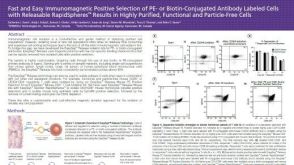 科学海报Positive Selection of PE- or Biotin-Conjugated Antibody Labeled Cells with Releasable Rapidspheres™

 沪公网安备31010102008431号