Rutella S et al. (SEP 2003)
Journal of immunology (Baltimore,Md. : 1950) 171 6 2977--88
Identification of a novel subpopulation of human cord blood CD34-CD133-CD7-CD45+lineage- cells capable of lymphoid/NK cell differentiation after in vitro exposure to IL-15.
The hemopoietic stem cell (HSC) compartment encompasses cell subsets with heterogeneous proliferative and developmental potential. Numerous CD34(-) cell subsets that might reside at an earlier stage of differentiation than CD34(+) HSCs have been described and characterized within human umbilical cord blood (UCB). We identified a novel subpopulation of CD34(-)CD133(-)CD7(-)CD45(dim)lineage (lin)(-) HSCs contained within human UCB that were endowed with low but measurable extended long-term culture-initiating cell activity. Exposure of CD34(-)CD133(-)CD7(-)CD45(dim)lin(-) HSCs to stem cell factor preserved cell viability and was associated with the following: 1) concordant expression of the stem cell-associated Ags CD34 and CD133,2) generation of CFU-granulocyte-macrophage,burst-forming unit erythroid,and megakaryocytic aggregates,3) significant extended long-term culture-initiating cell activity,and 4) up-regulation of mRNA signals for myeloperoxidase. At variance with CD34(+)lin(-) cells,CD34(-)CD133(-)CD7(-)CD45(dim)lin(-) HSCs maintained with IL-15,but not with IL-2 or IL-7,proliferated vigorously and differentiated into a homogeneous population of CD7(+)CD45(bright)CD25(+)CD44(+) lymphoid progenitors with high expression of the T cell-associated transcription factor GATA-3. Although they harbored nonclonally rearranged TCRgamma genes,IL-15-primed CD34(-)CD133(-)CD7(-)CD45(dim)lin(-) HSCs failed to achieve full maturation,as manifested in their CD3(-)TCRalphabeta(-)gammadelta(-) phenotype. Conversely,culture on stromal cells supplemented with IL-15 was associated with the acquisition of phenotypic and functional features of NK cells. Collectively,CD34(-)CD133(-)CD7(-)CD45(dim)lin(-) HSCs from human UCB displayed an exquisite sensitivity to IL-15 and differentiated into lymphoid/NK cells. Whether the transplantation of CD34(-)lin(-) HSCs possessing T/NK cell differentiation potential may impact on immunological reconstitution and control of minimal residual disease after HSC transplantation for autoimmune or malignant diseases remains to be determined.
View Publication
产品类型:
产品号#:
09500
产品名:
BIT 9500血清替代物
(Nov 2024)
Nature Communications 15
Defective germinal center selection results in persistence of self-reactive B cells from the primary to the secondary repertoire in Primary Antiphospholipid Syndrome
Primary antiphospholipid syndrome (PAPS) is a life-threatening clotting disorder mediated by pathogenic autoantibodies. Here we dissect the origin of self-reactive B cells in human PAPS using peripheral blood and bone marrow of patients with triple-positive PAPS via combined single-cell RNA sequencing,B cell receptors (BCR) repertoire profiling,CITEseq analysis and single cell immortalization. We find that antiphospholipid (aPL)-specific B cells are present in the naive compartment,polyreactive,and derived from the natural repertoire. Furthermore,B cells with aPL specificities are not eliminated in patients with PAPS,persist until the memory and long-lived plasma cell stages,likely after defective germinal center selection,while becoming less polyreactive. Lastly,compared with the non-PAPS cells,PAPS B cells exhibit distinct IFN and APRIL signature as well as dysregulated mTORC1 and MYC pathways. Our findings may thus elucidate the survival mechanisms of these autoreactive B cells and suggest potential therapeutic targets for the treatment of PAPS. Primary antiphospholipid syndrome (PAPS) is a clotting disorder attributed to autoreactive antibodies produced by B cells. Here the authors show,using single cell omics and B cell repertoire data,that autoreactive B cells originate from the natural B cell repertoire and escape germinal center selection to persist in PAPS patient via potential dysregulation of mTORC1 and MYC pathways.
View Publication
产品类型:
产品号#:
17954
17954RF
100-0971
产品名:
EasySep™人B细胞分选试剂盒
RoboSep™ 人B细胞分选试剂盒
EasySep™人B细胞分离试剂盒
H. Wen et al. (jul 2020)
Stem cells and development
Human Umbilical Cord Mesenchymal Stem Cells Attenuate Abdominal Aortic Aneurysm Progression in Sprague-Dawley Rats: Implication of Vascular Smooth Muscle Cell Phenotypic Modulation.
Abdominal aortic aneurysm (AAA) is life-threatening,for which efficient nonsurgical treatment strategy has not been available so far. Several previous studies investigating the therapeutic effect of mesenchymal stem cells (MSCs) in AAA indicated that MSCs could inhibit aneurysmal inflammatory responses and extracellular matrix destruction,and suppress aneurysm occurrence and expansion. Vascular smooth muscle cell (VSMC) phenotypic plasticity is reported to be predisposed in AAA initiation and progression. However,little is known about the effect of MSCs on VSMC phenotypic modulation in AAA. In this study,we investigate the therapeutic efficacy of umbilical cord mesenchymal stem cells (UC-MSCs) in elastase-induced AAA model and evaluate the effect of UC-MSC on VSMC phenotypic regulation. We demonstrate that the intravenous injection of UC-MSC attenuates elastase-induced aneurysmal expansion,reduces elastin degradation and fragmentation,inhibits MMPs and TNF-$\alpha$ expression,and preserves and/or restores VSMC contractile phenotype in AAA. Taken together,these results highlight the therapeutic and VSMC phenotypic modulation effects of UC-MSC in AAA progression,which further indicates the potential of applying UC-MSC as an alternative treatment candidate for AAA.
View Publication
Coata G et al. (JAN 2001)
Stem cells (Dayton,Ohio) 19 6 534--42
Prenatal diagnosis of genetic abnormalities using fetal CD34+ stem cells in maternal circulation and evidence they do not affect diagnosis in later pregnancies.
In the present study,we report a new method for enrichment and analysis of fetal CD34+ stem cells after culture in order to determine whether it is feasible for noninvasive prenatal diagnosis. We also determined whether fetal CD34+ stem cells persist in maternal blood after delivery and assessed whether they have an impact on noninvasive prenatal diagnosis of genetic abnormalities. Peripheral blood samples were obtained from 35 pregnant women,13 non-pregnant women who had given birth to male offsprings,12 women who had never been pregnant,and eight pregnant women with male fetuses. CD34+ stem cells were enriched and either cultured for prenatal diagnosis or analyzed with fluorescence in situ hybridization (FISH)/polymerase chain reaction (PCR) to determine peristance in maternal blood. Fetal/maternal cells can be isolated and grown in vitro" to provide enough cells for a more accurate fetal sex or aneuploid prediction than is provided by unenriched and uncultured CD34+ stem cells. The presence of fetal cells in maternal blood samples from mothers who had given birth to male offspring was found in 3 of 13 blood samples. PCR was positive for Y chromosome in one woman who had never been pregnant. Analysis of cultured CD34+ stem cells from mothers with Y PCR positivity did not detect any male cells in any samples. Even if PCR positivity is due to persistence of fetal stem cells from previous pregnancies�
View Publication
产品类型:
产品号#:
04435
04445
产品名:
MethoCult™H4435富集
MethoCult™H4435富集
Xie X et al. (FEB 2003)
Blood 101 4 1329--35
Thrombopoietin promotes mixed lineage and megakaryocytic colony-forming cell growth but inhibits primitive and definitive erythropoiesis in cells isolated from early murine yolk sacs.
The role of thrombopoietin (Tpo) in promoting hematopoiesis has been extensively studied in late fetal,neonatal,and adult mice. However,the effects of Tpo on early yolk sac hematopoiesis have been largely unexplored. We examined whole embryos or the cells isolated from embryo proper and yolk sacs and identified both Tpo and c-mpl (Tpo receptor) mRNA transcripts in tissues as early as embryonic day 6.5 (E6.5). Presomite whole embryos and somite-staged yolk sac and embryo proper cells were plated in methylcellulose cultures and treated with selected hematopoietic growth factors in the presence or absence of Tpo. Tpo alone failed to promote colony-forming unit (CFU) formation. However,in the presence of other growth factors,Tpo caused a substantial dose-dependent reduction in primitive and definitive erythroid CFU growth in cultures containing E7.5 and E8.0 whole embryos and E8.25 to 9.5 yolk sac-derived cells. Meanwhile,Tpo treatment resulted in a substantial dose-dependent increase in CFU-mixed lineage (CFU-Mix) and CFU-megakaryocyte (CFU-Meg) formation in cultures containing cells from similar staged tissues. Addition of Tpo to cultures of sorted E9.5 yolk sac c-Kit(+)CD34(+) hematopoietic progenitors also inhibited erythroid CFU growth but augmented CFU-Mix and CFU-Meg activity. Effects of Tpo on CFU growth were blocked in the presence of a monoclonal antibody with Tpo-neutralizing activity but not with control antibody. Thus,under certain growth factor conditions,Tpo directly inhibits early yolk sac erythroid CFU growth but facilitates megakaryocyte and mixed lineage colony formation.
View Publication
产品类型:
产品号#:
03134
产品名:
MethoCult™M3134
Zhou Q et al. (FEB 2016)
Molecular biology of the cell 27 4 627--39
Inhibition of the histone demethylase Kdm5b promotes neurogenesis and derepresses Reln (reelin) in neural stem cells from the adult subventricular zone of mice.
The role of epigenetic regulators in the control of adult neurogenesis is largely undefined. We show that the histone demethylase enzyme Kdm5b (Jarid1b) negatively regulates neurogenesis from adult subventricular zone (SVZ) neural stem cells (NSCs) in culture. shRNA-mediated depletion of Kdm5b in proliferating adult NSCs decreased proliferation rates and reduced neurosphere formation in culture. When transferred to differentiation culture conditions,Kdm5b-depleted adult NSCs migrated from neurospheres with increased velocity. Whole-genome expression screening revealed widespread transcriptional changes with Kdm5b depletion,notably the up-regulation of reelin (Reln),the inhibition of steroid biosynthetic pathway component genes and the activation of genes with intracellular transport functions in cultured adult NSCs. Kdm5b depletion increased extracellular reelin concentration in the culture medium and increased phosphorylation of the downstream reelin signaling target Disabled-1 (Dab1). Sequestration of extracellular reelin with CR-50 reelin-blocking antibodies suppressed the increase in migratory velocity of Kdm5b-depleted adult NSCs. Chromatin immunoprecipitation revealed that Kdm5b is present at the proximal promoter of Reln,and H3K4me3 methylation was increased at this locus with Kdm5b depletion in differentiating adult NSCs. Combined the data suggest Kdm5b negatively regulates neurogenesis and represses Reln in neural stem cells from the adult SVZ.
View Publication
产品类型:
产品号#:
05700
05701
05702
05704
产品名:
NeuroCult™ 基础培养基(小鼠&大鼠)
NeuroCult™ 扩增添加物 (小鼠&大鼠)
NeuroCult™ 扩增试剂盒 (小鼠&大鼠)
NeuroCult™ 分化试剂盒 (小鼠&大鼠)
Jin F et al. (JUL 2005)
Cancer research 65 14 6354--63
Activation of nuclear factor-kappaB contributes to induction of death receptors and apoptosis by the synthetic retinoid CD437 in DU145 human prostate cancer cells.
Activation of the transcription factor,nuclear factor-kappaB (NF-kappaB),results in up-regulation of not only antiapoptotic genes but also proapoptotic genes,including death receptor 4 (DR4) and death receptor 5 (DR5). Therefore,NF-kappaB activation either suppresses or promotes apoptosis depending on the type of stimulus or cell context. We showed previously that the synthetic retinoid,6-[3-(1-adamantyl)-4-hydroxyphenyl]-2-naphthalene carboxylic acid (CD437),effectively induces apoptosis particularly in androgen-independent prostate carcinoma cells. This effect was associated with the ability of CD437 to induce the expression of DR4 and DR5. In the present study,we examined the hypothesis that NF-kappaB activation plays a role in CD437-induced death receptor expression and apoptosis. Treatment of DU145 cells with CD437 resulted in a rapid decrease (textgreater or = 3 hours) of IkappaBalpha,which was accompanied by increased translocation of the NF-kappaB subunit p65 from the cytoplasm to the nucleus and increased NF-kappaB DNA-binding activity (textgreater or = 4 hours). The NF-kappaB inhibitor,helenalin,inhibited CD437-induced IkappaBalpha reduction and p65 nuclear translocation. Accordingly,it also abrogated CD437-induced up-regulation of DR4,activation of caspase-8 and caspase-3,and increased DNA fragmentation. Overexpression of an IkappaBalpha dominant-negative mutant blocked not only CD437-induced p65 nuclear translocation but also DR4 up-regulation,caspase activation,and DNA fragmentation. CD437 was unable to decrease IkappaBalpha protein levels and up-regulate DR4 expression in CD437-resistant DU145 cells. Moreover,knockdown of Fas-associated death domain,caspase-8,and DR4,respectively,suppressed CD437-induced apoptosis. Collectively,these results indicate that CD437 activates NF-kappaB via decreasing IkappaBalpha protein and thereby induces DR4 expression and subsequent apoptosis in DU145 cells.
View Publication
产品类型:
产品号#:
72722
72724
产品名:
CD437
CD437
Boquest AC et al. (APR 2007)
Stem cells (Dayton,Ohio) 25 4 852--61
CpG methylation profiles of endothelial cell-specific gene promoter regions in adipose tissue stem cells suggest limited differentiation potential toward the endothelial cell lineage.
In vivo endothelial commitment of adipose stem cells (ASCs) has scarcely been reported,and controversy remains on the contribution of ASCs to vascularization. We address the epigenetic commitment of ASCs to the endothelial lineage. We report a bisulfite sequencing analysis of CpG methylation in the promoters of two endothelial-cell-specific genes,CD31 and CD144,in freshly isolated and in cultures of ASCs before and after induction of endothelial differentiation. In contrast to adipose tissue-derived endothelial (CD31(+)) cells,freshly isolated ASCs display a heavily methylated CD31 promoter and a mosaically methylated CD144 promoter despite basal transcription of both genes. Methylation state of both promoters remains globally stable upon culture. Endothelial stimulation of ASCs in methylcellulose elicits phenotypic changes,marginal upregulation of CD31,and CD144 expression and restrictive induction of a CD31(+)CD144(+) immunophenotype. These events are accompanied by discrete changes in CpG methylation in CD31 and CD144 promoters; however,no global demethylation that marks CD31(+) cells and human umbilical vein endothelial cells occurs. Immunoselection of CD31(+) cells after endothelial stimulation reveals consistent demethylation of one CpG immediately 3' of the transcription start site of the CD31 promoter. Adipogenic or osteogenic differentiation maintains CD31 and CD144 methylation patterns of undifferentiated cells. Methylation profiles of CD31 and CD144 promoters suggest a limited commitment of ASCs to the endothelial lineage. This contrasts with the reported hypomethylation of adipogenic promoters,which reflects a propensity of ASCs toward adipogenic differentiation. Analysis of CpG methylation at lineage-specific promoters provides a robust assessment of epigenetic commitment of stem cells to a specific lineage.
View Publication
产品类型:
产品号#:
04434
04444
产品名:
MethoCult™H4434经典
MethoCult™H4434经典
Girart M et al. (SEP 2007)
Journal of immunology (Baltimore,Md. : 1950) 179 6 3472--9
Engagement of TLR3, TLR7, and NKG2D regulate IFN-gamma secretion but not NKG2D-mediated cytotoxicity by human NK cells stimulated with suboptimal doses of IL-12.
NK cells express different TLRs,such as TLR3,TLR7,and TLR9,but little is known about their role in NK cell stimulation. In this study,we used specific agonists (poly(I:C),loxoribine,and synthetic oligonucleotides containing unmethylated CpG sequences to stimulate human NK cells without or with suboptimal doses of IL-12,IL-15,or IFN-alpha,and investigated the secretion of IFN-gamma,cytotoxicity,and expression of the activating receptor NKG2D. Poly(I:C) and loxoribine,in conjunction with IL-12,but not IL-15,triggered secretion of IFN-gamma. Inhibition of IFN-gamma secretion by chloroquine suggested that internalization of the TLR agonists was necessary. Also,secretion of IFN-gamma was dependent on MEK1/ERK,p38 MAPK,p70(S6) kinase,and NF-kappaB,but not on calcineurin. IFN-alpha induced a similar effect,but promoted lesser IFN-gamma secretion. However,cytotoxicity (51Cr release assays) against MHC class I-chain related A (MICA)- and MICA+ tumor targets remained unchanged,as well as the expression of the NKG2D receptor. Excitingly,IFN-gamma secretion was significantly increased when NK cells were stimulated with poly(I:C) or loxoribine and IL-12,and NKG2D engagement was induced by coculture with MICA+ tumor cells in a PI3K-dependent manner. We conclude that resting NK cells secrete high levels of IFN-gamma in response to agonists of TLR3 or TLR7 and IL-12,and this effect can be further enhanced by costimulation through NKG2D. Hence,integration of the signaling cascades that involve TLR3,TLR7,IL-12,and NKG2D emerges as a critical step to promote IFN-gamma-dependent NK cell-mediated effector functions,which could be a strategy to promote Th1-biased immune responses in pathological situations such as cancer.
View Publication
产品类型:
产品号#:
15025
15065
产品名:
RosetteSep™人NK细胞富集抗体混合物
RosetteSep™人NK细胞富集抗体混合物
L. Wang et al. (may 2020)
Science advances 6 21 eaba6357
In situ repair abilities of human umbilical cord-derived mesenchymal stem cells and autocrosslinked hyaluronic acid gel complex in rhesus monkeys with intrauterine adhesion.
Increasing occurrence of moderate to severe intrauterine adhesion (IUA) is seriously affecting the quality of human life. The aim of the study was to establish IUA models in nonhuman primates and to explore the dual repair effects of human umbilical cord-derived mesenchymal stem cells (huMSCs) loaded on autocrosslinked hyaluronic acid gel (HA-GEL) on endometrial damage and adhesion. Here,we recorded the menstrual cycle data in detail with uterine cavities observed and endometrial tissues detected after intervention,and the thicker endometria,decreased amount of fibrotic formation,increased number of endometrium glands,etc.,suggested that both HA-GEL and huMSC/HA-GEL complexes could partially repair IUA caused by mechanical injury,but huMSC/HA-GEL complex transplantation had notable dual repair effects: a reliable antiadhesion property and the promotion of endometrial regeneration.
View Publication
产品类型:
产品号#:
05412
05465
产品名:
MesenCult™ 脂肪分化试剂盒 (人)
MesenCult™ 成骨细胞分化试剂盒 (人)
Vacca P et al. (DEC 2006)
Blood 108 13 4078--85
Analysis of natural killer cells isolated from human decidua: Evidence that 2B4 (CD244) functions as an inhibitory receptor and blocks NK-cell function.
While during the first trimester of pregnancy natural killer (NK) cells represent the most abundant lymphocyte population in the decidua,their actual function at this site is still debated. In this study we analyzed NK cells isolated from decidual tissue for their surface phenotype and functional capability. We show that decidual NK (dNK) cells express normal surface levels of certain activating receptors,including NKp46,NKG2D,and 2B4,as well as of killer cell immunoglobulin-like receptors (KIRs) and CD94/NKG2A inhibitory receptor. In addition,they are characterized by high levels of cytoplasmic granules despite their CD56(bright) CD16- surface phenotype. Moreover,we provide evidence that in dNK cells,activating NK receptors display normal triggering capability whereas 2B4 functions as an inhibitory receptor. Thus,cross-linking of 2B4 resulted in inhibition of both cytolytic activity and interferon-gamma (IFN-gamma) production. Clonal analysis revealed that,in the majority of dNK cell clones,the 2B4 inhibitory function is related to the deficient expression of signaling lymphocyte activation molecule (SLAM)-associated protein (SAP) mRNA. Moreover,biochemical analysis revealed low levels of SAP in the dNK polyclonal population. This might suggest that dNK cells,although potentially capable of killing,are inhibited in their function when interacting with cells expressing CD48.
View Publication


 EasySep™小鼠TIL(CD45)正选试剂盒




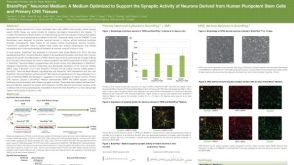 科学海报BrainPhys™ Neuronal Medium: A Medium Optimized to Support the Synaptic Activity of Neurons Derived from Human Pluripotent Stem Cells and Primary CNS Tissues
 沪公网安备31010102008431号