Conneally E et al. (SEP 1997)
Proceedings of the National Academy of Sciences of the United States of America 94 18 9836--41
Expansion in vitro of transplantable human cord blood stem cells demonstrated using a quantitative assay of their lympho-myeloid repopulating activity in nonobese diabetic-scid/scid mice.
Human hematopoiesis originates in a population of stem cells with transplantable lympho-myeloid reconstituting potential,but a method for quantitating such cells has not been available. We now describe a simple assay that meets this need. It is based on the ability of sublethally irradiated immunodeficient nonobese diabetic-scid/scid (NOD/SCID) mice to be engrafted by intravenously injected human hematopoietic cells and uses limiting dilution analysis to measure the frequency of human cells that produce both CD34(-)CD19(+) (B-lymphoid) and CD34(+) (myeloid) colony-forming cell progeny in the marrow of such recipients 6 to 8 weeks post-transplant. Human cord blood (CB) contains approximately 5 of these competitive repopulating units (CRU) per ml that have a similar distribution between the CD38(-) and CD38(+) subsets of CD34(+) CB cells as long-term culture-initiating cells (LTC-IC) (4:1 vs. 2:1). Incubation of purified CD34(+)CD38(-) human CB cells in serum-free medium containing flt-3 ligand,Steel factor,interleukin 3,interleukin 6,and granulocyte colony-stimulating factor for 5-8 days resulted in a 100-fold expansion of colony-forming cells,a 4-fold expansion of LTC-IC,and a 2-fold (but significant,P textless 0.02) increase in CRU. The culture-derived CRU,like the original CB CRU,generated pluripotent,erythroid,granulopoietic,megakaryopoietic,and pre-B cell progeny upon transplantation into NOD/SCID mice. These findings demonstrate an equivalent phenotypic heterogeneity amongst human CB cells detectable as CRU and LTC-IC. In addition,their similarly modest response to stimulation by a combination of cytokines that extensively amplify LTC-IC from normal adult marrow underscores the importance of ontogeny-dependent changes in human hematopoietic stem cell proliferation and self-renewal.
View Publication
产品类型:
产品号#:
28600
产品名:
L-Calc™有限稀释软件
Avanzini MA et al. (DEC 2009)
Haematologica 94 12 1649--60
Generation of mesenchymal stromal cells in the presence of platelet lysate: a phenotypic and functional comparison of umbilical cord blood- and bone marrow-derived progenitors.
BACKGROUND: Mesenchymal stromal cells are employed in various different clinical settings in order to modulate immune response. However,relatively little is known about the mechanisms responsible for their immunomodulatory effects,which could be influenced by both the cell source and culture conditions. DESIGN AND METHODS: We tested the ability of a 5% platelet lysate-supplemented medium to support isolation and ex vivo expansion of mesenchymal stromal cells from full-term umbilical-cord blood. We also investigated the biological/functional properties of umbilical cord blood mesenchymal stromal cells,in comparison with platelet lysate-expanded bone marrow mesenchymal stromal cells. RESULTS: The success rate of isolation of mesenchymal stromal cells from umbilical cord blood was in the order of 20%. These cells exhibited typical morphology,immunophenotype and differentiation capacity. Although they have a low clonogenic efficiency,umbilical cord blood mesenchymal stromal cells may possess high proliferative potential. The genetic stability of these cells from umbilical cord blood was demonstrated by a normal molecular karyotype; in addition,these cells do not express hTERT and telomerase activity,do express p16(ink4a) protein and do not show anchorage-independent cell growth. Concerning alloantigen-specific immune responses,umbilical cord blood mesenchymal stromal cells were able to: (i) suppress T- and NK-lymphocyte proliferation,(ii) decrease cytotoxic activity and (iii) only slightly increase interleukin-10,while decreasing interferon-gamma secretion,in mixed lymphocyte culture supernatants. While an indoleamine 2,3-dioxygenase-specific inhibitor did not reverse mesenchymal stromal cell-induced suppressive effects,a prostaglandin E(2)-specific inhibitor hampered the suppressive effect of both umbilical cord blood- and bone marrow-mesenchymal stromal cells on alloantigen-induced cytotoxic activity. Mesenchymal stromal cells from both sources expressed HLA-G. CONCLUSIONS: Umbilical cord blood- and bone marrow-mesenchymal stromal cells may differ in terms of clonogenic efficiency,proliferative capacity and immunomodulatory properties; these differences may be relevant for clinical applications.
View Publication
产品类型:
产品号#:
05401
产品名:
MesenCult™ MSC基础培养基 (人)
Luo Y et al. (JUL 2014)
Stem cells translational medicine 3 7 821--835
Stable enhanced green fluorescent protein expression after differentiation and transplantation of reporter human induced pluripotent stem cells generated by AAVS1 transcription activator-like effector nucleases.
Human induced pluripotent stem (hiPS) cell lines with tissue-specific or ubiquitous reporter genes are extremely useful for optimizing in vitro differentiation conditions as well as for monitoring transplanted cells in vivo. The adeno-associated virus integration site 1 (AAVS1) locus has been used as a safe harbor" locus for inserting transgenes because of its open chromatin structure�
View Publication
产品类型:
产品号#:
05110
85850
85857
产品名:
STEMdiff™定型内胚层检测试剂盒
mTeSR™1
mTeSR™1
Le Y et al. (MAR 2005)
Journal of immunology (Baltimore,Md. : 1950) 174 5 2582--90
CXC chemokine ligand 12-induced focal adhesion kinase activation and segregation into membrane domains is modulated by regulator of G protein signaling 1 in pro-B cells.
CXCL12-induced chemotaxis and adhesion to VCAM-1 decrease as B cells differentiate in the bone marrow. However,the mechanisms that regulate CXCL12/CXCR4-mediated signaling are poorly understood. We report that after CXCL12 stimulation of progenitor B cells,focal adhesion kinase (FAK) and PI3K are inducibly recruited to raft-associated membrane domains. After CXCL12 stimulation,phosphorylated FAK is also localized in membrane domains. The CXCL12/CXCR4-FAK pathway is membrane cholesterol dependent and impaired by metabolic inhibitors of G(i),Src family,and the GTPase-activating protein,regulator of G protein signaling 1 (RGS1). In the bone marrow,RGS1 mRNA expression is low in progenitor B cells and high in mature B cells,implying developmental regulation of CXCL12/CXCR4 signaling by RGS1. CXCL12-induced chemotaxis and adhesion are impaired when FAK recruitment and phosphorylation are inhibited by either membrane cholesterol depletion or overexpression of RGS1 in progenitor B cells. We conclude that the recruitment of signaling molecules to specific membrane domains plays an important role in CXCL12/CXCR4-induced cellular responses.
View Publication
产品类型:
产品号#:
产品名:
Q. Pan et al. (dec 2019)
Cell and tissue research
Characterizing the effects of hypoxia on the metabolic profiles of mesenchymal stromal cells derived from three tissue sources using chemical isotope labeling liquid chromatography-mass spectrometry.
Microenvironmental factors such as oxygen concentration mediate key effects on the biology of mesenchymal stromal cells (MSCs). Herein,we performed an in-depth characterization of the metabolic behavior of MSCs derived from the placenta,umbilical cord,and adipose tissue (termed hPMSCs,UC-MSCs,and AD-MSCs,respectively) at physiological (hypoxic; 5{\%} oxygen [O2]) and standardized (normoxic; 21{\%} O2) O2 concentrations using chemical isotope labeling liquid chromatography-mass spectrometry. 12C- and 13C-isotope dansylation (Dns) labeling was used to analyze the amine/phenol submetabolome,and 2574 peak pairs or metabolites were detected and quantified,from which 52 metabolites were positively identified using a library of 275 Dns-metabolite standards; 2189 metabolites were putatively identified. Next,we identified six metabolites using the Dns library,as well as 14 hypoxic biomarkers from the human metabolome database out of 96 altered metabolites. Ultimately,metabolic pathway analyses were performed to evaluate the associated pathways. Based on pathways identified using the Kyoto Encyclopedia of Genes and Genomes,we identified significant changes in the metabolic profiles of MSCs in response to different O2 concentrations. These results collectively suggest that O2 concentration has the strongest influence on hPMSCs metabolic characteristics,and that 5{\%} O2 promotes arginine and proline metabolism in hPMSCs and UC-MSCs but decreases gluconeogenesis (alanine-glucose) rates in hPMSCs and AD-MSCs. These changes indicate that MSCs derived from different sources exhibit distinct metabolic profiles.
View Publication
产品类型:
产品号#:
17952
17952RF
17953
17953RF
100-0696
100-0710
产品名:
EasySep™人CD4+ T细胞分选试剂盒
RoboSep™ 人CD4+ T细胞分选试剂盒
EasySep™人CD8+ T细胞分选试剂盒
RoboSep™ 人CD8+ T细胞分选试剂盒
EasySep™人CD4+ T细胞分离试剂盒
EasySep™人CD8+ T细胞分选试剂盒
Clemens G et al. ( 2013)
Molecular bioSystems 9 4 677--692
The action of all-trans-retinoic acid (ATRA) and synthetic retinoid analogues (EC19 and EC23) on human pluripotent stem cells differentiation investigated using single cell infrared microspectroscopy.
All trans-retinoic acid (ATRA) is widely used to direct the differentiation of cultured stem cells. When exposed to the pluripotent human embryonal carcinoma (EC) stem cell line,TERA2.cl.SP12,ATRA induces ectoderm differentiation and the formation of neuronal cell types. We have previously generated synthetic analogues of retinoic acid (EC23 and EC19) which also induce the differentiation of EC cells. Even though EC23 and EC19 have similar chemical structures,they have differing biochemical effects in terms of EC cell differentiation. EC23 induces neuronal differentiation in a manner similar to ATRA,whereas EC19 directs the cells to form epithelial-like derivatives. Previous MALDI-TOF MS analysis examined the response of TERA2.cl.SP12 cells after exposure to ATRA,EC23 and EC19 and further demonstrated the similarly in the effect of ATRA and EC23 activity whilst responses to EC19 were very different. In this study,we show that Fourier Transform Infrared Micro-Spectroscopy (FT-IRMS) coupled with appropriate scatter correction and multivariate analysis can be used as an effective tool to further investigate the differentiation of human pluripotent stem cells and monitor the alternative affects different retinoid compounds have on the induction of differentiation. FT-IRMS detected differences between cell populations as early as 3 days of compound treatment. Populations of cells treated with different retinoid compounds could easily be distinguished from one another during the early stages of cell differentiation. These data demonstrate that FT-IRMS technology can be used as a sensitive screening technique to monitor the status of the stem cell phenotype and progression of differentiation along alternative pathways in response to different compounds.
View Publication
产品类型:
产品号#:
73102
73104
产品名:
EC23
EC23
Belzile J-P et al. (APR 2014)
Journal of virology 88 8 4021--4039
Human cytomegalovirus infection of human embryonic stem cell-derived primitive neural stem cells is restricted at several steps but leads to the persistence of viral DNA.
UNLABELLED Congenital human cytomegalovirus (HCMV) infection is a major cause of central nervous system structural anomalies and sensory impairments. It is likely that the stage of fetal development,as well as the state of differentiation of susceptible cells at the time of infection,affects the severity of the disease. We used human embryonic stem (ES) cell-derived primitive prerosette neural stem cells (pNSCs) and neural progenitor cells (NPCs) maintained in chemically defined conditions to study HCMV replication in cells at the early stages of neural development. In contrast to what was observed previously using fetus-derived NPCs,infection of ES cell-derived pNSCs with HCMV was nonprogressive. At a low multiplicity of infection,we observed only a small percentage of cells expressing immediate-early genes (IE) and early genes. IE expression was found to be restricted to cells negative for the anterior marker FORSE-1,and treatment of pNSCs with retinoic acid restored IE expression. Differentiation of pNSCs into NPCs restored IE expression but not the transactivation of early genes. Virions produced in NPCs and pNSCs were exclusively cell associated and were mostly non-neural tropic. Finally,we found that viral genomes could persist in pNSC cultures for up to a month after infection despite the absence of detectable IE expression by immunofluorescence,and infectious virus could be produced upon differentiation of pNSCs to neurons. In conclusion,our results highlight the complex array of hurdles that HCMV must overcome in order to infect primitive neural stem cells and suggest that these cells might act as a reservoir for the virus. IMPORTANCE Human cytomegalovirus (HCMV) is a betaherpesvirus that is highly prevalent in the population. HCMV infection is usually asymptomatic but can lead to severe consequences in immunosuppressed individuals. HCMV is also the most important infectious cause of congenital developmental birth defects. Manifestations of fetal HCMV disease range from deafness and learning disabilities to more severe symptoms such as microcephaly. In this study,we have used embryonic stem cells to generate primitive neural stem cells and have used these to model HCMV infection of the fetal central nervous system (CNS) in vitro. Our results reveal that these cells,which are similar to those present in the developing neural tube,do not support viral replication but instead likely constitute a viral reservoir. Future work will define the effect of viral persistence on cellular functions as well as the exogenous signals leading to the reactivation of viral replication in the CNS.
View Publication
产品类型:
产品号#:
85850
85857
产品名:
mTeSR™1
mTeSR™1
Petzer AL et al. (SEP 1996)
Blood 88 6 2162--71
Characterization of primitive subpopulations of normal and leukemic cells present in the blood of patients with newly diagnosed as well as established chronic myeloid leukemia.
Elevated numbers of primitive Philadelphia chromosome-positive (Ph+) progenitors,including long-term culture-initiating cells (LTC-IC) as well as colony-forming cells (CFC),have been previously described in the blood of patients with chronic myeloid leukemia (CML) in chronic phase with high white blood cell counts. In the present study,which focused primarily on an analysis of circulating progenitors present in such patients at diagnosis,we discovered the frequent and occasionally exclusive presence of circulating normal (Ph-) LTC-IC,often at levels above those seen for LTC-IC in the blood of normal individuals. The presence of detectable numbers of circulating Ph- LTC-IC was independent of the fact that the same peripheral blood samples also contained elevated numbers of predominantly or exclusively Ph+ CFC. Interestingly,both the Ph+ and Ph- LTC-IC in these samples were CD34+CD71- and variably CD38- and Thy-1+,as previously documented for LTC-IC in normal marrow. Thus,neither CD38 nor Thy-1 expression was useful for discriminating between Ph+ and Ph- LTC-IC in mixed populations. Nevertheless,an association of these phenotypes with LTC-IC function did allow highly enriched (textgreater 5% pure) suspensions of either Ph+ or Ph- LTC-IC to be obtained from selected samples of CML blood in which the initial LTC-IC population was either predominantly Ph+ or Ph-,respectively. These findings suggest that the mechanisms causing mobilization of leukemic stem cells in untreated CML patients may affect their normal counterparts. They also indicate a possible new source of autologous cells for the support of intensive therapy of CML patients. Finally,they provide a method for obtaining the most highly purified populations of Ph+ LTC-IC described to date. This method should be useful for further analyses of the molecular activities of these very primitive neoplastic cells.
View Publication
产品类型:
产品号#:
05150
产品名:
MyeloCult™H5100
Rajeshkumar NV et al. (SEP 2010)
Molecular cancer therapeutics 9 9 2582--92
A combination of DR5 agonistic monoclonal antibody with gemcitabine targets pancreatic cancer stem cells and results in long-term disease control in human pancreatic cancer model.
Pancreatic ductal adenocarcinoma (PDA) is an aggressive malignancy with one of the worst outcomes among all cancers. PDA often recurs after initial treatment to result in patient death despite the use of chemotherapy or radiation therapy. PDA contains a subset of tumor-initiating cells capable of extensive self-renewal known as cancer stem cells (CSC),which may contribute to therapeutic resistance and metastasis. At present,conventional chemotherapy and radiotherapy are largely ineffective in depleting CSC pool,suggesting the need for novel therapies that specifically target the cancer-sustaining stem cells for tumor eradication and to improve the poor prognosis of PDA patients. In this study,we report that death receptor 5 (DR5) is enriched in pancreatic CSCs compared with the bulk of the tumor cells. Treating a collection of freshly generated patient-derived PDA xenografts with gemcitabine,the first-line chemotherapeutic agent for PDA,is initially effective in reducing tumor size,but largely ineffective in diminishing the CSC populations,and eventually culminated in tumor relapse. However,a combination of tigatuzumab,a fully humanized DR5 agonist monoclonal antibody,with gemcitabine proved to be more efficacious by providing a double hit to kill both CSCs and bulk tumor cells. The combination therapy produced remarkable reduction in pancreatic CSCs,tumor remissions,and significant improvements in time to tumor progression in a model that is considered more difficult to treat. These data provide the rationale to explore the DR5-directed therapies in combination with chemotherapy as a therapeutic option to improve the current standard of care for pancreatic cancer patients.
View Publication
C. L. Araujo Furlan et al. ( 2018)
Frontiers in immunology 9 2555
Limited Foxp3+ Regulatory T Cells Response During Acute Trypanosoma cruzi Infection Is Required to Allow the Emergence of Robust Parasite-Specific CD8+ T Cell Immunity.
While it is now acknowledged that CD4+ T cells expressing CD25 and Foxp3 (Treg cells) regulate immune responses and,consequently,influence the pathogenesis of infectious diseases,the regulatory response mediated by Treg cells upon infection by Trypanosoma cruzi was still poorly characterized. In order to understand the role of Treg cells during infection by this protozoan parasite,we determined in time and space the magnitude of the regulatory response and the phenotypic,functional and transcriptional features of the Treg cell population in infected mice. Contrary to the accumulation of Treg cells reported in most chronic infections in mice and humans,experimental T. cruzi infection was characterized by sustained numbers but decreased relative frequency of Treg cells. The reduction in Treg cell frequency resulted from a massive accumulation of effector immune cells,and inversely correlated with the magnitude of the effector immune response as well as with emergence of acute immunopathology. In order to understand the causes underlying the marked reduction in Treg cell frequency,we evaluated the dynamics of the Treg cell population and found a low proliferation rate and limited accrual of peripheral Treg cells during infection. We also observed that Treg cells became activated and acquired a phenotypic and transcriptional profile consistent with suppression of type 1 inflammatory responses. To assess the biological relevance of the relative reduction in Treg cells frequency observed during T. cruzi infection,we transferred in vitro differentiated Treg cells at early moments,when the deregulation of the ratio between regulatory and conventional T cells becomes significant. Intravenous injection of Treg cells dampened parasite-specific CD8+ T cell immunity and affected parasite control in blood and tissues. Altogether,our results show that limited Treg cell response during the acute phase of T. cruzi infection enables the emergence of protective anti-parasite CD8+ T cell immunity and critically influences host resistance.
View Publication
产品类型:
产品号#:
19852
19852RF
19853
19853RF
产品名:
EasySep™小鼠CD4+ T细胞分选试剂盒
RoboSep™ 小鼠CD4+ T细胞分选试剂盒
EasySep™小鼠CD8+ T细胞分选试剂盒
RoboSep™ 小鼠CD8+ T细胞分选试剂盒
(Mar 2024)
Stem Cell Research & Therapy 15 1
Embryonic stem cells overexpressing high molecular weight FGF2 isoform enhance recovery of pre-ganglionic spinal root lesion in combination with fibrin biopolymer mediated root repair
BackgroundSpinal ventral root avulsion results in massive motoneuron degeneration with poor prognosis and high costs. In this study,we compared different isoforms of basic fibroblast growth factor 2 (FGF2),overexpressed in stably transfected Human embryonic stem cells (hESCs),following motor root avulsion and repair with a heterologous fibrin biopolymer (HFB).MethodsIn the present work,hESCs bioengineered to overexpress 18,23,and 31 kD isoforms of FGF2,were used in combination with reimplantation of the avulsed roots using HFB. Statistical analysis was conducted using GraphPad Prism software with one-way or two-way ANOVA,followed by Tukey’s or Dunnett’s multiple comparison tests. Significance was set at *p < 0.05,**p < 0.01,***p < 0.001,and ****p < 0.0001.ResultsFor the first set of experiments,rats underwent avulsion of the ventral roots with local administration of HFB and engraftment of hESCs expressing the above-mentioned FGF2 isoforms. Analysis of motoneuron survival,glial reaction,and synaptic coverage,two weeks after the lesion,indicated that therapy with hESCs overexpressing 31 kD FGF2 was the most effective. Consequently,the second set of experiments was performed with that isoform,so that ventral root avulsion was followed by direct spinal cord reimplantation. Motoneuron survival,glial reaction,synaptic coverage,and gene expression were analyzed 2 weeks post-lesion; while the functional recovery was evaluated by the walking track test and von Frey test for 12 weeks. We showed that engraftment of hESCs led to significant neuroprotection,coupled with immunomodulation,attenuation of astrogliosis,and preservation of inputs to the rescued motoneurons. Behaviorally,the 31 kD FGF2 - hESC therapy enhanced both motor and sensory recovery.ConclusionTransgenic hESCs were an effective delivery platform for neurotrophic factors,rescuing axotomized motoneurons and modulating glial response after proximal spinal cord root injury,while the 31 kD isoform of FGF2 showed superior regenerative properties over other isoforms in addition to the significant functional recovery.Supplementary InformationThe online version contains supplementary material available at 10.1186/s13287-024-03676-6.
View Publication


 EasySep™小鼠TIL(CD45)正选试剂盒




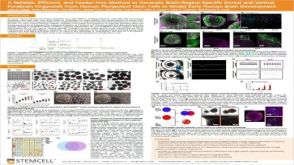 科学海报A Reliable, Efficient, and Feeder-Free Method to Generate Brain-Region-Specific Dorsal and Ventral Forebrain Organoids From Human Pluripotent Stem Cells to Model Early Human Brain Development
 沪公网安备31010102008431号