Genotype-Specific Differences between Mouse CNS Stem Cell Lines Expressing Frontotemporal Dementia Mutant or Wild Type Human Tau
Stem cell (SC) lines that capture the genetics of disease susceptibility provide new research tools. To assess the utility of mouse central nervous system (CNS) SC-containing neurosphere cultures for studying heritable neurodegenerative disease,we compared neurosphere cultures from transgenic mice that express human tau with the P301L familial frontotemporal dementia (FTD) mutation,rTg(tau(P301L))4510,with those expressing comparable levels of wild type human tau,rTg(tau(wt))21221. rTg(tau(P301L))4510 mice express the human tau(P301L) variant in their forebrains and display cellular,histological,biochemical and behavioral abnormalities similar to those in human FTD,including age-dependent differences in tau phosphorylation that distinguish them from rTg(tau(wt))21221 mice. We compared FTD-hallmark tau phosphorylation in neurospheres from rTg(tau(P301L))4510 mice and from rTg(tau(wt))21221 mice. The tau genotype-specific phosphorylation patterns in neurospheres mimicked those seen in mice,validating use of neurosphere cultures as models for studying tau phosphorylation. Genotype-specific tau phosphorylation was observed in 35 independent cell lines from individual fetuses; tau in rTg(tau(P301L))4510 cultures was hypophosphorylated in comparison with rTg(tau(wt))21221 as was seen in young adult mice. In addition,there were fewer human tau-expressing cells in rTg(tau(P301L))4510 than in rTg(tau(wt))21221 cultures. Following differentiation,neuronal filopodia-spine density was slightly greater in rTg(tau(P301L))4510 than rTg(tau(wt))21221 and control cultures. Together with the recapitulation of genotype-specific phosphorylation patterns,the observation that neurosphere lines maintained their cell line-specific-differences and retained SC characteristics over several passages supports the utility of SC cultures as surrogates for analysis of cellular disease mechanisms.
View Publication
产品类型:
产品号#:
05700
05701
05702
产品名:
NeuroCult™ 基础培养基(小鼠&大鼠)
NeuroCult™ 扩增添加物 (小鼠&大鼠)
NeuroCult™ 扩增试剂盒 (小鼠&大鼠)
Wu Q et al. (NOV 2017)
American journal of physiology. Lung cellular and molecular physiology 30-Nov ajplung003242017
Over-production of growth differentiation factor 15 (GDF15) promotes human rhinovirus infection and virus-induced inflammation in the lung.
Human rhinovirus (HRV) is the most common virus contributing to acute exacerbations of chronic obstructive pulmonary disease (COPD) nearly year-round,but the mechanisms have not been well elucidated. Recent clinical studies suggest that high levels of growth differentiation factor 15 (GDF15) protein in the blood are associated with an increased yearly rate of all-cause COPD exacerbations. Therefore,in the current study,we investigated whether GDF15 promotes HRV infection and virus-induced lung inflammation. We first examined the role of GDF15 in regulating host defense and HRV-induced inflammation using human GDF15 transgenic mice and cultured human GDF15 transgenic mouse tracheal epithelial cells. Next,we determined the effect of GDF15 on viral replication,antiviral responses,and inflammation in human airway epithelial cells with GDF15 knockdown and HRV infection. Finally,we explored the signaling pathways involved in airway epithelial responses to HRV infection in the context of GDF15. Human GDF15 protein over-expression in mice led to exaggerated inflammatory responses to HRV,increased infectious particle release,and decreased IFN-λ2/3 (IL-28A/B) mRNA expression in the lung. Moreover,GDF15 facilitated HRV replication and inflammation via inhibiting IFN-λ1/IL-29 protein production in human airway epithelial cells. Lastly,Smad1 cooperated with interferon regulatory factor 7 (IRF7) to regulate airway epithelial responses to HRV infection partly via GDF15 signaling. Our results reveal a novel function of GDF15 in promoting lung HRV infection and virus-induced inflammation,which may be a new mechanism for the increased susceptibility and severity of respiratory viral (i.e.,HRV) infection in cigarette smoke-exposed airways with GDF15 over-production.
View Publication
产品类型:
产品号#:
05001
05021
05022
产品名:
PneumaCult™-ALI 培养基
PneumaCult™-ALI 培养基含12 mm Transwell®插件
PneumaCult™-ALI 培养基含6.5 mm Transwell®插件
K. Ben M'Barek et al. (DEC 2017)
Science translational medicine 9 421
Human ESC-derived retinal epithelial cell sheets potentiate rescue of photoreceptor cell loss in rats with retinal degeneration.
Replacing defective retinal pigment epithelial (RPE) cells with those derived from human embryonic stem cells (hESCs) or human-induced pluripotent stem cells (hiPSCs) is a potential strategy for treating retinal degenerative diseases. Early clinical trials have demonstrated that hESC-derived or hiPSC-derived RPE cells can be delivered safely as a suspension to the human eye. The next step is transplantation of hESC/hiPSC-derived RPE cells as cell sheets that are more physiological. We have developed a tissue-engineered product consisting of hESC-derived RPE cells grown as sheets on human amniotic membrane as a biocompatible substrate. We established a surgical approach to engraft this tissue-engineered product into the subretinal space of the eyes of rats with photoreceptor cell loss. We show that transplantation of the hESC-RPE cell sheets grown on a human amniotic membrane scaffold resulted in rescue of photoreceptor cell death and improved visual acuity in rats with retinal degeneration compared to hESC-RPE cells injected as a cell suspension. These results suggest that tissue-engineered hESC-RPE cell sheets produced under good manufacturing practice conditions may be a useful approach for treating diseases of retinal degeneration.
View Publication
产品类型:
产品号#:
产品名:
L. C. Lindesmith et al. ( 2019)
Immunity 50 6 1530--1541.e8
Sera Antibody Repertoire Analyses Reveal Mechanisms of Broad and Pandemic Strain Neutralizing Responses after Human Norovirus Vaccination.
Rapidly evolving RNA viruses,such as the GII.4 strain of human norovirus (HuNoV),and their vaccines elicit complex serological responses associated with previous exposure. Specific correlates of protection,moreover,remain poorly understood. Here,we report the GII.4-serological antibody repertoire-pre- and post-vaccination-and select several antibody clonotypes for epitope and structural analysis. The humoral response was dominated by GII.4-specific antibodies that blocked ancestral strains or by antibodies that bound to divergent genotypes and did not block viral-entry-ligand interactions. However,one antibody,A1431,showed broad blockade toward tested GII.4 strains and neutralized the pandemic GII.P16-GII.4 Sydney strain. Structural mapping revealed conserved epitopes,which were occluded on the virion or partially exposed,allowing for broad blockade with neutralizing activity. Overall,our results provide high-resolution molecular information on humoral immune responses after HuNoV vaccination and demonstrate that infection-derived and vaccine-elicited antibodies can exhibit broad blockade and neutralization against this prevalent human pathogen.
View Publication
产品类型:
产品号#:
06005
产品名:
IntestiCult™ 肠道类器官生长培养基 (小鼠)
(Sep 2024)
bioRxiv 99
KIF5A regulates axonal repair and time-dependent axonal transport of SFPQ granules and mitochondria in human motor neurons
Mutations in the microtubule binding motor protein,kinesin family member 5A (KIF5A),cause the fatal motor neuron disease,Amyotrophic Lateral Sclerosis. While KIF5 family members transport a variety of cargos along axons,it is still unclear which cargos are affected by KIF5A mutations. We generated KIF5A null mutant human motor neurons to investigate the impact of KIF5A loss on the transport of various cargoes and its effect on motor neuron function at two different timepoints in vitro. The absence of KIF5A resulted in reduced neurite complexity in young motor neurons (DIV14) and significant defects in axonal regeneration capacity at all developmental stages. KIF5A loss did not affect neurofilament transport but resulted in decreased mitochondria motility and anterograde speed at DIV42. More prominently,KIF5A depletion strongly reduced anterograde transport of SFPQ-associated RNA granules in DIV42 motor neuron axons. We conclude that KIF5A most prominently functions in human motor neurons to promote axonal regrowth after injury as well as to anterogradely transport mitochondria and,to a larger extent,SFPQ-associated RNA granules in a time-dependent manner.
View Publication
产品类型:
产品号#:
85850
85857
产品名:
mTeSR™1
mTeSR™1
B. Ghosh et al. (aug 2020)
BMC pulmonary medicine 20 1 216
Effect of sub-chronic exposure to cigarette smoke, electronic cigarette and waterpipe on human lung epithelial barrier function.
BACKGROUND Taking into consideration a recent surge of a lung injury condition associated with electronic cigarette use,we devised an in vitro model of sub-chronic exposure of human bronchial epithelial cells (HBECs) in air-liquid interface,to determine deterioration of epithelial cell barrier from sub-chronic exposure to cigarette smoke (CS),e-cigarette aerosol (EC),and tobacco waterpipe exposures (TW). METHODS Products analyzed include commercially available e-liquid,with 0{\%} or 1.2{\%} concentration of nicotine,tobacco blend (shisha),and reference-grade cigarette (3R4F). In one set of experiments,HBECs were exposed to EC (0 and 1.2{\%}),CS or control air for 10 days using 1 cigarette/day. In the second set of experiments,exposure of pseudostratified primary epithelial tissue to TW or control air exposure was performed 1-h/day,every other day,until 3 exposures were performed. After 16-18 h of last exposure,we investigated barrier function/structural integrity of the epithelial monolayer with fluorescein isothiocyanate-dextran flux assay (FITC-Dextran),measurements of trans-electrical epithelial resistance (TEER),assessment of the percentage of moving cilia,cilia beat frequency (CBF),cell motion,and quantification of E-cadherin gene expression by reverse-transcription quantitative polymerase chain reaction (RT-qPCR). RESULTS When compared to air control,CS increased fluorescence (FITC-Dextran assay) by 5.6 times,whereby CS and EC (1.2{\%}) reduced TEER to 49 and 60{\%} respectively. CS and EC (1.2{\%}) exposure reduced CBF to 62 and 59{\%},and cilia moving to 47 and 52{\%},respectively,when compared to control air. CS and EC (1.2{\%}) increased cell velocity compared to air control by 2.5 and 2.6 times,respectively. The expression of E-cadherin reduced to 39{\%} of control air levels by CS exposure shows an insight into a plausible molecular mechanism. Altogether,EC (0{\%}) and TW exposures resulted in more moderate decreases in epithelial integrity,while EC (1.2{\%}) substantially decreased airway epithelial barrier function comparable with CS exposure. CONCLUSIONS The results support a toxic effect of sub-chronic exposure to EC (1.2{\%}) as evident by disruption of the bronchial epithelial cell barrier integrity,whereas further research is needed to address the molecular mechanism of this observation as well as TW and EC (0{\%}) toxicity in chronic exposures.
View Publication
Bohannon C et al. ( 2016)
Nature communications 7 11826
Long-lived antigen-induced IgM plasma cells demonstrate somatic mutations and contribute to long-term protection.
Long-lived plasma cells are critical to humoral immunity as a lifelong source of protective antibodies. Antigen-activated B cells-with T-cell help-undergo affinity maturation within germinal centres and persist as long-lived IgG plasma cells in the bone marrow. Here we show that antigen-specific,induced IgM plasma cells also persist for a lifetime. Unlike long-lived IgG plasma cells,which develop in germinal centres and then home to the bone marrow,IgM plasma cells are primarily retained within the spleen and can develop even in the absence of germinal centres. Interestingly,their expressed IgV loci exhibit somatic mutations introduced by the activation-induced cytidine deaminase (AID). However,these IgM plasma cells are probably not antigen-selected,as replacement mutations are spread through the variable segment and not enriched within the CDRs. Finally,antibodies from long-lived IgM plasma cells provide protective host immunity against a lethal virus challenge.
View Publication
产品类型:
产品号#:
19854
19854RF
产品名:
EasySep™小鼠B细胞分选试剂盒
RoboSep™ 小鼠B细胞分选试剂盒
P. A. Morawski et al. (JAN 2017)
Scientific reports 7 40838
Non-pathogenic tissue-resident CD8+ T cells uniquely accumulate in the brains of lupus-prone mice.
Severe lupus often includes psychiatric and neurological sequelae,although the cellular contributors to CNS disease remain poorly defined. Using intravascular staining to discriminate tissue-localized from blood-borne cells,we find substantial accumulation of CD8+ T cells relative to other lymphocytes in brain tissue,which correlates with lupus disease and limited neuropathology. This is in contrast to all other affected organs,where infiltrating CD4+ cells are predominant. Brain-infiltrating CD8+ T cells represent an activated subset of those found in the periphery,having a resident-memory phenotype (CD69+CD122-PD1+CD44+CD62L-) and expressing adhesion molecules (VLA-4+LFA-1+) complementary to activated brain endothelium. Remarkably,infiltrating CD8+ T cells do not cause tissue damage in lupus-prone mice,as genetic ablation of these cells via $\beta$2 m deficiency does not reverse neuropathology,but exacerbates disease both in the brain and globally despite decreased serum IgG levels. Thus,lupus-associated inflammation disrupts the blood-brain barrier in a discriminating way biased in favor of non-pathogenic CD8+ T cells relative to other infiltrating leukocytes,perhaps preventing further tissue damage in such a sensitive organ.
View Publication
产品类型:
产品号#:
21000
20119
20155
产品名:
RoboSep™- S
RoboSep™ 吸头组件抛光剂
RoboSep™分选试管套装(9个塑料管+吸头保护器)
Jacobs-Helber SM and Sawyer ST (AUG 2004)
Blood 104 3 696--703
Jun N-terminal kinase promotes proliferation of immature erythroid cells and erythropoietin-dependent cell lines.
Erythropoietin (EPO) is the hormone necessary for development of erythrocytes from immature erythroid cells. EPO activates Jun N-terminal kinase (JNK),a member of the mitogen-activated protein kinase (MAPK) family in the EPO-dependent murine erythroid HCD57 cells. Therefore,we tested if JNK activity supported proliferation and/or survival of these cells. Treatment with the JNK inhibitor SP600125 inhibited JNK activity and EPO-dependent proliferation of HCD57 cells and the human EPO-dependent cell lines TF-1 and UT7-EPO. SP600125 also increased the fraction of cells in G2/M. Introduction of a dominant-negative form of JNK1 inhibited EPO-dependent proliferation in HCD57 cells but did not increase the fraction of cells in G2/M. Constitutive JNK activity was observed in primary murine erythroid progenitors. Treatment of primary mouse bone marrow cells with the SP600125 inhibitor reduced the number of erythroid burst-forming units (BFU-e's) but not the more differentiated erythroid colony-forming units (CFU-e's),and SP600125 protected the BFU-e's from apoptosis induced by cytosine arabinoside,demonstrating that the SP600125 inhibited proliferation of the BFU-e's. Therefore,JNK activity appears to be an important regulator of proliferation in immature,primary erythroid cells and 3 erythroid cell lines but may not be required for the survival or proliferation of CFU-e's or proerythroblasts.
View Publication
产品类型:
产品号#:
03334
产品名:
MethoCult™M3334
Qi X et al. (APR 2004)
Proceedings of the National Academy of Sciences of the United States of America 101 16 6027--32
BMP4 supports self-renewal of embryonic stem cells by inhibiting mitogen-activated protein kinase pathways.
The fate of pluripotent stem cells is tightly controlled during early embryonic development. Both the derivation and the maintenance of embryonic stem cells (ES cells) in vitro depend on feeder cell-derived growth factors that are largely unidentified. To dissect the mechanisms governing pluripotency,we conducted a screen to identify factors that are produced by mouse embryonic fibroblast STO cells and are required to maintain the pluripotency of ES cells. One of the factors is bone morphogenetic protein 4 (BMP4). Unexpectedly,the major effect of BMP4 on the self-renewal of ES cells is accomplished by means of the inhibition of both extracellular receptor kinase (ERK) and p38 mitogen-activated protein kinase (MAPK) pathways,and inhibitors of ERK and p38 MAPKs mimic the effect of BMP4 on ES cells. Importantly,inhibition of the p38 MAPK pathway by SB203580 overcomes the block in deriving ES cells from blastocysts lacking a functional Alk3,the BMP type IA receptor. These results uncover a paradigm for BMP signaling in the biology of pluripotent stem cells.
View Publication


 EasySep™小鼠TIL(CD45)正选试剂盒




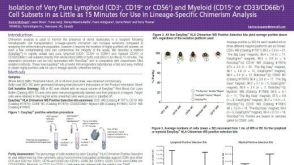 科学海报Isolation of Very Pure Lymphoid (CD3+, CD19+ or CD56+) and Myeloid (CD15+ or CD33/CD66b+) Cell Subsets in as Little as 15 Minutes for Use in Lineage-Specific Chimerism Analysis

 沪公网安备31010102008431号