Schlecht G et al. (OCT 2001)
Journal of immunology (Baltimore,Md. : 1950) 167 8 4215--21
Induction of CTL and nonpolarized Th cell responses by CD8alpha(+) and CD8alpha(-) dendritic cells.
Two distinct dendritic cell (DC) subpopulations have been evidenced in mice on the basis of their differential CD8alpha expression and their localization in lymphoid organs. Several reports suggest that CD8alpha(+) and CD8alpha(-) DC subsets could be functionally different. In this study,using a panel of MHC class I- and/or class II-restricted peptides,we analyzed CD4(+) and CD8(+) T cell responses obtained after i.v. injection of freshly purified peptide-pulsed DC subsets. First,we showed that both DC subsets efficiently induce specific CTL responses and Th1 cytokine production in the absence of CD4(+) T cell priming. Second,we showed that in vivo activation of CD4(+) T cells by CD8alpha(+) or CD8alpha(-) DC,injected i.v.,leads to a nonpolarized Th response with production of both Th1 and Th2 cytokines. The CD8alpha(-) subset induced a higher production of Th2 cytokines such as IL-4 and IL-10 than the CD8alpha(+) subset. However,IL-5 was produced by CD4(+) T cells activated by both DC subsets. When both CD4(+) and CD8(+) T cells were primed by DC injected i.v.,a similar pattern of cytokines was observed,but,under these conditions,Th1 cytokines were mainly produced by CD8(+) T cells,while Th2 cytokines were produced by CD4(+) T cells. Thus,this study clearly shows that CD4(+) T cell responses do not influence the development of specific CD8(+) T cell cytotoxic responses induced either by CD8alpha(+) or CD8alpha(-) DC subsets.
View Publication
产品类型:
产品号#:
09600
09650
产品名:
StemSpan™ SFEM
StemSpan™ SFEM
Tay SS et al. (MAR 2003)
Journal of immunology (Baltimore,Md. : 1950) 170 6 3315--22
IFN-gamma reverses the stop signal allowing migration of antigen-specific T cells into inflammatory sites.
In humans the majority of endothelial cells (EC) constitutively express MHC class II Ags. We know that in vitro ECs can activate CD45RO(+) B7-independent CD4(+) T cells to proliferate and produce IL-2. The in vivo correlate of this T cell response is not known,and here we have explored whether endothelial expression of MHC class II Ags affects the transendothelial migration of alloreactive CD4(+) CD45RO(+) B7-independent T cells. Alloreactive CD4(+) T cell clones and lines were generated against HLA-DR11,DR13,DR4,and DR1 MHC Ags,and their rates of migration across untreated EC line Eahy.926 (MHC class II negative) or Eahy.926 transfected with CIITA (EahyCIITA) to express DR11 and DR13 were investigated. The migrations of EahyCIITA-specific T cell clones and lines were retarded in a DR-specific manner,and retardation was reversed in the presence of mAb to DR Ag. When investigating the ability of T cells to proliferate in response to EahyCIITA before and after transmigration,migrated cells were still able to proliferate,but the frequency of EahyCIITA-specific cells was much reduced compared with that of nonmigrated cells. The use of fluorescently labeled T cells revealed that specific cells become trapped within the endothelial monolayer. Pretreatment of EahyCIITA with IFN-gamma restored the ability of DR11- or DR13-specific T cells to transmigrate and proliferate,thus abrogating DR-specific retardation. We conclude that cognate interaction between T cells and endothelial MHC class II initiates a stop signal possibly similar to an immunological synapse,but this is overcome in an inflammatory milieu.
View Publication
产品类型:
产品号#:
15022
15062
产品名:
RosetteSep™人CD4+ T细胞富集抗体混合物
RosetteSep™人CD4+ T细胞富集抗体混合物
Groß et al. (JUN 2013)
Current molecular medicine 13 5 765--776
Improved generation of patient-specific induced pluripotent stem cells using a chemically-defined and matrigel-based approach.
Reprogramming of somatic cells into patient-specific pluripotent analogues of human embryonic stem cells (ESCs) emerges as a prospective therapeutic angle in molecular medicine and a tool for basic stem cell biology. However,the combination of relative inefficiency and high variability of non-defined culture conditions precluded the use of this technique in a clinical setting and impeded comparability between laboratories. To overcome these obstacles,we sequentially devised a reprogramming protocol using one lentiviral-based polycistronic reprogramming construct,optimized for high co-expression of OCT4,SOX2,KLF4 and MYC in conjunction with small molecule inhibitors of non-permissive signaling cascades,such as transforming growth factor $\$(SB431542),MEK/ERK (PD0325901) and Rho-kinase signaling (Thiazovivin),in a defined extracellular environment. Based on human fetal liver fibroblasts we could efficiently derive induced pluripotent stem cells (iPSCs) within 14 days. We attained efficiencies of up to 10.97±1.71% resulting in 79.5- fold increase compared to non-defined reprogramming using four singular vectors. We show that the overall increase of efficiency and temporal kinetics is a combinatorial effect of improved lentiviral vector design,signaling inhibition and definition of extracellular matrix (Matrigel®) and culture medium (mTESR®1). Using this protocol,we could derive iPSCs from patient fibroblasts,which were impermissive to classical reprogramming efforts,and from a patient suffering from familial platelet disorder. Thus,our defined protocol for highly efficient reprogramming to generate patient-specific iPSCs,reflects a big step towards therapeutic and broad scientific application of iPSCs,even in previously unfeasible settings.
View Publication
产品类型:
产品号#:
05850
05857
05870
05875
85850
85857
85870
85875
产品名:
mTeSR™1
mTeSR™1
Mao P et al. (MAY 2013)
Proceedings of the National Academy of Sciences of the United States of America 110 21 8644--8649
Mesenchymal glioma stem cells are maintained by activated glycolytic metabolism involving aldehyde dehydrogenase 1A3.
Tumor heterogeneity of high-grade glioma (HGG) is recognized by four clinically relevant subtypes based on core gene signatures. However,molecular signaling in glioma stem cells (GSCs) in individual HGG subtypes is poorly characterized. Here we identified and characterized two mutually exclusive GSC subtypes with distinct dysregulated signaling pathways. Analysis of mRNA profiles distinguished proneural (PN) from mesenchymal (Mes) GSCs and revealed a pronounced correlation with the corresponding PN or Mes HGGs. Mes GSCs displayed more aggressive phenotypes in vitro and as intracranial xenografts in mice. Further,Mes GSCs were markedly resistant to radiation compared with PN GSCs. The glycolytic pathway,comprising aldehyde dehydrogenase (ALDH) family genes and in particular ALDH1A3,were enriched in Mes GSCs. Glycolytic activity and ALDH activity were significantly elevated in Mes GSCs but not in PN GSCs. Expression of ALDH1A3 was also increased in clinical HGG compared with low-grade glioma or normal brain tissue. Moreover,inhibition of ALDH1A3 attenuated the growth of Mes but not PN GSCs. Last,radiation treatment of PN GSCs up-regulated Mes-associated markers and down-regulated PN-associated markers,whereas inhibition of ALDH1A3 attenuated an irradiation-induced gain of Mes identity in PN GSCs. Taken together,our data suggest that two subtypes of GSCs,harboring distinct metabolic signaling pathways,represent intertumoral glioma heterogeneity and highlight previously unidentified roles of ALDH1A3-associated signaling that promotes aberrant proliferation of Mes HGGs and GSCs. Inhibition of ALDH1A3-mediated pathways therefore might provide a promising therapeutic approach for a subset of HGGs with the Mes signature.
View Publication
产品类型:
产品号#:
01700
01705
01702
产品名:
ALDEFLUOR™ 试剂盒
ALDEFLUOR™ DEAB试剂
ALDEFLUOR™测定缓冲液
Ma N et al. (NOV 2013)
Journal of Biological Chemistry 288 48 34671--34679
$\$-Thalassemia ($\$-Thal) is a group of life-threatening blood disorders caused by either point mutations or deletions of nucleotides in $\$-globin gene (HBB). It is estimated that 4.5% of the population in the world carry $\$-Thal mutants (1),posing a persistent threat to public health. The generation of patient-specific induced pluripotent stem cells (iPSCs) and subsequent correction of the disease-causing mutations offer an ideal therapeutic solution to this problem. However,homologous recombination-based gene correction in human iPSCs remains largely inefficient. Here,we describe a robust process combining efficient generation of integration-free $\$-Thal iPSCs from the cells of patients and transcription activator-like effector nuclease (TALEN)-based universal correction of HBB mutations in situ. We generated integration-free and gene-corrected iPSC lines from two patients carrying different types of homozygous mutations and showed that these iPSCs are pluripotent and have normal karyotype. We showed that the correction process did not generate TALEN-induced off targeting mutations by sequencing. More importantly,the gene-corrected $\$-Thal iPS cell lines from each patient can be induced to differentiate into hematopoietic progenitor cells and then further to erythroblasts expressing normal $\$-globin. Our studies provide an efficient and universal strategy to correct different types of $\$-globin mutations in $\$-Thal iPSCs for disease modeling and applications.
View Publication
产品类型:
产品号#:
05850
05857
05870
05875
85850
85857
85870
85875
产品名:
mTeSR™1
mTeSR™1
Ou X et al. (MAY 2014)
Stem Cells 32 5 1183--1194
SIRT1 positively regulates autophagy and mitochondria function in embryonic stem cells under oxidative stress
SIRT1,an NAD-dependent deacetylase,plays a role in regulation of autophagy. SIRT1 increases mitochondrial function and reduces oxidative stress,and has been linked to age-related reactive oxygen species (ROS) generation,which is highly dependent on mitochondrial metabolism. H2O2 induces oxidative stress and autophagic cell death through interference with Beclin 1 and the mTOR signaling pathways. We evaluated connections between SIRT1 activity and induction of autophagy in murine (m) and human (h) embryonic stem cells (ESCs) upon ROS challenge. Exogenous H2O2 (1 mM) induced apoptosis and autophagy in wild-type (WT) and Sirt1-/- mESCs. High concentrations of H2O2 (1 mM) induced more apoptosis in Sirt1-/-,than in WT mESCs. However,addition of 3-methyladenine,a widely used autophagy inhibitor,in combination with H2O2 induced more cell death in WT than in Sirt1-/- mESCs. Decreased induction of autophagy in Sirt1-/- mESCs was demonstrated by decreased conversion of LC3-I to LC3-II,lowered expression of Beclin-1,and decreased LC3 punctae and LysoTracker staining. H2O2 induced autophagy with loss of mitochondrial membrane potential and disruption of mitochondrial dynamics in Sirt1-/- mESCs. Increased phosphorylation of P70/85-S6 kinase and ribosomal S6 was noted in Sirt1-/- mESCs,suggesting that SIRT1 regulates the mTOR pathway. Consistent with effects in mESCs,inhibition of SIRT1 using Lentivirus-mediated SIRT1 shRNA in hESCs demonstrated that knockdown of SIRT1 decreased H2O2-induced autophagy. This suggests a role for SIRT1 in regulating autophagy and mitochondria function in ESCs upon oxidative stress,effects mediated at least in part by the class III PI3K/Beclin 1 and mTOR pathways. Stem Cells 2014;32:1183-1194
View Publication
产品类型:
产品号#:
05850
05857
05870
05875
85850
85857
85870
85875
产品名:
mTeSR™1
mTeSR™1
Lyssiotis CA et al. (JUN 2009)
Proceedings of the National Academy of Sciences of the United States of America 106 22 8912--7
Reprogramming of murine fibroblasts to induced pluripotent stem cells with chemical complementation of Klf4.
Ectopic expression of defined transcription factors can reprogram somatic cells to induced pluripotent stem (iPS) cells,but the utility of iPS cells is hampered by the use of viral delivery systems. Small molecules offer an alternative to replace virally transduced transcription factors with chemical signaling cues responsible for reprogramming. In this report we describe a small-molecule screening platform applied to identify compounds that functionally replace the reprogramming factor Klf4. A series of small-molecule scaffolds were identified that activate Nanog expression in mouse fibroblasts transduced with a subset of reprogramming factors lacking Klf4. Application of one such molecule,kenpaullone,in lieu of Klf4 gave rise to iPS cells that are indistinguishable from murine embryonic stem cells. This experimental platform can be used to screen large chemical libraries in search of novel compounds to replace the reprogramming factors that induce pluripotency. Ultimately,such compounds may provide mechanistic insight into the reprogramming process.
View Publication
产品类型:
产品号#:
72782
产品名:
Kenpaullone
Cantu' C et al. (JAN 2011)
Nucleic acids research 39 2 486--501
A highly conserved SOX6 double binding site mediates SOX6 gene downregulation in erythroid cells.
The Sox6 transcription factor plays critical roles in various cell types,including erythroid cells. Sox6-deficient mice are anemic due to impaired red cell maturation and show inappropriate globin gene expression in definitive erythrocytes. To identify new Sox6 target genes in erythroid cells,we used the known repressive double Sox6 consensus within the εy-globin promoter to perform a bioinformatic genome-wide search for similar,evolutionarily conserved motifs located within genes whose expression changes during erythropoiesis. We found a highly conserved Sox6 consensus within the Sox6 human gene promoter itself. This sequence is bound by Sox6 in vitro and in vivo,and mediates transcriptional repression in transient transfections in human erythroleukemic K562 cells and in primary erythroblasts. The binding of a lentiviral transduced Sox6FLAG protein to the endogenous Sox6 promoter is accompanied,in erythroid cells,by strong downregulation of the endogenous Sox6 transcript and by decreased in vivo chromatin accessibility of this region to the PstI restriction enzyme. These observations suggest that the negative Sox6 autoregulation,mediated by the double Sox6 binding site within its own promoter,may be relevant to control the Sox6 transcriptional downregulation that we observe in human erythroid cultures and in mouse bone marrow cells in late erythroid maturation.
View Publication
产品类型:
产品号#:
09600
09650
09850
产品名:
StemSpan™ SFEM
StemSpan™ SFEM
Henrich D et al. (NOV 2010)
Injury 41 Suppl 2 S62--8
RIA reamings and hip aspirate: a comparative evaluation of osteoprogenitor and endothelial progenitor cells.
Autologous bone grafting represents the gold standard modality to treat atrophic non-unions by virtue of its osteoinductive and osteoconductive properties. The common harvest site is the iliac crest,but there are major concerns due to limited volume and considerable donor site morbidity. Alternative autologous bone graft can be harvested from the femoral bone cavity using a newly developed 'Reamer Irrigator Aspirator' (RIA). Osseous aspirated particles can be recovered with a filter and used as auto-graft. The purpose of this study was to compare the concentration and differentiation potential of mesenchymal stem cells (MSC) and endothelial progenitor cells (EPC) harvested with the RIA technique or from the iliac crest,respectively. RIA aspirate was collected from 26 patients undergoing intramedullary nailing of femur fractures. Iliac crest aspirate was collected from 38 patients undergoing bone graft transplantation. Concentration of MSC and EPC were assessed by means of the MSC colony assay,EPC culture assay and flowcytometry (CD34,CD133,VEGF-R2),respectively. Osteogenic differentiation of MSC's was measured by von Kossa staining. Patients in both groups did not significantly differ regarding their age,gender or pre-existing health conditions. In comparison to aspirates obtained from iliac crest the RIA aspirates from the femur contained a significantly higher percentage of CD34+ progenitor cells,a significantly higher concentration of MSC and a significantly higher concentration of early EPC. The percentage of late EPC did not differ between both sites. Moreover,the capability of MSC for calcium deposition was significantly enhanced in MSC obtained with RIA. Our results show that RIA aspirate is a rich source for different types of autologous progenitor cells,which can be used to accelerate healing of bone and other musculoskeletal tissues.
View Publication
产品类型:
产品号#:
05401
05402
05411
产品名:
MesenCult™ MSC基础培养基 (人)
MesenCult™ MSC 刺激补充剂(人)
MesenCult™ 增殖试剂盒(人)
Pei Y et al. (MAY 2012)
Development (Cambridge,England) 139 10 1724--33
WNT signaling increases proliferation and impairs differentiation of stem cells in the developing cerebellum.
The WNT pathway plays multiple roles in neural development and is crucial for establishment of the embryonic cerebellum. In addition,WNT pathway mutations are associated with medulloblastoma,the most common malignant brain tumor in children. However,the cell types within the cerebellum that are responsive to WNT signaling remain unknown. Here we investigate the effects of canonical WNT signaling on two important classes of progenitors in the developing cerebellum: multipotent neural stem cells (NSCs) and granule neuron precursors (GNPs). We show that WNT pathway activation in vitro promotes proliferation of NSCs but not GNPs. Moreover,mice that express activated β-catenin in the cerebellar ventricular zone exhibit increased proliferation of NSCs in that region,whereas expression of the same protein in GNPs impairs proliferation. Although β-catenin-expressing NSCs proliferate they do not undergo prolonged expansion or neoplastic growth; rather,WNT signaling markedly interferes with their capacity for self-renewal and differentiation. At a molecular level,mutant NSCs exhibit increased expression of c-Myc,which might account for their transient proliferation,but also express high levels of bone morphogenetic proteins and the cyclin-dependent kinase inhibitor p21,which might contribute to their altered self-renewal and differentiation. These studies suggest that the WNT pathway is a potent regulator of cerebellar stem cell growth and differentiation.
View Publication
产品类型:
产品号#:
05700
05701
05702
产品名:
NeuroCult™ 基础培养基(小鼠&大鼠)
NeuroCult™ 扩增添加物 (小鼠&大鼠)
NeuroCult™ 扩增试剂盒 (小鼠&大鼠)
Mak SK et al. (JAN 2012)
Stem cells international 2012 140427
Small molecules greatly improve conversion of human-induced pluripotent stem cells to the neuronal lineage.
Efficient in vitro differentiation into specific cell types is more important than ever after the breakthrough in nuclear reprogramming of somatic cells and its potential for disease modeling and drug screening. Key success factors for neuronal differentiation are the yield of desired neuronal marker expression,reproducibility,length,and cost. Three main neuronal differentiation approaches are stromal-induced neuronal differentiation,embryoid body (EB) differentiation,and direct neuronal differentiation. Here,we describe our neurodifferentiation protocol using small molecules that very efficiently promote neural induction in a 5-stage EB protocol from six induced pluripotent stem cells (iPSC) lines from patients with Parkinson's disease and controls. This protocol generates neural precursors using Dorsomorphin and SB431542 and further maturation into dopaminergic neurons by replacing sonic hedgehog with purmorphamine or smoothened agonist. The advantage of this approach is that all patient-specific iPSC lines tested in this study were successfully and consistently coaxed into the neural lineage.
View Publication


 EasySep™小鼠TIL(CD45)正选试剂盒




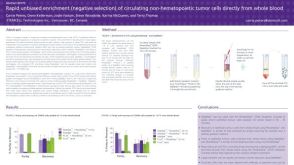 科学海报Rapid Unbiased Enrichment (Negative Selection) of Circulating Non-Hematopoietic Tumor Cells Directly from Whole Blood

 沪公网安备31010102008431号