3D chromatin-based variant-to-gene maps across 57 human cell types reveal the cellular and genetic architecture of autoimmune disease susceptibility
A portion of the genetic basis for many common autoimmune disorders has been uncovered by genome-wide association studies (GWAS),but GWAS do not reveal causal variants,effector genes,or the cell types impacted by disease-associated variation. We have generated 3D genomic datasets consisting of promoter-focused Capture-C,Hi-C,ATAC-seq,and RNA-seq and integrated these data with GWAS of 16 autoimmune traits to physically map disease-associated variants to the effector genes they likely regulate in 57 human cell types. These 3D maps of gene cis-regulatory architecture are highly powered to identify the cell types most likely impacted by disease-associated genetic variation compared to 1D genomic features,and tend to implicate different effector genes than eQTL approaches in the same cell types. Most of the variants implicated by these cis-regulatory architectures are highly trait-specific,but nearly half of the target genes connected to these variants are shared across multiple autoimmune disorders in multiple cell types,suggesting a high level of genetic diversity and complexity among autoimmune diseases that nonetheless converge at the level of target gene and cell type. Substantial effector gene sharing led to the common enrichment of similar biological networks across disease and cell types. However,trait-specific pathways representing potential areas for disease-specific intervention were identified. To test this,we pharmacologically validated squalene synthase,a cholesterol biosynthetic enzyme encoded by the FDFT1 gene implicated by our approach in MS and SLE,as a novel immunomodulatory drug target controlling inflammatory cytokine production by human T cells. These data represent a comprehensive resource for basic discovery of gene cis-regulatory mechanisms,and the analyses reported reveal mechanisms by which autoimmune-associated variants act to regulate gene expression,function,and pathology across multiple,distinct tissues and cell types.
View Publication
Kumagai T et al. (JUN 2003)
Journal of the National Cancer Institute 95 12 896--905
Vitamin D2 analog 19-nor-1,25-dihydroxyvitamin D2: antitumor activity against leukemia, myeloma, and colon cancer cells.
BACKGROUND: 1,25-Dihydroxyvitamin D(3) inhibits growth of several types of human cancer cells in vitro,but its therapeutic use is hampered because it causes hypercalcemia. 19-nor-1,25-Dihydroxyvitamin D(2) (paricalcitol) is a noncalcemic vitamin D analog that is approved by the Food and Drug Administration for the treatment of secondary hyperparathyroidism. We investigated the antitumor activity and mechanism of action of paricalcitol in vitro and in vivo. METHODS: Effects of paricalcitol on proliferation,the cell cycle,differentiation,and apoptosis were examined in cancer cell lines. Effects on tumor growth were examined with colon cancer cell xenografts in nude mice (five in the experimental group and five in the control group). The interaction of paricalcitol with the vitamin D receptor (VDR) in mononuclear spleen cells and myeloid stem cells from wild-type and VDR knockout mice was examined. All statistical tests were two-sided. RESULTS: Paricalcitol inhibited the proliferation of myeloid leukemia cell lines HL-60,NB-4,and THP-1 cells at an effective dose that inhibited growth 50% (ED(50)) of 2.4-5.8 x 10(-9) M by inducing cell cycle arrest and differentiation. Paricalcitol inhibited the proliferation of NCI-H929 myeloma cells at an ED(50) of 2.0 x 10(-10) M by inducing cell cycle arrest and apoptosis. Paricalcitol also inhibited the proliferation of colon cancer cell lines HT-29 (ED(50) = 1.7 x 10(-8) M) and SW837 (ED(50) = 3.2 x 10(-8) M). HT-29 colon cancer xenografts in paricalcitol-treated nude mice were smaller (1044 mm(3) and 1752 mm(3),difference = 708 mm(3),95% confidence interval = 311 to 1104 mm(3); P =.03) and weighed less (1487 mg and 4162 mg,difference = 2675 mg,95% confidence interval = 2103 to 3248 mg; Ptextless.001) than those in vehicle-treated mice. Paricalcitol induced committed myeloid hematopoietic stem cells from wild-type but not from VDR knockout mice to differentiate as macrophages. CONCLUSION: Paricalcitol has anticancer activity against myeloid leukemia,myeloma,and colon cancer cells that may be mediated through the VDR. Because it has been approved by the Food and Drug Administration,clinical trials of this agent in certain cancers are reasonable.
View Publication
产品类型:
产品号#:
03234
产品名:
MethoCult™M3234
Carotta S et al. (SEP 2004)
Blood 104 6 1873--80
Directed differentiation and mass cultivation of pure erythroid progenitors from mouse embryonic stem cells.
Differentiating embryonic stem (ES) cells are an increasingly important source of hematopoietic progenitors,useful for both basic research and clinical applications. Besides their characterization in colony assays,protocols exist for the cultivation of lymphoid,myeloid,and erythroid cells. With the possible exception of mast cells,however,long-term expansion of pure hematopoietic progenitors from ES cells has not been possible without immortalization caused by overexpression of exogenous genes. Here,we describe for the first time an efficient yet easy strategy to generate mass cultures of pure,immature erythroid progenitors from mouse ES cells (ES-EPs),using serum-free medium plus recombinant cytokines and hormones. ES-EPs represent long-lived,adult,definitive erythroid progenitors that resemble immature erythroid cells expanding in vivo during stress erythropoiesis. When exposed to terminal differentiation conditions,ES-EPs differentiated into mature,enucleated erythrocytes. Importantly,ES-EPs injected into mice did not exhibit tumorigenic potential but differentiated into normal erythrocytes. Both the virtually unlimited supply of cells and the defined culture conditions render our system a valuable tool for the analysis of factors influencing proliferation and maturation of erythroid progenitors. In addition,the system allows detailed characterization of processes during erythroid proliferation and differentiation using wild-type (wt) and genetically modified ES cells.
View Publication
产品类型:
产品号#:
03234
03434
03444
产品名:
MethoCult™M3234
MethoCult™GF M3434
MethoCult™GF M3434
He X-S et al. (DEC 2004)
The Journal of clinical investigation 114 12 1812--9
T cell-dependent production of IFN-gamma by NK cells in response to influenza A virus.
The role of human NK cells in viral infections is poorly understood. We used a cytokine flow-cytometry assay to simultaneously investigate the IFN-gamma response of NK and T lymphocytes to influenza A virus (fluA). When PBMCs from fluA-immune adult donors were incubated with fluA,IFN-gamma was produced by both CD56(dim) and CD56(bright) subsets of NK cells,as well as by fluA-specific T cells. Purified NK cells did not produce IFN-gamma in response to fluA,while depletion of T lymphocytes reduced to background levels the fluA-induced IFN-gamma production by NK cells,which indicates that T cells are required for the IFN-gamma response of NK cells. The fluA-induced IFN-gamma production of NK cells was suppressed by anti-IL-2 Ab,while recombinant IL-2 replaced the helper function of T cells for IFN-gamma production by NK cells. This indicates that IL-2 produced by fluA-specific T cells is involved in the T cell-dependent IFN-gamma response of NK cells to fluA. Taken together,these results suggest that at an early stage of recurrent viral infection,NK-mediated innate immunity to the virus is enhanced by preexisting virus-specific T cells.
View Publication
产品类型:
产品号#:
15621
15661
15021
15061
15025
15065
产品名:
RosetteSep™ 人CD3去除抗体混合物
RosetteSep™人CD3去除抗体混合物
RosetteSep™人T细胞富集抗体混合物
RosetteSep™人T细胞富集抗体混合物
RosetteSep™人NK细胞富集抗体混合物
RosetteSep™人NK细胞富集抗体混合物
Curry CL et al. (SEP 2005)
Oncogene 24 42 6333--44
Gamma secretase inhibitor blocks Notch activation and induces apoptosis in Kaposi's sarcoma tumor cells.
Kaposi's sarcoma (KS) is a common neoplasm in HIV-1-infected individuals causing significant morbidity and mortality. Despite recent advances,the pathogenesis of this potentially life-threatening neoplasm remains unclear,and there is currently no cure for KS. Notch proteins are known to play a fundamental role in cell fate decisions including proliferation,differentiation,and apoptosis. It is,therefore,not surprising that Notch proteins have been implicated in tumorigenesis and appear to function as either oncogenes or tumor suppressor proteins depending on cellular context. In this report,we demonstrate elevated levels of activated Notch-1,-2,and -4 in KS tumor cells in vivo and in vitro compared to endothelial cells,the precursor of the KS cell. Notch activation was confirmed through luciferase reporter assays and localization of Hes (Hairy/Enhancer of Split)-1 and Hey (Hairy/Enhancer of Split related with YRPW)1 (primary targets of the Notch pathway) in KS cell nuclei. Studies using gamma-secretase inhibitors (GSI and LY-411,575),which block Notch activation,resulted in apoptosis in primary and immortalized KS cells. Similar studies injecting GSI into established KS cell tumors on mice demonstrated growth inhibition or tumor regression that was characterized by apoptosis in treated,but not control tumors. The results indicate that KS cells overexpress activated Notch and interruption of Notch signaling inhibits KS cell growth. Thus,targeting Notch signaling may be of therapeutic value in KS patients.
View Publication
Sox2 expression defines a heterogeneous population of neurosphere-forming cells in the adult murine brain.
The identification of neural stem cells (NSCs) in situ has been prevented by the inability to identify a marker consistently expressed in all adult NSCs and is thus generally accomplished using the in vitro neurosphere-forming assay. The high-mobility group transcription factor Sox2 is expressed in embryonic neural epithelial stem cells; because these cells are thought to give rise to the adult NSC population,we hypothesized that Sox2 may continue to be expressed in adult NSCs. Using Sox2:EGFP transgenic mice,we show that Sox2 is expressed in neurogenic regions along the rostral-caudal axis of the central nervous system throughout life. Furthermore,all neurospheres derived from these neurogenic regions express Sox2,suggesting that Sox2 is indeed expressed in adult NSCs. We demonstrate that NSCs are heterogeneous within the adult brain,with differing capacities for cell production. In vitro,all neurospheres express Sox2,but the expression of markers common to early progenitor cells within individual neurospheres varies; this heterogeneity of NSCs is mirrored in vivo. For example,both glial fibrillary acidic protein and NG2 are expressed within individual neurospheres,but their expression is mutually exclusive; likewise,these two markers show distinct staining patterns within the Sox2+ regions of the brain's neurogenic regions. Thus,we propose that the expression of Sox2 is a unifying characteristic of NSCs in the adult brain,but that not all NSCs maintain the ability to form all neural cell types in vivo.
View Publication
产品类型:
产品号#:
05700
05701
05702
产品名:
NeuroCult™ 基础培养基(小鼠&大鼠)
NeuroCult™ 扩增添加物 (小鼠&大鼠)
NeuroCult™ 扩增试剂盒 (小鼠&大鼠)
Cohen-Haguenauer O et al. (FEB 2006)
Proceedings of the National Academy of Sciences of the United States of America 103 7 2340--5
In vivo repopulation ability of genetically corrected bone marrow cells from Fanconi anemia patients.
Fanconi anemia (FA) is a rare inherited genomic instability syndrome representing one of the best examples of hematopoietic stem cell deficiency. Although FA might be an excellent candidate for bone marrow (BM) genetic correction ex vivo,knockout animal models are not sufficient to guide preclinical steps,and gene therapy attempts have proven disappointing so far. Contributing to these poor results is a characteristic and dramatic early BM-cells die-off when placed in culture. We show here that human primary FA BM cell survival can be ameliorated by using specific culture conditions that limit oxidative stress. When coupled with retrovirus-mediated transfer of the main complementation group FANCA-cDNA,we could achieve long-term reconstitution of the stem cell compartment both in vitro and in vivo. Gene-corrected BM cultures grew for textgreater120 days,and after cultured cell transplantation into NOD/SCID mice,clonogenic human cells carrying the FANCA transgene could be detected 6 months after transduction. By comparison,untransduced cells died in culture by 15 days. Of necessity for ethical reasons,experiments were conducted on a very limited number of primary BM cells. By using low cytokine regimen and conditions matching regulatory requirements,a contingent of gene-corrected cells slowly emerges with an unmet potential for in vivo engraftment. Future therapeutic applications of stem cells might be expanding from these data. In addition,we provide a model of gene-corrected human primary cell growth that carries the potential to better delineate the combined role of both DNA damage and oxidative stress in the pathogenesis of FA.
View Publication
产品类型:
产品号#:
04436
产品名:
MethoCult™ SF H4436
Xu X-L et al. (FEB 2010)
Carcinogenesis 31 2 167--74
The properties of tumor-initiating cells from a hepatocellular carcinoma patient's primary and recurrent tumor.
Hepatocellular carcinoma (HCC) is associated with a high morbidity and mortality due to its high rate of recurrence. However,little is known about the biological characteristics of recurrent HCC cells. A single patient's primary and recurrent HCC-derived cell lines,Hep-11 and Hep-12,respectively,were established by primary culture. These two cell lines have the same hepatitis B virus integration site and share many common amplifications and deletions,which suggest that they have the same clonal origin. While Hep-11 cells were non-tumorigenic at 16 weeks following injection of up to 10 000 cells,injection of only 100 Hep-12 cells was sufficient to initiate tumor growth,and all single Hep-12 clones were tumorigenic in immunodeficient mice. Compared with Hep-11,Hep-12 cells expressed the oval cell markers AFP,NCAM/CD56,c-kit/CD117,as well as multiple stem cell markers such as Nanog,OCT4 and SOX2. In addition,textgreater90% of Hep-12 cells were aldehyde dehydrogenase positive. They were also less resistant to paclitaxel,but more resistant to doxorubicin,cisplatin and hydroxycamptothecin (HCPT),which had been administrated to the patient. Furthermore,Hep-12 cells expressed higher levels of poly (adenosine diphosphate-ribose) polymerase-1 (PARP-1) than Hep-11,and PARP-1 inhibition potentiated the sensitivity to HCPT in Hep-12 cells but not in Hep-11 cells. These results indicate that a large population of the recurrent HCC-derived Hep-12 cells were tumor-initiating cells and that elevated expression of PARP-1 was related to their resistance to HCPT.
View Publication
产品类型:
产品号#:
01700
01705
01701
01702
产品名:
ALDEFLUOR™ 试剂盒
ALDEFLUOR™ DEAB试剂
ALDEFLUOR™测定缓冲液
Kö et al. (JUL 2010)
Cancer letters 293 1 117--23
Circulating tumor cells in metastatic colorectal cancer: efficacy and feasibility of different enrichment methods.
Comprehensive in vitro and in vivo studies comparing EpCAM-based methods with other cytometric CTC enrichment technologies in metastatic colorectal cancer (mCRC) patients are lacking. We compare four manual cytometric methods to detect CTCs in vitro and in mCRC patients. The EpCAM-based technology,MACS HEA MicroBeads((R)),showed a significant better tumor cell recovery rate compared to other cytometric methods (p-valuetextless0.0001). CTCs of 38 mCRC patients were enriched with MACS HEA MicroBeads(R). Progression-free survival did significantly differ between mCRC patients without detectable and with textgreateror= 1 CTCs (p=0.007). CTC enrichment with EpCAM coupled antibodies is superior to other cytometric methods and is a feasible method for CTC detection in mCRC patients.
View Publication
产品类型:
产品号#:
产品名:
Calcagno AM et al. (NOV 2010)
Journal of the National Cancer Institute 102 21 1637--52
Prolonged drug selection of breast cancer cells and enrichment of cancer stem cell characteristics.
BACKGROUND: Cancer stem cells are presumed to have virtually unlimited proliferative and self-renewal abilities and to be highly resistant to chemotherapy,a feature that is associated with overexpression of ATP-binding cassette transporters. We investigated whether prolonged continuous selection of cells for drug resistance enriches cultures for cancer stem-like cells. METHODS: Cancer stem cells were defined as CD44+/CD24�?� cells that could self-renew (ie,generate cells with the tumorigenic CD44+/CD24�?� phenotype),differentiate,invade,and form tumors in vivo. We used doxorubicin-selected MCF-7/ADR cells,weakly tumorigenic parental MCF-7 cells,and MCF-7/MDR,an MCF-7 subline with forced expression of ABCB1 protein. Cells were examined for cell surface markers and side-population fractions by microarray and flow cytometry,with in vitro invasion assays,and for ability to form mammospheres. Xenograft tumors were generated in mice to examine tumorigenicity (n = 52). The mRNA expression of multidrug resistance genes was examined in putative cancer stem cells and pathway analysis of statistically significantly differentially expressed genes was performed. All statistical tests were two-sided. RESULTS: Pathway analysis showed that MCF-7/ADR cells express mRNAs from ABCB1 and other genes also found in breast cancer stem cells (eg,CD44,TGFB1,and SNAI1). MCF-7/ADR cells were highly invasive,formed mammospheres,and were tumorigenic in mice. In contrast to parental MCF-7 cells,more than 30% of MCF-7/ADR cells had a CD44+/CD24�?� phenotype,could self-renew,and differentiate (ie,produce CD44+/CD24�?� and CD44+/CD24+ cells) and overexpressed various multidrug resistance-linked genes (including ABCB1,CCNE1,and MMP9). MCF-7/ADR cells were statistically significantly more invasive in Matrigel than parental MCF-7 cells (MCF-7 cells = 0.82 cell per field and MCF-7/ADR = 7.51 cells per field,difference = 6.69 cells per field,95% confidence interval = 4.82 to 8.55 cells per field,P textless .001). No enrichment in the CD44+/CD24�?� or CD133+ population was detected in MCF-7/MDR. CONCLUSION: The cell population with cancer stem cell characteristics increased after prolonged continuous selection for doxorubicin resistance.
View Publication


 EasySep™小鼠TIL(CD45)正选试剂盒




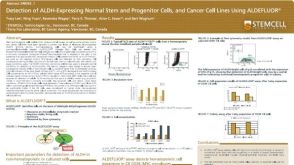 科学海报Detection of ALDH-Expressing Normal Stem and Progenitor Cells, and Cancer Cell Lines Using ALDEFLUOR™

 沪公网安备31010102008431号