Transcriptomic Profiling of iPS Cell-Derived Hepatocyte-like Cells Reveals Their Close Similarity to Primary Liver Hepatocytes
Human-induced pluripotent stem cell (iPSC)-derived hepatocyte-like cells (HLCs) have been shown to be useful for the development of cell-based regenerative strategies and for modelling drug discovery. However,stem cell-derived HLCs are not identical in nature to primary human hepatocytes (PHHs),which could affect the cell phenotype and,potentially,model reliability. Therefore,we employed the in-depth gene expression profiling of HLCs and other important and relevant cell types,which led to the identification of clear similarities and differences between them at the transcriptional level. Through gene set enrichment analysis,we identified that genes that are critical for immune signalling pathways become downregulated upon HLC differentiation. Our analysis also found that TAV.HLCs exhibit a mild gene signature characteristic of acute lymphoblastic leukaemia,but not other selected cancers. Importantly,HLCs present significant similarity to PHHs,making them genuinely valuable for modelling human liver biology in vitro and for the development of prototype cell-based therapies for pre-clinical testing.
View Publication
产品类型:
产品号#:
85850
85857
产品名:
mTeSR™1
mTeSR™1
J. E. Krull et al. (Feb 2024)
Cell Reports Medicine 5 3
Follicular lymphoma B cells exhibit heterogeneous transcriptional states with associated somatic alterations and tumor microenvironments
SummaryFollicular lymphoma (FL) is an indolent non-Hodgkin lymphoma of germinal center origin,which presents with significant biologic and clinical heterogeneity. Using RNA-seq on B cells sorted from 87 FL biopsies,combined with machine-learning approaches,we identify 3 transcriptional states that divide the biological ontology of FL B cells into inflamed,proliferative,and chromatin-modifying states,with relationship to prior GC B cell phenotypes. When integrated with whole-exome sequencing and immune profiling,we find that each state was associated with a combination of mutations in chromatin modifiers,copy-number alterations to TNFAIP3,and T follicular helper cells (Tfh) cell interactions,or primarily by a microenvironment rich in activated T cells. Altogether,these data define FL B cell transcriptional states across a large cohort of patients,contribute to our understanding of FL heterogeneity at the tumor cell level,and provide a foundation for guiding therapeutic intervention. Graphical abstract Highlights•B cells from follicular lymphoma exhibit 3 distinct transcriptional states•FL B cells differ by enhanced inflammation,proliferation,or chromatin remodeling•Tumor cell states correlate with unique immune-microenvironment features•Unique mutation and CNV profiles highlight potential genetic causes of heterogeneity Krull et al. analyzed bulk transcriptional,genomic,and immune profiles of B cells from follicular lymphoma and reveal 3 distinct transcriptional states. These cell states underscore the inherent variability of FL tumors,independent of stroma,and implicate intrinsic differences as an underpinning to FL heterogeneity.
View Publication
产品类型:
产品号#:
17864
17963
17963RF
产品名:
EasySep™ 人记忆B细胞分选试剂盒
EasySep™人B细胞富集试剂盒II(不去除CD43)
RoboSep™ 人B细胞富集试剂盒II(不去除CD43)
T. Guo et al. (Nov 2024)
Journal of Translational Medicine 22 3
Isolation and identification of patient-derived liver cancer stem cells and development of personalized treatment strategies
Liver cancer stem cells (LCSCs) are thought to drive the metastasis and recurrence,however,the heterogeneity of molecular markers of LCSCs has hindered the development of effective methods to isolate them. This study introduced an effective approach to isolate and culture LCSCs from human primary liver cancer (HPLC),leveraging mouse embryonic fibroblasts (MEFs) as feeder cells in conjunction with using defined medium. Isolated LCSCs were further characterized by multiple approaches. Transcriptome sequencing data analysis was conducted to identify highly expressed genes in LCSCs and classify different subtypes of liver cancers. Total sixteen cell strains were directly isolated from 24 tissues of three types of HPLC without sorting,seven of which could be maintained long-term culture as colony growth on MEFs,which is unique characteristics of stem cells. Even 10 of cloned cells formed the tumors in immunodeficient mice,indicating that those cloned cells were tumorgenic. The histologies and gene expression pattern of human xenografts were very similar to those of HPLC where these cloned cells were isolated. Moreover,putative markers of LCSCs were further verified to all express in cloned cells,confirming that these cells were LCSCs. These cloned LCSCs could be cryopreserved,and still maintained the feature of colony growth on MEFs after the recovery. Compared to suspension culture as conventional approach to culture LCSCs,our approach much better maintained stemness of LCSCs for a long time. To date,these cloned cells could be cultured on MEFs over 12 passages. Moreover,bioinformatics analysis of sequencing data revealed the gene expression profiles in LCSCs,and liver cancers were classified into two subtypes C1 and C2 based on genes associated with the prognosis of LCSCs. Patients of the C2 subtype,which is closely related to the extracellular matrix,were found to be sensitive to treatments such as Cisplatin,Axitinib,JAK1 inhibitors,WNT-c59,Sorafenib,and RO-3306. In summary,this effective approach offers new insights into the molecular landscape of human liver cancers,and the identification of the C2 subtype and its unique response to the treatment pave the way for the creation of more effective,personalized therapeutic strategies. The online version contains supplementary material available at 10.1186/s12967-024-05870-9.
View Publication
产品类型:
产品号#:
01700
产品名:
ALDEFLUOR™ 试剂盒
(Jul 2025)
Stem Cell Research & Therapy 16
Apoptotic vesicles of mesenchymal stem cells promote M2 polarization and alleviate early-onset preeclampsia via miR-191-5p
BackgroundMacrophages play a crucial role in the development of early-onset preeclampsia (EOPE),which may be closely associated with an imbalance in macrophage M1/M2 polarization. Mesenchymal stem cell (MSC)-derived apoptotic vesicles (apoVs) have anti-inflammatory,tissue repair,and immunomodulatory functions. MSC-apoVs may ameliorate EOPE by regulating macrophage polarization,but the underlying mechanisms remain to be clarified.MethodsMacrophage infiltration and M1/M2 polarization were first analyzed in the placentas of PE patients and normal pregancies to identify macrophage alterations in EOPE placentas. MSC-apoVs were extracted and characterized. The effects of MSC-apoVs on macrophage polarization and trophoblasts invasion were validated in vivo and in vitro. miRNA transcriptomic sequencing of MSC-apoVs was conducted to identify key miRNAs involved in macrophage M2 polarization and to investigate upstream and downstream regulation factors,which were further validated in vivo and in vitro.ResultsThe proportion of M2 macrophages was significantly reduced in EOPE placentas. MSC-apoVs carrying high levels of miR-191-5p recruited macrophages,downregulated CDK6 protein expression,stabilized mitochondrial membrane potential (MMP),and promoted M2 polarization of macrophages. This enhanced the invasion of trophoblasts and improved EOPE pregnancy outcomes in mice,including reduced blood pressure,decreased urine protein,and improved embryo quality. Overexpression of miR-191-5p mimics in MSC-apoVs further alleviated EOPE-related symptoms,whereas inhibition of miR-191-5p reduced the therapeutic effect of MSC-apoVs. Further experiments confirmed that M2 macrophages polarized by MSC-apoVs promote trophoblasts invasion by secreting platelet-derived growth factor-AB (PDGF-AB),which binds to platelet-derived growth factor receptor-beta (PDGFR-β) on trophoblasts,directly activating the downstream PI3K-AKT-mTOR signaling pathway,thereby improving EOPE.ConclusionOur findings reveal the crucial role of M2 macrophages in the pathogenesis of EOPE. MSC-apoVs with high miR-191-5p recruit macrophages,downregulate CDK6,stabilize MMP,and promote M2 polarization,increasing PDGF-AB secretion,which enhances trophoblasts invasion and thereby treat EOPE. Therefore,MSC-apoVs therapy may serve as a promising strategy to improve the prognosis of EOPE.Supplementary InformationThe online version contains supplementary material available at 10.1186/s13287-025-04546-5.
View Publication
产品类型:
产品号#:
19359
100-0697
19359RF
产品名:
EasySep™人单核细胞分选试剂盒
EasySep™人单核细胞分选试剂盒
RoboSep™ 人单核细胞分选试剂盒
Li et al. (Oct 2025)
Journal of Hematology & Oncology 18
Targeting triple-negative breast cancer using cord-blood CD34⁺ HSPC-derived mesothelin-specific CAR-NKT cells with potent antitumor activity
Triple-negative breast cancer (TNBC) is an aggressive subtype of breast cancer characterized by the lack of ER,PR,and HER2 expression. Its aggressive behavior,high degree of tumor heterogeneity,and immunosuppressive tumor microenvironment (TME) are associated with poor clinical outcomes,rapid disease progression,and limited therapeutic options. Although chimeric antigen receptor (CAR)-engineered T cell therapy has shown certain promise,its applicability in TNBC is hindered by antigen escape,TME-mediated suppression,and the logistical constraints of autologous cell production. In this study,we employed hematopoietic stem and progenitor cell (HSPC) gene engineering and a feeder-free HSPC differentiation culture to generate allogeneic IL-15-enhanced,mesothelin-specific CAR-engineered invariant natural killer T ( Allo15 MCAR-NKT) cells. These cells demonstrated robust and multifaceted antitumor activity against TNBC,mediated by CAR- and NK receptor-dependent cytotoxicity,as well as selective targeting of CD1d + TME immunosuppressive cells through their TCR. In both orthotopic and metastatic TNBC xenograft models,Allo15 MCAR-NKT cells demonstrated potent antitumor activity,associated with robust effector and cytotoxic phenotypes,low exhaustion,and a favorable safety profile without inducing graft-versus-host disease. Together,these results support Allo15 MCAR-NKT cells as a next-generation,off-the-shelf immunotherapy with strong therapeutic potential for TNBC,particularly in the context of metastasis,immune evasion,and treatment resistance. The online version contains supplementary material available at 10.1186/s13045-025-01736-9.
View Publication
T. Frey et al. (Oct 2025)
Cell Communication and Signaling : CCS 23 2.45E+03
T cell receptor associated transmembrane adaptor 1 (TRAT1) modulates human Th17 and Treg responses via PI3-kinase and STAT dependent mechanisms
BackgroundAdaptor proteins associated with the T cell receptor (TCR) play critical roles in regulating immune responses by Translating receptor engagement into intracellular signals. T cell Receptor Associated Transmembrane Adaptor 1 (TRAT1) has been implicated in modulating TCR complex stability,but its functional role in human effector and regulatory CD4⁺ T cell subsets remains poorly understood. This study aimed to elucidate the role of TRAT1 in regulating T cell activation and differentiation,particularly in helper T cells function and regulatory T cells.MethodsPrimary human CD4⁺ T cells,including thymus-derived and induced regulatory T cells (Treg),were genetically modified by CRISPR/Cas9-mediated gene deletion or retro-/lentiviral overexpression of TRAT1. Functional assays,flow cytometry,cytokine quantification,and RNA sequencing were performed to evaluate modulation of T cell functions. Mechanistic studies included pathway inhibition using small molecules and phospho-protein analysis. The influence of TRAT1 on Treg function was further assessed in a CAR Treg context in an immune organoid model of allo-rejection.ResultsThymus-derived,TGFb-induced and FOXP3-transgenic Treg displayed reduced expression of TRAT1 compared to effector T cells,which showed pronounced up-regulation of TRAT1 following activation. In effector T cells,deletion of TRAT1 led to increased signaling through the phosphoinositide 3-kinase pathway resulting in enhanced proliferation and increased expression of activation markers. However,this was accompanied by reduced production of interleukin-17,which was linked to elevated activity of STAT6 as shown by inhibition experiments using small molecule inhibitors. Overexpression and CRISPR/Cas9-mediated knockout of TRAT1 in Treg enhanced suppression of CD4⁺ target cells via up-regulation of LAP/GARP but reduced suppression of CD8⁺ target cells,an effect confirmed in HLA-A2-specific CAR Treg in a human organoid model of allo-rejection.ConclusionsTRAT1 acts as a dual regulator of human CD4⁺ T cell function,limiting effector activation through modulation of intracellular signaling and supporting regulatory T cell-mediated suppression. These findings reveal a novel mechanism of immune regulation with potential implications for the development of cell-based immunotherapies.Supplementary InformationThe online version contains supplementary material available at 10.1186/s12964-025-02429-z.
View Publication
产品类型:
产品号#:
100-0695
17951
17951RF
产品名:
EasySep™人T细胞分选试剂盒
EasySep™人T细胞分选试剂盒
RoboSep™ 人T细胞分选试剂盒
Bruserud &O et al. (JUN 2002)
Haematologica 87 6 584--95
Leptin in human acute myelogenous leukemia: studies of in vivo levels and in vitro effects on native functional leukemia blasts.
BACKGROUND AND OBJECTIVES: Leptin receptors can be expressed by acute myelogenous leukemia (AML) cells,but the functional effects of leptin on native AML blasts have not been characterized in detail. We investigated systemic leptin levels in AML patients and in vitro effects of leptin on cultured AML blasts. DESIGN AND METHODS: Serum leptin levels were compared for patients with untreated AML and healthy controls. Native AML blasts were derived from a large group of consecutive patients,and effects of leptin on proliferation (suspension cultures and colony formation),constitutive cytokine secretion,differentiation and apoptosis regulation were assayed in vitro. RESULTS: Systemic leptin levels were decreased in patients with untreated AML,and leptin levels in acute leukemia patients were not altered during severe chemotherapy-induced cytopenia and complicating febrile neutropenia. In vitro studies demonstrated that leptin increased AML blast release of interleukin (IL) 1beta,IL6,tumor necrosis factor (TNF) alpha and granulocyte-macrophage colony-stimulating factor (GM-CSF). This enhancing effect showed no correlation with CD34 expression and was not dependent on the presence of serum,induction of differentiation or alteration of caspase 3 activity with decreased in vitro apoptosis. Leptin also increased spontaneous AML blast proliferation,whereas divergent effects on blast proliferation were observed in the presence of exogenous cytokines. The in vitro effects were usually observed at concentrations exceeding the systemic levels. INTERPRETATION AND CONCLUSIONS: Our results suggest that systemic leptin levels alone do not have a major influence on native AML blasts,but the systemic levels in combination with local leptin release in the bone marrow may affect the functional characteristics of these cells.
View Publication
产品类型:
产品号#:
04230
09600
09650
产品名:
MethoCult™H4230
StemSpan™ SFEM
StemSpan™ SFEM
Venu P et al. (APR 2010)
In vitro cellular & developmental biology. Animal 46 3-4 200--5
Analysis of long-term culture properties and pluripotent character of two sibling human embryonic stem cell lines derived from discarded embryos
We had earlier reported the derivation and characterization of two new sibling human embryonic stem cell lines BJNhem19 and BJNhem20,from discarded grade III embryos of Indian origin. We report here the characteristics of the two sibling cell lines after long-term continuous culture for over 2 yr during which they have been passaged over 200 times. We show that both cell lines adapt well to culture on various mouse and human feeders as well as in feeder-free conditions. The cells show normal diploid karyotype and continue to express all pluripotency markers. Both cell lines differentiate to derivatives of all three germ layers in vitro. However as reported earlier,BJNhem19 is unable to generate teratomas in nude or SCID mice or differentiate to beating cardiomyocytes when tested over several passages during long-term stable culture. On the other hand,the cardiac differentiation capacity of BJNhem20 is greatly increased,and it can generate beating cardiomyocytes that proliferate when isolated and cultured further. In conclusion,the two cell lines have maintained a stable phenotype for over 2 yr and are indeed immortal. Their derivation from grade III embryos does not seem to have any adverse effect on their long-term phenotype. The cells can be obtained for research purposes from the UK Stem Cell Bank and from the authors.
View Publication
产品类型:
产品号#:
05850
05857
05870
05875
85850
85857
85870
85875
产品名:
mTeSR™1
mTeSR™1
Smart CE et al. ( 2013)
PloS one 8 6 e64388
In vitro analysis of breast cancer cell line tumourspheres and primary human breast epithelia mammospheres demonstrates inter- and intrasphere heterogeneity.
Mammosphere and breast tumoursphere culture have gained popularity as in vitro assays for propagating and analysing normal and cancer stem cells. Whether the spheres derived from different sources or parent cultures themselves are indeed single entities enriched in stem/progenitor cells compared to other culture formats has not been fully determined. We surveyed sphere-forming capacity across 26 breast cell lines,immunophenotyped spheres from six luminal- and basal-like lines by immunohistochemistry and flow cytometry and compared clonogenicity between sphere,adherent and matrigel culture formats using in vitro functional assays. Analyses revealed morphological and molecular intra- and inter-sphere heterogeneity,consistent with adherent parental cell line phenotypes. Flow cytometry showed sphere culture does not universally enrich for markers previously associated with stem cell phenotypes,although we found some cell-line specific changes between sphere and adherent formats. Sphere-forming efficiency was significantly lower than adherent or matrigel clonogenicity and constant over serial passage. Surprisingly,self-renewal capacity of sphere-derived cells was similar/lower than other culture formats. We observed significant correlation between long-term-proliferating-cell symmetric division rates in sphere and adherent cultures,suggesting functional overlap between the compartments sustaining them. Experiments with normal primary human mammary epithelia,including sorted luminal (MUC1(+)) and basal/myoepithelial (CD10(+)) cells revealed distinct luminal-like,basal-like and mesenchymal entities amongst primary mammospheres. Morphological and colony-forming-cell assay data suggested mammosphere culture may enrich for a luminal progenitor phenotype,or induce reversion/relaxation of the basal/mesenchymal in vitro selection occurring with adherent culture. Overall,cell line tumourspheres and primary mammospheres are not homogenous entities enriched for stem cells,suggesting a more cautious approach to interpreting data from these assays and careful consideration of its limitations. Sphere culture may represent an alternative 3-dimensional culture system which rather than universally 'enriching' for stem cells,has utility as one of a suite of functional assays that provide a read-out of progenitor activity.
View Publication
产品类型:
产品号#:
05620
产品名:
MammoCult™人培养基试剂盒
Sheridan SD et al. (OCT 2011)
PLoS ONE 6 10 e26203
Epigenetic characterization of the FMR1 gene and aberrant neurodevelopment in human induced pluripotent stem cell models of fragile X syndrome
Fragile X syndrome (FXS) is the most common inherited cause of intellectual disability. In addition to cognitive deficits,FXS patients exhibit hyperactivity,attention deficits,social difficulties,anxiety,and other autistic-like behaviors. FXS is caused by an expanded CGG trinucleotide repeat in the 5' untranslated region of the Fragile X Mental Retardation (FMR1) gene leading to epigenetic silencing and loss of expression of the Fragile X Mental Retardation protein (FMRP). Despite the known relationship between FMR1 CGG repeat expansion and FMR1 silencing,the epigenetic modifications observed at the FMR1 locus,and the consequences of the loss of FMRP on human neurodevelopment and neuronal function remain poorly understood. To address these limitations,we report on the generation of induced pluripotent stem cell (iPSC) lines from multiple patients with FXS and the characterization of their differentiation into post-mitotic neurons and glia. We show that clones from reprogrammed FXS patient fibroblast lines exhibit variation with respect to the predominant CGG-repeat length in the FMR1 gene. In two cases,iPSC clones contained predominant CGG-repeat lengths shorter than measured in corresponding input population of fibroblasts. In another instance,reprogramming a mosaic patient having both normal and pre-mutation length CGG repeats resulted in genetically matched iPSC clonal lines differing in FMR1 promoter CpG methylation and FMRP expression. Using this panel of patient-specific,FXS iPSC models,we demonstrate aberrant neuronal differentiation from FXS iPSCs that is directly correlated with epigenetic modification of the FMR1 gene and a loss of FMRP expression. Overall,these findings provide evidence for a key role for FMRP early in human neurodevelopment prior to synaptogenesis and have implications for modeling of FXS using iPSC technology. By revealing disease-associated cellular phenotypes in human neurons,these iPSC models will aid in the discovery of novel therapeutics for FXS and other autism-spectrum disorders sharing common pathophysiology.
View Publication
产品类型:
产品号#:
05850
05857
05870
05875
85850
85857
85870
85875
产品名:
mTeSR™1
mTeSR™1
Close JL et al. (MAR 2017)
Neuron 93 5 1035--1048.e5
Single-Cell Profiling of an In Vitro Model of Human Interneuron Development Reveals Temporal Dynamics of Cell Type Production and Maturation.
GABAergic interneurons are essential for neural circuit function,and their loss or dysfunction is implicated in human neuropsychiatric disease. In vitro methods for interneuron generation hold promise for studying human cellular and functional properties and,ultimately,for therapeutic cell replacement. Here we describe a protocol for generating cortical interneurons from hESCs and analyze the properties and maturation time course of cell types using single-cell RNA-seq. We find that the cell types produced mimic in vivo temporal patterns of neuron and glial production,with immature progenitors and neurons observed early and mature cortical neurons and glial cell types produced late. By comparing the transcriptomes of immature interneurons to those of more mature neurons,we identified genes important for human interneuron differentiation. Many of these genes were previously implicated in neurodevelopmental and neuropsychiatric disorders.
View Publication


 EasySep™小鼠TIL(CD45)正选试剂盒




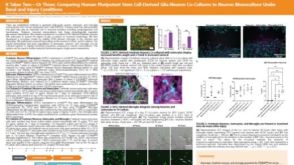 科学海报It Takes Two—Or Three: Comparing Human Pluripotent Stem Cell Derived Glia-Neuron Co-Cultures to Neuron Monoculture Under Basal and Injury Conditions
 沪公网安备31010102008431号