Multinucleated giant cells are hallmarks of ovarian aging with unique immune and degradation-associated molecular signatures
The ovary is one of the first organs to exhibit signs of aging,characterized by reduced tissue function,chronic inflammation,and fibrosis. Multinucleated giant cells (MNGCs),formed by macrophage fusion,typically occur in chronic immune pathologies,including infectious and non-infectious granulomas and the foreign body response,but are also observed in the aging ovary. The function and consequence of ovarian MNGCs remain unknown as their biological activity is highly context-dependent,and their large size has limited their isolation and analysis through technologies such as single-cell RNA sequencing. In this study,we define ovarian MNGCs through a deep analysis of their presence across age and species using advanced imaging technologies as well as their unique transcriptome using laser capture microdissection. MNGCs form complex interconnected networks that increase with age in both mouse and nonhuman primate ovaries. MNGCs are characterized by high Gpnmb expression,a putative marker of ovarian and non-ovarian MNGCs. Pathway analysis highlighted functions in apoptotic cell clearance,lipid metabolism,proteolysis,immune processes,and increased oxidative phosphorylation and antioxidant activity. Thus,MNGCs have signatures related to degradative processes,immune function,and high metabolic activity. These processes were enriched in MNGCs compared to primary ovarian macrophages,suggesting discrete functionality. MNGCs express CD4 and colocalize with T-cells,which were enriched in regions of MNGCs,indicative of a close interaction between these immune cell types. These findings implicate MNGCs in modulation of the ovarian immune landscape during aging given their high penetrance and unique molecular signature that supports degradative and immune functions. Ovarian multinucleated giant cells are a unique macrophage population that arise within the aging mammalian ovary. This study characterizes their transcriptome in mice,uncovering a potential role in degradation of cellular debris and immune signaling,suggesting a potential contribution to ovarian inflammation during aging.
View Publication
产品类型:
产品号#:
20144
100-0659
产品名:
EasySep™缓冲液
EasySep™ 小鼠F4/80正选试剂盒
Y. Numata et al. (May 2025)
Cell Death & Disease 16 1
Digoxin promotes anoikis of circulating cancer cells by targeting Na + /K + -ATPase α3-isoform
Circulating cancer cells (CCCs) are closely related to the process of distant metastasis. In early step of the metastasis cascade,CCCs must evade the detachment-induced cell death (anoikis) for their survival. Here,we examined whether Na + /K + -ATPase α3-isoform (α3NaK) in CCCs contributes to avoidance of anoikis. In CCCs isolated from gastric cancer patients,α3NaK was predominantly localized in the plasma membrane (PM),but it moved to the cytoplasm when the CCCs were attached to culture dishes. The CCCs showed significant expression of integrin α5 but not fibronectin,one of components of the extracellular matrix (ECM). In human gastric cancer MKN45 cells,digoxin (20 and 50 nM),a cardiac glycoside,significantly inhibited the enzyme activity and translocation (from cytoplasm to PM) of α3NaK,while they had no significant effect on ubiquitous Na + /K + -ATPase α1-isoform (α1NaK) in the PM. The translocation of α3NaK required the loss of ECM components from the cells. Additionally,digoxin significantly enhanced caspase 3/7 activity,as well as the expression of cleaved caspase 3,while reducing the viability of detached (floating) cells. In the MKN45 xenograft mouse model,intraperitoneal administration of digoxin (2 mg/kg/day) significantly decreased the number of CCCs and suppressed their liver metastasis. Our results suggest that α3NaK plays an essential role in the survival of CCCs in gastric cancer,and that digoxin enhances anoikis in detached (metastatic) gastric cancer cells by inhibiting the α3NaK translocation from cytoplasm to PM,thereby reducing CCCs. Targeting α3NaK may be a promising therapeutic strategy against CCC survival. Subject terms: Metastasis,Gastric cancer,Apoptosis
View Publication
产品类型:
产品号#:
15122
15162
产品名:
RosetteSep™ 人CD45去除抗体混合物
RosetteSep™人CD45去除抗体混合物
Galera-Monge T et al. (MAY 2016)
Stem Cell Research 16 3 766--769
Generation of a human iPSC line from a patient with Leigh syndrome caused by a mutation in the MT-ATP6 gene
Human iPSC line L749.1 was generated from fibroblasts of a patient with Leigh syndrome associated with a heteroplasmic mutation in the MT-ATP6 gene. Reprogramming factors OCT4,SOX2,CMYC and KLF4 were delivered using retroviruses.
View Publication
产品类型:
产品号#:
05850
05857
05870
05875
85850
85857
85870
85875
产品名:
mTeSR™1
mTeSR™1
Tenor H et al. (AUG 1996)
British journal of pharmacology 118 7 1727--35
Effects of theophylline and rolipram on leukotriene C4 (LTC4) synthesis and chemotaxis of human eosinophils from normal and atopic subjects.
1. The effects of the non-selective phosphodiesterase (PDE) inhibitor theophylline and the selective PDE4 inhibitor rolipram on leukotriene C4 (LTC4) synthesis and chemotaxis of complement 5a (C5a)- and platelet-activating factor (PAF)-stimulated human eosinophils obtained from normal and atopic donors were investigated. 2. Eosinophils were purified from peripheral venous blood of normal and atopic subjects by an immunomagnetic procedure to a purity textgreater 99%. Eosinophils were stimulated with PAF (0.1 microM) or C5a 0.1 microM for 15 min and LTC4 was measured by radioimmunoassay (RIA). Eosinophil chemotaxis in response to PAF and C5a was assessed with 48-well microchambers (Boyden). 3. Under these conditions substantial amounts of LTC4 (about 300-1000 pg per 10(6) cells) were only detectable in the presence of indomethacin (0.1-10 microM). To explain this finding it was hypothesized that indomethacin reversed the inhibition of LTC4 synthesis by endogenously synthesized prostaglandins,in particular prostaglandin E2 (PGE2). In fact,eosinophils release 23 pg PGE2 per 10(6) cells following PAF stimulation; this PGE2 synthesis was completely inhibited by indomethacin and readdition of PGE2 inhibited eosinophil LTC4 synthesis (IC50 = 3 nM). The following experiments were performed in the presence of 10 microM indomethacin. 4. Theophylline (IC50 approximately 50 microM) and rolipram (IC50 approximately 0.03-0.2 microM) suppressed PAF- and C5a-stimulated LTC4 synthesis. This PDE inhibitor-induced suppression of LTC4 generation is mediated by activation of protein kinase A,since it was reversed by the protein kinase A inhibitor Rp-8-Br-cyclic AMPS. In addition,exogenous arachidonic acid concentration-dependently (0.3 microM-3 microM) reversed the inhibition of LTC4 synthesis by the PDE inhibitors,indicating that theophylline and rolipram suppress the mobilization of arachidonic acid. The beta 2-adrenoceptor agonist salbutamol inhibited eosinophil LTC4 synthesis (IC50 = 0.08 microM). The combination of salbutamol with theophylline (10 microM) or rolipram (3 nM) appeared to be additive. 5. Theophylline (IC50 approximately 40 microM),rolipram (IC50 approximately 0.02 microM [C5a],approximately 0.6 microM [PAF]) and PGE2 (IC50 approximately 3 nM) inhibited C5a- and PAF-stimulated eosinophil chemotaxis. The combination of PGE2 with theophylline resulted in an additive effect. 6. Both C5a- and PAF-stimulated eosinophil chemotaxis and LTC4 generation were significantly elevated in eosinophils from atopic individuals compared to normal subjects. However,eosinophils from normal and atopic individuals were not different with respect to their total cyclic AMP-PDE and PDE4 isoenzyme activities as well as the potencies of theophylline and rolipram to suppress LTC4 generation and chemotaxis.
View Publication
产品类型:
产品号#:
73382
73384
产品名:
Rolipram
Rolipram
Forget M-A et al. ( 2012)
PloS one 7 7 e41074
Stimulation of Wnt/ß-catenin pathway in human CD8+ T lymphocytes from blood and lung tumors leads to a shared young/memory phenotype.
Cancer can be treated by adoptive cell transfer (ACT) of T lymphocytes. However,how to optimally raise human T cells to a differentiation state allowing the best persistence in ACT is a challenge. It is possible to differentiate mouse CD8(+) T cells towards stem cell-like memory (T(SCM)) phenotype upon TCR stimulation with Wnt/ß-catenin pathway activation. Here,we evaluated if T(SCM) can be obtained from human mature CD8(+) T cells following TCR and Wnt/ß-catenin activation through treatment with the chemical agent 4,6-disubstituted pyrrolopyrimidine (TWS119),which inhibits the glycogen synthase kinase-3β (GSK-3β),key inhibitor of the Wnt pathway. Human CD8(+) T cells isolated from peripheral blood or tumor-infiltrating lymphocytes (TIL),and treated with TWS119 gave rise to CD62L(+)CD45RA(+) cells,indicative of early differentiated stage,also expressing CD127 which is normally found on memory cells,and CD133,an hematopoietic stem cell marker. T(SCM) cells raised from either TIL or blood secreted numerous inflammatory mediators,but in lower amounts than those measured without TWS119. Finally,generated T(SCM) CD8(+) T cells expressed elevated Bcl-2 and no detectable caspase-3 activity,suggesting increased persistence. Our data support a role for Wnt/ß-catenin pathway in promoting the T(SCM) subset in human CD8(+) T cells from TIL and the periphery,which are relevant for ACT.
View Publication
产品类型:
产品号#:
73512
73514
产品名:
TWS119
TWS119
C. Nguyen et al. (Oct 2025)
Nature Immunology 26 11
Transcriptional and epigenetic targets of MEF2C in human microglia contribute to cellular functions related to autism risk and age-related disease
MEF2C encodes a transcription factor that is critical in nervous system development. Here,to examine disease-associated functions of MEF2C in human microglia,we profiled microglia differentiated from isogenic MEF2C-haploinsufficient and MEF2C-knockout induced pluripotent stem cell lines. Complementary transcriptomic and functional analyses revealed that loss of MEF2C led to a hyperinflammatory phenotype with broad phagocytic impairment,lipid accumulation,lysosomal dysfunction and elevated basal inflammatory cytokine secretion. Genome-wide profiling of MEF2C-bound sites coupled with the active regulatory landscape enabled inference of its transcriptional functions and potential mechanisms for MEF2C-associated cellular functions. Transcriptomic and epigenetic approaches identified substantial overlap with idiopathic autism datasets,suggesting a broader role of human microglial MEF2C dysregulation in idiopathic autism. In a mouse xenotransplantation model,loss of MEF2C led to morphological,lysosomal and lipid abnormalities in human microglia in vivo. Together,these studies reveal mechanisms by which reduced microglial MEF2C could contribute to the development of neurological diseases. Coufal and colleagues generated microglia from human iPS cells to examine mechanistic roles of the transcription factor MEF2C and how these roles might relate to the autism phenotype seen following the loss of MEF2C in human microglia.
View Publication
Prenatal and postnatal myeloid cells demonstrate stepwise progression in the pathogenesis of MLL fusion gene leukemia.
The steps to leukemia following an in utero fusion of MLL (HRX,ALL-1) to a partner gene in humans are not known. Introduction of the Mll-AF9 fusion gene into embryonic stem cells results in leukemia in mice with cell-type specificity similar to humans. In this study we used myeloid colony assays,immunophenotyping,and transplantation to evaluate myelopoiesis in Mll-AF9 mice. Colony assays demonstrated that both prenatal and postnatal Mll-AF9 tissues have significantly increased numbers of CD11b(+)/CD117(+)/Gr-1(+/-) myeloid cells,often in compact clusters. The self-renewal capacity of prenatal myeloid progenitors was found to decrease following serial replating of colony-forming cells. In contrast,early postnatal myeloid progenitors increased following replating; however,the enhanced self-renewal of early postnatal myeloid progenitor cells was limited and did not result in long-term cell lines or leukemia in vivo. Unlimited replating,long-term CD11b/Gr-1(+) myeloid cell lines,and the ability to produce early leukemia in vivo in transplantation experiments,were found only in mice with overt leukemia. Prenatal Mll-AF9 tissues had reduced total (mature and progenitor) CD11b/Gr-1(+) cells compared with wild-type tissues. Colony replating,immunophenotyping,and cytochemistry suggest that any perturbation of cellular differentiation from the prenatal stage onward is partial and largely reversible. We describe a novel informative in vitro and in vivo model system that permits study of the stages in the pathogenesis of Mll fusion gene leukemia,beginning in prenatal myeloid cells,progressing to a second stage in the postnatal period and,finally,resulting in overt leukemia in adult animals.
View Publication
产品类型:
产品号#:
03534
产品名:
MethoCult™GF M3534
Abadier M et al. (DEC 2017)
Cell reports 21 13 3885--3899
Effector and Regulatory T Cells Roll at High Shear Stress by Inducible Tether and Sling Formation.
The adaptive immune response involves T cell differentiation and migration to sites of inflammation. T cell trafficking is initiated by rolling on inflamed endothelium. Tethers and slings,discovered in neutrophils,facilitate cell rolling at high shear stress. Here,we demonstrate that the ability to form tethers and slings during rolling is highly inducible in T helper 1 (Th1),Th17,and regulatory T (Treg) cells but less in Th2 cells. In vivo,endogenous Treg cells rolled stably in cremaster venules at physiological shear stress. Quantitative dynamic footprinting nanoscopy of Th1,Th17,and Treg cells uncovered the formation of multiple tethers per cell. Human Th1 cells also showed tethers and slings. RNA sequencing (RNA-seq) revealed the induction of cell migration and cytoskeletal genes in sling-forming cells. We conclude that differentiated CD4 T cells stabilize rolling by inducible tether and sling formation. These phenotypic changes approximate the adhesion phenotype of neutrophils and support CD4 T cell access to sites of inflammation.
View Publication
产品类型:
产品号#:
19762
19762RF
产品名:
EasySep™小鼠中性粒细胞富集试剂盒
RoboSep™ 小鼠中性粒细胞富集试剂盒含滤芯吸头
Y.-H. Chang et al. ( 2017)
Immunity 47 5 943--958.e9
Dichotomous Expression of TNF Superfamily Ligands on Antigen-Presenting Cells Controls Post-priming Anti-viral CD4+ T Cell Immunity.
T cell antigen-presenting cell (APC) interactions early during chronic viral infection are crucial for determining viral set point and disease outcome,but how and when different APC subtypes contribute to these outcomes is unclear. The TNF receptor superfamily (TNFRSF) member GITR is important for CD4+ T cell accumulation and control of chronic lymphocytic choriomeningitis virus (LCMV). We found that type I interferon (IFN-I) induced TNFSF ligands GITRL,4-1BBL,OX40L,and CD70 predominantly on monocyte-derived APCs and CD80 and CD86 predominantly on classical dendritic cells (cDCs). Mice with hypofunctional GITRL in Lyz2+ cells had decreased LCMV-specific CD4+ T cell accumulation and increased viral load. GITR signals in CD4+ T cells occurred after priming to upregulate OX40,CD25,and chemokine receptor CX3CR1. Thus IFN-I (signal 3) induced a post-priming checkpoint (signal 4) for CD4+ T cell accumulation,revealing a division of labor between cDCs and monocyte-derived APCs in regulating T cell expansion.
View Publication
产品类型:
产品号#:
18559
18559RF
19765
19765RF
19852
19852RF
产品名:
EasySep™小鼠Naïve CD4+ T细胞分选试剂盒
RoboSep™ 小鼠Naïve CD4+ T细胞分选试剂盒
EasySep™小鼠CD4+ T细胞分选试剂盒
RoboSep™ 小鼠CD4+ T细胞分选试剂盒
Matsumura-Takeda K et al. (APR 2007)
Stem cells (Dayton,Ohio) 25 4 862--70
CD41+/CD45+ cells without acetylcholinesterase activity are immature and a major megakaryocytic population in murine bone marrow.
Murine megakaryocytes (MKs) are defined by CD41/CD61 expression and acetylcholinesterase (AChE) activity; however,their stages of differentiation in bone marrow (BM) have not been fully elucidated. In murine lineage-negative (Lin(-))/CD45(+) BM cells,we found CD41(+) MKs without AChE activity (AChE(-)) except for CD41(++) MKs with AChE activity (AChE(+)),in which CD61 expression was similar to their CD41 level. Lin(-)/CD41(+)/CD45(+)/AChE(-) MKs could differentiate into AChE(+),with an accompanying increase in CD41/CD61 during in vitro culture. Both proplatelet formation (PPF) and platelet (PLT) production for Lin(-)/CD41(+)/CD45(+)/AChE(-) MKs were observed later than for Lin(-)/CD41(++)/CD45(+)/AChE(+) MKs,whereas MK progenitors were scarcely detected in both subpopulations. GeneChip and semiquantitative polymerase chain reaction analyses revealed that the Lin(-)/CD41(+)/CD45(+)/AChE(-) MKs are assigned at the stage between the progenitor and PPF preparation phases in respect to the many MK/PLT-specific gene expressions,including beta1-tubulin. In normal mice,the number of Lin(-)/CD41(+)/CD45(+)/AChE(-) MKs was 100 times higher than that of AChE(+) MKs in BM. When MK destruction and consequent thrombocytopenia were caused by an antitumor agent,mitomycin-C,Lin(-)/CD41(+)/CD45(+)/AChE(-) MKs led to an increase in AChE(+) MKs and subsequent PLT recovery with interleukin-11 administration. It was concluded that MKs in murine BM at least in part consist of immature Lin(-)/CD41(+)/CD45(+)/AChE(-) MKs and more differentiated Lin(-)/CD41(++)/CD45(+)/AChE(+) MKs. Immature Lin(-)/CD41(+)/CD45(+)/AChE(-) MKs are a major MK population compared with AChE(+) MKs in BM and play an important role in rapid PLT recovery in vivo.
View Publication
产品类型:
产品号#:
03231
04960
04902
04900
04961
04901
04963
04962
04970
04971
产品名:
MethoCult™M3231
MegaCult™-C胶原蛋白和不含细胞因子的培养基
胶原蛋白溶液
MegaCult™-C培养基无细胞因子
MegaCult™-C胶原蛋白和细胞因子培养基
MegaCult™-C细胞因子培养基
双室载玻片试剂盒
MegaCult™-C cfu染色试剂盒
MegaCult™-C不含细胞因子完整试剂盒
MegaCult™-C细胞因子完整试剂盒
B. Kuo et al. (nov 2018)
Cellular signalling 51 23--33
The LPA2 receptor agonist Radioprotectin-1 spares Lgr5-positive intestinal stem cells from radiation injury in murine enteroids.
Rapidly proliferating cells are highly sensitive to ionizing radiation and can undergo apoptosis if the oxidative and genotoxic injury exceed the defensive and regenerative capacity of the cell. Our earlier work has established the antiapoptotic action of the growth factor-like lipid mediator lysophosphatidic acid (LPA). Activation of the LPA2 GPCR has been hypothesized to elicit antiapoptotic and regenerative actions of LPA. Based on this hypothesis we developed a novel nonlipid agonist of LPA2,which we designated Radioprotectin-1 (RP-1). We tested RP-1 at the six murine LPA GPCR subtypes using the transforming growth factor alpha shedding assay and found that it had a 25 nM EC50 that is similar to that of LPA18:1 at 32 nM. RP-1 effectively reduced apoptosis induced by gamma-irradiation and the radiomimetic drug Adriamycin only in cells that expressed LPA2 either endogenously or after transfection. RP-1 reduced gamma-H2AX levels in irradiated mouse embryonic fibroblasts transduced with the human LPA2 GPCR but was ineffective in vector transduced MEF control cells and significantly increased clonogenic survival after gamma-irradiation. gamma-Irradiation induced the expression of lpar2 transcripts that was further enhanced by RP-1 exposure within 30 min after irradiation. RP-1 decreased the mortality of C57BL/6 mice in models of the hematopoietic and gastrointestinal acute radiation syndromes. Using Lgr5-EGFP-CreER;Tdtomatoflox transgenic mice,we found that RP-1 increased the survival and growth of intestinal enteroids via the enhanced survival of Lgr5+ intestinal stem cells. Taken together,our results suggest that the LPA2-specific agonist RP-1 exerts its radioprotective and radiomitigative action through specific activation of the upregulated LPA2 GPCR in Lgr5+ stem cells.
View Publication


 EasySep™小鼠TIL(CD45)正选试剂盒




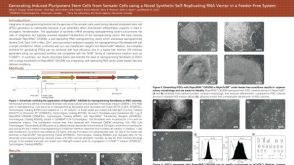 科学海报Generating iPSCs from Somatic Cells using a Novel Synthetic Self-Replicating RNA Vector in a Feeder-Free System
 沪公网安备31010102008431号