Yu Z et al. ( 2017)
Toxicology in Vitro 42 April 319--328
Prediction of delivery of organic aerosols onto air-liquid interface cells in vitro using an electrostatic precipitator
To better characterize biological responses to atmospheric organic aerosols,the efficient delivery of aerosol to in vitro lung cells is necessary. In this study,chamber generated secondary organic aerosol (SOA) entered the commercialized exposure chamber (CULTEX® Radial Flow System Compact) where it interfaced with an electrostatic precipitator (ESP) (CULTEX® Electrical Deposition Device) and then deposited on a particle collection plate. This plate contained human lung cells (BEAS-2B) that were cultured on a membrane insert to produce an air-liquid interface (ALI). To augment in vitro assessment using the ESP exposure device,the particle dose was predicted for various sampling parameters such as particle size,ESP deposition voltage,and sampling flowrate. The dose model was evaluated against the experimental measured mass of collected airborne particles. The high flowrate used in this study increased aerosol dose but failed to achieve cell stability. For example,RNA in the ALI BEAS-2B cells in vitro was stable at 0.15 L/minute but decayed at high flowrates. The ESP device and the resulting model were applied to in vitro studies (i.e.,viability and IL-8 expression) of toluene SOA using ALI BEAS-2B cells with a flowrate of 0.15 L/minute,and no cellular RNA decay occurred.
View Publication
产品类型:
产品号#:
05001
05021
05022
05008
产品名:
PneumaCult™-ALI 培养基
PneumaCult™-ALI 培养基含12 mm Transwell®插件
PneumaCult™-ALI 培养基含6.5 mm Transwell®插件
PneumaCult™交货中
Bramble MS et al. (NOV 2016)
Scientific reports 6 36916
Sex-Specific Effects of Testosterone on the Sexually Dimorphic Transcriptome and Epigenome of Embryonic Neural Stem/Progenitor Cells.
The mechanisms by which sex differences in the mammalian brain arise are poorly understood,but are influenced by a combination of underlying genetic differences and gonadal hormone exposure. Using a mouse embryonic neural stem cell (eNSC) model to understand early events contributing to sexually dimorphic brain development,we identified novel interactions between chromosomal sex and hormonal exposure that are instrumental to early brain sex differences. RNA-sequencing identified 103 transcripts that were differentially expressed between XX and XY eNSCs at baseline (FDR%=%0.10). Treatment with testosterone-propionate (TP) reveals sex-specific gene expression changes,causing 2854 and 792 transcripts to become differentially expressed on XX and XY genetic backgrounds respectively. Within the TP responsive transcripts,there was enrichment for genes which function as epigenetic regulators that affect both histone modifications and DNA methylation patterning. We observed that TP caused a global decrease in 5-methylcytosine abundance in both sexes,a transmissible effect that was maintained in cellular progeny. Additionally,we determined that TP was associated with residue-specific alterations in acetylation of histone tails. These findings highlight an unknown component of androgen action on cells within the developmental CNS,and contribute to a novel mechanism of action by which early hormonal organization is initiated and maintained.
View Publication
产品类型:
产品号#:
05700
05701
05702
产品名:
NeuroCult™ 基础培养基(小鼠&大鼠)
NeuroCult™ 扩增添加物 (小鼠&大鼠)
NeuroCult™ 扩增试剂盒 (小鼠&大鼠)
Hotta R et al. (APR 2016)
Neurogastroenterology and motility : the official journal of the European Gastrointestinal Motility Society 28 4 498--512
Isogenic enteric neural progenitor cells can replace missing neurons and glia in mice with Hirschsprung disease.
BACKGROUND Transplanting autologous patient-derived enteric neuronal stem/progenitor cells (ENSCs) is an innovative approach to replacing missing enteric neurons in patients with Hirschsprung disease (HSCR). Using autologous cells eliminates immunologic and ethical concerns raised by other cell sources. However,whether postnatal aganglionic bowel is permissive for transplanted ENSCs and whether ENSCs from HSCR patients can be successfully isolated,cultured,and transplanted in vivo remains unknown. METHODS ENSCs isolated from the ganglionic intestine of Ednrb(-/-) mice (HSCR-ENSCs) were characterized immunohistochemically and evaluated for their capacity to proliferate and differentiate in vitro. Fluorescently labeled ENSCs were co-cultured ex vivo with aganglionic Ednrb(-/-) colon. For in vivo transplantation,HSCR-ENSCs were labeled with lentivirus expressing green fluorescent protein (GFP) and implanted into aganglionic embryonic chick gut in ovo and postnatal aganglionic Ednrb(-/-) rectum in vivo. KEY RESULTS HSCR-ENSCs maintain normal capacity self-renewal and neuronal differentiation. Moreover,the Ednrb(-/-) aganglionic environment is permissive to engraftment by wild-type ENSCs ex vivo and supports migratrion and neuroglial differentiation of these cells following transplantation in vivo. Lentiviral GFP-labeled HSCR-ENSCs populated embryonic chick hindgut and postnatal colon of Ednrb(-/-) HSCR,with cells populating the intermuscular layer and forming enteric neurons and glia. CONCLUSIONS & INFERENCES ENSCs can be isolated and cultured from mice with HSCR,and transplanted into the aganglionic bowel of HSCR littermates to generate enteric neuronal networks. These results in an isogenic model establish the potential of using autologous-derived stem cells to treat HSCR and other intestinal neuropathies.
View Publication
产品类型:
产品号#:
05700
产品名:
NeuroCult™ 基础培养基(小鼠&大鼠)
M. Klopotowska et al. (feb 2022)
Cancer immunology research 10 2 228--244
PRDX-1 Supports the Survival and Antitumor Activity of Primary and CAR-Modified NK Cells under Oxidative Stress.
Oxidative stress,caused by the imbalance between reactive species generation and the dysfunctional capacity of antioxidant defenses,is one of the characteristic features of cancer. Here,we quantified hydrogen peroxide in the tumor microenvironment (TME) and demonstrated that hydrogen peroxide concentrations are elevated in tumor interstitial fluid isolated from murine breast cancers in vivo,when compared with blood or normal subcutaneous fluid. Therefore,we investigated the effects of increased hydrogen peroxide concentration on immune cell functions. NK cells were more susceptible to hydrogen peroxide than T cells or B cells,and by comparing T,B,and NK cells' sensitivities to redox stress and their antioxidant capacities,we identified peroxiredoxin-1 (PRDX1) as a lacking element of NK cells' antioxidative defense. We observed that priming with IL15 protected NK cells' functions in the presence of high hydrogen peroxide and simultaneously upregulated PRDX1 expression. However,the effect of IL15 on PRDX1 expression was transient and strictly dependent on the presence of the cytokine. Therefore,we genetically modified NK cells to stably overexpress PRDX1,which led to increased survival and NK cell activity in redox stress conditions. Finally,we generated PD-L1-CAR NK cells overexpressing PRDX1 that displayed potent antitumor activity against breast cancer cells under oxidative stress. These results demonstrate that hydrogen peroxide,at concentrations detected in the TME,suppresses NK cell function and that genetic modification strategies can improve CAR NK cells' resistance and potency against solid tumors.
View Publication
产品类型:
产品号#:
19054
19055
19051
19051RF
19055RF
19054RF
产品名:
EasySep™人B细胞富集试剂盒
EasySep™人NK细胞富集试剂盒
EasySep™人T细胞富集试剂盒
RoboSep™ 人T细胞富集试剂盒含滤芯吸头
RoboSep™ 人NK细胞富集试剂盒含滤芯吸头
RoboSep™ 人B细胞富集试剂盒含滤芯吸头
K. M. Glaser et al. ( 2022)
Frontiers in immunology 13 1039803
Combinatorial depletions of G-protein coupled receptor kinases in immune cells identify pleiotropic and cell type-specific functions.
G-protein coupled receptor kinases (GRKs) participate in the regulation of chemokine receptors by mediating receptor desensitization. They can be recruited to agonist-activated G-protein coupled receptors (GPCRs) and phosphorylate their intracellular parts,which eventually blocks signal propagation and often induces receptor internalization. However,there is growing evidence that GRKs can also control cellular functions beyond GPCR regulation. Immune cells commonly express two to four members of the GRK family (GRK2,GRK3,GRK5,GRK6) simultaneously,but we have very limited knowledge about their interplay in primary immune cells. In particular,we are missing comprehensive studies comparing the role of this GRK interplay for (a) multiple GPCRs within one leukocyte type,and (b) one specific GPCR between several immune cell subsets. To address this issue,we generated mouse models of single,combinatorial and complete GRK knockouts in four primary immune cell types (neutrophils,T cells,B cells and dendritic cells) and systematically addressed the functional consequences on GPCR-controlled cell migration and tissue localization. Our study shows that combinatorial depletions of GRKs have pleiotropic and cell-type specific effects in leukocytes,many of which could not be predicted. Neutrophils lacking all four GRK family members show increased chemotactic migration responses to a wide range of GPCR ligands,whereas combinatorial GRK depletions in other immune cell types lead to pro- and anti-migratory responses. Combined depletion of GRK2 and GRK6 in T cells and B cells shows distinct functional outcomes for (a) one GPCR type in different cell types,and (b) different GPCRs in one cell type. These GPCR-type and cell-type specific effects reflect in altered lymphocyte chemotaxis in vitro and localization in vivo. Lastly,we provide evidence that complete GRK deficiency impairs dendritic cell homeostasis,which unexpectedly results from defective dendritic cell differentiation and maturation in vitro and in vivo. Together,our findings demonstrate the complexity of GRK functions in immune cells,which go beyond GPCR desensitization in specific leukocyte types. Furthermore,they highlight the need for studying GRK functions in primary immune cells to address their specific roles in each leukocyte subset.
View Publication
产品类型:
产品号#:
17668
19851
19854
19851RF
19854RF
17668RF
产品名:
EasySep™小鼠FITC阳性选择试剂盒II
EasySep™小鼠T细胞分选试剂盒
EasySep™小鼠B细胞分选试剂盒
RoboSep™ 小鼠T细胞分选试剂盒
RoboSep™ 小鼠B细胞分选试剂盒
RoboSep™ 小鼠FITC正选试剂盒II
(May 2024)
Nature Microbiology 9 6
Peptostreptococcus anaerobius mediates anti-PD1 therapy resistance and exacerbates colorectal cancer via myeloid-derived suppressor cells in mice
Bacteria such as the oral microbiome member Peptostreptococcus anaerobius can exacerbate colorectal cancer (CRC) development. Little is known regarding whether these immunomodulatory bacteria also affect antitumour immune checkpoint blockade therapy. Here we show that administration of P. anaerobius abolished the efficacy of anti-PD1 therapy in mouse models of CRC. P. anaerobius both induced intratumoral myeloid-derived suppressor cells (MDSCs) and stimulated their immunosuppressive activities to impair effective T cell responses. Mechanistically,P. anaerobius administration activated integrin α2β1–NF-κB signalling in CRC cells to induce secretion of CXCL1 and recruit CXCR2+ MDSCs into tumours. The bacterium also directly activated immunosuppressive activity of intratumoral MDSCs by secreting lytC_22,a protein that bound to the Slamf4 receptor on MDSCs and promoted ARG1 and iNOS expression. Finally,therapeutic targeting of either integrin α2β1 or the Slamf4 receptor were revealed as promising strategies to overcome P. anaerobius-mediated resistance to anti-PD1 therapy in CRC. Interactions between Peptostreptococcus anaerobius and host cells promote recruitment and activation of myeloid-derived suppressor cells,leading to anti-PD1 immune checkpoint inhibitor resistance and exacerbated colorectal cancer in mice.
View Publication
产品类型:
产品号#:
19867
产品名:
EasySep™小鼠MDSC(CD11b+Gr1+)分选试剂盒
(Feb 2024)
Cancer Immunology Research 12 4
High-Specificity CRISPR-Mediated Genome Engineering in Anti-BCMA Allogeneic CAR T Cells Suppresses Allograft Rejection in Preclinical Models
Allogeneic CAR T–cell therapies are being developed for hematologic malignancies. The authors implement a Cas12a chRDNA platform to generate allogeneic immune-cloaked BCMA-specific CAR T cells with resistance to host response–mediated rejection for evaluation in multiple myeloma. AbstractAllogeneic chimeric antigen receptor (CAR) T cell therapies hold the potential to overcome many of the challenges associated with patient-derived (autologous) CAR T cells. Key considerations in the development of allogeneic CAR T cell therapies include prevention of graft-vs-host disease (GvHD) and suppression of allograft rejection. Here,we describe preclinical data supporting the ongoing first-in-human clinical study,the CaMMouflage trial (NCT05722418),evaluating CB-011 in patients with relapsed/refractory multiple myeloma. CB-011 is a hypoimmunogenic,allogeneic anti–B-cell maturation antigen (BCMA) CAR T cell therapy candidate. CB-011 cells feature 4 genomic alterations and were engineered from healthy donor–derived T cells using a Cas12a CRISPR hybrid RNA–DNA (chRDNA) genome-editing technology platform. To address allograft rejection,CAR T cells were engineered to prevent endogenous HLA class I complex expression and overexpress a single-chain polyprotein complex composed of beta-2 microglobulin (B2M) tethered to HLA-E. In addition,T-cell receptor (TCR) expression was disrupted at the TCR alpha constant locus in combination with the site-specific insertion of a humanized BCMA-specific CAR. CB-011 cells exhibited robust plasmablast cytotoxicity in vitro in a mixed lymphocyte reaction in cell cocultures derived from patients with multiple myeloma. In addition,CB-011 cells demonstrated suppressed recognition by and cytotoxicity from HLA-mismatched T cells. CB-011 cells were protected from natural killer cell–mediated cytotoxicity in vitro and in vivo due to endogenous promoter-driven expression of B2M–HLA-E. Potent antitumor efficacy,when combined with an immune-cloaking armoring strategy to dampen allograft rejection,offers optimized therapeutic potential in multiple myeloma. See related Spotlight by Caimi and Melenhorst,p. 385
View Publication
产品类型:
产品号#:
100-0956
10981
17951
100-0695
17951RF
产品名:
ImmunoCult™ XF培养基
ImmunoCult™ XF 人T细胞扩增培养基,500 mL
EasySep™人T细胞分选试剂盒
EasySep™人T细胞分选试剂盒
RoboSep™ 人T细胞分选试剂盒
(Apr 2024)
Frontiers in Molecular Biosciences 11
Hsp90 inhibition leads to an increase in surface expression of multiple immunological receptors in cancer cells
Heat shock protein 90 (Hsp90) is a molecular chaperone important for maintaining protein homeostasis (proteostasis) in the cell. Hsp90 inhibitors are being explored as cancer therapeutics because of their ability to disrupt proteostasis. Inhibiting Hsp90 increases surface density of the immunological receptor Major Histocompatibility Complex 1 (MHC1). Here we show that this increase occurs across multiple cancer cell lines and with both cytosol-specific and pan-Hsp90 inhibitors. We demonstrate that Hsp90 inhibition also alters surface expression of both IFNGR and PD-L1,two additional immunological receptors that play a significant role in anti-tumour or anti-immune activity in the tumour microenvironment. Hsp90 also negatively regulates IFN-γ activity in cancer cells,suggesting it has a unique role in mediating the immune system’s response to cancer. Our data suggests a strong link between Hsp90 activity and the pathways that govern anti-tumour immunity. This highlights the potential for the use of an Hsp90 inhibitor in combination with another currently available cancer treatment,immune checkpoint blockade therapy,which works to prevent immune evasion of cancer cells. Combination checkpoint inhibitor therapy and the use of an Hsp90 inhibitor may potentiate the therapeutic benefits of both treatments and improve prognosis for cancer patients.
View Publication
产品类型:
产品号#:
19853
19853RF
产品名:
EasySep™小鼠CD8+ T细胞分选试剂盒
RoboSep™ 小鼠CD8+ T细胞分选试剂盒
(Sep 2024)
Frontiers in Immunology 15
SARS-CoV-2 spike protein induces the cytokine release syndrome by stimulating T cells to produce more IL-2
IntroductionCytokine release syndrome (CRS) is one of the leading causes of mortality in patients with COVID-19 caused by the SARS-CoV-2 coronavirus. However,the mechanism of CRS induced by SARS-CoV-2 is vague.MethodsUsing spike protein combined with IL-2,IFN-γ,and TNF-α to stimulate human peripheral blood mononuclear cells (PBMCs) to secrete CRS-related cytokines,the content of cytokines in the supernatant was detected,and the effects of NK,T,and monocytes were analyzed.ResultsThis study shows that dendritic cells loaded with spike protein of SARS-CoV-2 stimulate T cells to release much more interleukin-2 (IL-2,) which subsequently cooperates with spike protein to facilitate PBMCs to release IL-1β,IL-6,and IL-8. These effects are achieved via IL-2 stimulation of NK cells to release tumor necrosis factor-α (TNF-α) and interferon-γ (IFN-γ),as well as T cells to release IFN-γ Mechanistically,IFN-γ and TNF-α enhance the transcription of CD40,and the interaction of CD40 and its ligand stabilizes the membrane expression of toll-like receptor 4 (TLR4) that serves as a receptor of spike protein on the surface of monocytes. As a result,there is a constant interaction between spike protein and TLR4,leading to continuous activation of nuclear factor-κ-gene binding (NF-κB). Furthermore,TNF-α also activates NF-κB signaling in monocytes,which further cooperates with IFN-γ and spike protein to modulate NF-κB–dependent transcription of CRS-related inflammatory cytokines.DiscussionTargeting TNF-α/IFN-γ in combination with TLR4 may represent a promising therapeutic approach for alleviating CRS in individuals with COVID-19.
View Publication
产品类型:
产品号#:
19359
17951
100-0695
17951RF
100-0697
19359RF
产品名:
EasySep™人单核细胞分选试剂盒
EasySep™人T细胞分选试剂盒
EasySep™人T细胞分选试剂盒
RoboSep™ 人T细胞分选试剂盒
EasySep™人单核细胞分选试剂盒
RoboSep™ 人单核细胞分选试剂盒
M. Huyghe et al. (Oct 2024)
Frontiers in Immunology 15 3
Comparative analysis of iPSC-derived NK cells from two differentiation strategies reveals distinct signatures and cytotoxic activities
The ability to generate natural killer (NK) cells from induced pluripotent stem cells (iPSCs) has given rise to new possibilities for the large-scale production of homogeneous immunotherapeutic cellular products and opened new avenues towards the creation of “off-the-shelf” cancer immunotherapies. However,the differentiation of NK cells from iPSCs remains poorly understood,particularly regarding the ontogenic landscape of iPSC-derived NK (iNK) cells produced in vitro and the influence that the differentiation strategy employed may have on the iNK profile. To investigate this question,we conducted a comparative analysis of two sets of iNK cells generated from the same iPSC line using two different protocols: (i) a short-term,clinically compatible feeder-free protocol corresponding to primitive hematopoiesis,and (ii) a lymphoid-based protocol representing the definitive hematopoietic step. Our work demonstrated that both protocols are capable of producing functional iNK cells. However,the two sets of resulting iNKs exhibited distinct phenotypes and transcriptomic profiles. The lymphoid-based differentiation approach generated iNKs with a more mature and activated profile,which demonstrated higher cytotoxicity against cancer cell lines compared to iNK cells produced under short-term feeder-free conditions suggesting that the differentiation strategy must be considered when designing iNK cell–based adoptive immunotherapies.
View Publication
Sattler M et al. ( 2003)
Cancer research 63 17 5462--5469
A novel small molecule met inhibitor induces apoptosis in cells transformed by the oncogenic TPR-MET tyrosine kinase.
The Met receptor tyrosine kinase has been shown to be overexpressed or mutated in a variety of solid tumors and has,therefore,been identified as a good candidate for molecularly targeted therapy. Activation of the Met tyrosine kinase by the TPR gene was originally described in vitro through carcinogen-induced rearrangement. The TPR-MET fusion protein contains constitutively elevated Met tyrosine kinase activity and constitutes an ideal model to study the transforming activity of the Met kinase. We found,when introduced into an interleukin 3-dependent cell line,TPR-MET induces factor independence and constitutive tyrosine phosphorylation of several cellular proteins. One major tyrosine phosphorylated protein was identified as the TPR-MET oncoprotein itself. Inhibition of the Met kinase activity by the novel small molecule drug SU11274 [(3Z)-N-(3-chlorophenyl)-3-([3,5-dimethyl-4-[(4-methylpiperazin-1-yl)carbonyl]-1H-pyrrol-2-yl]methylene)-N-methyl-2-oxo-2,3-dihydro-1H-indole-5-sulfonamide] led to time- and dose-dependent reduced cell growth. The inhibitor did not affect other tyrosine kinase oncoproteins,including BCR-ABL,TEL-JAK2,TEL-PDGFbetaR,or TEL-ABL. The Met inhibitor induced G(1) cell cycle arrest and apoptosis with increased Annexin V staining and caspase 3 activity. The autophosphorylation of the Met kinase was reduced on sites that have been shown previously to be important for activation of pathways involved in cell growth and survival,especially the phosphatidylinositol-3'-kinase and the Ras pathway. In particular,we found that the inhibitor blocked phosphorylation of AKT,GSK-3beta,and the pro-apoptotic transcription factor FKHR. The characterization of SU11274 as an effective inhibitor of Met tyrosine kinase activity illustrates the potential of targeting for Met therapeutic use in cancers associated with activated forms of this kinase.
View Publication


 EasySep™小鼠TIL(CD45)正选试剂盒




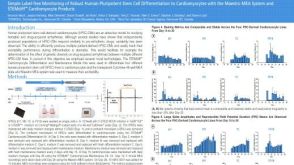 科学海报Simple Label-free Monitoring of Robust Human Pluripotent Stem Cell Differentiation to Cardiomyocytes with the Maestro MEA System and STEMdiff™ Cardiomyocyte Products
 沪公网安备31010102008431号