X.-Y. Zhang et al. (feb 2022)
Human molecular genetics 31 4 638--650
Exosomal transfer of activated neutrophil-derived lncRNA CRNDE promotes proliferation and migration of airway smooth muscle cells in asthma.
Activated neutrophil-derived exosomes reportedly contribute to the proliferation of airway smooth muscle cells (ASMCs),thereby aggravating the airway wall remodeling during asthma; however,the specific mechanism remains unclear. Lipopolysaccharide (LPS)-EXO and si-CRNDE-EXO were extracted from the media of human neutrophils treated with LPS and LPS??+??si-CRNDE (a siRNA targets long non-coding RNA CRNDE),respectively. Human ASMCs were co-cultured with LPS-EXO or si-CRNDE-EXO,and cell viability,proliferation and migration were measured. The interplay of colorectal neoplasia differentially expressed (CRNDE),inhibitor of nuclear factor kappa B kinase subunit beta (IKK$\beta$) and nuclear receptor subfamily 2 group C member 2 (TAK1) was explored using RNA immunoprecipitation (RIP) and Co-IP assays. A mouse model of asthma was induced using ovalbumin. CRNDE was upregulated in LPS-EXO and successfully transferred from LPS-treated neutrophils to ASMCs through exosome. Mechanically,CRNDE loaded in LPS-EXO reinforced TAK1-mediated IKK$\beta$ phosphorylation,thereby activating the nuclear factor kappa B (NF-$\kappa$B) pathway. Functionally,silencing CRNDE in LPS-EXO,an IKK$\beta$ inhibitor,and an NF-$\kappa$B inhibitor all removed the upregulation of cell viability,proliferation and migration induced by LPS-EXO in ASMCs. In the end,the in vivo experiment demonstrated that CRNDE knockdown in neutrophils effectively reduced the thickness of bronchial smooth muscle in a mouse model for asthma. Activated neutrophils-derived CRNDE was transferred to ASMCs through exosomes and activated the NF-$\kappa$B pathway by enhancing IKK$\beta$ phosphorylation. The latter promoted the proliferation and migration of ASMCs and then contributed to airway remodeling in asthma.
View Publication
产品类型:
产品号#:
17957
20144
17957RF
产品名:
EasySep™人中性粒细胞分选试剂盒
EasySep™缓冲液
RoboSep™ 人中性粒细胞分选试剂盒
(Apr 2024)
Communications Biology 7
Dynamic molecular network analysis of iPSC-Purkinje cells differentiation delineates roles of ISG15 in SCA1 at the earliest stage
Better understanding of the earliest molecular pathologies of all neurodegenerative diseases is expected to improve human therapeutics. We investigated the earliest molecular pathology of spinocerebellar ataxia type 1 (SCA1),a rare familial neurodegenerative disease that primarily induces death and dysfunction of cerebellum Purkinje cells. Extensive prior studies have identified involvement of transcription or RNA-splicing factors in the molecular pathology of SCA1. However,the regulatory network of SCA1 pathology,especially central regulators of the earliest developmental stages and inflammatory events,remains incompletely understood. Here,we elucidated the earliest developmental pathology of SCA1 using originally developed dynamic molecular network analyses of sequentially acquired RNA-seq data during differentiation of SCA1 patient-derived induced pluripotent stem cells (iPSCs) to Purkinje cells. Dynamic molecular network analysis implicated histone genes and cytokine-relevant immune response genes at the earliest stages of development,and revealed relevance of ISG15 to the following degradation and accumulation of mutant ataxin-1 in Purkinje cells of SCA1 model mice and human patients. Molecular changes in neurodegeneration occur much earlier than previously expected. In this study,dynamic molecular network analysis of iPSC differentiation uncovers a temporal pathway from histone to ISG15 with the earliest molecular changes of SCA1.
View Publication
产品类型:
产品号#:
05990
产品名:
TeSR™-E8™
J. Jahan et al. (Mar 2024)
Biochemical pharmacology 222
The role of telomerase reverse transcriptase in the mitochondrial protective functions of Angiotensin-(1–7) in diabetic CD34 + cells
Angiotensin (Ang)-(1–7) stimulates vasoprotective functions of diabetic (DB) CD34 + hematopoietic stem/progenitor cells partly by decreasing reactive oxygen species (ROS),increasing nitric oxide (NO) levels and decreasing TGFβ1 secretion. Telomerase reverse transcriptase (TERT) translocates to mitochondria and regulates ROS generation. Alternative splicing of TERT results in variants α-,β- and α-β-TERT,which may oppose functions of full-length (FL) TERT. This study tested if the protective functions of Ang-(1–7) or TGFβ1-silencing are mediated by mitoTERT and that diabetes decreases FL-TERT expression by inducing splicing. CD34 + cells were isolated from the peripheral blood mononuclear cells of nondiabetic (ND,n = 68) or DB (n = 74) subjects. NO and mitoROS levels were evaluated by flow cytometry. TERT splice variants and mitoDNA-lesions were characterized by qPCR. TRAP assay was used for telomerase activity. Decoy peptide was used to block mitochondrial translocation (mitoXTERT). TERT inhibitor or mitoXTERT prevented the effects of Ang-(1–7) on NO or mitoROS levels in DB-CD34 + cells. FL-TERT expression and telomerase activity were lower and mitoDNA-lesions were higher in DB cells compared to ND and were reversed by Ang-(1–7) or TGFβ1-silencing. The prevalence of TERT splice variants,with predominant β-TERT expression,was higher and the expression of FL-TERT was lower in DB cells (n = 25) compared to ND (n = 30). Ang-(1–7) or TGFβ1-silencing decreased TERT-splicing and increased FL-TERT. Blocking of β-splicing increased FL-TERT and protected mitoDNA in DB-cells. The findings suggest that diabetes induces TERT-splicing in CD34 + cells and that β-TERT splice variant largely contributes to the mitoDNA oxidative damage.
View Publication
产品类型:
产品号#:
09600
09650
产品名:
StemSpan™ SFEM
StemSpan™ SFEM
S. Liu et al. (Jul 2025)
Chinese Medicine 20
Effects of solamargine in hepatic metastasis of colorectal cancer: induction of ferroptosis and elimination of cancer stem cells
Colorectal cancer (CRC) is a prevalent malignant tumor globally,ranking third in incidence and second in mortality. Metastasis is the main cause of death in patients with CRC. Solanum nigrum L. (SNL),a traditional Chinese medicinal herb endowed with detoxification,blood circulation enhancement,and anti-swelling properties,has been widely used in folk prescriptions for cancer treatment in China. Solamargine (SM) is the major steroidal alkaloid glycoside purified from SNL. However,its role and mechanism against metastatic CRC are not yet clear. The purpose of this study was to evaluate the inhibitory effect of SM on human hepatic metastatic CRC and investigate its underlying mechanism. CCK-8 assay,colony-formation assay,transwell assay,flow cytometry,tumoursphere formation assay,reverse-transcription quantitative PCR (RT-qPCR),Western blotting,transcriptomic sequencing and ferroptosis analysis were performed to reveal the efficacy and the underlying mechanism of SM in CRC cell lines. In vivo,allograft model,patient-derived xenograft (PDX) model,and liver metastatic model were performed to verify the effect of SM on the growth and metastasis of CRC. SM was found to suppress hepatic metastasis in CRC by effectively targeting key cellular processes,including proliferation,survival,and stemness. RNA sequencing showed that SM could induce ferroptosis,which was confirmed by elevated lipid reactive oxygen species (ROS) and downregulated glutathione peroxidase 4 (GPX4) and glutathione synthetase (GSS) in CRC cells and xenografts. Induction of ferroptosis by SM was regulated by nuclear factor erythroid 2-related factor 2 (Nrf2). Furthermore,downregulation of β-catenin was found to be fundamental for the SM-enabled cancer stem cells (CSCs) elimination and metastasis blockage in CRC. Our results indicated that SM is a promising therapeutic drug to inhibit hepatic metastasis in CRC by inducing ferroptosis and impeding CSCs. The online version contains supplementary material available at 10.1186/s13020-025-01171-5.
View Publication
产品类型:
产品号#:
01700
01702
产品名:
ALDEFLUOR™ 试剂盒
ALDEFLUOR™测定缓冲液
A. R. Dinasarapu et al. (Aug 2025)
Stem Cells Translational Medicine 14 8
Modeling rare genetic disease with patient-derived induced pluripotent stem cells: reassessment of the minimum numbers of lines needed
Induced pluripotent stem cells (iPSCs) are widely used to model human genetic diseases. The most common strategy involves collecting cells from relevant individuals and then reprogramming them into iPSCs. This strategy is very powerful,but finding enough individuals with a specific genetic disease can be challenging,especially since most are rare. In addition,making numerous iPSC lines is time-consuming and expensive. As a result,most studies have included relatively small numbers of iPSC lines,sometimes from the same individual. Considering the experimental variability obtained using different iPSC lines,there has been great interest in delineating the most efficient number of lines needed to achieve a robust and reproducible result. Several recommendations have been published,although most conclusions have been based on methods where experimental variance from individual cases is difficult to separate from technical issues related to the preparation of iPSCs. The current study used gene expression profiles determined by RNA sequencing (RNAseq) to empirically evaluate the impact of the number of unique individuals and the number of replicate iPSC lines from each individual for modeling Lesch-Nyhan disease (LND). This disease is caused by mutations in the HPRT1 gene,which encodes the enzyme hypoxanthine-guanine phosphoribosyltransferase. Results for detecting disease-relevant changes in gene expression depended on the analytical method employed,and whether or not statistical procedures were used to address multiple iPSC lines from the same individual. In keeping with prior studies,the best results were obtained with iPSC lines from 3-4 unique individuals per group. In contrast to prior studies,results were improved with 2 lines per individual,without statistical corrections for duplicate lines from the same individual. In the current study where all lines were produced in parallel using the same methods,most variance in gene expression came from technical factors unrelated to the individual from whom the iPSC lines were prepared.
View Publication
Vieillard V et al. (AUG 2005)
Proceedings of the National Academy of Sciences 102 31 10981--86
NK cytotoxicity against CD4+ T cells during HIV-1 infection: A gp41 peptide induces the expression of an NKp44 ligand
HIV infection leads to a state of chronic immune activation and progressive deterioration in immune function,manifested most recognizably by the progressive depletion of CD4+ T cells. A substantial percentage of natural killer (NK) cells from patients with HIV infection are activated and express the natural cytotoxicity receptor (NCR) NKp44. Here we show that a cellular ligand for NKp44 (NKp44L) is expressed during HIV-1 infection and is correlated with both the progression of CD4+ T cell depletion and the increase of viral load. CD4+ T cells expressing this ligand are highly sensitive to the NK lysis activity mediated by NKp44+ NK cells. The expression of NKp44L is induced by the linear motif NH2-SWSNKS-COOH of the HIV-1 envelope gp41 protein. This highly conserved motif appears critical to the sharp increase in NK lysis of CD4+ T cells from HIV-infected patients. These studies strongly suggest that induction of NKp44L plays a key role in the lysis of CD4+ T cells by activated NK cells in HIV infection and consequently provide a framework for considering how HIV-1 may use NK cell immune surveillance to trigger CD4+ T cells. Understanding this mechanism may help to develop future therapeutic strategies and vaccines against HIV-1 infection.
View Publication
产品类型:
产品号#:
03800
03801
03802
03803
03804
03805
03806
05150
15021
15061
产品名:
ClonaCell™-HY 杂交瘤试剂盒
ClonaCell™-HY Medium
ClonaCell™-HY Medium
ClonaCell™-HY Medium
ClonaCell™-HY Medium
ClonaCell™-HY Medium
ClonaCell™-HY PEG (融合)
MyeloCult™H5100
RosetteSep™人T细胞富集抗体混合物
RosetteSep™人T细胞富集抗体混合物
Bruserud &O et al. (MAR 2007)
Haematologica 92 3 332--41
Subclassification of patients with acute myelogenous leukemia based on chemokine responsiveness and constitutive chemokine release by their leukemic cells.
BACKGROUND AND OBJECTIVES: Chemokines are soluble mediators involved in angiogenesis,cellular growth control and immunomodulation. In the present study we investigated the effects of various chemokines on proliferation of acute myelogenous leukemia (AML) cells and constitutive chemokine release by primary AML cells. DESIGN AND METHODS: Native human AML cells derived from 68 consecutive patients were cultured in vitro. We investigated AML cell proliferation (3H-thymidine incorporation,colony formation),chemokine receptor expression,constitutive chemokine release and chemotaxis of normal peripheral blood mononuclear cells. RESULTS: Exogenous chemokines usually did not have any effect on AML blast proliferation in the absence of hematopoietic growth factors,but when investigating growth factor-dependent (interleukin 3 + granulocyte-macrophage colony-stimulating factor + stem cell factor) proliferation in suspension cultures the following patient subsets were identified: (i) patients whose cells showed chemokine-induced growth enhancement (8 patients); (ii) divergent effects on proliferation (15 patients); and (iii) no effect (most patients). These patient subsets did not differ in chemokine receptor expression,but,compared to CD34- AML cells,CD34+ cells showed higher expression of several receptors. Chemokines also increased the proliferation of clonogenic AML cells from the first subset of patients. Furthermore,a broad constitutive chemokine release profile was detected for most patients,and the following chemokine clusters could be identified: CCL2-4/CXCL1/8,CCL5/CXCL9-11 (possibly also CCL23) and CCL13/17/22/24/CXCL5 (possibly also CXCL6). Only the CCL2-4/CXCL1/8 cluster showed significant correlations between corresponding mRNA levels and NFkB levels/activation. The chemotaxis of normal immunocompetent cells for patients without constitutive chemokine release was observed to be decreased. INTERPRETATION AND CONCLUSIONS: Differences in chemokine responsiveness as well as chemokine release contribute to patient heterogeneity in AML. Patients with AML can be classified into distinct subsets according to their chemokine responsiveness and chemokine release profile.
View Publication
产品类型:
产品号#:
04434
04444
09600
09650
产品名:
MethoCult™H4434经典
MethoCult™H4434经典
StemSpan™ SFEM
StemSpan™ SFEM
Elliott E and Ginzburg I (JAN 2009)
FEBS letters 583 1 229--34
BAG-1 is preferentially expressed in neuronal precursor cells of the adult mouse brain and regulates their proliferation in vitro.
BAG-1 protein has been well characterized as necessary for proper neuronal development. However,little is known about the function of BAG-1 in the adult brain. In this work,the expression and localization of BAG-1 in the mature mouse brain was studied. The levels of both BAG-1 isoforms decrease significantly in the brain during development. BAG-1 was found preferentially expressed in Neuronal Precursor Cells (NPCs) in the two major niches of neurogenesis. Lentiviral mediated overexpression of BAG-1 increased the proliferation rate of cultured NPCs. In addition,depletion of BAG-1 from NPCs induced a decrease in NPCs proliferation in the presence of a stress hormone,corticosterone. These data suggest a role for BAG-1 in mechanisms of neurogenesis in the adult mouse brain.
View Publication
产品类型:
产品号#:
05700
05701
05702
产品名:
NeuroCult™ 基础培养基(小鼠&大鼠)
NeuroCult™ 扩增添加物 (小鼠&大鼠)
NeuroCult™ 扩增试剂盒 (小鼠&大鼠)
Ran D et al. (DEC 2009)
Experimental hematology 37 12 1423--34
Aldehyde dehydrogenase activity among primary leukemia cells is associated with stem cell features and correlates with adverse clinical outcomes.
OBJECTIVE: Animal models have provided evidence for the existence of leukemia stem cells (LSC). However,prospective isolation of human LSC from patients with acute myeloid leukemia (AML),as well as the assessment of their clinical significance,has remained a major challenge. MATERIALS AND METHODS: We have studied the functional characteristics of a subset of leukemia cells that expressed CD34 and high aldehyde dehydrogenase activity (ALDH(br)),which was freshly isolated from the mononuclear cells at the time of diagnosis from the marrow of 68 consecutive patients suffering from AML. RESULTS: The percentage of ALDH(br) cells ranged from 0.01% to 16.0% with a median of 0.5%. Compared to their counterparts with low aldehyde dehydrogenase activity from the same individual patients,the ALDH(br) population showed a significantly higher affinity to human mesenchymal stromal cells (n=12; ptextless0.01),a more than twofold higher proportion of slow-dividing and quiescent cells (n=4; ptextless0.05),higher numbers of long-term culture-initiating cell colonies in vitro (n=25; ptextless0.01),and an enhanced engraftment in the nonobese diabetic/severe combined immunodeficient mouse model (n=3; ptextless0.05). Above all,we found that the frequency of ALDH(br) cells correlated significantly with diminished survival probability (p=0.025) and with adverse cytogenetic factors (ptextless0.05). CONCLUSION: A small proportion of leukemia cells derived from the marrow of patients with AML were ALDH(br) and CD34(+). They demonstrated functional characteristics of LSC and high percentages of these cells among the leukemia cells correlated significantly with poor clinical outcome.
View Publication
产品类型:
产品号#:
01700
01705
01701
01702
产品名:
ALDEFLUOR™ 试剂盒
ALDEFLUOR™ DEAB试剂
ALDEFLUOR™测定缓冲液
Valencic E et al. (APR 2010)
Cytotherapy 12 2 154--60
The immunosuppressive effect of Wharton's jelly stromal cells depends on the timing of their licensing and on lymphocyte activation.
BACKGROUND: Mesenchymal stromal cells (MSC) have been proven to have potent immunosuppressive action and hence have been proposed for the treatment of severe Graft Versus Host Disease. However,in most models,MSC were added at the same time of lymphocyte stimulation,which is quite different from what occurs in vivo. AIMS: To investigate how the timing of lymphocyte activation and the exposure to activation-related cytokines (licensing) can influence the immunosuppressive action of Wharton's jelly stromal cells (WJSC). METHODS: WJSC,licensed or not with activation-related cytokines,were added lymphocytes the same time or 24 hours after their stimulation with phytohaemoagglutinin. Proliferation of lymphocytes and cytokines production was measured after three days co-culture. RESULTS: Lymphocytes stimulated in the presence of WJSC displayed a dramatic decrease in proliferation and production of cytokines,in spite of normal expression of activation markers. The suppression was weakened when targeted lymphocytes were seperated by a membrane and partially rescued by the addition of exogenous l-tryptophan,suggesting a major role for indoleamine 2,3-dioxigenase with a probable paracrine effect. Licensing of WJSC increased the immunosuppressive effect,in both contact and non-contact settings. The timing of WJSC licensing was crucial for the immunosuppressive action. Lymphocytes pre-stimulated alone for 24 h,and added afterwards to non-licensed WJSC,showed normal or even increased proliferation. On the other hand,their proliferation was strongly inhibited by licensed WJSC. CONCLUSIONS: WJSC have a potent immunosuppressive function best realized with direct contact,and increased by licensing signals before and during lymphocyte stimulation. Our results could contribute to the set up of new WJSC-based therapies for severe autoimmuno disorders.
View Publication
产品类型:
产品号#:
产品名:
Yañ et al. (NOV 2010)
Experimental cell research 316 19 3109--23
Prostaglandin E2 plays a key role in the immunosuppressive properties of adipose and bone marrow tissue-derived mesenchymal stromal cells.
Mesenchymal stromal cells (MSCs) have important immunosuppressive properties,but the mechanisms and soluble factors involved in these effects remain unclear. We have studied prostaglandin-E2 (PGE2) as a possible candidate implied in adipose tissue-derived MSCs (Ad-MSCs) immunosuppressive properties over dendritic cells and T lymphocytes,compared to bone marrow derived MSCs (BM-MSCs). We found that both MSCs inhibited the maturation of myeloid-DCs and plasmocytoid-DCs. High levels of PGE2 were detected in DCs/MSCs co-cultures. Its blockade with indomethacin (IDM) allowed plasmocytoid-DCs but not myeloid-DCs maturation. Additionally,high levels of PGE2 were found in co-cultures in which Ad-MSCs or BM-MSCs inhibited activated T cells proliferation and pro-inflammatory cytokines production. PGE2 blockade by IDM preserved T lymphocytes proliferation but did not restore the pro-inflammatory cytokines secretion. However,an increased expression of transcription factors and cytokines genes involved in the Th1/Th2 differentiation pathway was detected in the T cells co-cultured with Ad-MSCs,but not with BM-MSCs. In conclusion,we propose that PGE2 is a soluble factor mediating most of the immunosuppressive effects of Ad-MSCs and BM-MSCs over p-DCs maturation and activated T lymphocytes proliferation and cytokine secretion.
View Publication


 EasySep™小鼠TIL(CD45)正选试剂盒




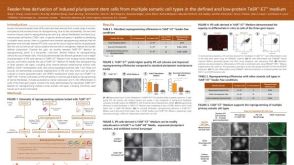 科学海报Feeder-Free Derivation of Induced Pluripotent Stem Cells from Multiple Somatic Cell Types in the Defined and Low-Protein TeSR™-E7™ Medium
 沪公网安备31010102008431号