C. A. Egelston et al. (OCT 2018)
Nature communications 9 1 4297
Human breast tumor-infiltrating CD8+ T cells retain polyfunctionality despite PD-1 expression.
Functional CD8+ T cells in human tumors play a clear role in clinical prognosis and response to immunotherapeutic interventions. PD-1 expression in T cells involved in chronic infections and tumors such as melanoma often correlates with a state of T-cell exhaustion. Here we interrogate CD8+ tumor-infiltrating lymphocytes (TILs) from human breast and melanoma tumors to explore their functional state. Despite expression of exhaustion hallmarks,such as PD-1 expression,human breast tumor CD8+ TILs retain robust capacity for production of effector cytokines and degranulation capacity. In contrast,melanoma CD8+ TILs display dramatic reduction of cytokine production and degranulation capacity. We show that CD8+ TILs from human breast tumors can potently kill cancer cells via bi-specific antibodies. Our data demonstrate that CD8+ TILs in human breast tumors retain polyfunctionality,despite PD-1 expression,and suggest that they may be harnessed for effective immunotherapies.
View Publication
产品类型:
产品号#:
17853
17853RF
19159
19159RF
100-0699
产品名:
EasySep™人CD8正选试剂盒 II
RoboSep™ 人CD8正选试剂盒 II
EasySep™人记忆CD8+ T细胞富集试剂盒
RoboSep™ 人记忆CD8+ T细胞富集试剂盒
EasySep™人CD8阳性选择试剂盒II
M. J. Bailey et al. (NOV 2018)
Nature communications 9 1 4560
Human antibodies targeting Zika virus NS1 provide protection against disease in a mouse model.
Zika virus is a mosquito-borne flavivirus closely related to dengue virus that can cause severe disease in humans,including microcephaly in newborns and Guillain-Barr{\'{e}} syndrome in adults. Specific treatments and vaccines for Zika virus are not currently available. Here,we isolate and characterize four monoclonal antibodies (mAbs) from an infected patient that target the non-structural protein NS1. We show that while these antibodies are non-neutralizing,NS1-specific mAbs can engage Fc$\gamma$R without inducing antibody dependent enhancement (ADE) of infection in vitro. Moreover,we demonstrate that mAb AA12 has protective efficacy against lethal challenges of African and Asian lineage strains of Zika virus in Stat2-/- mice. Protection is Fc-dependent,as a mutated antibody unable to activate known Fc effector functions or complement is not protective in vivo. This study highlights the importance of the ZIKV NS1 protein as a potential vaccine antigen.
View Publication
产品类型:
产品号#:
17955
17955RF
100-0960
产品名:
EasySep™人NK细胞分选试剂盒
RoboSep™ 人NK细胞分选试剂盒
EasySep™人NK细胞分离试剂盒
B. Kan et al. (NOV 2018)
Nature communications 9 1 4822
Cellular metabolism constrains innate immune responses in early human ontogeny.
Pathogen immune responses are profoundly attenuated in fetuses and premature infants,yet the mechanisms underlying this developmental immaturity remain unclear. Here we show transcriptomic,metabolic and polysome profiling and find that monocytes isolated from infants born early in gestation display perturbations in PPAR-$\gamma$-regulated metabolic pathways,limited glycolytic capacity and reduced ribosomal activity. These metabolic changes are linked to a lack of translation of most cytokines and of MALT1 signalosome genes essential to respond to the neonatal pathogen Candida. In contrast,they have little impact on house-keeping phagocytosis functions. Transcriptome analyses further indicate a role for mTOR and its putative negative regulator DNA Damage Inducible Transcript 4-Like in regulating these metabolic constraints. Our results provide a molecular basis for the broad susceptibility to multiple pathogens in these infants,and suggest that the fetal immune system is metabolically programmed to avoid energetically costly,dispensable and potentially harmful immune responses during ontogeny.
View Publication
产品类型:
产品号#:
07801
07811
07851
07861
17858
17858RF
18060
18061
100-0694
产品名:
Lymphoprep™
Lymphoprep™
EasySep™人CD14正选试剂盒II
RoboSep™ 人CD14正选试剂盒II
Lymphoprep™
Lymphoprep™
EasySep™人CD14正选试剂盒II
G. Saggu et al. (NOV 2018)
Nature communications 9 1 5058
Cis interaction between sialylated Fc$\gamma$RIIA and the $\alpha$I-domain of Mac-1 limits antibody-mediated neutrophil recruitment.
Vascular-deposited IgG immune complexes promote neutrophil recruitment,but how this process is regulated is still unclear. Here we show that the CD18 integrin Mac-1,in its bent state,interacts with the IgG receptor Fc$\gamma$RIIA in cis to reduce the affinity of Fc$\gamma$RIIA for IgG and inhibit Fc$\gamma$RIIA-mediated neutrophil recruitment under flow. The Mac-1 rs1143679 lupus-risk variant reverses Mac-1 inhibition of Fc$\gamma$RIIA,as does a Mac-1 ligand and a mutation in Mac-1's ligand binding $\alpha$I-domain. Sialylated complex glycans on Fc$\gamma$RIIA interact with the $\alpha$I-domain via divalent cations,and this interaction is required for Fc$\gamma$RIIA inhibition by Mac-1. Human neutrophils deficient in CD18 integrins exhibit augmented Fc$\gamma$RIIA-dependent recruitment to IgG-coated endothelium. In mice,CD18 integrins on neutrophils dampen IgG-mediated neutrophil accumulation in the kidney. In summary,cis interaction between sialylated Fc$\gamma$RIIA and the $\alpha$I-domain of Mac-1 alters the threshold for IgG-mediated neutrophil recruitment. A disruption of this interaction may increase neutrophil influx in autoimmune diseases.
View Publication
S. Arandjelovic et al. (feb 2019)
Nature immunology 20 2 141--151
A noncanonical role for the engulfment gene ELMO1 in neutrophils that promotes inflammatory arthritis.
Rheumatoid arthritis is characterized by progressive joint inflammation and affects {\~{}}1{\%} of the human population. We noted single-nucleotide polymorphisms (SNPs) in the apoptotic cell-engulfment genes ELMO1,DOCK2,and RAC1 linked to rheumatoid arthritis. As ELMO1 promotes cytoskeletal reorganization during engulfment,we hypothesized that ELMO1 loss would worsen inflammatory arthritis. Surprisingly,Elmo1-deficient mice showed reduced joint inflammation in acute and chronic arthritis models. Genetic and cell-biology studies revealed that ELMO1 associates with receptors linked to neutrophil function in arthritis and regulates activation and early neutrophil recruitment to the joints,without general inhibition of inflammatory responses. Further,neutrophils from the peripheral blood of human donors that carry the SNP in ELMO1 associated with arthritis display increased migratory capacity,whereas ELMO1 knockdown reduces human neutrophil migration to chemokines linked to arthritis. These data identify 'noncanonical' roles for ELMO1 as an important cytoplasmic regulator of specific neutrophil receptors and promoter of arthritis.
View Publication
产品类型:
产品号#:
19762
19762RF
产品名:
EasySep™小鼠中性粒细胞富集试剂盒
RoboSep™ 小鼠中性粒细胞富集试剂盒含滤芯吸头
J. H. Choi et al. ( 2019)
Science (New York,N.Y.) 364 6440
LMBR1L regulates lymphopoiesis through Wnt/beta-catenin signaling.
Precise control of Wnt signaling is necessary for immune system development. In this study,we detected severely impaired development of all lymphoid lineages in mice,resulting from an N-ethyl-N-nitrosourea-induced mutation in the limb region 1-like gene (Lmbr1l),which encodes a membrane-spanning protein with no previously described function in immunity. The interaction of LMBR1L with glycoprotein 78 (GP78) and ubiquitin-associated domain-containing protein 2 (UBAC2) attenuated Wnt signaling in lymphocytes by preventing the maturation of FZD6 and LRP6 through ubiquitination within the endoplasmic reticulum and by stabilizing destruction complex" proteins. LMBR1L-deficient T cells exhibited hallmarks of Wnt/beta-catenin activation and underwent apoptotic cell death in response to proliferative stimuli. LMBR1L has an essential function during lymphopoiesis and lymphoid activation acting as a negative regulator of the Wnt/beta-catenin pathway."
View Publication
产品类型:
产品号#:
19853
19853RF
17961
17961RF
产品名:
EasySep™小鼠CD8+ T细胞分选试剂盒
RoboSep™ 小鼠CD8+ T细胞分选试剂盒
EasySep™人Naïve Pan-T细胞分选试剂盒
RoboSep™ 人Naïve Pan-T细胞分选试剂盒
S. C. David et al. (may 2019)
Nature microbiology
Direct interaction of whole-inactivated influenza A and pneumococcal vaccines enhances influenza-specific immunity.
The upper respiratory tract is continuously exposed to a vast array of potentially pathogenic viruses and bacteria. Influenza A virus (IAV) has particular synergism with the commensal bacterium Streptococcus pneumoniae in this niche,and co-infection exacerbates pathogenicity and causes significant mortality. However,it is not known whether this synergism is associated with a direct interaction between the two pathogens. We have previously reported that co-administration of a whole-inactivated IAV vaccine (gamma-Flu) with a whole-inactivated pneumococcal vaccine (gamma-PN) enhances pneumococcal-specific responses. In this study,we show that mucosal co-administration of gamma-Flu and gamma-PN similarly augments IAV-specific immunity,particularly tissue-resident memory cell responses in the lung. In addition,our in vitro analysis revealed that S. pneumoniae directly interacts with both gamma-Flu and with live IAV,facilitating increased uptake by macrophages as well as increased infection of epithelial cells by IAV. These observations provide an additional explanation for the synergistic pathogenicity of IAV and S. pneumoniae,as well as heralding the prospect of exploiting the phenomenon to develop better vaccine strategies for both pathogens.
View Publication
产品类型:
产品号#:
19858
19858RF
产品名:
EasySep™ 小鼠Naïve CD8+ T细胞分选试剂盒
RoboSep™ 小鼠Naïve CD8+ T细胞分选试剂盒
E. Giuliani et al. (mar 2019)
Scientific reports 9 1 4373
Hexamethylene bisacetamide impairs NK cell-mediated clearance of acute T lymphoblastic leukemia cells and HIV-1-infected T cells that exit viral latency.
The hexamethylene bisacetamide (HMBA) anticancer drug was dismissed due to limited efficacy in leukemic patients but it may re-enter into the clinics in HIV-1 eradication strategies because of its recently disclosed capacity to reactivate latent virus. Here,we investigated the impact of HMBA on the cytotoxicity of natural killer (NK) cells against acute T lymphoblastic leukemia (T-ALL) cells or HIV-1-infected T cells that exit from latency. We show that in T-ALL cells HMBA upmodulated MICB and ULBP2 ligands for the NKG2D activating receptor. In a primary CD4+ T cell-based latency model,HMBA did not reactivate HIV-1,yet enhanced ULBP2 expression on cells harboring virus reactivated by prostratin (PRO). However,HMBA reduced the expression of NKG2D and its DAP10 adaptor in NK cells,hence impairing NKG2D-mediated cytotoxicity and DAP10-dependent response to IL-15 stimulation. Alongside,HMBA dampened killing of T-ALL targets by IL-15-activated NK cells and impaired NK cell-mediated clearance of PRO-reactivated HIV-1+ cells. Overall,our results demonstrate a dominant detrimental effect of HMBA on the NKG2D pathway that crucially controls NK cell-mediated killing of tumors and virus-infected cells,providing one possible explanation for poor clinical outcome in HMBA-treated cancer patients and raising concerns for future therapeutic application of this drug.
View Publication
产品类型:
产品号#:
19052
19052RF
产品名:
EasySep™人CD4+ T细胞富集试剂盒
RoboSep™ 人CD4+ T细胞富集试剂盒含滤芯吸头
J. Jung et al. (apr 2019)
Cell host microbe 25 4 513--525.e6
Cleaved Cochlin Sequesters Pseudomonas aeruginosa and Activates Innate Immunity in the Inner Ear.
In the inner ear,endolymph fluid surrounds the organ of Corti,which is important for auditory function; notably,even slight environmental changes mediated by trauma or infection can have significant consequences. However,it is unclear how the immune response is modulated in these tissues. Here,we report the local immune surveillance role of cleaved cochlin LCCL (Limulus factor C,Cochlin,and Lgl1) during Pseudomonas aeruginosa infection in the cochlea. Upon infection,the LCCL domain is cleaved from cochlin and secreted into the perilymph. This cleaved fragment sequesters infiltrating bacteria in the scala tympani and subsequently recruits resident immune cells to eliminate the bacteria. Importantly,hearing loss in a cochlin knockout mouse model is remedied by treatment with a cochlin LCCL peptide. These findings suggest cleaved cochlin LCCL constitutes a critical factor in innate immunity and auditory function and may be a potential therapeutic target to treat chronic otitis media-induced hearing loss.
View Publication
产品类型:
产品号#:
19762
19762RF
产品名:
EasySep™小鼠中性粒细胞富集试剂盒
RoboSep™ 小鼠中性粒细胞富集试剂盒含滤芯吸头
N. Kuroda et al. (jun 2019)
Scientific reports 9 1 8568
Infiltrating CCR2+ monocytes and their progenies, fibrocytes, contribute to colon fibrosis by inhibiting collagen degradation through the production of TIMP-1.
Intestinal fibrosis is a serious complication in inflammatory bowel disease (IBD). Despite the remarkable success of recent anti-inflammatory therapies for IBD,incidence of intestinal fibrosis and need for bowel resection have not significantly changed. To clarify the contribution of haematopoietic-derived cells in intestinal fibrosis,we prepared bone marrow (BM) chimeric mice (chimeras),which were reconstituted with BM cells derived from enhanced green fluorescent protein (EGFP)-transgenic mice or CC chemokine receptor 2 (CCR2)-deficient mice. After 2 months of transplantation,BM chimeras were treated with azoxymethane/dextran sodium sulphate. During chronic inflammation,CCR2+ BM-derived monocyte and fibrocyte infiltration into the colon and CC chemokine ligand 2 production increased,leading to colon fibrosis in EGFP BM chimeras. In CCR2-deficient BM chimeras,monocyte and fibrocyte numbers in the colonic lamina propria significantly decreased,and colon fibrosis was attenuated. In colon tissue,mRNA expression of tissue inhibitor of metalloproteinase (TIMP)-1 but not of collagen I,transforming growth factor-beta1 or matrix metalloproteinases was significantly different between the two chimeras. CCR2+ monocytes and fibrocytes showed high Timp1 mRNA expression. Our results suggest that infiltrating CCR2+ monocytes and their progenies,fibrocytes,promote colon fibrosis by inhibiting collagen degradation through TIMP-1 production.
View Publication
产品类型:
产品号#:
19861
19861RF
产品名:
EasySep™小鼠单核细胞分选试剂盒
RoboSep™ 小鼠单核细胞分选试剂盒
A. Lisco et al. (apr 2019)
JCI insight 4 8
Identification of rare HIV-1-infected patients with extreme CD4+ T cell decline despite ART-mediated viral suppression.
BACKGROUND The goal of antiretroviral therapy (ART) is to suppress HIV-1 replication and reconstitute CD4+ T cells. Here,we report on HIV-infected individuals who had a paradoxical decline in CD4+ T cells despite ART-mediated suppression of plasma HIV-1 load (pVL). We defined such an immunological outcome as extreme immune decline (EXID). METHODS EXID's clinical and immunological characteristics were compared to immunological responders (IRs),immunological nonresponders (INRs),healthy controls (HCs),and idiopathic CD4+ lymphopenia (ICL) patients. T cell immunophenotyping and assembly/activation of inflammasomes were evaluated by flow cytometry. PBMC transcriptome analysis and genetic screening for pathogenic variants were performed. Levels of cytokines/chemokines were measured by electrochemiluminescence. Luciferase immunoprecipitation system and NK-mediated antibody-dependent cellular cytotoxicity (ADCC) assays were used to identify anti-lymphocyte autoantibodies. RESULTS EXIDs were infected with non-B HIV-1 subtypes and after 192 weeks of consistent ART-mediated pVL suppression had a median CD4+ decrease of 157 cells/mul,compared with CD4+ increases of 193 cells/mul and 427 cells/mul in INR and IR,respectively. EXID had reduced naive CD4+ T cells,but similar proportions of cycling CD4+ T cells and HLA-DR+CD38+CD8+ T cells compared with IR and INR. Levels of inflammatory cytokines were also similar in EXID and INR,but the IL-7 axis was profoundly perturbed compared with HC,IR,INR,and ICL. Genes involved in T cell and monocyte/macrophage function,autophagy,and cell migration were differentially expressed in EXID. Two of the 5 EXIDs had autoantibodies causing ADCC,while 2 different EXIDs had an increased inflammasome/caspase-1 activation despite consistently ART-suppressed pVL. CONCLUSIONS EXID is a distinct immunological outcome compared with previously described INR. Anti-CD4+ T cell autoantibodies and aberrant inflammasome/caspase-1 activation despite suppressed HIV-1 viremia are among the mechanisms responsible for EXID.
View Publication


 EasySep™小鼠TIL(CD45)正选试剂盒




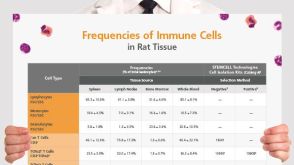 挂图Frequencies of Immune Cells in Rat Tissue Lists the estimated frequencies of more than 15 immune cell types in Sprague Dawley rats
 沪公网安备31010102008431号