Protocol for establishing inducible CRISPR interference system for multiple-gene silencing in human pluripotent stem cells
SummaryInducible loss-of-function strategies are crucial for understanding gene function. However,creating inducible,multiple-gene knockout models is challenging and time-consuming. Here,we present a protocol for establishing a doxycycline-inducible CRISPR interference (CRISPRi) system to concurrently silence multiple genes in human induced pluripotent stem cells (hPSCs). We describe the steps for establishing host CRISPRi hPSCs,designing and cloning single-guide RNAs (sgRNAs) into a lentivirus plasmid,and establishing monoclonal CRISPRi hPSC lines transduced with sgRNAs. We also detail the procedures for selecting effective CRISPRi clones.For complete details on the use and execution of this protocol,please refer to Matsui et al.1 Graphical abstract Highlights•Dox-inducible CRISPRi system to silence multiple genes concurrently•Instructions for generating CRISPRi hPSCs transduced with four sgRNAs•FOXA1/A2/A3-CRISPRi system represses expression of all three FOXA genes by 95% Publisher’s note: Undertaking any experimental protocol requires adherence to local institutional guidelines for laboratory safety and ethics. Inducible loss-of-function strategies are crucial for understanding gene function. However,creating inducible,multiple-gene knockout models is challenging and time-consuming. Here,we present a protocol for establishing a doxycycline-inducible CRISPR interference (CRISPRi) system to concurrently silence multiple genes in human induced pluripotent stem cells (hPSCs). We describe the steps for establishing host CRISPRi hPSCs,designing and cloning single-guide RNAs (sgRNAs) into a lentivirus plasmid,and establishing monoclonal CRISPRi hPSC lines transduced with sgRNAs. We also detail the procedures for selecting effective CRISPRi clones.
View Publication
产品类型:
产品号#:
100-0483
100-0484
85850
85857
产品名:
Hausser Scientificᵀᴹ 明线血球计数板
ReLeSR™
mTeSR™1
mTeSR™1
Charrier S et al. (AUG 2004)
Blood 104 4 978--85
Inhibition of angiotensin I-converting enzyme induces radioprotection by preserving murine hematopoietic short-term reconstituting cells.
Angiotensin I-converting enzyme (ACE) inhibitors can affect hematopoiesis by several mechanisms including inhibition of angiotensin II formation and increasing plasma concentrations of AcSDKP (acetyl-N-Ser-Asp-Lys-Pro),an ACE substrate and a negative regulator of hematopoiesis. We tested whether ACE inhibition could decrease the hematopoietic toxicity of lethal or sublethal irradiation protocols. In all cases,short treatment with the ACE inhibitor perindopril protected against irradiation-induced death. ACE inhibition accelerated hematopoietic recovery and led to a significant increase in platelet and red cell counts. Pretreatment with perindopril increased bone marrow cellularity and the number of hematopoietic progenitors (granulocyte macrophage colony-forming unit [CFU-GM],erythroid burst-forming unit [BFU-E],and megakaryocyte colony-forming unit [CFU-MK]) from day 7 to 28 after irradiation. Perindopril also increased the number of hematopoietic stem cells with at least a short-term reconstitutive activity in animals that recovered from irradiation. To determine the mechanism of action involved,we evaluated the effects of increasing AcSDKP plasma concentrations and of an angiotensin II type 1 (AT1) receptor antagonist (telmisartan) on radioprotection. We found that the AT1-receptor antagonism mediated similar radioprotection as the ACE inhibitor. These results suggest that ACE inhibitors and AT1-receptor antagonists could be used to decrease the hematopoietic toxicity of irradiation.
View Publication
产品类型:
产品号#:
03134
产品名:
MethoCult™M3134
Suzuki T et al. (NOV 2006)
Stem cells (Dayton,Ohio) 24 11 2456--65
Highly efficient ex vivo expansion of human hematopoietic stem cells using Delta1-Fc chimeric protein.
Ex vivo expansion of hematopoietic stem cells (HSCs) has been explored in the fields of stem cell biology,gene therapy,and clinical transplantation. Here,we demonstrate efficient ex vivo expansion of HSCs measured by long-term severe combined immunodeficient (SCID) repopulating cells (SRCs) from human cord blood CD133-sorted cells using a soluble form of Delta1. After a 3-week culture on immobilized Delta1 supplemented with stem cell factor,thrombopoietin,Flt-3 ligand,interleukin (IL)-3,and IL-6/soluble IL-6 receptor chimeric protein (FP6) in a serum- and stromal cell-free condition,we achieved approximately sixfold expansion of SRCs when evaluated by limiting dilution/transplantation assays. The maintenance of full multipotency and self-renewal capacity during culture was confirmed by transplantation to nonobese diabetic/SCID/gammac(null) mice,which showed myeloid,B,T,and natural killer cells as well as CD133(+)CD34(+) cells,and hematopoietic reconstitution in the secondary recipients. Interestingly,the CD133-sorted cells contained approximately 4.5 times more SRCs than the CD34-sorted cells. The present study provides a promising method to expand HSCs and encourages future trials on clinical transplantation.
View Publication
产品类型:
产品号#:
04434
04444
产品名:
MethoCult™H4434经典
MethoCult™H4434经典
Bhatia M et al. (AUG 1997)
The Journal of experimental medicine 186 4 619--24
Quantitative analysis reveals expansion of human hematopoietic repopulating cells after short-term ex vivo culture.
Ex vivo culture of human hematopoietic cells is a crucial component of many therapeutic applications. Although current culture conditions have been optimized using quantitative in vitro progenitor assays,knowledge of the conditions that permit maintenance of primitive human repopulating cells is lacking. We report that primitive human cells capable of repopulating nonobese diabetic (NOD)/severe combined immunodeficiency (SCID) mice (SCID-repopulating cells; SRC) can be maintained and/or modestly increased after culture of CD34+CD38- cord blood cells in serum-free conditions. Quantitative analysis demonstrated a 4- and 10-fold increase in the number of CD34+CD38- cells and colony-forming cells,respectively,as well as a 2- to 4-fold increase in SRC after 4 d of culture. However,after 9 d of culture,all SRC were lost,despite further increases in total cells,CFC content,and CD34+ cells. These studies indicate that caution must be exercised in extending the duration of ex vivo cultures used for transplantation,and demonstrate the importance of the SRC assay in the development of culture conditions that support primitive cells.
View Publication
产品类型:
产品号#:
02690
02696
02697
09300
09500
09600
09650
产品名:
StemSpan™CC100
StemSpan™巨核细胞扩增补充(100X)
StemSpan™CC110
含有10% 牛血清白蛋白(BSA)的 Iscove's MDM
BIT 9500血清替代物
StemSpan™ SFEM
StemSpan™ SFEM
Ohno Y et al. (DEC 2010)
Proceedings of the National Academy of Sciences of the United States of America 107 50 21529--34
Hoxb4 transduction down-regulates Geminin protein, providing hematopoietic stem and progenitor cells with proliferation potential.
Retrovirus-mediated transduction of Hoxb4 enhances hematopoietic stem cell (HSC) activity and enforced expression of Hoxb4 induces in vitro development of HSCs from differentiating mouse embryonic stem cells,but the underlying molecular mechanism remains unclear. We previously showed that the HSC activity was abrogated by accumulated Geminin,an inhibitor for the DNA replication licensing factor Cdt1 in mice deficient in Rae28 (also known as Phc1),which encodes a member of Polycomb-group complex 1. In this study we found that Hoxb4 transduction reduced accumulated Geminin in Rae28-deficient mice,despite increasing the mRNA,and restored the impaired HSC activity. Supertransduction of Geminin suppressed the HSC activity induced by Hoxb4 transduction,whereas knockdown of Geminin promoted the clonogenic and replating activities,indicating the importance of Geminin regulation in the molecular mechanism underlying Hoxb4 transduction-mediated enhancement of the HSC activity. This facilitated our investigation of how transduced Hoxb4 reduced Geminin. We showed in vitro and in vivo that Hoxb4 and the Roc1 (also known as Rbx1)-Ddb1-Cul4a ubiquitin ligase core component formed a complex designated as RDCOXB4,which acted as an E3 ubiquitin ligase for Geminin and down-regulated Geminin through the ubiquitin-proteasome system. Down-regulated Geminin and the resultant E2F activation may provide cells with proliferation potential by increasing a DNA prereplicative complex loaded onto chromatin. Here we suggest that transduced Hoxb4 down-regulates Geminin protein probably by constituting the E3 ubiquitin ligase for Geminin to provide hematopoietic stem and progenitor cells with proliferation potential.
View Publication
Alessandrini F et al. ( 2016)
Journal of Cancer 7 13 1791--1797
Noninvasive Monitoring of Glioma Growth in the Mouse.
Malignant gliomas are the most common and deadly primary malignant brain tumors. In vivo orthotopic models could doubtless represent an appropriate tool to test novel treatment for gliomas. However,methods commonly used to monitor the growth of glioma inside the mouse brain are time consuming and invasive. We tested the reliability of a minimally invasive procedure,based on a secreted luciferase (Gaussia luciferase),to frequently monitor the changes of glioma size. Gluc activity was evaluated from blood samples collected from the tail tip of mice twice a week,allowing to make a growth curve for the tumors. We validated the correlation between Gluc activity and tumor size by analysing the tumor after brain dissection. We found that this method is reliable for monitoring human glioma transplanted in immunodeficient mice,but it has strong limitation in immunocompetent models,where an immune response against the luciferase is developed during the first weeks after transplant.
View Publication
York D et al. (DEC 2016)
BMC Biotechnology 16 1 23
Generating aldehyde-tagged antibodies with high titers and high formylglycine yields by supplementing culture media with copper(II)
BACKGROUND The ability to site-specifically conjugate a protein to a payload of interest (e.g.,a fluorophore,small molecule pharmacophore,oligonucleotide,or other protein) has found widespread application in basic research and drug development. For example,antibody-drug conjugates represent a class of biotherapeutics that couple the targeting specificity of an antibody with the chemotherapeutic potency of a small molecule drug. While first generation antibody-drug conjugates (ADCs) used random conjugation approaches,next-generation ADCs are employing site-specific conjugation. A facile way to generate site-specific protein conjugates is via the aldehyde tag technology,where a five amino acid consensus sequence (CXPXR) is genetically encoded into the protein of interest at the desired location. During protein expression,the Cys residue within this consensus sequence can be recognized by ectopically-expressed formylglycine generating enzyme (FGE),which converts the Cys to a formylglycine (fGly) residue. The latter bears an aldehyde functional group that serves as a chemical handle for subsequent conjugation. RESULTS The yield of Cys conversion to fGly during protein production can be variable and is highly dependent on culture conditions. We set out to achieve consistently high yields by modulating culture conditions to maximize FGE activity within the cell. We recently showed that FGE is a copper-dependent oxidase that binds copper in a stoichiometric fashion and uses it to activate oxygen,driving enzymatic turnover. Building upon that work,here we show that by supplementing cell culture media with copper we can routinely reach high yields of highly converted protein. We demonstrate that cells incorporate copper from the media into FGE,which results in increased specific activity of the enzyme. The amount of copper required is compatible with large scale cell culture,as demonstrated in fed-batch cell cultures with antibody titers of 5 g textperiodcentered L(-1),specific cellular production rates of 75 pg textperiodcentered cell(-1) textperiodcentered d(-1),and fGly conversion yields of 95-98 %. CONCLUSIONS We describe a process with a high yield of site-specific formylglycine (fGly) generation during monoclonal antibody production in CHO cells. The conversion of Cys to fGly depends upon the activity of FGE,which can be ensured by supplementing the culture media with 50 uM copper(II) sulfate.
View Publication


 EasySep™小鼠TIL(CD45)正选试剂盒




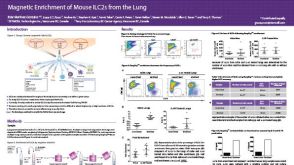
 科学海报Easy Isolation of F4/80-Positive Macrophages from Mouse Tissues


 沪公网安备31010102008431号