Leung CG et al. (JUL 2007)
The Journal of experimental medicine 204 7 1603--11
Requirements for survivin in terminal differentiation of erythroid cells and maintenance of hematopoietic stem and progenitor cells.
Survivin,which is the smallest member of the inhibitor of apoptosis protein (IAP) family,is a chromosomal passenger protein that mediates the spindle assembly checkpoint and cytokinesis,and also functions as an inhibitor of apoptosis. Frequently overexpressed in human cancers and not expressed in most adult tissues,survivin has been proposed as an attractive target for anticancer therapies and,in some cases,has even been touted as a cancer-specific gene. Survivin is,however,expressed in proliferating adult cells,including human hematopoietic stem cells,T-lymphocytes,and erythroid cells throughout their maturation. Therefore,it is unclear how survivin-targeted anticancer therapies would impact steady-state blood development. To address this question,we used a conditional gene-targeting strategy and abolished survivin expression from the hematopoietic compartment of mice. We show that inducible deletion of survivin leads to ablation of the bone marrow,with widespread loss of hematopoietic progenitors and rapid mortality. Surprisingly,heterozygous deletion of survivin causes defects in erythropoiesis in a subset of the animals,with a dramatic reduction in enucleated erythrocytes and the presence of immature megaloblastic erythroblasts. Our studies demonstrate that survivin is essential for steady-state hematopoiesis and survival of the adult,and further,that a high level of survivin expression is critical for proper erythroid differentiation.
View Publication
产品类型:
产品号#:
19756
19756RF
产品名:
Petzer AL et al. (FEB 1996)
Proceedings of the National Academy of Sciences of the United States of America 93 4 1470--4
Self-renewal of primitive human hematopoietic cells (long-term-culture-initiating cells) in vitro and their expansion in defined medium.
A major goal of experimental and clinical hematology is the identification of mechanisms and conditions that support the expansion of transplantable hematopoietic stem cells. In normal marrow,such cells appear to be identical to (or represent a subset of) a population referred to as long-term-culture-initiating cells (LTC-ICs) so-named because of their ability to produce colony-forming cell (CFC) progeny for textgreater or = 5 weeks when cocultured with stromal fibroblasts. Some expansion of LTC-ICs in vitro has recently been described,but identification of the factors required and whether LTC-IC self-renewal divisions are involved have remained unresolved issues. To address these issues,we examined the maintenance and/or generation of LTC-ICs from single CD34+ CD38- cells cultured for variable periods under different culture conditions. Analysis of the progeny obtained from cultures containing a feeder layer of murine fibroblasts engineered to produce steel factor,interleukin (IL)-3,and granulocyte colony-stimulating factor showed that approximately 20% of the input LTC-ICs (representing approximately 2% of the original CD34+ CD38- cells) executed self-renewal divisions within a 6-week period. Incubation of the same CD34+ CD38- starting populations as single cells in a defined (serum free) liquid medium supplemented with Flt-3 ligand,steel factor,IL-3,IL-6,granulocyte colony-stimulating factor,and nerve growth factor resulted in the proliferation of initial cells to produce clones of from 4 to 1000 cells within 10 days,approximately 40% of which included textgreater or = 1 LTC-IC. In contrast,in similar cultures containing methylcellulose,input LTC-ICs appeared to persist but not divide. Overall the LTC-IC expansion in the liquid cultures was 30-fold in the first 10 days and 50-fold by the end of another 1-3 weeks. Documentation of human LTC-IC self-renewal in vitro and identification of defined conditions that permit their extensive and rapid amplification should facilitate analysis of the molecular mechanisms underlying these processes and their exploitation for a variety of therapeutic applications.
View Publication
产品类型:
产品号#:
04436
04064
04100
04230
04236
04431
04434
04444
05150
04464
04531
04535
04545
04536
04564
04035
04330
04034
04044
04435
04445
04534
04544
产品名:
MethoCult™ SF H4436
MethoCult™ H4034 Optimum 入门试剂盒
MethoCult™ H4100
MethoCult™ H4230
MethoCult™ SF H4236
MethoCult™ H4431
MethoCult™ H4434 Classic
MethoCult™ H4434 Classic
MyeloCult™ H5100
MethoCult™ H4434 Classic 套装
MethoCult™ H4531
MethoCult™ H4535 Enriched,不含EPO
MethoCult™ H4535 Enriched,不含EPO
MethoCult™ SF H4536
MethoCult™ H4534 Classic 无 EPO 入门试剂盒
MethoCult™ 不含EPO的H4035 Optimum
MethoCult™ H4330
MethoCult™ H4034 Optimum
MethoCult™ H4034 Optimum
MethoCult™ H4435 Enriched
MethoCult™ H4435 Enriched
MethoCult™ H4534 Classic(不含 EPO)
MethoCult™ H4534 Classic(不含 EPO)
Zhang L et al. (APR 2016)
Human Reproduction 31 4 832--843
Protein kinase A inhibitor, H89, enhances survival and clonogenicity of dissociated human embryonic stem cells through Rho-associated coiled-coil containing protein kinase (ROCK) inhibition
H89 inhibits the dissociation-induced phosphorylation of PKA and two substrates of Rho-associated coiled-coil containing protein kinase (ROCK),myosin light chain (MLC2) and myosin phosphatase target subunit 1 (MYPT1),significantly increases cell survival and colony formation,and strongly depresses dissociation-induced cell death and cell blebbing without affecting the pluripotency of hESCs and their differentiation in vitro.
View Publication
产品类型:
产品号#:
05835
05839
产品名:
STEMdiff™ 神经诱导培养基
STEMdiff™ 神经诱导培养基
Klim JR et al. (DEC 2010)
Nature methods 7 12 989--94
A defined glycosaminoglycan-binding substratum for human pluripotent stem cells.
To exploit the full potential of human pluripotent stem cells for regenerative medicine,developmental biology and drug discovery,defined culture conditions are needed. Media of known composition that maintain human embryonic stem (hES) cells have been developed,but finding chemically defined,robust substrata has proven difficult. We used an array of self-assembled monolayers to identify peptide surfaces that sustain pluripotent stem cell self-renewal. The effective substrates displayed heparin-binding peptides,which can interact with cell-surface glycosaminoglycans and could be used with a defined medium to culture hES cells for more than 3 months. The resulting cells maintained a normal karyotype and had high levels of pluripotency markers. The peptides supported growth of eight pluripotent cell lines on a variety of scaffolds. Our results indicate that synthetic substrates that recognize cell-surface glycans can facilitate the long-term culture of pluripotent stem cells.
View Publication
产品类型:
产品号#:
05850
05857
05870
05875
85850
85857
85870
85875
产品名:
mTeSR™1
mTeSR™1
Kawano Y et al. (JAN 2003)
Blood 101 2 532--40
Ex vivo expansion of human umbilical cord hematopoietic progenitor cells using a coculture system with human telomerase catalytic subunit (hTERT)-transfected human stromal cells.
We developed a new human stromal cell line that could expand human hematopoietic progenitor/stem cells. Primary human bone marrow stromal cells were infected with retrovirus containing the human telomerase catalytic subunit (hTERT) gene,resulting in increased population doubling and the acquisition of cell immortalization. Characteristics of the hTERT-transduced stromal (hTERT-stromal) cells were identical with those of the primary stromal cells in terms of morphologic appearance and expression of surface antigens. Human cord blood (CB) CD34(+) cells were expanded by coculture with primary stromal or hTERT-stromal cells in the presence of stem cell factor,thrombopoietin,and Flk-2/Flt-3 ligand under serum-free condition. The degree of expansion of CD34(+) cells and total number of colony-forming units in culture (CFU-Cs) after 2 weeks' coculture with the hTERT-stromal cells were nearly the same as those after 2 weeks' coculture with primary stromal cells (CD34(+) cells,118-fold +/- 8-fold versus 117-fold +/- 13-fold; CFU-Cs,71-fold +/- 5-fold versus 67-fold +/- 5-fold of initial cell number). CB expansion on hTERT-stromal cells occurred at a similar rate through 7 weeks. In contrast,the rate of CB expansion on primary stromal cells had drastically declined at 7 weeks. In nonobese diabetic/severe combined immunodeficiency (SCID) mice,the degree of engraftment of SCID-repopulating cells that had been cocultured with hTERT-stromal cells for 4 weeks was significantly higher than that of precocultured CB cells. These results indicate that this hTERT-stromal cell line could be useful for ex vivo expansion of hematopoietic progenitor/stem cells and for analyzing the microenvironment of human bone marrow.
View Publication
产品类型:
产品号#:
04064
04034
04044
产品名:
MethoCult™ H4034 Optimum 入门试剂盒
MethoCult™ H4034 Optimum
MethoCult™ H4034 Optimum
Takeda A et al. (JUL 2006)
Cancer research 66 13 6628--37
NUP98-HOXA9 induces long-term proliferation and blocks differentiation of primary human CD34+ hematopoietic cells.
NUP98-HOXA9,the chimeric protein resulting from the t(7;11)(p15;p15) chromosomal translocation,is a prototype of several NUP98 fusions that occur in myelodysplastic syndromes and acute myeloid leukemia. We examined its effect on differentiation,proliferation,and gene expression in primary human CD34+ hematopoietic cells. Colony-forming cell (CFC) assays in semisolid medium combined with morphologic examination and flow cytometric immunophenotyping revealed that NUP98-HOXA9 increased the numbers of erythroid precursors and impaired both myeloid and erythroid differentiation. In continuous liquid culture,cells transduced with NUP98-HOXA9 exhibited a biphasic growth curve with initial growth inhibition followed by enhanced long-term proliferation,suggesting an increase in the numbers of primitive self-renewing cells. This was confirmed by a dramatic increase in the numbers of long-term culture-initiating cells,the most primitive hematopoietic cells detectable in vitro. To understand the molecular mechanisms underlying the effects of NUP98-HOXA9 on hematopoietic cell proliferation and differentiation,oligonucleotide microarray analysis was done at several time points over 16 days,starting at 6 hours posttransduction. The early growth suppression was preceded by up-regulation of IFNbeta1 and accompanied by marked up-regulation of IFN-induced genes,peaking at 3 days posttransduction. In contrast,oncogenes such as homeobox transcription factors,FLT3,KIT,and WT1 peaked at 8 days or beyond,coinciding with increased proliferation. In addition,several putative tumor suppressors and genes associated with hematopoietic differentiation were repressed at later time points. These findings provide a comprehensive picture of the changes in proliferation,differentiation,and global gene expression that underlie the leukemic transformation of human hematopoietic cells by NUP98-HOXA9.
View Publication
产品类型:
产品号#:
05150
产品名:
MyeloCult™ H5100
Kim H-R et al. ( 2016)
Cell & bioscience 6 1 50
Improved hematopoietic differentiation of human pluripotent stem cells via estrogen receptor signaling pathway.
BACKGROUND Aside from its importance in reproduction,estrogen (E2) is known to regulate the proliferation and differentiation of hematopoietic stem cells in rodents. However,the regulatory role of E2 in human hematopoietic system has not been investigated. The purpose of this study is to investigate the effect of E2 on hematopoietic differentiation using human pluripotent stem cells (hPSCs). RESULTS E2 improved hematopoietic differentiation of hPSCs via estrogen receptor alpha (ER-$$)-dependent pathway. During hematopoietic differentiation of hPSCs,ER-$$ is persistently maintained and hematopoietic phenotypes (CD34 and CD45) were exclusively detected in ER-$$ positive cells. Interestingly,continuous E2 signaling is required to promote hematopoietic output from hPSCs. Supplementation of E2 or an ER-$$ selective agonist significantly increased the number of hemangioblasts and hematopoietic progenitors,and subsequent erythropoiesis,whereas ER-$$ selective agonist did not. Furthermore,ICI 182,780 (ER antagonist) completely abrogated the E2-induced hematopoietic augmentation. Not only from hPSCs but also from human umbilical cord bloods,does E2 signaling potentiate hematopoietic development,suggesting universal function of E2 on hematopoiesis. CONCLUSIONS Our study identifies E2 as positive regulator of human hematopoiesis and suggests that endocrine factors such as E2 influence the behavior of hematopoietic stem cells in various physiological conditions.
View Publication
产品类型:
产品号#:
05850
05857
05870
05875
85850
85857
85870
85875
产品名:
mTeSR™1
mTeSR™1
Zhang CC et al. (FEB 2006)
Proceedings of the National Academy of Sciences of the United States of America 103 7 2184--9
Prion protein is expressed on long-term repopulating hematopoietic stem cells and is important for their self-renewal.
Although the wild-type prion protein (PrP) is abundant and widely expressed in various types of tissues and cells,its physiological function(s) remain unknown,and PrP knockout mice do not exhibit overt and undisputed phenotypes. Here we showed that PrP is expressed on the surface of several bone marrow cell populations successively enriched in long-term (LT) hematopoietic stem cells (HSCs) using flow cytometry analysis. Affinity purification of the PrP-positive and -negative fractions from these populations,followed by competitive bone marrow reconstitution assays,shows that all LT HSCs express PrP. HSCs from PrP-null bone marrow exhibited impaired self-renewal in serial transplantation of lethally irradiated mouse recipients both in the presence and absence of competitors. When treated with a cell cycle-specific myelotoxic agent,the animals reconstituted with PrP-null HSCs exhibit increased sensitivity to hematopoietic cell depletion. Ectopic expression of PrP in PrP-null bone marrow cells by retroviral infection rescued the defective hematopoietic engraftment during serial transplantation. Therefore,PrP is a marker for HSCs and supports their self-renewal.
View Publication
产品类型:
产品号#:
03630
03434
03444
09600
09650
28600
产品名:
MethoCult™ M3630
MethoCult™ GF M3434
MethoCult™ GF M3434
StemSpan™ SFEM
StemSpan™ SFEM
L-Calc™有限稀释软件
Phondeechareon T et al. (OCT 2016)
Annals of hematology 95 10 1617--1625
Generation of induced pluripotent stem cells as a potential source of hematopoietic stem cells for transplant in PNH patients.
Paroxysmal nocturnal hemoglobinuria (PNH) is an acquired hemolytic anemia caused by lack of CD55 and CD59 on blood cell membrane leading to increased sensitivity of blood cells to complement. Hematopoietic stem cell transplantation (HSCT) is the only curative therapy for PNH,however,lack of HLA-matched donors and post-transplant complications are major concerns. Induced pluripotent stem cells (iPSCs) derived from patients are an attractive source for generating autologous HSCs to avoid adverse effects resulting from allogeneic HSCT. The disease involves only HSCs and their progeny; therefore,other tissues are not affected by the mutation and may be used to produce disease-free autologous HSCs. This study aimed to derive PNH patient-specific iPSCs from human dermal fibroblasts (HDFs),characterize and differentiate to hematopoietic cells using a feeder-free protocol. Analysis of CD55 and CD59 expression was performed before and after reprogramming,and hematopoietic differentiation. Patients' dermal fibroblasts expressed CD55 and CD59 at normal levels and the normal expression remained after reprogramming. The iPSCs derived from PNH patients had typical pluripotent properties and differentiation capacities with normal karyotype. After hematopoietic differentiation,the differentiated cells expressed early hematopoietic markers (CD34 and CD43) with normal CD59 expression. The iPSCs derived from HDFs of PNH patients have normal levels of CD55 and CD59 expression and hold promise as a potential source of HSCs for autologous transplantation to cure PNH patients.
View Publication
产品类型:
产品号#:
05850
05857
05870
05875
07923
07920
04435
04445
85850
85857
85870
85875
07922
产品名:
Dispase (1 U/mL)
ACCUTASE™
MethoCult™ H4435 Enriched
MethoCult™ H4435 Enriched
mTeSR™1
mTeSR™1
ACCUTASE™
Giebel B et al. (MAR 2006)
Blood 107 5 2146--52
Primitive human hematopoietic cells give rise to differentially specified daughter cells upon their initial cell division.
It is often predicted that stem cells divide asymmetrically,creating a daughter cell that maintains the stem-cell capacity,and 1 daughter cell committed to differentiation. While asymmetric stem-cell divisions have been proven to occur in model organisms (eg,in Drosophila),it remains illusive whether primitive hematopoietic cells in mammals actually can divide asymmetrically. In our experiments we have challenged this question and analyzed the developmental capacity of separated offspring of primitive human hematopoietic cells at a single-cell level. We show for the first time that the vast majority of the most primitive,in vitro-detectable human hematopoietic cells give rise to daughter cells adopting different cell fates; 1 inheriting the developmental capacity of the mother cell,and 1 becoming more specified. In contrast,approximately half of the committed progenitor cells studied gave rise to daughter cells,both of which adopted the cell fate of their mother. Although our data are compatible with the model of asymmetric cell division,other mechanisms of cell fate specification are discussed. In addition,we describe a novel human hematopoietic progenitor cell that has the capacity to form natural killer (NK) cells as well as macrophages,but not cells of other myeloid lineages.
View Publication


 EasySep™小鼠TIL(CD45)正选试剂盒




 技术公告Media and Supplements for In Vitro Hematotoxicity Testing
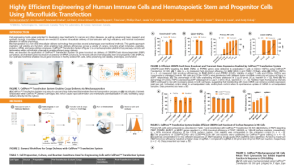 科学海报Highly Efficient Engineering of Human Immune Cells and Hematopoietic Stem and Progenitor Cells Using Microfluidic Transfection
 沪公网安备31010102008431号