Valamehr B et al. (SEP 2011)
Regenerative medicine 6 5 623--34
Developing defined culture systems for human pluripotent stem cells.
Human pluripotent stem cells hold promising potential in many therapeutics applications including regenerative medicine and drug discovery. Over the past three decades,embryonic stem cell research has illustrated that embryonic stem cells possess two important and distinct properties: the ability to continuously self-renew and the ability to differentiate into all specialized cell types. In this article,we will discuss the continuing evolution of human pluripotent stem cell culture by examining requirements needed for the maintenance of self-renewal in vitro. We will also elaborate on the future direction of the field toward generating a robust and completely defined culture system,which has brought forth collaborations amongst biologists and engineers. As human pluripotent stem cell research progresses towards identifying solutions for debilitating diseases,it will be critical to establish a defined,reproducible and scalable culture system to meet the requirements of these clinical applications.
View Publication
产品类型:
产品号#:
85850
85857
产品名:
mTeSR™1
mTeSR™1
Meyer C et al. ( 2017)
International journal of nanomedicine 12 3153--3170
Pseudotyping exosomes for enhanced protein delivery in mammalian cells.
Exosomes are cell-derived nanovesicles that hold promise as living vehicles for intracellular delivery of therapeutics to mammalian cells. This potential,however,is undermined by the lack of effective methods to load exosomes with therapeutic proteins and to facilitate their uptake by target cells. Here,we demonstrate how a vesicular stomatitis virus glycoprotein (VSVG) can both load protein cargo onto exosomes and increase their delivery ability via a pseudotyping mechanism. By fusing a set of fluorescent and luminescent reporters with VSVG,we show the successful targeting and incorporation of VSVG fusions into exosomes by gene transfection and fluorescence tracking. We subsequently validate our system by live cell imaging of VSVG and its participation in endosomes/exosomes that are ultimately released from transfected HEK293 cells. We show that VSVG pseudotyping of exosomes does not affect the size or distributions of the exosomes,and both the full-length VSVG and the VSVG without the ectodomain are shown to integrate into the exosomal membrane,suggesting that the ectodomain is not required for protein loading. Finally,exosomes pseudotyped with full-length VSVG are internalized by multiple-recipient cell types to a greater degree compared to exosomes loaded with VSVG without the ectodomain,confirming a role of the ectodomain in cell tropism. In summary,our work introduces a new genetically encoded pseudotyping platform to load and enhance the intracellular delivery of therapeutic proteins via exosome-based vehicles to target cells.
View Publication
产品类型:
产品号#:
85850
85857
产品名:
mTeSR™1
mTeSR™1
Lai AY et al. (OCT 2005)
Journal of immunology (Baltimore,Md. : 1950) 175 8 5016--23
Heterogeneity of Flt3-expressing multipotent progenitors in mouse bone marrow.
Mechanisms of lymphoid and myeloid lineage choice by hemopoietic stem cells remain unclear. In this study we show that the multipotent progenitor (MPP) population,which is immediately downstream of hemopoietic stem cells,is heterogeneous and can be subdivided in terms of VCAM-1 expression. VCAM-1(+) MPPs were fully capable of differentiating into both lymphoid and myeloid lineages. In contrast,VCAM-1(-) MPPs gave rise to lymphocytes predominately in vivo. T and B cell development from VCAM-1(-) MPPs was 1 wk faster than that from VCAM-1(+) MPPs. Furthermore,VCAM-1(+) MPPs gave rise to common myeloid progenitors and VCAM-1(-) MPPs in vivo,indicating that VCAM-1(-) MPPs are progenies of VCAM-1(+) MPPs. VCAM-1(-) MPPs,in turn,developed into lymphoid lineage-restricted common lymphoid progenitors. These results establish a hierarchy of developmental relationship between MPP subsets and lymphoid and myeloid progenitors. In addition,VCAM-1(+) MPPs may represent the branching point between the lymphoid and myeloid lineages.
View Publication
产品类型:
产品号#:
03534
03434
03444
产品名:
MethoCult™GF M3534
MethoCult™GF M3434
MethoCult™GF M3434
Han X-D et al. (MAY 2007)
Proceedings of the National Academy of Sciences of the United States of America 104 21 9007--11
Fetal gene therapy of alpha-thalassemia in a mouse model.
Fetuses with homozygous alpha-thalassemia usually die at the third trimester of pregnancy or soon after birth. Hence,the disease could potentially be a target for fetal gene therapy. We have previously established a mouse model of alpha-thalassemia. These mice mimic the human alpha-thalassemic conditions and can be used as preclinical models for fetal gene therapy. We tested a lentiviral vector containing the HS 2,3,and 4 of the beta-LCR,a central polypurine tract element,and the beta-globin gene promoter directing either the EGFP or the human alpha-globin gene. We showed that the GFP expression was erythroid-specific and detected in BFU-E colonies and the erythroid progenies of CFU-GEMM. For in utero gene delivery,we did yolk sac vessel injection at midgestation of mouse embryos. The recipient mice were analyzed after birth for human alpha-globin gene expression. In the newborn,human alpha-globin gene expression was detected in the liver,spleen,and peripheral blood. The human alpha-globin gene expression was at the peak at 3-4 months,when it reached 20% in some recipients. However,the expression declined at 7 months. Colony-forming assays in these mice showed low abundance of the transduced human alpha-globin gene in their BFU-E and CFU-GEMM and the lack of its transcript. Thus,lentiviral vectors can be an effective vehicle for delivering the human alpha-globin gene into erythroid cells in utero,but,in the mouse model,delivery at late midgestation could not transduce hematopoietic stem cells adequately to sustain gene expression.
View Publication
Donor natural killer cell allorecognition of missing self in haploidentical hematopoietic transplantation for acute myeloid leukemia: challenging its predictive value.
We analyzed 112 patients with high-risk acute myeloid leukemia (61 in complete remission [CR]; 51 in relapse),who received human leukocyte-antigen (HLA)-haploidentical transplants from natural killer (NK) alloreactive (n = 51) or non-NK alloreactive donors (n = 61). NK alloreactive donors possessed HLA class I,killer-cell immunoglobulin-like receptor (KIR) ligand(s) which were missing in the recipients,KIR gene(s) for missing self recognition on recipient targets,and alloreactive NK clones against recipient targets. Transplantation from NK-alloreactive donors was associated with a significantly lower relapse rate in patients transplanted in CR (3% versus 47%) (P textgreater .003),better event-free survival in patients transplanted in relapse (34% versus 6%,P = .04) and in remission (67% versus 18%,P = .02),and reduced risk of relapse or death (relative risk versus non-NK-alloreactive donor,0.48; 95% CI,0.29-0.78; P textgreater .001). In all patients we tested the missing ligand" model which pools KIR ligand mismatched transplants and KIR ligand-matched transplants from donors possessing KIR(s) for which neither donor nor recipient have HLA ligand(s). Only transplantation from NK-alloreactive donors is associated with a survival advantage."
View Publication
Zhou M et al. (FEB 2010)
Journal of cellular biochemistry 109 3 606--14
Differentiation of mouse embryonic stem cells into hepatocytes induced by a combination of cytokines and sodium butyrate.
There is increasing evidence to suggest that embryonic stem cells (ESCs) are capable of differentiating into hepatocytes in vitro. In this study,we used a combination of cytokines and sodium butyrate in a novel three-step procedure to efficiently direct the differentiation of mouse ESCs into hepatocytes. Mouse ESCs were first differentiated into definitive endoderm cells by 3 days of treatment with Activin A. The definitive endoderm cells were then differentiated into hepatocytes by the addition of acidic fibroblast growth factor (aFGF) and sodium butyrate to the culture medium for 5 days. After 10 days of further in vitro maturation,the morphological and phenotypic markers of hepatocytes were characterized using immunohistochemistry,immunoblotting,and reverse transcription-polymerase chain reaction (RT-PCR). Furthermore,the cells were tested for functions associated with mature hepatocytes,including glycogen storage and indocyanine green uptake and release,and the ratio of hepatic differentiation was determined by counting the percentage of albumin-positive cells. In the presence of medium containing cytokines and sodium butyrate,numerous epithelial cells resembling hepatocytes were observed,and approximately 74% of the cells expressed the hepatic marker,albumin,after 18 days in culture. RT-PCR analysis and immunohistochemistry showed that these cells expressed adult liver cell markers,and had the abilities of glycogen storage and indocyanine green uptake and release. We have developed an efficient method for directing the differentiation of mouse ESCs into cells that exhibit the characteristics of mature hepatocytes. This technique will be useful for research into the molecular mechanisms underlying liver development,and could provide a source of hepatocytes for transplantation therapy and drug screening.
View Publication
产品类型:
产品号#:
72242
产品名:
丁酸钠(Sodium Butyrate)
Yang J-Y et al. (JUN 2013)
Cell Transplantation 22 6 945--959
SSEA4-positive pig induced pluripotent stem cells are primed for differentiation into neural cells.
Neural cells derived from induced pluripotent stem cells (iPSCs) have the potential for autologous cell therapies in treating patients with severe neurological disorders or injury. However,further study of efficacy and safety are needed in large animal preclinical models that have similar neural anatomy and physiology to humans such as the pig. The pig model for pluripotent stem cell therapy has been made possible for the first time with the development of pig iPSCs (piPSCs) capable of in vitro and in vivo differentiation into tissues of all three germ layers. Still,the question remains if piPSCs are capable of undergoing robust neural differentiation using a system similar to those being used with human iPSCs. In this study,we generated a new line of piPSCs from fibroblast cells that expressed pluripotency markers and were capable of embryoid body differentiation into all three germ layers. piPSCs demonstrated robust neural differentiation forming βIII-TUB/MAP2+ neurons,GFAP+ astrocytes,and O4+ oligodendrocytes and demonstrated strong upregulation of neural cell genes representative of all three major neural lineages of the central nervous system. In the presence of motor neuron signaling factors,piPSC-derived neurons showed expression of transcription factors associated with motor neuron differentiation (HB9 and ISLET1). Our findings demonstrate that SSEA4 expression is required for piPSCs to differentiate into neurons,astrocytes,and oligodendrocytes and furthermore develop specific neuronal subtypes. This indicates that the pigs can fill the need for a powerful model to study autologous neural iPSC therapies in a system similar to humans.
View Publication
产品类型:
产品号#:
07923
85850
85857
产品名:
Dispase (1 U/mL)
mTeSR™1
mTeSR™1
Moreau-Gaudry F et al. (NOV 2001)
Blood 98 9 2664--72
High-level erythroid-specific gene expression in primary human and murine hematopoietic cells with self-inactivating lentiviral vectors.
Use of oncoretroviral vectors in gene therapy for hemoglobinopathies has been impeded by low titer vectors,genetic instability,and poor expression. Fifteen self- inactivating (SIN) lentiviral vectors using 4 erythroid promoters in combination with 4 erythroid enhancers with or without the woodchuck hepatitis virus postregulatory element (WPRE) were generated using the enhanced green fluorescent protein as a reporter gene. Vectors with high erythroid-specific expression in cell lines were tested in primary human CD34(+) cells and in vivo in the murine bone marrow (BM) transplantation model. Vectors containing the ankyrin-1 promoter showed high-level expression and stable proviral transmission. Two vectors containing the ankyrin-1 promoter and 2 erythroid enhancers (HS-40 plus GATA-1 or HS-40 plus 5-aminolevulinate synthase intron 8 [I8] enhancers) and WPRE expressed at levels higher than the HS2/beta-promoter vector in bulk unilineage erythroid cultures and individual erythroid blast-forming units derived from human BM CD34(+) cells. Sca1(+)/lineage(-) Ly5.1 mouse hematopoietic cells,transduced with these 2 ankyrin-1 promoter vectors,were injected into lethally irradiated Ly5.2 recipients. Eleven weeks after transplantation,high-level expression was seen from both vectors in blood (63%-89% of red blood cells) and erythroid cells in BM (70%-86% engraftment),compared with negligible expression in myeloid and lymphoid lineages in blood,BM,spleen,and thymus (0%-4%). The I8/HS-40-containing vector encoding a hybrid human beta/gamma-globin gene led to 43% to 113% human gamma-globin expression/copy of the mouse alpha-globin gene. Thus,modular use of erythroid-specific enhancers/promoters and WPRE in SIN-lentiviral vectors led to identification of high-titer,stably transmitted vectors with high-level erythroid-specific expression for gene therapy of red cell diseases.
View Publication
产品类型:
产品号#:
产品名:
Murdoch B et al. (MAR 2003)
Proceedings of the National Academy of Sciences of the United States of America 100 6 3422--7
Wnt-5A augments repopulating capacity and primitive hematopoietic development of human blood stem cells in vivo.
Human hematopoietic stem cells are defined by their ability to repopulate multiple hematopoietic lineages in the bone marrow of transplanted recipients and therefore are functionally distinct from hematopoietic progenitors detected in vitro. Although factors capable of regulating progenitors are well established,in vivo regulators of hematopoietic repopulating function are unknown. By using a member of the vertebrate Wnt family,Wnt-5A,the proliferation and differentiation of progenitors cocultured on stromal cells transduced with Wnt-5A or treated with Wnt-5A conditioned medium (CM) was unaffected. However,i.p. injection of Wnt-5A CM into mice engrafted with human repopulating cells increased multilineage reconstitution by textgreater3-fold compared with controls. Furthermore,in vivo treatment of human repopulating cells with Wnt-5A CM produced a greater proportion of phenotypically primitive hematopoietic progeny that could be isolated and shown to possess enhanced progenitor function independent of continued Wnt-5A treatment. Our study demonstrates that Wnt-5A augments primitive hematopoietic development in vivo and represents an in vivo regulator of hematopoietic stem cell function in the human. Based on these findings,we suggest a potential role for activation of Wnt signaling in managing patients exhibiting poor hematopoietic recovery shortly after stem cell transplantation.
View Publication


 EasySep™小鼠TIL(CD45)正选试剂盒






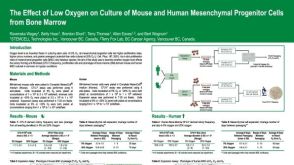 科学海报The Effect of Low Oxygen on Culture of Mouse and Human Mesenchymal Progenitor Cells from Bone Marrow
 沪公网安备31010102008431号