Slug deficiency enhances self-renewal of hematopoietic stem cells during hematopoietic regeneration.
Both extrinsic and intrinsic mechanisms tightly govern hematopoietic stem cell (HSC) decisions of self-renewal and differentiation. However,transcription factors that can selectively regulate HSC self-renewal division after stress remain to be identified. Slug is an evolutionarily conserved zinc-finger transcription factor that is highly expressed in primitive hematopoietic cells and is critical for the radioprotection of these key cells. We studied the effect of Slug in the regulation of HSCs in Slug-deficient mice under normal and stress conditions using serial functional assays. Here,we show that Slug deficiency does not disturb hematopoiesis or alter HSC homeostasis and differentiation in bone marrow but increases the numbers of primitive hematopoietic cells in the extramedullary spleen site. Deletion of Slug enhances HSC repopulating potential but not its homing and differentiation ability. Furthermore,Slug deficiency increases HSC proliferation and repopulating potential in vivo after myelosuppression and accelerates HSC expansion during in vitro culture. Therefore,we propose that Slug is essential for controlling the transition of HSCs from relative quiescence under steady-state condition to rapid proliferation under stress conditions. Our data suggest that inhibition of Slug in HSCs may present a novel strategy for accelerating hematopoietic recovery,thus providing therapeutic benefits for patients after clinical myelosuppressive treatment.
View Publication
产品类型:
产品号#:
09600
09650
28600
产品名:
StemSpan™ SFEM
StemSpan™ SFEM
L-Calc™有限稀释软件
Kawano Y et al. (JAN 2003)
Blood 101 2 532--40
Ex vivo expansion of human umbilical cord hematopoietic progenitor cells using a coculture system with human telomerase catalytic subunit (hTERT)-transfected human stromal cells.
We developed a new human stromal cell line that could expand human hematopoietic progenitor/stem cells. Primary human bone marrow stromal cells were infected with retrovirus containing the human telomerase catalytic subunit (hTERT) gene,resulting in increased population doubling and the acquisition of cell immortalization. Characteristics of the hTERT-transduced stromal (hTERT-stromal) cells were identical with those of the primary stromal cells in terms of morphologic appearance and expression of surface antigens. Human cord blood (CB) CD34(+) cells were expanded by coculture with primary stromal or hTERT-stromal cells in the presence of stem cell factor,thrombopoietin,and Flk-2/Flt-3 ligand under serum-free condition. The degree of expansion of CD34(+) cells and total number of colony-forming units in culture (CFU-Cs) after 2 weeks' coculture with the hTERT-stromal cells were nearly the same as those after 2 weeks' coculture with primary stromal cells (CD34(+) cells,118-fold +/- 8-fold versus 117-fold +/- 13-fold; CFU-Cs,71-fold +/- 5-fold versus 67-fold +/- 5-fold of initial cell number). CB expansion on hTERT-stromal cells occurred at a similar rate through 7 weeks. In contrast,the rate of CB expansion on primary stromal cells had drastically declined at 7 weeks. In nonobese diabetic/severe combined immunodeficiency (SCID) mice,the degree of engraftment of SCID-repopulating cells that had been cocultured with hTERT-stromal cells for 4 weeks was significantly higher than that of precocultured CB cells. These results indicate that this hTERT-stromal cell line could be useful for ex vivo expansion of hematopoietic progenitor/stem cells and for analyzing the microenvironment of human bone marrow.
View Publication
产品类型:
产品号#:
04064
04034
04044
产品名:
MethoCult™ H4034 Optimum启动试剂盒套装
MethoCult™H4034 Optimum
MethoCult™H4034 Optimum
Zhang CC et al. (FEB 2006)
Proceedings of the National Academy of Sciences of the United States of America 103 7 2184--9
Prion protein is expressed on long-term repopulating hematopoietic stem cells and is important for their self-renewal.
Although the wild-type prion protein (PrP) is abundant and widely expressed in various types of tissues and cells,its physiological function(s) remain unknown,and PrP knockout mice do not exhibit overt and undisputed phenotypes. Here we showed that PrP is expressed on the surface of several bone marrow cell populations successively enriched in long-term (LT) hematopoietic stem cells (HSCs) using flow cytometry analysis. Affinity purification of the PrP-positive and -negative fractions from these populations,followed by competitive bone marrow reconstitution assays,shows that all LT HSCs express PrP. HSCs from PrP-null bone marrow exhibited impaired self-renewal in serial transplantation of lethally irradiated mouse recipients both in the presence and absence of competitors. When treated with a cell cycle-specific myelotoxic agent,the animals reconstituted with PrP-null HSCs exhibit increased sensitivity to hematopoietic cell depletion. Ectopic expression of PrP in PrP-null bone marrow cells by retroviral infection rescued the defective hematopoietic engraftment during serial transplantation. Therefore,PrP is a marker for HSCs and supports their self-renewal.
View Publication
产品类型:
产品号#:
03630
03434
03444
09600
09650
28600
产品名:
MethoCult™M3630
MethoCult™GF M3434
MethoCult™GF M3434
StemSpan™ SFEM
StemSpan™ SFEM
L-Calc™有限稀释软件
Lin S and Talbot P (JAN 2011)
Methods in molecular biology (Clifton,N.J.) 690 31--56
Methods for culturing mouse and human embryonic stem cells
Mouse embryonic stem cells (mESCs) were first derived and cultured almost 30 years ago and ever since have been valuable tools for creating knockout mice and for studying early mammalian development. More recently (1998),human embryonic stem cells (hESCs) have been derived from blastocysts,and numerous methods have evolved to culture hESCs in vitro in both complex and defined media. hESCs are especially important at this time as they could potentially be used to treat degenerative diseases and to access the toxicity of new drugs and environmental chemicals. For both human and mouse ESCs,fibroblast feeder layers are often used at some phase in the culturing protocol. The feeders - often mouse embryonic fibroblasts (mEFs) - provide a substrate that increases plating efficiency,helps maintain pluripotency,and facilitates survival and growth of the stem cells. Various protocols for culturing embryonic stem cells from both species are available with newer trends moving toward feeder-free and serum-free culture. The purpose of this chapter is to provide basic protocol information on the isolation of mouse embryonic fibroblasts and establishment of feeder layers,the culture of mESCs on both mEFs and on gelatin in serum-containing medium,and the culture of hESCs in defined media on both mEFs (hESC culture medium) and Matrigel (mTeSR). These basic protocols are intended for researchers wanting to develop stem cell research in their labs. These protocols have been tested in our laboratory and work well. They can be modified and adapted for any relevant user's particular purpose.
View Publication
产品类型:
产品号#:
85850
85857
产品名:
mTeSR™1
mTeSR™1
J. H. Kim et al. (Jun 2024)
Cancer Research Communications 4 6
Hemangiosarcoma and angiosarcoma are soft-tissue sarcomas of blood vessel–forming cells in dogs and humans,respectively. These vasoformative sarcomas are aggressive and highly metastatic,with disorganized,irregular blood-filled vascular spaces. Our objective was to define molecular programs which support the niche that enables progression of canine hemangiosarcoma and human angiosarcoma. Dog-in-mouse hemangiosarcoma xenografts recapitulated the vasoformative and highly angiogenic morphology and molecular characteristics of primary tumors. Blood vessels in the tumors were complex and disorganized,and they were lined by both donor and host cells. In a series of xenografts,we observed that the transplanted hemangiosarcoma cells created exuberant myeloid hyperplasia and gave rise to lymphoproliferative tumors of mouse origin. Our functional analyses indicate that hemangiosarcoma cells generate a microenvironment that supports expansion and differentiation of hematopoietic progenitor populations. Furthermore,gene expression profiling data revealed hemangiosarcoma cells expressed a repertoire of hematopoietic cytokines capable of regulating the surrounding stromal cells. We conclude that canine hemangiosarcomas,and possibly human angiosarcomas,maintain molecular properties that provide hematopoietic support and facilitate stromal reactions,suggesting their potential involvement in promoting the growth of hematopoietic tumors. We demonstrate that hemangiosarcomas regulate molecular programs supporting hematopoietic expansion and differentiation,providing insights into their potential roles in creating a permissive stromal-immune environment for tumor progression.
View Publication
产品类型:
产品号#:
04435
04445
05150
产品名:
MethoCult™H4435富集
MethoCult™H4435富集
MyeloCult™H5100
Dobo I et al. (JAN 2001)
The hematology journal : the official journal of the European Haematology Association / EHA 2 6 396--403
Comparison of four serum-free, cytokine-free media for analysis of endogenous erythroid colony growth in polycythemia vera and essential thrombocythemia.
INTRODUCTION: The assay of endogenous erythroid colony formation (EEC),a characteristic of polycythemia vera and essential thrombocythemia,is not standardized. In this multicentric study,we tested four semisolid,serum-free,cytokine-free media based on either methylcellulose (M1,M2) or collagen (C1,C2) commercialized for the EEC assay. MATERIALS AND METHODS: Bone marrow mononuclear cells (BMMC) from 73 individuals (62 patients with either polycythemia vera (26),essential thrombocythemia (19),secondary polyglobuly (17) or chronic myeloid leukemia (2) and 11 healthy donors) were grown in parallel in the four media without,or with 0.01 U/ml erythropoietin (EPo). RESULTS: In all four media EEC formation was specific,as it was not observed in cultures of patients with secondary polyglobuly or chronic myeloid leukemia,nor of healthy donors. Analysis of fresh or MGG-stained collagen gel cultures allowed detection of EEC formation significantly more frequently than methylcellulose-based media; addition of 0.01 U/ml of EPo had little or no effect on EEC formation. Collagen-based medium C1 gave better results than the other media tested: the 'C1' EEC assay was positive for 68.2% of polycythemia vera cultures with significantly higher median EEC numbers (6.5/10(5) BMMC for patients with one major criteria of polycythemia vera and 19 and 21/10(5) BMMC for patients with two or three major criteria,respectively). Medium C1 was also better for essential thrombocythemia cultures with 47.4% of positive results but with a low median EEC number (6.7/10(5) BMMC). When associated with the ELISA dosage of serum EPo,the 'C1' EEC assay allowed confirmation or elimination of the diagnosis of polycythemia vera for 91% (20/22) of polyglobulic patients. CONCLUSION: We propose that serum-free collagen-based culture systems be considered to standardize the EEC assay,now part of the new criteria of polycythemia vera.
View Publication
产品类型:
产品号#:
04850
04900
04901
04902
04960
04961
04962
04963
04970
04971
04974
产品名:
MegaCult™-C含脂培养基
MegaCult™-C培养基无细胞因子
MegaCult™-C细胞因子培养基
胶原蛋白溶液
MegaCult™-C胶原蛋白和不含细胞因子的培养基
MegaCult™-C胶原蛋白和细胞因子培养基
MegaCult™-C cfu染色试剂盒
双室载玻片试剂盒
MegaCult™-C不含细胞因子完整试剂盒
MegaCult™-C细胞因子完整试剂盒
MegaCult™-C胶原蛋白和脂质培养基
Orellana MD et al. (AUG 2015)
Cryobiology 71 1 151--160
Efficient recovery of undifferentiated human embryonic stem cell cryopreserved with hydroxyethyl starch, dimethyl sulphoxide and serum replacement
BACKGROUND The therapeutic use of human embryonic stem cells (hESCs) is dependent on an efficient cryopreservation protocol for long-term storage. The aim of this study was to determine whether the combination of three cryoprotecting reagents using two freezing systems might improve hESC recovery rates with maintenance of hESC pluripotency properties for potential cell therapy application. METHODS Recovery rates of hESC colonies which were frozen in three cryoprotective solutions: Me2SO/HES/SR medium,Defined-medium® and Me2SO/SFB in medium solution were evaluated in ultra-slow programmable freezing system (USPF) and a slow-rate freezing system (SRF). The hESC pluripotency properties after freezing-thawing were evaluated. RESULTS We estimated the distribution frequency of survival colonies and observed that independent of the freezing system used (USPF or SRF) the best results were obtained with Me2SO/HES/SR as cryopreservation medium. We showed a significant hESC recovery colonies rate after thawing in Me2SO/HES/SR medium were 3.88 and 2.9 in USPF and SRF,respectively. The recovery colonies rate with Defined-medium® were 1.05 and 1.07 however in classical Me2SO medium were 0.5 and 0.86 in USPF and SRF,respectively. We showed significant difference between Me2SO/HES/SR medium×Defined-medium® and between Me2SO/HES/SR medium×Me2SO medium,for two cryopreservation systems (Ptextless0.05). CONCLUSION We developed an in house protocol using the combination of Me2SO/HES/SR medium and ultra-slow programmable freezing system which resulted in hESC colonies that remain undifferentiated,maintain their in vitro and in vivo pluripotency properties and genetic stability. This approach may be suitable for cell therapy studies.
View Publication
产品类型:
产品号#:
05854
05855
85850
85857
产品名:
mFreSR™
mFreSR™
mTeSR™1
mTeSR™1
Gentry T et al. (JAN 2007)
Cytotherapy 9 3 259--74
Simultaneous isolation of human BM hematopoietic, endothelial and mesenchymal progenitor cells by flow sorting based on aldehyde dehydrogenase activity: implications for cell therapy.
BACKGROUND: ALDH(br) cells express high aldehyde dehydrogenase (ALDH) activity and have progenitor cell activity in several contexts. We characterized human BM ALDH(br) cells to determine whether cell sorting based on ALDH activity isolates potentially useful populations for cell therapy. METHOD: We measured the expression of ALDH and cell-surface Ag by flow cytometry and compared the ability of sorted ALDH(br),and BM populations remaining after ALDH(br) cells were removed (ALDH(dim) populations),to develop into several cell lineages in culture. RESULTS: The ALDH(br) population comprised 1.2+/-0.8% (mean+/-SD,n=30) nucleated cells and was enriched in cells expressing CD34,CD117,CD105,CD127,CD133 and CD166,and in primitive CD34(+) CD38(-) and CD34(+) CD133(+) progenitors. Most of the CD34(+) and CD133(+) cells were ALDH(dim). ALDH(br) populations had 144-fold more hematopoietic colony-forming activity than ALDH(dim) cells and included all megakaryocyte progenitors. ALDH(br) populations readily established endothelial cell monolayers in cultures. Cells generating endothelial colonies in 7 days were 435-fold more frequent in ALDH(br) than ALDH(dim) populations. CFU-F were 9.5-fold more frequent in ALDH(br) than ALDH(dim) cells,and ALDH(br) cells gave rise to multipotential mesenchymal cell cultures that could be driven to develop into adipocytes,osteoblasts and chondrocytes. DISCUSSION: Hematopoietic,endothelial and mesenchymal progenitor cells can be isolated simultaneously from human BM by cell sorting based on ALDH activity. BM ALDH(br) populations may be useful in several cell therapy applications.
View Publication
产品类型:
产品号#:
01700
01702
01705
产品名:
ALDEFLUOR™ 试剂盒
ALDEFLUOR™测定缓冲液
ALDEFLUOR™ DEAB试剂
M. A. DeWitt et al. (OCT 2016)
Science translational medicine 8 360 360ra134
Selection-free genome editing of the sickle mutation in human adult hematopoietic stem/progenitor cells.
Genetic diseases of blood cells are prime candidates for treatment through ex vivo gene editing of CD34+ hematopoietic stem/progenitor cells (HSPCs),and a variety of technologies have been proposed to treat these disorders. Sickle cell disease (SCD) is a recessive genetic disorder caused by a single-nucleotide polymorphism in the $\beta$-globin gene (HBB). Sickle hemoglobin damages erythrocytes,causing vasoocclusion,severe pain,progressive organ damage,and premature death. We optimize design and delivery parameters of a ribonucleoprotein (RNP) complex comprising Cas9 protein and unmodified single guide RNA,together with a single-stranded DNA oligonucleotide donor (ssODN),to enable efficient replacement of the SCD mutation in human HSPCs. Corrected HSPCs from SCD patients produced less sickle hemoglobin RNA and protein and correspondingly increased wild-type hemoglobin when differentiated into erythroblasts. When engrafted into immunocompromised mice,ex vivo treated human HSPCs maintain SCD gene edits throughout 16 weeks at a level likely to have clinical benefit. These results demonstrate that an accessible approach combining Cas9 RNP with an ssODN can mediate efficient HSPC genome editing,enables investigator-led exploration of gene editing reagents in primary hematopoietic stem cells,and suggests a path toward the development of new gene editing treatments for SCD and other hematopoietic diseases.
View Publication
Valamehr B et al. (SEP 2011)
Regenerative medicine 6 5 623--34
Developing defined culture systems for human pluripotent stem cells.
Human pluripotent stem cells hold promising potential in many therapeutics applications including regenerative medicine and drug discovery. Over the past three decades,embryonic stem cell research has illustrated that embryonic stem cells possess two important and distinct properties: the ability to continuously self-renew and the ability to differentiate into all specialized cell types. In this article,we will discuss the continuing evolution of human pluripotent stem cell culture by examining requirements needed for the maintenance of self-renewal in vitro. We will also elaborate on the future direction of the field toward generating a robust and completely defined culture system,which has brought forth collaborations amongst biologists and engineers. As human pluripotent stem cell research progresses towards identifying solutions for debilitating diseases,it will be critical to establish a defined,reproducible and scalable culture system to meet the requirements of these clinical applications.
View Publication


 EasySep™小鼠TIL(CD45)正选试剂盒




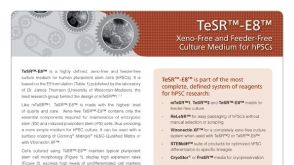 产品手册TeSR™-E8™: Feeder-Free Culture Medium for Human Pluripotent Stem Cells

 沪公网安备31010102008431号