R. U. W. Friis et al. (Oct 2025)
Cancer Immunology,Immunotherapy : CII 74 11
Development of antigen multimers for detection and evaluation of CAR T cells
Chimeric antigen receptor (CAR) T cell therapy has transformed the treatment landscape of hematologic cancers by engineering T cells to specifically target and destroy cancer cells. Monitoring CAR T cell activity and function is essential for optimizing therapeutic outcomes,but existing tools for CAR detection are often limited in specificity and functional assessment capability. Methods: We developed dextran multimers by conjugating multiple CAR-specific antigens to a dextran backbone. The multimers were compared to previously reported antigen tetramers for their ability to stain and detect CAR T cells. Because these multimers incorporate the CAR target antigen,they uniquely enable assessment of CAR T cell functionality. We tested the staining and functional properties of the multimers across a range of CAR constructs with different affinities,using flow cytometry and microscopy. Results: The dextran multimers demonstrated high specificity and sensitivity in staining CAR T cells,with adjustable antigen density to optimize binding. Dextran multimers also enabled effective clustering and subsequent activation of CARs,showing their utility as both a staining and functional assessment tool. The multimers revealed that CARs with different affinities and clustering tendencies displayed varied binding and activation in response to different antigen densities. Conclusions: Dextran multimers offer a dual advantage as versatile reagents for both staining and functional analysis of CAR T cells. Their capacity to engage CARs with the specific antigen provides a valuable platform for evaluating CAR functionality,informing CAR design improvements,and enhancing therapeutic precision.
View Publication
产品类型:
产品号#:
100-0695
17951
17951RF
产品名:
EasySep™人T细胞分选试剂盒
EasySep™人T细胞分选试剂盒
RoboSep™ 人T细胞分选试剂盒
Yu F et al. (MAY 2011)
Oncogene 30 18 2161--72
Kruppel-like factor 4 (KLF4) is required for maintenance of breast cancer stem cells and for cell migration and invasion.
Kruppel-like factor 4 (KLF4) is highly expressed in more than 70% of breast cancers and functions as an oncogene. However,an exact mechanism by which KLF4 enhances tumorigenesis of breast cancer remains unknown. In this study,we show that KLF4 was highly expressed in cancer stem cell (CSC)-enriched populations in mouse primary mammary tumor and breast cancer cell lines. Knockdown of KLF4 in breast cancer cells (MCF-7 and MDA-MB-231) decreased the proportion of stem/progenitor cells as demonstrated by expression of stem cell surface markers such as aldehyde dehydrogenase 1,side population and by in vitro mammosphere assay. Consistently KLF4 overexpression led to an increase of the cancer stem cell population. KLF4 knockdown also suppressed cell migration and invasion in MCF-7 and MDA-MB-231 cells. Furthermore,knockdown of KLF4 reduced colony formation in vitro and inhibited tumorigenesis in immunocompromised non-obese diabetic/severe combined immunodeficiency mice,supporting an oncogenic role for KLF4 in breast cancer development. Further mechanistic studies revealed that the Notch signaling pathway was required for KLF4-mediated cell migration and invasion,but not for CSC maintenance. Taken together,our study provides evidence that KLF4 has a potent oncogenic role in mammary tumorigenesis likely by maintaining stem cell-like features and by promoting cell migration and invasion. Thus,targeting KLF4 may provide an effective therapeutic approach to suppress tumorigenicity in breast cancer.
View Publication
产品类型:
产品号#:
72782
产品名:
Kenpaullone
Pearce DJ and Bonnet D (SEP 2007)
Experimental hematology 35 9 1437--46
The combined use of Hoechst efflux ability and aldehyde dehydrogenase activity to identify murine and human hematopoietic stem cells.
OBJECTIVE: In murine hematopoietic tissue,direct repopulation experiments have demonstrated that the side population (SP) represents a remarkable enrichment of hematopoietic stem cells. Human SP has been phenotyped as negative for lineage antigens as well as CD34. However,in the 9 years since the original publication,no long-term hematopoietic reconstitution has been reported for the adult human SP/CD34(-) subset. Elevated levels of aldehyde dehydrogenase (ALDH) have been demonstrated in murine and human progenitor cells when compared to other hematopoietic cells. METHODS: Here,we report the phenotype of human cord blood SP cells. We established the technique of simultaneous phenotyping,Hoechst exclusion,and ALDH labeling on murine tissues. We then performed the simultaneous analysis of phenotype,SP,and ALDH activity on human cord blood and bone marrow cells. Finally,we analyzed the phenotype and functional potential of human cord blood ALDH(+) cells to determine whether Lin(-)/CD34(-) cells are identified via this technique. RESULTS: We demonstrate that human Lin(-)/CD34(-)/ALDH(+) cells are capable of long-term repopulation. Although the SP technique identifies cells that overlap with the ALDH(+) cell population,this is restricted to the CD34(+) cell subset. CONCLUSION: Hoechst exclusion ability does not seem to be the method of choice for the isolation of human hematopoietic stem cells.
View Publication
产品类型:
产品号#:
01700
01702
01705
产品名:
ALDEFLUOR™ 试剂盒
ALDEFLUOR™测定缓冲液
ALDEFLUOR™ DEAB试剂
F. Mammoli et al. (sep 2019)
Experimental cell research 382 1 111445
Physiological expression of miR-130a during differentiation of CD34+ human hematopoietic stem cells results in the inhibition of monocyte differentiation.
MicroRNAs (miRNA) are small noncoding RNAs that regulate gene expression by targeting mRNAs in a sequence specific manner,thereby determining their degradation or inhibiting translation. They are involved in processes such as proliferation,differentiation and apoptosis by fine-tuning the expression of genes underlying such events. The expression of specific miRNAs is involved in hematopoietic differentiation and their deregulation contributes to the development of hematopoietic malignancies such as acute myeloid leukemia (AML). miR-130a is over-expressed in AML. Here we show that miR-130a is physiologically expressed in myeloblasts and down-regulated during monocyte differentiation. Gain- and loss-of-function experiments performed on CD34+ human hematopoietic stem cells confirmed that expression of miR-130a inhibits monocyte differentiation by interfering with the expression of key transcription factors HOXA10,IRF8,KLF4,MAFB and PU-1. The data obtained in this study highlight that the correct modulation of miR-130a is necessary for normal differentiation to occur and confirming that deregulation of this miRNA might underlie the differentiation block occurring in AML.
View Publication
产品类型:
产品号#:
06005
产品名:
IntestiCult™ 肠道类器官生长培养基 (小鼠)
Doyonnas R et al. (SEP 2004)
Proceedings of the National Academy of Sciences of the United States of America 101 37 13507--12
Hematopoietic contribution to skeletal muscle regeneration by myelomonocytic precursors.
Adult bone marrow-derived cells can participate in muscle regeneration after bone marrow transplantation. In recent studies a single hematopoietic stem cell (HSC) was shown to give rise to cells that not only reconstituted all of the lineages of the blood,but also contributed to mature muscle fibers. However,the relevant HSC derivative with this potential has not yet been definitively identified. Here we use fluorescence-activated cell sorter-based protocols to test distinct hematopoietic fractions and show that only fractions containing c-kit(+) immature myelomonocytic precursors are capable of contributing to muscle fibers after i.m. injection. Although these cells belong to the myeloid lineage,they do not include mature CD11b(+) myelomonocytic cells,such as macrophages. Of the four sources of mature macrophages tested that were derived either from monocytic culture,bone marrow,peripheral blood after granulocyte colony-stimulating factor mobilization,or injured muscle,none contributed to muscle. In addition,after transplantation of bone marrow isolated from CD11b-Cre-transgenic mice into the Cre-reporter strain (Z/EG),no GFP myofibers were detected,demonstrating that macrophages expressing CD11b do not fuse with myofibers. Irrespective of the underlying mechanisms,these data suggest that the HSC derivatives that integrate into regenerating muscle fibers exist in the pool of hematopoietic cells known as myelomonocytic progenitors.
View Publication
Woods EJ et al. (OCT 2009)
Cryobiology 59 2 150--7
Optimized cryopreservation method for human dental pulp-derived stem cells and their tissues of origin for banking and clinical use.
Dental pulp is a promising source of mesenchymal stem cells with the potential for cell-mediated therapies and tissue engineering applications. We recently reported that isolation of dental pulp-derived stem cells (DPSC) is feasible for at least 120h after tooth extraction,and that cryopreservation of early passage cultured DPSC leads to high-efficiency recovery post-thaw. This study investigated additional processing and cryobiological characteristics of DPSC,ending with development of procedures for banking. First,we aimed to optimize cryopreservation of established DPSC cultures,with regards to optimizing the cryoprotective agent (CPA),the CPA concentration,the concentration of cells frozen,and storage temperatures. Secondly,we focused on determining cryopreservation characteristics of enzymatically digested tissue as a cell suspension. Lastly,we evaluated the growth,surface markers and differentiation properties of DPSC obtained from intact teeth and undigested,whole dental tissue frozen and thawed using the optimized procedures. In these experiments it was determined that Me(2)SO at a concentration between 1 and 1.5M was the ideal cryopreservative of the three studied. It was also determined that DPSC viability after cryopreservation is not limited by the concentration of cells frozen,at least up to 2x10(6) cells/mL. It was further established that DPSC can be stored at -85 degrees C or -196 degrees C for at least six months without loss of functionality. The optimal results with the least manipulation were achieved by isolating and cryopreserving the tooth pulp tissues,with digestion and culture performed post-thaw. A recovery of cells from textgreater85% of the tissues frozen was achieved and cells isolated post-thaw from tissue processed and frozen with a serum free,defined cryopreservation medium maintained morphological and developmental competence and demonstrated MSC-hallmark trilineage differentiation under the appropriate culture conditions.
View Publication
产品类型:
产品号#:
05401
05402
05411
产品名:
MesenCult™ MSC基础培养基 (人)
MesenCult™ MSC 刺激补充剂(人)
MesenCult™ 增殖试剂盒(人)
Davenport C et al. (issue=109 2016)
Journal of visualized experiments : JoVE 109
A Quick and Efficient Method for the Purification of Endoderm Cells Generated from Human Embryonic Stem Cells.
The differentiation capabilities of pluripotent stem cells such as embryonic stem cells (ESCs) allow a potential therapeutic application for cell replacement therapies. Terminally differentiated cell types could be used for the treatment of various degenerative diseases. In vitro differentiation of these cells towards tissues of the lung,liver and pancreas requires as a first step the generation of definitive endodermal cells. This step is rate-limiting for further differentiation towards terminally matured cell types such as insulin-producing beta cells,hepatocytes or other endoderm-derived cell types. Cells that are committed towards the endoderm lineage highly express a multitude of transcription factors such as FOXA2,SOX17,HNF1B,members of the GATA family,and the surface receptor CXCR4. However,differentiation protocols are rarely 100% efficient. Here,we describe a method for the purification of a CXCR4+ cell population after differentiation into the DE by using magnetic microbeads. This purification additionally removes cells of unwanted lineages. The gentle purification method is quick and reliable and might be used to improve downstream applications and differentiations.
View Publication
产品类型:
产品号#:
85850
85857
产品名:
mTeSR™1
mTeSR™1
A. Montepeloso et al. (Nov 2024)
Nature Communications 15
Haploinsufficiency at the CX3CR1 locus of hematopoietic stem cells favors the appearance of microglia-like cells in the central nervous system of transplant recipients
Transplantation of engineered hematopoietic stem/progenitor cells (HSPCs) showed curative potential in patients affected by neurometabolic diseases treated in early stage. Favoring the engraftment and maturation of the engineered HSPCs in the central nervous system (CNS) could allow enhancing further the therapeutic potential of this approach. Here we unveil that HSPCs haplo-insufficient at the Cx3cr1 (Cx3cr1 −/+ ) locus are favored in central nervous system (CNS) engraftment and generation of microglia-like progeny cells (MLCs) as compared to wild type (Cx3cr1 +/+ ) HSPCs upon transplantation in mice. Based on this evidence,we have developed a CRISPR-based targeted gene addition strategy at the human CX3CR1 locus resulting in an enhanced ability of the edited human HSPCs to generate mature MLCs upon transplantation in immunodeficient mice,and in lineage specific,regulated and robust transgene expression. This approach,which benefits from the modulation of pathways involved in microglia maturation and migration in haplo-insufficient cells,may broaden the application of HSPC gene therapy to a larger spectrum of neurometabolic and neurodegenerative diseases. Subject terms: Targeted gene repair,Haematopoietic stem cells,Microglial cells
View Publication
产品类型:
产品号#:
09600
09605
09650
09655
产品名:
StemSpan™ SFEM
StemSpan™ SFEM II
StemSpan™ SFEM
StemSpan™ SFEM II
Jhaveri DJ et al. (MAY 2015)
The Journal of neuroscience : the official journal of the Society for Neuroscience 35 21 8132--44
Purification of neural precursor cells reveals the presence of distinct, stimulus-specific subpopulations of quiescent precursors in the adult mouse hippocampus.
The activity of neural precursor cells in the adult hippocampus is regulated by various stimuli; however,whether these stimuli regulate the same or different precursor populations remains unknown. Here,we developed a novel cell-sorting protocol that allows the purification to homogeneity of neurosphere-forming neural precursors from the adult mouse hippocampus and examined the responsiveness of individual precursors to various stimuli using a clonal assay. We show that within the Hes5-GFP(+)/Nestin-GFP(+)/EGFR(+) cell population,which comprises the majority of neurosphere-forming precursors,there are two distinct subpopulations of quiescent precursor cells,one directly activated by high-KCl depolarization,and the other activated by norepinephrine (NE). We then demonstrate that these two populations are differentially distributed along the septotemporal axis of the hippocampus,and show that the NE-responsive precursors are selectively regulated by GABA,whereas the KCl-responsive precursors are selectively modulated by corticosterone. Finally,based on RNAseq analysis by deep sequencing,we show that the progeny generated by activating NE-responsive versus KCl-responsive quiescent precursors are molecularly different. These results demonstrate that the adult hippocampus contains phenotypically similar but stimulus-specific populations of quiescent precursors,which may give rise to neural progeny with different functional capacity.
View Publication


 EasySep™小鼠TIL(CD45)正选试剂盒




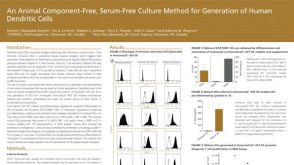 科学海报An Animal Component-Free, Serum-Free Culture Method for Generation of Human Dendritic Cells

 沪公网安备31010102008431号