Haraguchi Y et al. (DEC 2015)
Journal of Tissue Engineering and Regenerative Medicine 9 12 1363--1375
Simple suspension culture system of human iPS cells maintaining their pluripotency for cardiac cell sheet engineering.
In this study,a simple three-dimensional (3D) suspension culture method for the expansion and cardiac differentiation of human induced pluripotent stem cells (hiPSCs) is reported. The culture methods were easily adapted from two-dimensional (2D) to 3D culture without any additional manipulations. When hiPSCs were directly applied to 3D culture from 2D in a single-cell suspension,only a few aggregated cells were observed. However,after 3 days,culture of the small hiPSC aggregates in a spinner flask at the optimal agitation rate created aggregates which were capable of cell passages from the single-cell suspension. Cell numbers increased to approximately 10-fold after 12 days of culture. The undifferentiated state of expanded hiPSCs was confirmed by flow cytometry,immunocytochemistry and quantitative RT-PCR,and the hiPSCs differentiated into three germ layers. When the hiPSCs were subsequently cultured in a flask using cardiac differentiation medium,expression of cardiac cell-specific genes and beating cardiomyocytes were observed. Furthermore,the culture of hiPSCs on Matrigel-coated dishes with serum-free medium containing activin A,BMP4 and FGF-2 enabled it to generate robust spontaneous beating cardiomyocytes and these cells expressed several cardiac cell-related genes,including HCN4,MLC-2a and MLC-2v. This suggests that the expanded hiPSCs might maintain the potential to differentiate into several types of cardiomyocytes,including pacemakers. Moreover,when cardiac cell sheets were fabricated using differentiated cardiomyocytes,they beat spontaneously and synchronously,indicating electrically communicative tissue. This simple culture system might enable the generation of sufficient amounts of beating cardiomyocytes for use in cardiac regenerative medicine and tissue engineering.
View Publication
产品类型:
产品号#:
05850
05857
05870
05875
07174
60002
60002AD
60002AD.1
60002AZ
60002AZ.1
60002BT
60002BT.1
60002FI
60002FI.1
60002PE
60002PE.1
60002PS
60002PS.1
60002PB
60002PB.1
60062
60062AD
60062AD.1
60062BT
60062FI
60062FI.1
60062PE
60062PE.1
85850
85857
85870
85875
1
产品名:
抗小鼠CD11c抗体,克隆N418
抗小鼠CD11c抗体,clone N418,Alexa Fluor® 488
抗小鼠CD11c抗体,克隆N418,APC
抗小鼠CD11c抗体,克隆N418,APC
抗小鼠CD11c抗体,克隆N418,Biotin
抗小鼠CD11c抗体,克隆N418,FITC
抗小鼠CD11c抗体,克隆N418,PerCP-Cy5.5
抗小鼠CD11c抗体,克隆N418,Pacific Blue™
抗小鼠CD11c抗体,克隆N418,Pacific Blue™
抗人SSEA-4抗体,克隆号MC-813-70,生物素
抗人SSEA-4抗体,克隆号MC-813-70,FITC
抗人SSEA-4抗体, 克隆号MC-813-70,FITC
抗人SSEA-4抗体,克隆号MC-813-70,PE
抗人SSEA-4抗体,克隆号MC-813-70,PE
mTeSR™1
mTeSR™1
Ng PP et al. (OCT 2006)
Blood 108 8 2745--54
Molecular events contributing to cell death in malignant human hematopoietic cells elicited by an IgG3-avidin fusion protein targeting the transferrin receptor.
We have previously reported that an anti-human transferrin receptor IgG3-avidin fusion protein (anti-hTfR IgG3-Av) inhibits the proliferation of an erythroleukemia-cell line. We have now found that anti-hTfR IgG3-Av also inhibits the proliferation of additional human malignant B and plasma cells. Anti-hTfR IgG3-Av induces internalization and rapid degradation of the TfR. These events can be reproduced in cells treated with anti-hTfR IgG3 cross-linked with a secondary Ab,suggesting that they result from increased TfR cross-linking. Confocal microscopy of cells treated with anti-hTfR IgG3-Av shows that the TfR is directed to an intracellular compartment expressing the lysosomal marker LAMP-1. The degradation of TfR is partially blocked by cysteine protease inhibitors. Furthermore,cells treated with anti-hTfR IgG3-Av exhibit mitochondrial depolarization and activation of caspases 9,8,and 3. The mitochondrial damage and cell death can be prevented by iron supplementation,but cannot be fully blocked by a pan-caspase inhibitor. These results suggest that anti-hTfR IgG3-Av induces lethal iron deprivation,but the resulting cell death does not solely depend on caspase activation. This report provides insights into the mechanism of cell death induced by anti-TfR Abs such as anti-hTfR IgG3-Av,a molecule that may be useful in the treatment of B-cell malignancies such as multiple myeloma.
View Publication
产品类型:
产品号#:
18357
18357RF
产品名:
(May 2025)
Stem Cell Research & Therapy 16 12
Genome editing of TXNIP in human pluripotent stem cells for the generation of hepatocyte-like cells and insulin-producing islet-like aggregates
BackgroundThioredoxin-interacting protein (TXNIP) plays a role in regulating endoplasmic reticulum (ER) and oxidative stress,which disrupt glucose homeostasis in diabetes. However,the impact of TXNIP deficiency on the differentiation and functionality of human stem cell-derived somatic metabolic cells remains unclear.MethodsWe used CRISPR-Cas12a genome editing to generate TXNIP-deficient (TXNIP?/?) H1 human embryonic stem cells (H1-hESCs). These cells were differentiated into hepatocyte-like cells (HLCs) and stem-cell-derived insulin-producing islets (SC-islets). The maturation and functionality TXNIP?/? and TXNIP+/+ SC-islets were assessed by implantation under the kidney capsule of male or female NOD-SCID mice.ResultsTXNIP deficiency significantly increased H1-hESC proliferation without affecting pluripotency,viability,or differentiation potential into HLCs and SC-islets. Bulk RNA-sequencing of thapsigargin-treated TXNIP?/? and TXNIP+/+ hESCs revealed differential expression of stress-responsive genes,with enriched apoptosis-related pathways in TXNIP+/+ cells,but minimal transcriptional changes specific to TXNIP deficiency. In HLCs,TXNIP deletion reduced albumin secretion and insulin signalling,as indicated by decreased AKT phosphorylation,while showing no differences in glycolytic activity or lipid metabolism markers. Under thapsigargin-induced ER stress,TXNIP?/? HLCs exhibited transiently reduced eIF2? phosphorylation and lower BiP expression,suggesting compromised adaptive responses to prolonged stress. SC-islets derived from TXNIP?/? hESCs showed comparable viability,endocrine cell composition,and cytokine responses to TXNIP+/+ islets. Following IFN? or IFN? treatment,STAT1 phosphorylation was increased in TXNIP?/? SC-islets,indicating that IFN signalling remained intact despite TXNIP deficiency. Upon implantation into NOD-SCID mice,both TXNIP?/? and TXNIP+/+ SC-islets produced human C-peptide and responded to glucose stimulation. However,TXNIP?/? SC-islets did not demonstrate enhanced glycaemic control or glucose-stimulated insulin secretion compared to controls.ConclusionsOur study demonstrates that TXNIP deficiency does not improve the differentiation or functionality of HLCs and SC-islets. We present the generation and characterisation of TXNIP?/? and TXNIP+/+ H1-hESCs,HLCs,and SC-islets as valuable models for future studies on the role of TXNIP in metabolic cell biology.Supplementary InformationThe online version contains supplementary material available at 10.1186/s13287-025-04314-5.
View Publication
Cunha B et al. (NOV 2015)
Journal of biotechnology 213 97--108
Exploring continuous and integrated strategies for the up- and downstream processing of human mesenchymal stem cells.
The integration of up- and downstream unit operations can result in the elimination of hold steps,thus decreasing the footprint,and ultimately can create robust closed system operations. This type of design is desirable for the bioprocess of human mesenchymal stem cells (hMSC),where high numbers of pure cells,at low volumes,need to be delivered for therapy applications. This study reports a proof of concept of the integration of a continuous perfusion culture in bioreactors with a tangential flow filtration (TFF) system for the concentration and washing of hMSC. Moreover,we have also explored a continuous alternative for concentrating hMSC. Results show that expanding cells in a continuous perfusion operation mode provided a higher expansion ratio,and led to a shift in cells' metabolism. TFF operated either in continuous or discontinuous allowed to concentrate cells,with high cell recovery (>80%) and viability (>95%); furthermore,continuous TFF permitted to operate longer with higher cell concentrations. Continuous diafiltration led to higher protein clearance (98%) with lower cell death,when comparing to discontinuous diafiltration. Overall,an integrated process allowed for a shorter process time,recovering 70% of viable hMSC (>95%),with no changes in terms of morphology,immunophenotype,proliferation capacity and multipotent differentiation potential.
View Publication
产品类型:
产品号#:
70022
70071
产品名:
Poulsen C et al. (AUG 2015)
Toxicology letters 237 1 21--9
Differential cytotoxicity of long-chain bases for human oral gingival epithelial keratinocytes, oral fibroblasts, and dendritic cells.
Long-chain bases are present in the oral cavity. Previously we determined that sphingosine,dihydrosphingosine,and phytosphingosine have potent antimicrobial activity against oral pathogens. Here,we determined the cytotoxicities of long-chain bases for oral cells,an important step in considering their potential as antimicrobial agents for oral infections. This information would clearly help in establishing prophylactic or therapeutic doses. To assess this,human oral gingival epithelial (GE) keratinocytes,oral gingival fibroblasts (GF),and dendritic cells (DC) were exposed to 10.0-640.0 μM long-chain bases and glycerol monolaurate (GML). The effects of long-chain bases on cell metabolism (conversion of resazurin to resorufin),membrane permeability (uptake of propidium iodide or SYTOX-Green),release of cellular contents (LDH),and cell morphology (confocal microscopy) were all determined. GE keratinocytes were more resistant to long-chain bases as compared to GF and DC,which were more susceptible. For DC,0.2-10.0 μM long-chain bases and GML were not cytotoxic; 40.0-80.0 μM long-chain bases,but not GML,were cytotoxic; and 80.0 μM long-chain bases induced cellular damage and death in less than 20 min. The LD50 of long-chain bases for GE keratinocytes,GF,and DC were considerably higher than their minimal inhibitory concentrations for oral pathogens,a finding important to pursuing their future potential in treating periodontal and oral infections.
View Publication
产品类型:
产品号#:
70041
产品名:
Yap LYW et al. (FEB 2011)
Tissue engineering. Part C,Methods 17 2 193--207
Defining a threshold surface density of vitronectin for the stable expansion of human embryonic stem cells.
Current methodology for pluripotent human embryonic stem cells (hESCs) expansion relies on murine sarcoma basement membrane substrates (Matrigel™),which precludes the use of these cells in regenerative medicine. To realize the clinical efficacy of hESCs and their derivatives,expansion of these cells in a defined system that is free of animal components is required. This study reports the successful propagation of hESCs (HES-3 and H1) for textgreater 20 passages on tissue culture-treated polystyrene plates,coated from 5 μg/mL of human plasma-purified vitronectin (VN) solution. Cells maintain expression of pluripotent markers Tra1-60 and OCT-4 and are karyotypically normal after 20 passages of continuous culture. In vitro and in vivo differentiation of hESC by embryoid body formation and teratoma yielded cells from the ecto-,endo-,and mesoderm lineages. VN immobilized on tissue culture polystyrene was characterized using a combination of X-ray photoemission spectroscopy,atomic force microscopy,and quantification of the VN surface density with a Bradford protein assay. Ponceau S staining was used to measure VN adsorption and desorption kinetics. Tuning the VN surface density,via the concentration of depositing solution,revealed a threshold surface density of 250 ng/cm²,which is required for hESCs attachment,proliferation,and differentiation. Cell attachment and proliferation assays on VN surface densities above this threshold show the substrate properties to be equally viable.
View Publication
产品类型:
产品号#:
05850
05857
05870
05875
85850
85857
85870
85875
产品名:
mTeSR™1
mTeSR™1
FOLEY GE and EAGLE H (OCT 1958)
Cancer research 18 9 1011--6
The cytotoxicity of anti-tumor agents for normal human and animal cells in first tissue culture passage.
A synthetic, xeno-free peptide surface for expansion and directed differentiation of human induced pluripotent stem cells.
Human induced pluripotent stem cells have the potential to become an unlimited cell source for cell replacement therapy. The realization of this potential,however,depends on the availability of culture methods that are robust,scalable,and use chemically defined materials. Despite significant advances in hiPSC technologies,the expansion of hiPSCs relies upon the use of animal-derived extracellular matrix extracts,such as Matrigel,which raises safety concerns over the use of these products. In this work,we investigated the feasibility of expanding and differentiating hiPSCs on a chemically defined,xeno-free synthetic peptide substrate,i.e. Corning Synthemax(®) Surface. We demonstrated that the Synthemax Surface supports the attachment,spreading,and proliferation of hiPSCs,as well as hiPSCs' lineage-specific differentiation. hiPSCs colonies grown on Synthemax Surfaces exhibit less spread and more compact morphology compared to cells grown on Matrigel™. The cytoskeleton characterization of hiPSCs grown on the Synthemax Surface revealed formation of denser actin filaments in the cell-cell interface. The down-regulation of vinculin and up-regulation of zyxin expression were also observed in hiPSCs grown on the Synthemax Surface. Further examination of cell-ECM interaction revealed that hiPSCs grown on the Synthemax Surface primarily utilize α(v)β(5) integrins to mediate attachment to the substrate,whereas multiple integrins are involved in cell attachment to Matrigel. Finally,hiPSCs can be maintained undifferentiated on the Synthemax Surface for more than ten passages. These studies provide a novel approach for expansion of hiPSCs using synthetic peptide engineered surface as a substrate to avoid a potential risk of contamination and lot-to-lot variability with animal derived materials.
View Publication
产品类型:
产品号#:
05850
05857
05870
05875
07930
07931
07940
07955
07956
07959
07954
85850
85857
85870
85875
100-1061
07952
产品名:
CryoStor® CS10
CryoStor® CS10
CryoStor® CS10
CryoStor® CS10
CryoStor® CS10
mTeSR™1
mTeSR™1
CryoStor® CS10
CryoStor® CS10
Elanzew A et al. (OCT 2015)
Biotechnology journal 10 10 1589--1599
A reproducible and versatile system for the dynamic expansion of human pluripotent stem cells in suspension.
Reprogramming of patient cells to human induced pluripotent stem cells (hiPSC) has facilitated in vitro disease modeling studies aiming at deciphering the molecular and cellular mechanisms that contribute to disease pathogenesis and progression. To fully exploit the potential of hiPSC for biomedical applications,technologies that enable the standardized generation and expansion of hiPSC from large numbers of donors are required. Paralleled automated processes for the expansion of hiPSC could provide an opportunity to maximize the generation of hiPSC collections from patient cohorts while minimizing hands-on time and costs. In order to develop a simple method for the parallel expansion of human pluripotent stem cells (hPSC) we established a protocol for their cultivation as undifferentiated aggregates in a bench-top bioreactor system (BioLevitator™). We show that long-term expansion (10 passages) of hPSCs either in mTeSR or E8 medium preserved a normal karyotype,three-germ-layer differentiation potential and high expression of pluripotency-associated markers. The system enables the expansion from low inoculation densities (0.3 × 10(5) cells/mL) and provides a simplified,cost-efficient and time-saving method for the provision of hiPSC at midi-scale. Implementation of this protocol in cell production schemes has the potential to advance cell manufacturing in many areas of hiPSC-based medical research.
View Publication
产品类型:
产品号#:
05850
05857
05870
05875
85850
85857
85870
85875
产品名:
mTeSR™1
mTeSR™1
Zhang X et al. (JAN 2016)
Carbohydrate Polymers 136 1061--1064
Peptide-conjugated hyaluronic acid surface for the culture of human induced pluripotent stem cells under defined conditions
Hyaluronic acid (HA) has been cross-linked to form hydrogel for potential applications in the self-renewal and differentiation of human pluripotent stem cells (hPSCs) for years. However,HA hydrogel with improved residence time and mechanical integrity that allows the survival of hPSCs under defined conditions is still much needed for clinical applications. In this study,HA was modified with methacrylate functional groups (MeHA) and cross-linked by photo-crosslinking method. After subsequent conjugation with adhesive peptide,these MeHA surfaces demonstrated performance in facilitating human induced pluripotent stem cells (hiPSCs) proliferation,and good pluripotency maintenance of hiPSCs under defined conditions. Moreover,MeHA films on glass-slides exhibited long residence time and mechanical stability throughout hiPSC culture. Our photo-crosslinkable MeHA possesses great value in accelerating the application of HA hydrogel in hiPSCs proliferation and differentiation with the conjugation of adhesive peptides.
View Publication
产品类型:
产品号#:
05850
05857
05870
05875
85850
85857
85870
85875
产品名:
mTeSR™1
mTeSR™1
Gori JL et al. (SEP 2012)
Blood 120 13 e35--44
Efficient generation, purification, and expansion of CD34(+) hematopoietic progenitor cells from nonhuman primate-induced pluripotent stem cells.
Induced pluripotent stem cell (iPSC) therapeutics are a promising treatment for genetic and infectious diseases. To assess engraftment,risk of neoplastic formation,and therapeutic benefit in an autologous setting,testing iPSC therapeutics in an appropriate model,such as the pigtail macaque (Macaca nemestrina; Mn),is crucial. Here,we developed a chemically defined,scalable,and reproducible specification protocol with bone morphogenetic protein 4,prostaglandin-E2 (PGE2),and StemRegenin 1 (SR1) for hematopoietic differentiation of Mn iPSCs. Sequential coculture with bone morphogenetic protein 4,PGE2,and SR1 led to robust Mn iPSC hematopoietic progenitor cell formation. The combination of PGE2 and SR1 increased CD34(+)CD38(-)Thy1(+)CD45RA(-)CD49f(+) cell yield by 6-fold. CD34(+)CD38(-)Thy1(+)CD45RA(-)CD49f(+) cells isolated on the basis of CD34 expression and cultured in SR1 expanded 3-fold and maintained this long-term repopulating HSC phenotype. Purified CD34(high) cells exhibited 4-fold greater hematopoietic colony-forming potential compared with unsorted hematopoietic progenitors and had bilineage differentiation potential. On the basis of these studies,we calculated the cell yields that must be achieved at each stage to meet a threshold CD34(+) cell dose that is required for engraftment in the pigtail macaque. Our protocol will support scale-up and testing of iPSC-derived CD34(high) cell therapies in a clinically relevant nonhuman primate model.
View Publication


 EasySep™小鼠TIL(CD45)正选试剂盒




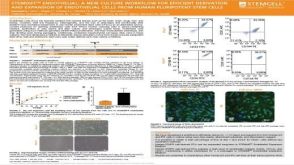 科学海报STEMdiff™ Endothelial: A New Culture Workflow for Efficient Derivation and Expansion of Endothelial Cells From Human Pluripotent Stem Cells
 沪公网安备31010102008431号