Agrawal B et al. (SEP 1998)
Cancer research 58 18 4079--81
Expression of MUC1 mucin on activated human T cells: implications for a role of MUC1 in normal immune regulation.
MUC1 mucin is expressed by normal and malignant epithelial cells and is thought to function through cell-cell interactions and transmembrane signal transduction events. Secreted cancer-associated MUC1 is immunosuppressive and inhibits human T-cell proliferation. We report here that newly synthesized MUC1 is expressed on the surface of mitogen-activated human T cells and is also found in soluble form in the supernatants from cultures of mitogen-activated human T cells. After removal of the mitogenic stimulus from the T-cell cultures,MUC1 expression is downregulated. The addition of anti-MUC1 monoclonal antibody to mitogen-activated cultures partially inhibits the T-cell proliferative response. These data suggest that MUC1 serves an immunodulatory function for human T lymphocytes.
View Publication
产品类型:
产品号#:
01423
产品名:
Mousa SA et al. (MAR 2010)
Cancer Letters 289 2 208--216
Stress resistant human embryonic stem cells as a potential source for the identification of novel cancer stem cell markers
Cancer stem cells are known for their inherent resistance to therapy. Here we investigated whether normal stem cells with acquired resistance to stress can be used to identify novel markers of cancer stem cells. For this,we generated a human embryonic stem cell line resistant to Trichostatin A and analyzed changes in its gene expression. The resistant cells over-expressed various genes associated with tumor aggressiveness,many of which are also expressed in the CD133+ glioma cancer stem cells. These findings suggest that stress-resistant stem cells generated in vitro may be useful for the discovery of novel markers of cancer stem cells.
View Publication
Pirson L et al. (JUL 2006)
Stem cells (Dayton,Ohio) 24 7 1814--21
Despite inhibition of hematopoietic progenitor cell growth in vitro, the tyrosine kinase inhibitor imatinib does not impair engraftment of human CD133+ cells into NOD/SCIDbeta2mNull mice.
There is potential interest for combining allogeneic hematopoietic cell transplantation (HCT),and particularly allogeneic HCT with a nonmyeloablative regimen,to the tyrosine kinase inhibitor imatinib (Glivec; Novartis,Basel,Switzerland,http://www.novartis.com) in order to maximize anti-leukemic activity against Philadelphia chromosome-positive leukemias. However,because imatinib inhibits c-kit,the stem cell factor receptor,it could interfere with bone marrow engraftment. In this study,we examined the impact of imatinib on normal progenitor cell function. Imatinib decreased the colony-forming capacity of mobilized peripheral blood human CD133(+) cells but not that of long-term culture-initiating cells. Imatinib also decreased the proliferation of cytokine-stimulated CD133(+) cells but did not induce apoptosis of these cells. Expression of very late antigen (VLA)-4,VLA-5,and CXCR4 of CD133(+) cells was not modified by imatinib,but imatinib decreased the ability of CD133(+) cells to migrate. Finally,imatinib did not decrease engraftment of CD133(+) cells into irradiated nonobese diabetic/severe combined immunodeficient/beta2m(null) mice conditioned with 3 or 1 Gy total body irradiation. In summary,our results suggest that,despite inhibition of hematopoietic progenitor cell growth in vitro,imatinib does not interfere with hematopoietic stem cell engraftment.
View Publication
Dambrot C et al. (AUG 2014)
Journal of Cellular and Molecular Medicine 18 8 1509--1518
Serum supplemented culture medium masks hypertrophic phenotypes in human pluripotent stem cell derived cardiomyocytes
It has been known for over 20 years that foetal calf serum can induce hypertrophy in cultured cardiomyocytes but this is rarely considered when examining cardiomyocytes derived from pluripotent stem cells (PSC). Here,we determined how serum affected cardiomyocytes from human embryonic- (hESC) and induced pluripotent stem cells (hiPSC) and hiPSC from patients with hypertrophic cardiomyopathy linked to a mutation in the MYBPC3 gene. We first confirmed previously published hypertrophic effects of serum on cultured neonatal rat cardiomyocytes demonstrated as increased cell surface area and beating frequency. We then found that serum increased the cell surface area of hESC- and hiPSC-derived cardiomyocytes and their spontaneous contraction rate. Phenylephrine,which normally induces cardiac hypertrophy,had no additional effects under serum conditions. Likewise,hiPSC-derived cardiomyocytes from three MYBPC3 patients which had a greater surface area than controls in the absence of serum as predicted by their genotype,did not show this difference in the presence of serum. Serum can thus alter the phenotype of human PSC derived cardiomyocytes under otherwise defined conditions such that the effects of hypertrophic drugs and gene mutations are underestimated. It is therefore pertinent to examine cardiac phenotypes in culture media without or in low concentrations of serum.
View Publication
产品类型:
产品号#:
05850
05857
05870
05875
85850
85857
85870
85875
产品名:
mTeSR™1
mTeSR™1
Dang SM et al. (MAY 2002)
Biotechnology and bioengineering 78 4 442--53
Efficiency of embryoid body formation and hematopoietic development from embryonic stem cells in different culture systems.
Embryonic stem (ES) cells have tremendous potential as a cell source for cell-based therapies. Realization of that potential will depend on our ability to understand and manipulate the factors that influence cell fate decisions and to develop scalable methods of cell production. We compared four standard ES cell differentiation culture systems by measuring aspects of embryoid body (EB) formation efficiency and cell proliferation,and by tracking development of a specific differentiated tissue type-blood-using functional (colony-forming cell) and phenotypic (Flk-1 and CD34 expression) assays. We report that individual murine ES cells form EBs with an efficiency of 42 +/- 9%,but this value is rarely obtained because of EB aggregation-a process whereby two or more individual ES cells or EBs fuse to form a single,larger cell aggregate. Regardless of whether EBs were generated from a single ES cell in methylcellulose or liquid suspension culture,or aggregates of ES cells in hanging drop culture,they grew to a similar maximum cell number of 28,000 +/- 9,000 cells per EB. Among the three methods for EB generation in suspension culture there were no differences in the kinetics or frequency of hematopoietic development. Thus,initiating EBs with a single ES cell and preventing EB aggregation should allow for maximum yield of differentiated cells in the EB system. EB differentiation cultures were also compared to attached differentiation culture using the same outputs. Attached colonies were not similarly limited in cell number; however,hematopoietic development in attached culture was impaired. The percentage of early Flk-1 and CD34 expressing cells was dramatically lower than in EBs cultured in suspension,whereas hematopoietic colony formation was almost completely inhibited. These results provide a foundation for development of efficient,scalable bioprocesses for ES cell differentiation,and inform novel methods for the production of hematopoietic tissues.
View Publication
Fibroblast growth factor-1 and -2 preserve long-term repopulating ability of hematopoietic stem cells in serum-free cultures.
In this study,we demonstrate that extended culture of unfractionated mouse bone marrow (BM) cells,in serum-free medium,supplemented only with fibroblast growth factor (FGF)-1,FGF-2,or FGF-1 +2 preserves long-term repopulating hematopoietic stem cells (HSCs). Using competitive repopulation assays,high levels of stem cell activity were detectable at 1,3,and 5 weeks after initiation of culture. FGFs as single growth factors failed to support cultures of highly purified Lin(-)Sca-1(+)c-Kit(+)(LSK) cells. However,cocultures of purified CD45.1 LSK cells with whole BM CD45.2 cells provided high levels of CD45.1 chimerism after transplant,showing that HSC activity originated from LSK cells. Subsequently,we tested the reconstituting potential of cells cultured in FGF-1 + 2 with the addition of early acting stimulatory molecules,stem cell factor +interleukin-11 + Flt3 ligand. The addition of these growth factors resulted in a strong mitogenic response,inducing rapid differentiation and thereby completely overriding FGF-dependent stem cell conservation. Importantly,although HSC activity is typically rapidly lost after short-term culture in vitro,our current protocol allows us to sustain stem cell repopulation potential for periods up to 5 weeks.
View Publication
产品类型:
产品号#:
09600
09650
产品名:
StemSpan™ SFEM
StemSpan™ SFEM
Friedel T et al. (MAR 2016)
Stem cells and development 25 9 729--39
CD30 Receptor-Targeted Lentiviral Vectors for Human Induced Pluripotent Stem Cell-Specific Gene Modification.
Cultures of induced pluripotent stem cells (iPSCs) often contain cells of varying grades of pluripotency. We present novel lentiviral vectors targeted to the surface receptor CD30 (CD30-LV) to transfer genes into iPSCs that are truly pluripotent as demonstrated by marker gene expression. We demonstrate that CD30 expression is restricted to SSEA4high cells of human iPSC cultures and a human embryonic stem cell line. When CD30-LV was added to iPSCs during routine cultivation,efficient and exclusive transduction of cells positive for the pluripotency marker Oct-4 was achieved,while retaining their pluripotency. When added during the reprogramming process,CD30-LV solely transduced cells that became fully reprogrammed iPSCs as confirmed by co-expression of endogenous Nanog and the reporter gene. Thus,CD30-LV may serve as novel tool for the selective gene transfer into pluripotent stem cells with broad applications in basic and therapeutic research.
View Publication
产品类型:
产品号#:
05850
05857
05870
05875
85850
85857
85870
85875
产品名:
mTeSR™1
mTeSR™1
Diekmann U et al. (JAN 2015)
Stem cells and development 24 2 190--204
A reliable and efficient protocol for human pluripotent stem cell differentiation into the definitive endoderm based on dispersed single cells.
Differentiation of pluripotent cells into endoderm-related cell types initially requires in vitro gastrulation into the definitive endoderm (DE). Most differentiation protocols are initiated from colonies of pluripotent cells complicating their adaption due to insufficiently defined starting conditions. The protocol described here was initiated from a defined cell number of dispersed single cells and tested on three different human embryonic stem cell lines and one human induced pluripotent stem cell line. Combined activation of ActivinA/Nodal signaling and GSK3 inhibition for the first 24 h,followed by ActivinA/Nodal signaling efficiently induced the DE state. Activation of ActivinA/Nodal signaling alone was not effective. Efficient GSK3 inhibition allowed the reduction of the ActivinA concentration during the entire protocol. A feeder-independent cultivation of pluripotent cells was preferred to achieve the high efficiency and robustness since feeder cells hindered the differentiation process. Additionally,inhibition of the phosphatidylinositol 3-kinase (PI3K) signaling pathway was not required,nonetheless yielding high cell numbers efficiently committed toward the DE. Finally,the endoderm generated could be differentiated further into PDX1-positive pan-pancreatic cells and NGN3-positive endocrine progenitors. Thus,this efficient and robust DE differentiation protocol is a step forward toward better reproducibility due to the well-defined conditions based on dispersed single cells from feeder-free-cultivated human pluripotent cells.
View Publication
产品类型:
产品号#:
05850
05857
05870
05875
07923
07174
85850
85857
85870
85875
100-0485
100-1077
产品名:
Dispase (1 U/mL)
mTeSR™1
mTeSR™1
温和细胞解离试剂
ReLeSR™
Shirato K et al. ( 2017)
Virology November 0--1
Wild-type human coronaviruses prefer cell-surface TMPRSS2 to endosomal cathepsins for cell entry
Human coronaviruses (HCoVs) enter cells via two distinct pathways: the endosomal pathway using cathepsins to activate spike protein and the cell-surface or early endosome pathway using extracellular proteases such as transmembrane protease serine 2 (TMPRSS2). We previously reported that clinical isolates of HCoV-229E preferred cell-surface TMPRSS2 to endosomal cathepsin for cell entry,and that they acquired the ability to use cathepsin L by repeated passage in cultured cells and were then able to enter cells via the endosomal pathway. Here,we show that clinical isolates of HCoV-OC43 and -HKU1 preferred the cell-surface TMRRSS2 to endosomal cathepsins for cell entry,similar to HCoV-229E. In addition,the cell-culture-adapted HCoV-OC43 lost the ability to infect and replicate in air-liquid interface cultures of human bronchial tracheal epithelial cells. These results suggest that circulating HCoVs in the field generally use cell-surface TMPRSS2 for cell entry,not endosomal cathepsins,in human airway epithelial cells.
View Publication


 EasySep™小鼠TIL(CD45)正选试剂盒




 技术公告Generation of Erythroblasts from Pluripotent Stem Cells Using STEMdiff™ Media and Supplements
 科学海报STEMdiff Cerebral Organoid Kit: A New Tool for the Culture of 3D Brain Organoids Derived from Human Pluripotent Stem Cells
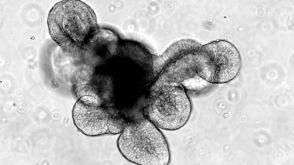 新闻The HUB Foundation for Organoid Technology and STEMCELL Technologies Sign Agreement on the Manufacturing of Cell Culture Media for Organoids
 沪公网安备31010102008431号