Corton JM et al. (APR 1995)
European journal of biochemistry / FEBS 229 2 558--65
5-aminoimidazole-4-carboxamide ribonucleoside. A specific method for activating AMP-activated protein kinase in intact cells?
The AMP-activated protein kinase (AMPK) is believed to protect cells against environmental stress (e.g. heat shock) by switching off biosynthetic pathways,the key signal being elevation of AMP. Identification of novel targets for the kinase cascade would be facilitated by development of a specific agent for activating the kinase in intact cells. Incubation of rat hepatocytes with 5-aminoimidazole-4-carboxamide ribonucleoside (AICAR) results in accumulation of the monophosphorylated derivative (5-aminoimidazole-4-carboxamide ribonucleoside; ZMP) within the cell. ZMP mimics both activating effects of AMP on AMPK,i.e. direct allosteric activation and promotion of phosphorylation by AMPK kinase. Unlike existing methods for activating AMPK in intact cells (e.g. fructose,heat shock),AICAR does not perturb the cellular contents of ATP,ADP or AMP. Incubation of hepatocytes with AICAR activates AMPK due to increased phosphorylation,causes phosphorylation and inactivation of a known target for AMPK (3-hydroxy-3-methylglutaryl-CoA reductase),and almost total cessation of two of the known target pathways,i.e. fatty acid and sterol synthesis. Incubation of isolated adipocytes with AICAR antagonizes isoprenaline-induced lipolysis. This provides direct evidence that the inhibition by AMPK of activation of hormone-sensitive lipase by cyclic-AMP-dependent protein kinase,previously demonstrated in cell-free assays,also operates in intact cells. AICAR should be a useful tool for identifying new target pathways and processes regulated by the protein kinase cascade.
View Publication
产品类型:
产品号#:
72704
产品名:
AICAR
Yen J et al. (JUL 2013)
Biomaterials Science 1 7 719--727
Cationic, helical polypeptide-based gene delivery for IMR-90 fibroblasts and human embryonic stem cells
Diblock copolymers consisting of poly(ethylene glycol)-block-poly(γ-4-(((2-(piperidin-1-yl)ethyl)amino)methyl)benzyl-l-glutamate) (PEG-b-PVBLG-8) were synthesized and evaluated for their ability to mediate gene delivery in hard-to-transfect cells like IMR-90 human fetal lung fibroblasts and human embryonic s
View Publication
产品类型:
产品号#:
85850
85857
产品名:
mTeSR™1
mTeSR™1
Putnam AL et al. (NOV 2013)
American journal of transplantation : official journal of the American Society of Transplantation and the American Society of Transplant Surgeons 13 11 3010--20
Clinical grade manufacturing of human alloantigen-reactive regulatory T cells for use in transplantation.
Regulatory T cell (Treg) therapy has the potential to induce transplantation tolerance so that immunosuppression and associated morbidity can be minimized. Alloantigen-reactive Tregs (arTregs) are more effective at preventing graft rejection than polyclonally expanded Tregs (PolyTregs) in murine models. We have developed a manufacturing process to expand human arTregs in short-term cultures using good manufacturing practice-compliant reagents. This process uses CD40L-activated allogeneic B cells to selectively expand arTregs followed by polyclonal restimulation to increase yield. Tregs expanded 100- to 1600-fold were highly alloantigen reactive and expressed the phenotype of stable Tregs. The alloantigen-expanded Tregs had a diverse TCR repertoire. They were more potent than PolyTregs in vitro and more effective at controlling allograft injuries in vivo in a humanized mouse model.
View Publication
产品类型:
产品号#:
07930
07931
07940
07952
07955
07959
100-1061
产品名:
CryoStor® CS10
CryoStor® CS10
CryoStor® CS10
CryoStor® CS10
CryoStor® CS10
CryoStor® CS10
CryoStor® CS10
Jiang G et al. (SEP 2014)
Tissue engineering. Part C,Methods 20 9 731--740
Induced pluripotent stem cells from human placental chorion for perinatal tissue engineering applications.
The reliable derivation of induced pluripotent stem cells (iPSCs) from a noninvasive autologous source at birth would facilitate the study of patient-specific in vitro modeling of congenital diseases and would enhance ongoing efforts aimed at developing novel cell-based treatments for a wide array of fetal and pediatric disorders. Accordingly,we have successfully generated iPSCs from human fetal chorionic somatic cells extracted from term pregnancies by ectopic expression of OCT4,SOX2,KLF4,and cMYC. The isolated parental somatic cells exhibited an immunophenotypic profile consistent with that of chorionic mesenchymal stromal cells (CMSCs). CMSC-iPSCs maintained pluripotency in feeder-free systems for more than 15 passages based on morphology,immunocytochemistry,and gene expression studies and were capable of embryoid body formation with spontaneous trilineage differentiation. CMSC-iPSCs could be selectively differentiated in vitro into various germ layer derivatives,including neural stem cells,beating cardiomyocytes,and definitive endoderm. This study demonstrates the feasibility of term placental chorion as a novel noninvasive alternative to dermal fibroblasts and cord blood for human perinatal iPSC derivation and may provide additional insights regarding the reprogramming capabilities of extra-embryonic tissues as they relate to developmental ontogeny and perinatal tissue engineering applications.
View Publication
产品类型:
产品号#:
85850
85857
产品名:
mTeSR™1
mTeSR™1
Sullivan JP et al. (DEC 2010)
Cancer research 70 23 9937--48
Aldehyde dehydrogenase activity selects for lung adenocarcinoma stem cells dependent on notch signaling.
Aldehyde dehydrogenase (ALDH) is a candidate marker for lung cancer cells with stem cell-like properties. Immunohistochemical staining of a large panel of primary non-small cell lung cancer (NSCLC) samples for ALDH1A1,ALDH3A1,and CD133 revealed a significant correlation between ALDH1A1 (but not ALDH3A1 or CD133) expression and poor prognosis in patients including those with stage I and N0 disease. Flow cytometric analysis of a panel of lung cancer cell lines and patient tumors revealed that most NSCLCs contain a subpopulation of cells with elevated ALDH activity,and that this activity is associated with ALDH1A1 expression. Isolated ALDH(+) lung cancer cells were observed to be highly tumorigenic and clonogenic as well as capable of self-renewal compared with their ALDH(-) counterparts. Expression analysis of sorted cells revealed elevated Notch pathway transcript expression in ALDH(+) cells. Suppression of the Notch pathway by treatment with either a γ-secretase inhibitor or stable expression of shRNA against NOTCH3 resulted in a significant decrease in ALDH(+) lung cancer cells,commensurate with a reduction in tumor cell proliferation and clonogenicity. Taken together,these findings indicate that ALDH selects for a subpopulation of self-renewing NSCLC stem-like cells with increased tumorigenic potential,that NSCLCs harboring tumor cells with ALDH1A1 expression have inferior prognosis,and that ALDH1A1 and CD133 identify different tumor subpopulations. Therapeutic targeting of the Notch pathway reduces this ALDH(+) component,implicating Notch signaling in lung cancer stem cell maintenance.
View Publication
Differential susceptibility and role for senescence in CART cells based on costimulatory domains
Despite the success of chimeric antigen receptor T (CART) cell therapy in hematological malignancies,durable remissions remain low. Here,we report CART senescence as a potential resistance mechanism in 41BB-costimulated CART cell therapy. To mimic cancer relapse,we utilized an in vitro model with repeated CART cell activation cycles followed by rest periods. Using CD19-targeted CART cells with costimulation via 4-1BB-CD3ζ (BBζ) or CD28-CD3ζ (28ζ),we showed that CART cells undergo functional,phenotypical,and transcriptomic changes of senescence,which is more prominent in BBζ. We then utilized two additional independent strategies to induce senescence through MYC activation and irradiation. Induction of senescence impaired BBζ activity but improved 28ζ activity in preclinical studies. These findings were supported by analyses of independent patient data sets; senescence signatures in CART cell products were associated with non-response to BBζ but with improved clinical outcomes in 28ζ treatment. In summary,our study identifies senescence as a potential mechanism of failure predominantly in 41BB-costimulated CART cells.Supplementary InformationThe online version contains supplementary material available at 10.1186/s12943-025-02371-1. SignificanceWe identified senescence as a cause of failure in CART cell therapy,predominantly in 4-1BB-costimulated CART cells.Supplementary InformationThe online version contains supplementary material available at 10.1186/s12943-025-02371-1.
View Publication
产品类型:
产品号#:
17951
100-0695
17951RF
产品名:
EasySep™人T细胞分选试剂盒
EasySep™人T细胞分选试剂盒
RoboSep™ 人T细胞分选试剂盒
Bieback K et al. (JAN 2004)
Stem cells (Dayton,Ohio) 22 4 625--34
Critical parameters for the isolation of mesenchymal stem cells from umbilical cord blood.
Evidence has emerged that mesenchymal stem cells (MSCs) represent a promising population for supporting new clinical concepts in cellular therapy. However,attempts to isolate MSCs from umbilical cord blood (UCB) of full-term deliveries have previously either failed or been characterized by a low yield. We investigated whether cells with MSC characteristics and multi-lineage differentiation potential can be cultivated from UCB of healthy newborns and whether yields might be maximized by optimal culture conditions or by defining UCB quality criteria. Using optimized isolation and culture conditions,in up to 63% of 59 low-volume UCB units,cells showing a characteristic mesenchymal morphology and immune phenotype (MSC-like cells) were isolated. These were similar to control MSCs from adult bone marrow (BM). The frequency of MSC-like cells ranged from 0 to 2.3 clones per 1 x 10(8) mononuclear cells (MNCs). The cell clones proliferated extensively with at least 20 population doublings within eight passages. In addition,osteogenic and chondrogenic differentiation demonstrated a multi-lineage capacity comparable with BM MSCs. However,in contrast to MSCs,MSC-like cells showed a reduced sensitivity to undergo adipogenic differentiation. Crucial points to isolate MSC-like cells from UCB were a time from collection to isolation of less than 15 hours,a net volume of more than 33 ml,and an MNC count of more than 1 x 10(8) MNCs. Because MSC-like cells can be isolated at high efficacy from full-term UCB donations,we regard UCB as an additional stem cell source for experimental and potentially clinical purposes.
View Publication
Molecular basis for an attenuated cytoplasmic dsRNA response in human embryonic stem cells
The introduction of double stranded RNA (dsRNA) into the cytoplasm of mammalian cells usually leads to a potent antiviral response resulting in the rapid induction of interferon beta (IFNβ). This response can be mediated by a number of dsRNA sensors,including TLR3,MDA5,RIG-I and PKR. We show here that pluripotent human cells (human embryonic stem (hES) cells and induced pluripotent (iPS) cells) do not induce interferon in response to cytoplasmic dsRNA,and we have used a variety of approaches to learn the underlying basis for this phenomenon. Two major cytoplasmic dsRNA sensors,TLR3 and MDA5,are not expressed in hES cells and iPS cells. PKR is expressed in hES cells,but is not activated by transfected dsRNA. In addition,RIG-I is expressed,but fails to respond to dsRNA because its signaling adapter,MITA/STING,is not expressed. Finally,the interferon-inducible RNAse L and oligoadenylate synthetase enzymes are also expressed at very low levels. Upon differentiation of hES cells into trophoblasts,cells acquire the ability to respond to dsRNA and this correlates with a significant induction of expression of TLR3 and its adaptor protein TICAM-1/TRIF. Taken together,our results reveal that the lack of an interferon response may be a general characteristic of pluripotency and that this results from the systematic downregulation of a number of genes involved in cytoplasmic dsRNA signaling.
View Publication
产品类型:
产品号#:
85850
85857
产品名:
mTeSR™1
mTeSR™1
Zhu W-Z et al. ( 2011)
Methods in molecular biology (Clifton,N.J.) 767 419--31
Methods for the derivation and use of cardiomyocytes from human pluripotent stem cells.
The availability of human cardiomyocytes derived from embryonic stem cells (ESCs) has generated -considerable excitement,as these cells are an excellent model system for studying myocardial development and may have eventual application in cell-based cardiac repair. Cardiomyocytes derived from the related induced pluripotent stem cells (iPSCs) have similar properties,but also offer the prospects of patient-specific disease modeling and cell therapies. Unfortunately,the methods by which cardiomyocytes have been historically generated from pluripotent stem cells are unreliable and typically result in preparations of low cardiac purity (typically textless1% cardiomyocytes). We detail here the methods for a recently reported directed cardiac differentiation protocol,which involves the serial application of two growth factors known to be involved in early embryonic heart development,activin A,and bone morphogenetic protein-4 (BMP-4). This protocol reliably yields preparations of 30-60% cardiomyocytes,which can then be further enriched to textgreater90% cardiomyocytes using straightforward physical methods.
View Publication
Activation of JNKs is essential for BMP9-induced osteogenic differentiation of mesenchymal stem cells.
Although BMP9 is highly capable of promoting osteogenic differentiation of mesenchymal stem cell (MSCs),the molecular mechanism involved remains to be fully elucidated. Here,we explore the possible involvement and detail role of JNKs (c-Jun N-terminal kinases) in BMP9-induced osteogenic differentiation of MSCs. It was found that BMP9 stimulated the activation of JNKs in MSCs. BMP9-induced osteogenic differentiation of MSCs was dramatically inhibited by JNKs inhibitor SP600125. Moreover,BMP9-activated Smads signaling was decreased by SP600125 treatment in MSCs. The effects of inhibitor are reproduced with adenoviruses expressing siRNA targeted JNKs. Taken together,our results revealed that JNKs was activated in BMP9-induced osteogenic differentiation of MSCs. What is most noteworthy,however,is that inhibition of JNKs activity resulted in reduction of BMP9-induced osteogenic differentiation of MSCs,implying that activation of JNKs is essential for BMP9 osteoinductive activity.
View Publication


 EasySep™小鼠TIL(CD45)正选试剂盒




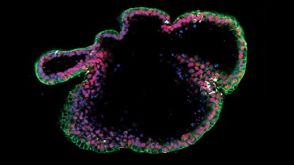 实验方案How to Prepare Single Cells from PSC-Derived Epithelial Cultures for Flow Cytometry Analysis
 47:14
线上讲座Online Immunology Journal Club: Expanding the Therapeutic Tool Kit for CAR T Cells发布日期: 06/16/2020
47:14
线上讲座Online Immunology Journal Club: Expanding the Therapeutic Tool Kit for CAR T Cells发布日期: 06/16/2020
 沪公网安备31010102008431号