Tropel P et al. (MAY 2017)
Stem cells and development
CpG island methylation correlates with the use of alternative promoter for USP44 gene expression in human pluripotent stem cells and testis.
Deubiquitinating enzymes may play a major regulatory role in pluripotent stem cells (PSCs) but few studies have investigated this topic. Within this family of enzymes,we found that the ubiquitin specific peptidase,USP44,is highly expressed in embryonic stem cells,induced PSCs and testes as compared to differentiated progenies and somatic organs. Analysis by qPCR and 5'RACE showed that alternate promoters are responsible for expression in PSCs and organs. We noticed 7 regions of transcription initiation,some of them with cell- or tissue-specific activity. Close analysis showed that one of the promoters involved in stem cell and testis-specific activity is differentially regulated in those tissues. At the epigenetic level,USP44 transcription was correlated with DNA methylation of a CpG island close to the main promoter region. These data imply a complex picture where regulating factors like OCT4 may interact with other epigenetic mechanisms to regulate USP44 expression in PSCs and testes.
View Publication
产品类型:
产品号#:
05850
05857
05870
05875
85850
85857
85870
85875
产品名:
mTeSR™1
mTeSR™1
K. Zhang et al. ( 2020)
International journal of nanomedicine 15 2859--2872
Topical Application of Exosomes Derived from Human Umbilical Cord Mesenchymal Stem Cells in Combination with Sponge Spicules for Treatment of Photoaging.
Purpose The topical application of exosomes secreted by mesenchymal stem cells (MSC-Exos) on the skin is a very new and interesting topic in the medical field. In this study,we aimed to investigate whether marine sponge Haliclona sp. spicules (SHSs) could effectively enhance the skin delivery of human umbilical cord-derived MSC-Exos (hucMSC-Exos),and further evaluate the topical application of hucMSC-Exos combined with SHSs in rejuvenating photoaged mouse skin. Materials and Methods SHSs were isolated from the explants of sponge Haliclona sp. with our proprietary method,and hucMSC-Exos were prepared from the conditioned medium of hucMSCs using ultracentrifugation. The effects of SHSs on the skin penetration of fluorescently labeled hucMSC-Exos were determined using confocal microscopy in vitro (porcine skin) and in vivo (mouse skin). The therapeutic effects of hucMSC-Exos coupled with SHSs against UV-induced photoaging in mice were assessed by using microwrinkles analysis,pathohistological examination and real-time RT-PCR. We also tested the skin irritation caused by the combination of hucMSC-Exos and SHSs in guinea pigs. Results In vitro results showed that hucMSC-Exos could not readily penetrate through porcine skin by themselves. However,SHSs increased the skin absorption of exosomes by a factor of 5.87 through creating microchannels. Similar penetration enhancement of hucMSC-Exos was observed after SHSs treatment in mice. The combined use of hucMSC-Exos and SHSs showed significant anti-photoaging effects in mice,including reducing microwrinkles,alleviating histopathological changes,and promoting the expression of extracellular matrix constituents,whereas hucMSC-Exos alone produced considerably weaker effects. Skin irritation test showed that the combination of hucMSC-Exos and SHSs caused slight irritation,and the skin recovered shortly. Conclusion SHSs provide a safe and effective way to enhance the skin delivery of MSC-Exos. Moreover,the combination of MSC-Exos and SHSs may be of much use in the treatment of photoaging.
View Publication
产品类型:
产品号#:
05445
05448
产品名:
MesenCult™ -ACF Plus培养基
MesenCult™-ACF Plus培养试剂盒
Huber BC et al. (NOV 2013)
STEM CELLS 31 11 2354--2363
Costimulation-adhesion blockade is superior to Cyclosporine A and prednisone immunosuppressive therapy for preventing rejection of differentiated human embryonic stem cells following transplantation
RATIONALE: Human embryonic stem cell (hESC) derivatives are attractive candidates for therapeutic use. The engraftment and survival of hESC derivatives as xenografts or allografts require effective immunosuppression to prevent immune cell infiltration and graft destruction.backslashnbackslashnOBJECTIVE: To test the hypothesis that a short-course,dual-agent regimen of two costimulation-adhesion blockade agents can induce better engraftment of hESC derivatives compared to current immunosuppressive agents.backslashnbackslashnMETHODS AND RESULTS: We transduced hESCs with a double fusion reporter gene construct expressing firefly luciferase (Fluc) and enhanced green fluorescent protein,and differentiated these cells to endothelial cells (hESC-ECs). Reporter gene expression enabled longitudinal assessment of cell engraftment by bioluminescence imaging. Costimulation-adhesion therapy resulted in superior hESC-EC and mouse EC engraftment compared to cyclosporine therapy in a hind limb model. Costimulation-adhesion therapy also promoted robust hESC-EC and hESC-derived cardiomyocyte survival in an ischemic myocardial injury model. Improved hESC-EC engraftment had a cardioprotective effect after myocardial injury,as assessed by magnetic resonance imaging. Mechanistically,costimulation-adhesion therapy is associated with systemic and intragraft upregulation of T-cell immunoglobulin and mucin domain 3 (TIM3) and a reduced proinflammatory cytokine profile.backslashnbackslashnCONCLUSIONS: Costimulation-adhesion therapy is a superior alternative to current clinical immunosuppressive strategies for preventing the post-transplant rejection of hESC derivatives. By extending the window for cellular engraftment,costimulation-adhesion therapy enhances functional preservation following ischemic injury. This regimen may function through a TIM3-dependent mechanism.
View Publication
产品类型:
产品号#:
05850
05857
05870
05875
85850
85857
85870
85875
产品名:
mTeSR™1
mTeSR™1
Wu J et al. (APR 2015)
Stem cells and development 24 7 892--903
Increased culture density is linked to decelerated proliferation, prolonged G1 phase, and enhanced propensity for differentiation of self-renewing human pluripotent stem cells.
Human pluripotent stem cells (hPSCs) display a very short G1 phase and rapid proliferation kinetics. Regulation of the cell cycle,which is linked to pluripotency and differentiation,is dependent on the stem cell environment,particularly on culture density. This link has been so far empirical and central to disparities in the growth rates and fractions of self-renewing hPSCs residing in different cycle phases. In this study,hPSC cycle progression in conjunction with proliferation and differentiation were comprehensively investigated for different culture densities. Cell proliferation decelerated significantly at densities beyond 50×10(4) cells/cm(2). Correspondingly,the G1 fraction increased from 25% up to 60% at densities greater than 40×10(4) cells/cm(2) while still hPSC pluripotency marker expression was maintained. In parallel,expression of the cycle inhibitor CDKN1A (p21) was increased,while that of p27 and p53 did not change significantly. After 4 days of culture in an unconditioned medium,greater heterogeneity was noted in the differentiation outcomes and was limited by reducing the density variation. A quantitative model was constructed for self-renewing and differentiating hPSC ensembles to gain a better understanding of the link between culture density,cycle progression,and stem cell state. Results for multiple hPSC lines and medium types corroborated experimental findings. Media commonly used for maintenance of self-renewing hPSCs exhibited the slowest kinetics of induction of differentiation (kdiff),while BMP4 supplementation led to 14-fold higher kdiff values. Spontaneous differentiation in a growth factor-free medium exhibited the largest variation in outcomes at different densities. In conjunction with the quantitative framework,our findings will facilitate rationalizing the selection of cultivation conditions for the generation of stem cell therapeutics.
View Publication
产品类型:
产品号#:
05850
05857
05870
05875
05916
85850
85857
85870
85875
产品名:
TeSR™-E5
mTeSR™1
mTeSR™1
Baksh D et al. (NOV 2005)
Blood 106 9 3012--9
Soluble factor cross-talk between human bone marrow-derived hematopoietic and mesenchymal cells enhances in vitro CFU-F and CFU-O growth and reveals heterogeneity in the mesenchymal progenitor cell compartment.
The homeostatic adult bone marrow (BM) is a complex tissue wherein physical and biochemical interactions serve to maintain a balance between the hematopoietic and nonhematopoietic compartments. To focus on soluble factor interactions occurring between mesenchymal and hematopoietic cells,a serum-free adhesion-independent culture system was developed that allows manipulation of the growth of both mesenchymal and hematopoietic human BM-derived progenitors and the balance between these compartments. Factorial experiments demonstrated a role for stem cell factor (SCF) and interleukin 3 (IL-3) in the concomitant growth of hematopoietic (CD45+) and nonhematopoietic (CD45-) cells,as well as their derivatives. Kinetic tracking of IL-3alpha receptor (CD123) and SCF receptor (CD117) expression on a sorted CD45- cell population revealed the emergence of CD45-CD123+ cells capable of osteogenesis. Of the total fibroblast colony-forming units (CFU-Fs) and osteoblast colony-forming units (CFU-O),approximately 24% of CFU-Fs and about 22% of CFU-Os were recovered from this population. Cell-sorting experiments demonstrated that the CD45+ cell population secreted soluble factors that positively affect the survival and proliferation of CFU-Fs and CFU-Os generated from the CD45- cells. Together,our results provide insight into the intercellular cytokine network between hematopoietic and mesenchymal cells and provide a strategy to mutually culture both mesenchymal and hematopoietic cells in a defined scalable bioprocess.
View Publication
产品类型:
产品号#:
09850
产品名:
L. Li et al. (OCT 2018)
Cell metabolism
TLR8-Mediated Metabolic Control of Human Treg Function: A Mechanistic Target for Cancer Immunotherapy.
Regulatory T (Treg) cells induce an immunosuppressive microenvironment that is a major obstacle for successful tumor immunotherapy. Dissecting the regulatory mechanisms between energy metabolism and functionality in Treg cells will provide insight toward developing novel immunotherapies against cancer. Here we report that human naturally occurring and tumor-associated Treg cells exhibit distinct metabolic profiles with selectivity for glucose metabolism compared with effector T cells. Treg-mediated accelerated glucose consumption induces cellular senescence and suppression of responder T cells through cross-talk. TLR8 signaling selectively inhibits glucose uptake and glycolysis in human Treg cells,resulting in reversal of Treg suppression. Importantly,TLR8 signaling-mediated reprogramming of glucose metabolism and function in human Treg cells can enhance anti-tumor immunity in vivo in a melanoma adoptive transfer T cell therapy model. Our studies identify mechanistic links between innate signaling and metabolic regulation of human Treg suppression,which may be used as a strategy to advance tumor immunotherapy.
View Publication
产品类型:
产品号#:
产品名:
Huang EH et al. (APR 2009)
Cancer research 69 8 3382--9
Aldehyde dehydrogenase 1 is a marker for normal and malignant human colonic stem cells (SC) and tracks SC overpopulation during colon tumorigenesis.
Although the concept that cancers originate from stem cells (SC) is becoming scientifically accepted,mechanisms by which SC contribute to tumor initiation and progression are largely unknown. For colorectal cancer (CRC),investigation of this problem has been hindered by a paucity of specific markers for identification and isolation of SC from normal and malignant colon. Accordingly,aldehyde dehydrogenase 1 (ALDH1) was investigated as a possible marker for identifying colonic SC and for tracking them during cancer progression. Immunostaining showed that ALDH1(+) cells are sparse and limited to the normal crypt bottom,where SCs reside. During progression from normal epithelium to mutant (APC) epithelium to adenoma,ALDH1(+) cells increased in number and became distributed farther up the crypt. CD133(+) and CD44(+) cells,which are more numerous and broadly distributed in normal crypts,showed similar changes during tumorigenesis. Flow cytometric isolation of cancer cells based on enzymatic activity of ALDH (Aldefluor assay) and implantation of these cells in nonobese diabetic-severe combined immunodeficient mice (a) generated xenograft tumors (Aldefluor(-) cells did not),(b) generated them after implanting as few as 25 cells,and (c) generated them dose dependently. Further isolation of cancer cells using a second marker (CD44(+) or CD133(+) serially) only modestly increased enrichment based on tumor-initiating ability. Thus,ALDH1 seems to be a specific marker for identifying,isolating,and tracking human colonic SC during CRC development. These findings also support our original hypothesis,derived previously from mathematical modeling of crypt dynamics,that progressive colonic SC overpopulation occurs during colon tumorigenesis and drives CRC development.
View Publication
产品类型:
产品号#:
01700
01705
01702
产品名:
ALDEFLUOR™ 试剂盒
ALDEFLUOR™ DEAB试剂, 1.5 mM, 1 mL
ALDEFLUOR™检测缓冲液
Prasain N et al. (NOV 2014)
Nature biotechnology 32 11 1151--1157
Differentiation of human pluripotent stem cells to cells similar to cord-blood endothelial colony-forming cells.
The ability to differentiate human pluripotent stem cells into endothelial cells with properties of cord-blood endothelial colony-forming cells (CB-ECFCs) may enable the derivation of clinically relevant numbers of highly proliferative blood vessel-forming cells to restore endothelial function in patients with vascular disease. We describe a protocol to convert human induced pluripotent stem cells (hiPSCs) or embryonic stem cells (hESCs) into cells similar to CB-ECFCs at an efficiency of textgreater10(8) ECFCs produced from each starting pluripotent stem cell. The CB-ECFC-like cells display a stable endothelial phenotype with high clonal proliferative potential and the capacity to form human vessels in mice and to repair the ischemic mouse retina and limb,and they lack teratoma formation potential. We identify Neuropilin-1 (NRP-1)-mediated activation of KDR signaling through VEGF165 as a critical mechanism for the emergence and maintenance of CB-ECFC-like cells.
View Publication
产品类型:
产品号#:
05850
05857
05870
05875
85850
85857
85870
85875
产品名:
mTeSR™1
mTeSR™1
Carlson AL et al. (AUG 2012)
FASEB journal : official publication of the Federation of American Societies for Experimental Biology 26 8 3240--51
Microfibrous substrate geometry as a critical trigger for organization, self-renewal, and differentiation of human embryonic stem cells within synthetic 3-dimensional microenvironments.
Substrates used to culture human embryonic stem cells (hESCs) are typically 2-dimensional (2-D) in nature,with limited ability to recapitulate in vivo-like 3-dimensional (3-D) microenvironments. We examined critical determinants of hESC self-renewal in poly-d-lysine-pretreated synthetic polymer-based substrates with variable microgeometries,including planar 2-D films,macroporous 3-D sponges,and microfibrous 3-D fiber mats. Completely synthetic 2-D substrates and 3-D macroporous scaffolds failed to retain hESCs or support self-renewal or differentiation. However,synthetic microfibrous geometries made from electrospun polymer fibers were found to promote cell adhesion,viability,proliferation,self-renewal,and directed differentiation of hESCs in the absence of any exogenous matrix proteins. Mechanistic studies of hESC adhesion within microfibrous scaffolds indicated that enhanced cell confinement in such geometries increased cell-cell contacts and altered colony organization. Moreover,the microfibrous scaffolds also induced hESCs to deposit and organize extracellular matrix proteins like laminin such that the distribution of laminin was more closely associated with the cells than the Matrigel treatment,where the laminin remained associated with the coated fibers. The production of and binding to laminin was critical for formation of viable hESC colonies on synthetic fibrous scaffolds. Thus,synthetic substrates with specific 3-D microgeometries can support hESC colony formation,self-renewal,and directed differentiation to multiple lineages while obviating the stringent needs for complex,exogenous matrices. Similar scaffolds could serve as tools for developmental biology studies in 3-D and for stem cell differentiation in situ and transplantation using defined humanized conditions.
View Publication
产品类型:
产品号#:
05850
05857
05870
05875
85850
85857
85870
85875
产品名:
mTeSR™1
mTeSR™1
Wang L-S et al. (FEB 2010)
Biomaterials 31 6 1148--57
Injectable biodegradable hydrogels with tunable mechanical properties for the stimulation of neurogenesic differentiation of human mesenchymal stem cells in 3D culture.
We report an injectable hydrogel scaffold system with tunable stiffness for controlling the proliferation rate and differentiation of human mesenchymal stem cells (hMSCs) in a three-dimensional (3D) context in normal growth media. The hydrogels composed of gelatin-hydroxyphenylpropionic acid (Gtn-HPA) conjugate were formed using the oxidative coupling of HPA moieties catalyzed by hydrogen peroxide (H(2)O(2)) and horseradish peroxidase (HRP). The stiffness of the hydrogels was readily tuned by varying the H(2)O(2) concentration without changing the concentration of polymer precursor. We found that the hydrogel stiffness strongly affected the cell proliferation rates. The rate of hMSC proliferation increased with the decrease in the stiffness of the hydrogel. Also,the neurogenesis of hMSCs was controlled by the hydrogel stiffness in a 3D context without the use of any additional biochemical signal. These cells which were cultured in hydrogels with lower stiffness for 3 weeks expressed much more neuronal protein markers compared to those cultured within stiffer hydrogels for the same period of time.
View Publication
B. L. Jamison et al. (jul 2019)
Journal of immunology (Baltimore,Md. : 1950) 203 1 48--57
Nanoparticles Containing an Insulin-ChgA Hybrid Peptide Protect from Transfer of Autoimmune Diabetes by Shifting the Balance between Effector T Cells and Regulatory T Cells.
CD4 T cells play a critical role in promoting the development of autoimmunity in type 1 diabetes. The diabetogenic CD4 T cell clone BDC-2.5,originally isolated from a NOD mouse,has been widely used to study the contribution of autoreactive CD4 T cells and relevant Ags to autoimmune diabetes. Recent work from our laboratory has shown that the Ag for BDC-2.5 T cells is a hybrid insulin peptide (2.5HIP) consisting of an insulin C-peptide fragment fused to a peptide from chromogranin A (ChgA) and that endogenous 2.5HIP-reactive T cells are major contributors to autoimmune pathology in NOD mice. The objective of this study was to determine if poly(lactide-co-glycolide) (PLG) nanoparticles (NPs) loaded with the 2.5HIP Ag (2.5HIP-coupled PLG NPs) can tolerize BDC-2.5 T cells. Infusion of 2.5HIP-coupled PLG NPs was found to prevent diabetes in an adoptive transfer model by impairing the ability of BDC-2.5 T cells to produce proinflammatory cytokines through induction of anergy,leading to an increase in the ratio of Foxp3+ regulatory T cells to IFN-gamma+ effector T cells. To our knowledge,this work is the first to use a hybrid insulin peptide,or any neoepitope,to re-educate diabetogenic T cells and may have significant implications for the development of an Ag-specific therapy for type 1 diabetes patients.
View Publication


 EasySep™小鼠TIL(CD45)正选试剂盒




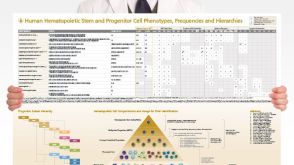 挂图Human Hematopoietic Stem and Progenitor Cell Phenotyping Overview of subset surface markers, frequencies and assays for analysis
 沪公网安备31010102008431号