Y. Kuwano et al. (MAY 2016)
Journal of Immunology 196 9 3828--33
G$\alpha$i2 and G$\alpha$i3 Differentially Regulate Arrest from Flow and Chemotaxis in Mouse Neutrophils.
Leukocyte recruitment to inflammation sites progresses in a multistep cascade. Chemokines regulate multiple steps of the cascade,including arrest,transmigration,and chemotaxis. The most important chemokine receptor in mouse neutrophils is CXCR2,which couples through G$\alpha$i2- and G$\alpha$i3-containing heterotrimeric G proteins. Neutrophils arrest in response to CXCR2 stimulation. This is defective in G$\alpha$i2-deficient neutrophils. In this study,we show that G$\alpha$i3-deficient neutrophils showed reduced transmigration but normal arrest in mice. We also tested G$\alpha$i2- or G$\alpha$i3-deficient neutrophils in a CXCL1 gradient generated by a microfluidic device. G$\alpha$i3-,but not G$\alpha$i2-,deficient neutrophils showed significantly reduced migration and directionality. This was confirmed in a model of sterile inflammation in vivo. G$\alpha$i2-,but not G$\alpha$i3-,deficient neutrophils showed decreased Ca(2+) flux in response to CXCR2 stimulation. Conversely,G$\alpha$i3-,but not G$\alpha$i2-,deficient neutrophils exhibited reduced AKT phosphorylation upon CXCR2 stimulation. We conclude that G$\alpha$i2 controls arrest and G$\alpha$i3 controls transmigration and chemotaxis in response to chemokine stimulation of neutrophils.
View Publication
产品类型:
产品号#:
19762
19762RF
20155
产品名:
EasySep™小鼠中性粒细胞富集试剂盒
RoboSep™ 小鼠中性粒细胞富集试剂盒含滤芯吸头
RoboSep™分选试管套装(9个塑料管+吸头保护器)
(Jul 2025)
Nature Communications 16
Suppression of multiple mouse models of refractory malignancies by reprogramming IL-18 ligand-receptor interaction
Achieving a cure is an urgent need for patients with advanced solid tumors. Here,we discover that oncolytic virus (OV) infection enhances IL-18 receptor expression but fails to increase IL-18 ligand expression. Therefore,we engineer armed oncolytic alphavirus M1 expressing wild-type IL-18 (wtIL-18) or a mutant variant (mutIL-18) that evades IL-18 binding protein (IL-18BP) while maintaining IL-18 receptor (IL-18R) binding. Intravenous administration of M1-mutIL-18 suppresses the growth of multiple advanced solid tumors in C57BL/6 and BALB/c mouse models and promotes long-term systemic immune memory. Mechanistically,armed M1-mutIL-18 enhances directed clonal expansion and differentiation of CD8+ T cells and sustains IFN-γ production. Thus,armed M1-mutIL-18 promotes dendritic cell (DC) activation,priming and activation of CD8+ T cells in lymphatic organs,and infiltration of IL-18R+ CD8+ T cells in the tumor microenvironment,establishing a positive feedback loop. We further show that a PD-L1 inhibitor enhances the anti-tumor efficacy of mutIL-18 OVs. These results highlight the importance of the IL-18 pathway in oncolytic virus therapy and implicate reprogramming ligand-receptor interaction as an effective strategy for immunotherapy. Immunotherapy holds great potential,although strategies for durable responses against solid tumors are still needed. Here,the authors combine oncolytic virus (OV) engineering and reprogramming of the IL-18 pathway,showing that armed OVs expressing a decoy-resistant IL-18 elicit anti-tumor immunity and long-term immunological memory against multiple refractory tumors in mice.
View Publication
产品类型:
产品号#:
19851
19851RF
产品名:
EasySep™小鼠T细胞分选试剂盒
RoboSep™ 小鼠T细胞分选试剂盒
Leonova KI et al. (APR 2010)
Cell cycle (Georgetown,Tex.) 9 7 1434--43
A small molecule inhibitor of p53 stimulates amplification of hematopoietic stem cells but does not promote tumor development in mice.
It has been shown that genetic inhibition of p53 leads to enhanced proliferation of hematopoietic stem cells (HSCs). This could,in theory,contribute to the increased frequency of tumor development observed in p53-deficient mice and humans. In our previous work,we identified chemical p53 inhibitors (PFTs) that suppress the transactivation function of p53 and protect cultured cells and mice from death induced by gamma irradiation (IR). Here we found that when applied to bone marrow cells in vitro or injected into mice,PFTb impeded IR-induced reduction of hematopoietic stem cell (HSC) and hematopoietic progenitor cell (HPC) population sizes. In addition,we showed that PFTb stimulated HSC and HPC proliferation in the absence of IR in vitro and in vivo and mobilized HSCs to the peripheral blood. Importantly,however,PFTb treatment did not affect the timing or frequency of tumor development in irradiated p53 heterozygous mice used as a model for determination of carcinogenicity. Thus,although PFTb administration led to increased numbers of HSCs and HPCs,it was not carcinogenic in mice. These findings suggest that chemical p53 inhibitors may be clinically useful as safe and effective stimulators of hematopoiesis.
View Publication
产品类型:
产品号#:
72062
72064
产品名:
环状 Pifithrin-α(Cyclic Pifithrin-Alpha)
环状 Pifithrin-α (Hydrobromide)
Y. S. Park et al. (mar 2022)
Biochemistry and biophysics reports 29 101214
Enhancement of proliferation of human umbilical cord blood-derived CD34+ hematopoietic stem cells by a combination of hyper-interleukin-6 and small molecules.
Umbilical cord blood (UCB) is an alternative source of allogeneic hematopoietic stem cells (HSCs) for transplantation to treat various hematological disorders. The major limitation to the use of UCB-derived HSCs (UCB-HSCs) in transplantation,however,is the low numbers of HSCs in a unit of cord blood. To overcome this limitation,various cytokines or small molecules have been used to expand UCB-HSCs ex vivo. In this study,we investigated a synergistic effect of the combination of HIL-6,SR1,and UM171 on UCB-HSC culture and found that this combination resulted in the highest number of CD34+ cells. These results suggest that the combination of SR1,UM171 and HIL-6 exerts a synergistic effect in the proliferation of HSCs from UCB and thus,SR1,UM171 and HIL-6 is the most suitable combination for obtaining HSCs from UCB for clinical transplantation.
View Publication
产品类型:
产品号#:
09600
17856
60018
09650
60018PB
60018BT
60018AD
60018FI.1
60018AZ
60018PB.2
60018PS.1
100-0467
60018FI
60018AD.1
60018PB.1
60018PE.1
60018PE
60018PS
60018AZ.1
17856RF
100-1569
产品名:
StemSpan™ SFEM
EasySep™人CD34正选试剂盒 II
抗人CD45抗体, 克隆号HI30
StemSpan™ SFEM
抗人CD45抗体,克隆HI30,Pacific Blue™
抗人CD45抗体,克隆HI30,Biotin
抗人CD45抗体,clone HI30,Alexa Fluor® 488
抗人CD45抗体,克隆HI30,FITC
抗人CD45抗体,克隆HI30,APC
抗人CD45抗体,克隆HI30,Pacific Blue™
抗人CD45抗体,克隆HI30,PerCP-Cy5.5
抗人CD45抗体,克隆HI30
抗人CD45抗体,克隆HI30,FITC
抗人CD45抗体,克隆HI30,Alexa Fluor® 488
抗人CD45抗体,克隆HI30,Pacific Blue™
抗人CD45抗体,克隆HI30,PE
抗人CD45抗体,克隆HI30,PE
抗人CD45抗体,克隆HI30,PerCP-Cy5.5
抗人CD45抗体,克隆HI30,APC
EasySep™人CD34正选试剂盒 II
EasySep™人CD34正选试剂盒 II
S. Bari et al. ( 2018)
Stem cells translational medicine 7 5 376--393
Ex Vivo Expansion of CD34+ CD90+ CD49f+ Hematopoietic Stem and Progenitor Cells from Non-Enriched Umbilical Cord Blood with Azole Compounds.
Umbilical cord blood (UCB) transplants in adults have slower hematopoietic recovery compared to bone marrow (BM) or peripheral blood (PB) stem cells mainly due to low number of total nucleated cells and hematopoietic stem and progenitor cells (HSPC). As such in this study,we aimed to perform ex vivo expansion of UCB HSPC from non-enriched mononucleated cells (MNC) using novel azole-based small molecules. Freshly-thawed UCB-MNC were cultured in expansion medium supplemented with small molecules and basal cytokine cocktail. The effects of the expansion protocol were measured based on in vitro and in vivo assays. The proprietary library of {\textgreater}50 small molecules were developed using structure-activity-relationship studies of SB203580,a known p38-MAPK inhibitor. A particular analog,C7,resulted in 1,554.1 ± 27.8-fold increase of absolute viable CD45+ CD34+ CD38- CD45RA- progenitors which was at least 3.7-fold higher than control cultures (p {\textless} .001). In depth phenotypic analysis revealed {\textgreater}600-fold expansion of CD34+ /CD90+ /CD49f+ rare HSPCs coupled with significant (p {\textless} .01) increase of functional colonies from C7 treated cells. Transplantation of C7 expanded UCB grafts to immunodeficient mice resulted in significantly (p {\textless} .001) higher engraftment of human CD45+ and CD45+ CD34+ cells in the PB and BM by day 21 compared to non-expanded and cytokine expanded grafts. The C7 expanded grafts maintained long-term human multilineage chimerism in the BM of primary recipients with sustained human CD45 cell engraftment in secondary recipients. In conclusion,a small molecule,C7,could allow for clinical development of expanded UCB grafts without pre-culture stem cell enrichment that maintains in vitro and in vivo functionality. Stem Cells Translational Medicine 2018;7:376-393.
View Publication
产品类型:
产品号#:
05010
05240
产品名:
STEMdiff™ 心肌细胞分化培养基试剂盒
STEMdiff™ 间充质祖细胞试剂盒
L. D. Volpe et al. (Nov 2024)
Cell Reports Medicine 5 11
A p38 MAPK-ROS axis fuels proliferation stress and DNA damage during CRISPR-Cas9 gene editing in hematopoietic stem and progenitor cells
Ex vivo activation is a prerequisite to reaching adequate levels of gene editing by homology-directed repair (HDR) for hematopoietic stem and progenitor cell (HSPC)-based clinical applications. Here,we show that shortening culture time mitigates the p53-mediated DNA damage response to CRISPR-Cas9-induced DNA double-strand breaks,enhancing the reconstitution capacity of edited HSPCs. However,this results in lower HDR efficiency,rendering ex vivo culture necessary yet detrimental. Mechanistically,ex vivo activation triggers a multi-step process initiated by p38 mitogen-activated protein kinase (MAPK) phosphorylation,which generates mitogenic reactive oxygen species (ROS),promoting fast cell-cycle progression and subsequent proliferation-induced DNA damage. Thus,p38 inhibition before gene editing delays G1/S transition and expands transcriptionally defined HSCs,ultimately endowing edited cells with superior multi-lineage differentiation,persistence throughout serial transplantation,enhanced polyclonal repertoire,and better-preserved genome integrity. Our data identify proliferative stress as a driver of HSPC dysfunction with fundamental implications for designing more effective and safer gene correction strategies for clinical applications.
View Publication
产品类型:
产品号#:
09600
09650
产品名:
StemSpan™ SFEM
StemSpan™ SFEM
A. Reuter et al. ( 2015)
The Journal of Immunology 194 2696-2705
Criteria for Dendritic Cell Receptor Selection for Efficient Antibody-Targeted Vaccination
Ab-targeted vaccination involves targeting a receptor of choice expressed by dendritic cells (DCs) with Ag-coupled Abs. Currently,there is little consensus as to which criteria determine receptor selection to ensure superior Ag presentation and immunity. In this study,we investigated parameters of DC receptor internalization and determined how they impact Ag presentation outcomes. First,using mixed bone marrow chimeras,we established that Ag-targeted,but not nontargeted,DCs are responsible for Ag presentation in settings of Ab-targeted vaccination in vivo. Next,we analyzed parameters of DEC205 (CD205),Clec9A,CD11c,CD11b,and CD40 endocytosis and obtained quantitative measurements of internalization speed,surface turnover,and delivered Ag load. Exploiting these parameters in MHC class I (MHC I) and MHC class II (MHC II) Ag presentation assays,we showed that receptor expression level,proportion of surface turnover,or speed of receptor internalization did not impact MHC I or MHC II Ag presentation efficiency. Furthermore,the Ag load delivered to DCs did not correlate with the efficiency of MHC I or MHC II Ag presentation. In contrast,targeting Ag to CD8(+) or CD8(-) DCs enhanced MHC I or MHC II Ag presentation,respectively. Therefore,receptor expression levels,speed of internalization,and/or the amount of Ag delivered can be excluded as major determinants that dictate Ag presentation efficiency in setting of Ab-targeted vaccination.
View Publication
Lin H et al. (MAR 2009)
Experimental biology and medicine (Maywood,N.J.) 234 3 342--53
Maitake beta-glucan enhances umbilical cord blood stem cell transplantation in the NOD/SCID mouse.
Beta glucans are cell wall constituents of yeast,fungi and bacteria,as well as mushrooms and barley. Glucans are not expressed on mammalian cells and are recognized as pathogen-associated molecular patterns (PAMPS) by pattern recognition receptors (PRR). Beta glucans have potential activity as biological response modifiers for hematopoiesis and enhancement of bone marrow recovery after injury. We have reported that Maitake beta glucan (MBG) enhanced mouse bone marrow (BMC) and human umbilical cord blood (CB) cell granulocyte-monocyte colony forming unit (GM-CFU) activity in vitro and protected GM-CFU forming stem cells from doxorubicin (DOX) toxicity. The objective of this study was to determine the effects of MBG on expansion of phenotypically distinct subpopulations of progenitor and stem cells in CB from full-term infants cultured ex vivo and on homing and engraftment in vivo in the nonobese diabetic/severe combined immunodeficient (NOD/SCID) mouse. MBG promoted a greater expansion of CD34+CD33+CD38- human committed hematopoietic progenitor (HPC) cells compared to the conventional stem cell culture medium (P = 0.002 by ANOVA). CD34+CXCR4+CD38- early,uncommitted human hematopoietic stem cell (HSC) numbers showed a trend towards increase in response to MBG. The fate of CD34+ enriched CB cells after injection into the sublethally irradiated NOS/SCID mouse was evaluated after retrieval of xenografted human CB from marrow and spleen by flow cytometric analysis. Oral administration of MBG to recipient NOS/SCID mice led to enhanced homing at 3 days and engraftment at 6 days in mouse bone marrow (P = 0.002 and P = 0.0005,respectively) compared to control mice. More CD34+ human CB cells were also retrieved from mouse spleen in MBG treated mice at 6 days after transplantation. The studies suggest that MBG promotes hematopoiesis through effects on CD34+ progenitor cell expansion ex vivo and when given to the transplant recipient could enhance CD34+ precursor cell homing and support engraftment.
View Publication
Kurita R et al. (SEP 2006)
Stem cells (Dayton,Ohio) 24 9 2014--22
Tal1/Scl gene transduction using a lentiviral vector stimulates highly efficient hematopoietic cell differentiation from common marmoset (Callithrix jacchus) embryonic stem cells.
The development of embryonic stem cell (ESC) therapies requires the establishment of efficient methods to differentiate ESCs into specific cell lineages. Here,we report the in vitro differentiation of common marmoset (CM) (Callithrix jacchus) ESCs into hematopoietic cells after exogenous gene transfer using vesicular stomatitis virus-glycoprotein-pseudotyped lentiviral vectors. We transduced hematopoietic genes,including tal1/scl,gata1,gata2,hoxB4,and lhx2,into CM ESCs. By immunochemical and morphological analyses,we demonstrated that overexpression of tal1/scl,but not the remaining genes,dramatically increased hematopoiesis of CM ESCs,resulting in multiple blood-cell lineages. Furthermore,flow cytometric analysis demonstrated that CD34,a hematopoietic stem/progenitor cell marker,was highly expressed in tal1/scl-overexpressing embryoid body cells. Similar results were obtained from three independent CM ESC lines. These results suggest that transduction of exogenous tal1/scl cDNA into ESCs is a promising method to induce the efficient differentiation of CM ESCs into hematopoietic stem/progenitor cells.
View Publication


 EasySep™小鼠TIL(CD45)正选试剂盒




 科学海报STEMdiff™ Endothelial: A New Culture Workflow for Efficient Derivation and Expansion of Endothelial Cells From Human Pluripotent Stem Cells
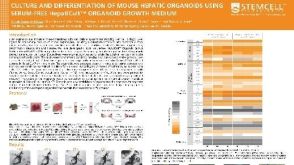 科学海报Culture and Differentiation of Mouse Hepatic Organoids Using Serum-free HepatiCult™ Organoid Growth Medium

 沪公网安备31010102008431号