Zhang J et al. (FEB 2007)
The Journal of clinical investigation 117 2 473--81
Primitive hematopoietic cells resist HIV-1 infection via p21.
Hematopoietic stem cells are resistant to HIV-1 infection. Here,we report a novel mechanism by which the cyclin-dependent kinase inhibitor (CKI) p21(Waf1/Cip1/Sdi1) (p21),a known regulator of stem cell pool size,restricts HIV-1 infection of primitive hematopoietic cells. Modifying p21 expression altered HIV-1 infection prior to changes in cell cycling and was selective for p21 since silencing the related CKIs,p27(Kip1) and p18(INK4C),had no effect on HIV-1. We show that p21 blocked viral infection by complexing with HIV-1 integrase and aborting chromosomal integration. A closely related lentivirus with a distinct integrase,SIVmac-251,and the other cell-intrinsic inhibitors of HIV-1,Trim5alpha,PML,Murr1,and IFN-alpha,were unaffected by p21. Therefore,p21 is an endogenous cellular component in stem cells that provides a unique molecular barrier to HIV-1 infection and may explain how these cells remain an uninfected sanctuary" in HIV disease."
View Publication
Rebel VI et al. (NOV 2002)
Proceedings of the National Academy of Sciences of the United States of America 99 23 14789--94
Distinct roles for CREB-binding protein and p300 in hematopoietic stem cell self-renewal.
Hematopoietic stem cells (HSC) are tightly regulated through,as yet,undefined mechanisms that balance self-renewal and differentiation. We have identified a role for the transcriptional coactivators CREB-binding protein (CBP) and p300 in such HSC fate decisions. A full dose of CBP,but not p300,is crucial for HSC self-renewal. Conversely,p300,but not CBP,is essential for proper hematopoietic differentiation. Furthermore,in chimeric mice,hematologic malignancies emerged from both CBP(-/-) and p300(-/-) cell populations. Thus,CBP and p300 play essential but distinct roles in maintaining normal hematopoiesis,and,in mice,both are required for preventing hematologic tumorigenesis.
View Publication
产品类型:
产品号#:
06902
06952
00321
00322
00323
00324
00325
产品名:
Denning-Kendall P et al. (JAN 2003)
Stem cells (Dayton,Ohio) 21 6 694--701
Cobblestone area-forming cells in human cord blood are heterogeneous and differ from long-term culture-initiating cells.
The long-term culture-initiating cell (LTC-IC) assay is a physiological approach to the quantitation of primitive human hematopoietic cells. The readout using identification of cobblestone area-forming cells (CAFC) has gained popularity over the LTC-IC readout where cells are subcultured in a colony-forming cell assay. However,comparing the two assays,cord blood (CB) mononuclear cell (MNC) samples were found to contain a higher frequency of CAFC than LTC-IC (126 +/- 83 versus 40 +/- 31 per 10(5) cells,p = 0.0001). Overall,60% of week-5 cobblestones produced by CB MNC were not functional LTC-IC and were classified as false." Separation of CB MNC using immunomagnetic columns showed that false cobblestones were CD34(-)/lineage(+). Purified CD34(+) cells�
View Publication
产品类型:
产品号#:
09500
09600
09650
产品名:
BIT 9500血清替代物
StemSpan™ SFEM
StemSpan™ SFEM
De Kock J et al. (SEP 2011)
Toxicology in vitro : an international journal published in association with BIBRA 25 6 1191--202
Evaluation of the multipotent character of human foreskin-derived precursor cells.
In the present study,the trilineage differentiation capacity of human foreskin-derived precursor cells (hSKP) was evaluated upon exposure to various (non)commercial (i and ii) ectodermal,(iii) mesodermal and (iv) endodermal differentiation media. (i) Upon sequential exposure of the cells to keratinocyte growth (CnT-07® or CnT-057®) and differentiation (CnT-02® or Epilife®) media,keratinocyte-like cells (filaggrin(+)/involucrin(+)) were obtained. The preferred keratinocyte differentiation strategy was exposure to CnT-07®. (ii) When hSKP were subsequently exposed to NeuroCult® media,cells underwent a weak neuro-ectodermal differentiation expressing nestin,myelin binding protein (MBP),vimentin and alpha-foetoprotein (AFP). Sequential exposure to NPMM® and NPDM® generated cells with an inferior neuro-ectodermal phenotype (nestin(+)/vimentin(+)/MBP(-)/AFP(-)). (iii) Upon exposure of hSKP to insulin-transferrin-selenite (ITS) and dexamethasone,small lipid droplets were observed,suggesting their differentiation potential towards adipocyte-like cells. (iv) Finally,after sequential exposure to hepatogenic growth factors and cytokines,an immature hepatic cell population was generated. The presence of pre-albumin suggests that a sequential exposure strategy is here superior to a cocktail approach. In summary,a considerable impact of different (non)commercial media on the lineage-specific differentiation efficiency of hSKP is shown. In addition,we demonstrate here for the first time that,in a suitable keratinocyte stimulating micro-environment,hSKP can generate keratinocyte-like progeny in vitro.
View Publication
产品类型:
产品号#:
05751
产品名:
NeuroCult™ NS-A 扩增试剂盒(人)
Cashman JD et al. (JAN 1990)
Blood 75 1 96--101
Mechanisms that regulate the cell cycle status of very primitive hematopoietic cells in long-term human marrow cultures. I. Stimulatory role of a variety of mesenchymal cell activators and inhibitory role of TGF-beta.
Long-term marrow cultures (LTMC) allow the proliferation and differentiation of primitive human hematopoietic progenitor cells to be maintained for many weeks in the absence of exogenously provided hematopoietic growth factors. Previous investigations focused on defining various types of cells that are present in this culture system and on measuring the cycling behavior of the different subpopulations of colony-forming cells maintained within it. These studies suggested that mesenchymal stromal elements derived from the input marrow play a key role in regulating the turnover of the most primitive,high-proliferative potential erythroid and granulopoietic colony-forming cells that are found almost exclusively in the adherent layer of LTMC. In this study we show that the re-entry into S-phase of these primitive hematopoietic progenitors that occurs after each weekly medium change is due to an as yet undefined constituent of horse serum,which is absent from fetal calf serum. However,this effect is not unique to the factor present in horse serum. It is also elicited by the addition to LTMC of several well-defined growth regulatory molecules,ie,platelet-derived growth factor (PDGF),interleukin-1 (IL-1),transforming growth factor alpha (TGF-alpha),and IL-2. None of these was able to stimulate hematopoietic colony-forming cells in methylcellulose assays,although all have known actions on mesenchymal cells including,in some cases,the ability to increase production of growth factors that can stimulate primitive high-proliferative potential hematopoietic progenitors in clonogenic assays. Interestingly,a stimulating effect was not obtained after addition of endotoxin to LTMC. TGF-beta,a direct-acting negative regulator that acts selectively on primitive hematopoietic progenitor cells if added to LTMC simultaneously with new medium or IL-1,blocked their stimulating activity. These results suggest a model in which indirect,local modulation of both positive and negative regulatory factors via effects on mesenchymal elements determines the rate of turnover of adjacent populations of very primitive hematopoietic cells that are normally maintained in a quiescent state in vivo.
View Publication
产品类型:
产品号#:
05150
05350
产品名:
MyeloCult™ H5100
Lidonnici MR et al. (MAY 2008)
Blood 111 9 4771--9
Requirement of c-Myb for p210(BCR/ABL)-dependent transformation of hematopoietic progenitors and leukemogenesis.
The c-Myb gene encodes a transcription factor required for proliferation and survival of normal myeloid progenitors and leukemic blast cells. Targeting of c-Myb by antisense oligodeoxynucleotides has suggested that myeloid leukemia blasts (including chronic myelogenous leukemia [CML]-blast crisis cells) rely on c-Myb expression more than normal progenitors,but a genetic approach to assess the requirement of c-Myb by p210(BCR/ABL)-transformed hematopoietic progenitors has not been taken. We show here that loss of a c-Myb allele had modest effects (20%-28% decrease) on colony formation of nontransduced progenitors,while the effect on p210(BCR/ABL)-expressing Lin(-) Sca-1(+) and Lin(-) Sca-1(+)Kit(+) cells was more pronounced (50%-80% decrease). Using a model of CML-blast crisis,mice (n = 14) injected with p210(BCR/ABL)-transduced p53(-/-)c-Myb(w/w) marrow cells developed leukemia rapidly and had a median survival of 26 days,while only 67% of mice (n = 12) injected with p210(BCR/ABL)-transduced p53(-/-)c-Myb(w/d) marrow cells died of leukemia with a median survival of 96 days. p210(BCR/ABL)-transduced c-Myb(w/w) and c-Myb(w/d) marrow progenitors expressed similar levels of the c-Myb-regulated genes c-Myc and cyclin B1,while those of Bcl-2 were reduced. However,ectopic Bcl-2 expression did not enhance colony formation of p210(BCR/ABL)-transduced c-Myb(w/d) Lin(-)Sca-1(+)Kit(+) cells. Together,these studies support the requirement of c-Myb for p210(BCR/ABL)-dependent leukemogenesis.
View Publication
产品类型:
产品号#:
04230
产品名:
MethoCult™ H4230
Tang C et al. (SEP 2011)
Nature biotechnology 29 9 829--34
An antibody against SSEA-5 glycan on human pluripotent stem cells enables removal of teratoma-forming cells.
An important risk in the clinical application of human pluripotent stem cells (hPSCs),including human embryonic and induced pluripotent stem cells (hESCs and hiPSCs),is teratoma formation by residual undifferentiated cells. We raised a monoclonal antibody against hESCs,designated anti-stage-specific embryonic antigen (SSEA)-5,which binds a previously unidentified antigen highly and specifically expressed on hPSCs--the H type-1 glycan. Separation based on SSEA-5 expression through fluorescence-activated cell sorting (FACS) greatly reduced teratoma-formation potential of heterogeneously differentiated cultures. To ensure complete removal of teratoma-forming cells,we identified additional pluripotency surface markers (PSMs) exhibiting a large dynamic expression range during differentiation: CD9,CD30,CD50,CD90 and CD200. Immunohistochemistry studies of human fetal tissues and bioinformatics analysis of a microarray database revealed that concurrent expression of these markers is both common and specific to hPSCs. Immunodepletion with antibodies against SSEA-5 and two additional PSMs completely removed teratoma-formation potential from incompletely differentiated hESC cultures.
View Publication
产品类型:
产品号#:
05850
05857
05870
05875
85850
85857
85870
85875
产品名:
mTeSR™1
mTeSR™1
(Apr 2024)
Cancer Innovation 3 3
Establishment of a humanized mouse model using steady‐state peripheral blood‐derived hematopoietic stem and progenitor cells facilitates screening of cancer‐targeted T‐cell repertoires
AbstractBackgroundCancer‐targeted T‐cell receptor T (TCR‐T) cells hold promise in treating cancers such as hematological malignancies and breast cancers. However,approaches to obtain cancer‐reactive TCR‐T cells have been unsuccessful.MethodsHere,we developed a novel strategy to screen for cancer‐targeted TCR‐T cells using a special humanized mouse model with person‐specific immune fingerprints. Rare steady‐state circulating hematopoietic stem and progenitor cells were expanded via three‐dimensional culture of steady‐state peripheral blood mononuclear cells,and then the expanded cells were applied to establish humanized mice. The human immune system was evaluated according to the kinetics of dendritic cells,monocytes,T‐cell subsets,and cytokines. To fully stimulate the immune response and to obtain B‐cell precursor NAML‐6‐ and triple‐negative breast cancer MDA‐MB‐231‐targeted TCR‐T cells,we used the inactivated cells above to treat humanized mice twice a day every 7 days. Then,human T cells were processed for TCR β‐chain (TRB) sequencing analysis. After the repertoires had been constructed,features such as the fraction,diversity,and immune signature were investigated.ResultsThe results demonstrated an increase in diversity and clonality of T cells after treatment. The preferential usage and features of TRBV,TRBJ,and the V–J combination were also changed. The stress also induced highly clonal expansion. Tumor burden and survival analysis demonstrated that stress induction could significantly inhibit the growth of subsequently transfused live tumor cells and prolong the survival of the humanized mice.ConclusionsWe constructed a personalized humanized mouse model to screen cancer‐targeted TCR‐T pools. Our platform provides an effective source of cancer‐targeted TCR‐T cells and allows for the design of patient‐specific engineered T cells. It therefore has the potential to greatly benefit cancer treatment. Cancer‐targeted T‐cell receptor T (TCR‐T) cells hold promise in treating malignancies but with limited source. We applied steady‐state peripheral blood mononuclear cells via three‐dimensional culture to construct humanized mouse model for cancer‐targeted TCR‐T repertoire screening.
View Publication
Shevde NK and Mael AA ( 2013)
Methods Mol Biol 946 535--546
Techniques in embryoid body formation from human pluripotent stem cells
Embryoid bodies (EBs) can be generated by culturing human pluripotent stem cells in ultra-low attachment culture vessels,under conditions that are adverse to pluripotency and proliferation. EBs generated in suspension cultures are capable of differentiating into cells of the ectoderm,mesoderm,and endoderm. In this chapter,we describe techniques for generation of EBs from human pluripotent stem cells. Once formed,the EBs can then be dissociated using specific enzymes to acquire a single cell population that has the potential to differentiate into cells of all three germ layers. This population can then be cultured in specialized conditions to obtain progenitor cells of specific lineages. Pure populations of progenitor cells generated on a large scale basis can be used for research,drug discovery/development,and cellular transplantation therapy.
View Publication
产品类型:
产品号#:
05850
05857
05870
05875
85850
85857
85870
85875
产品名:
mTeSR™1
mTeSR™1
Eckardt S et al. (FEB 2007)
Genes & development 21 4 409--19
Hematopoietic reconstitution with androgenetic and gynogenetic stem cells.
Parthenogenetic embryonic stem (ES) cells with two oocyte-derived genomes (uniparental) have been proposed as a source of autologous tissue for transplantation. The therapeutic applicability of any uniparental cell type is uncertain due to the consequences of genomic imprinting that in mammalian uniparental tissues causes unbalanced expression of imprinted genes. We transplanted uniparental fetal liver cells into lethally irradiated adult mice to test their capacity to replace adult hematopoietic tissue. Both maternal (gynogenetic) and paternal (androgenetic) derived cells conveyed long-term,multilineage reconstitution of hematopoiesis in recipients,with no associated pathologies. We also establish that uniparental ES cells can differentiate into transplantable hematopoietic progenitors in vitro that contribute to long-term hematopoiesis in recipients. Hematopoietic tissue in recipients maintained fidelity of parent-of-origin methylation marks at the Igf2/H19 locus; however,variability occurred in the maintenance of parental-specific methylation marks at other loci. In summary,despite genomic imprinting and its consequences on development that are particularly evident in the androgenetic phenotype,uniparental cells of both parental origins can form adult-transplantable stem cells and can repopulate an adult organ.
View Publication


 EasySep™小鼠TIL(CD45)正选试剂盒




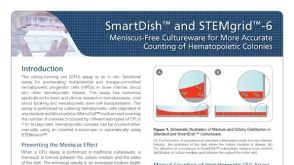 产品手册SmartDish™ and STEMgrid™-6 Meniscus-Free Cultureware for More Accurate Counting of Hematopoietic Colonies

 沪公网安备31010102008431号