Lee AS et al. (AUG 2009)
Cell Cycle 8 16 2608--2612
Effects of cell number on teratoma formation by human embryonic stem cells
Teratoma formation is a critical obstacle to safe clinical translation of human embryonic stem (ES) cell-based therapies in the future. As current methods of isolation are unable to yield 100% pure population of differentiated cells from a pluripotent donor source,potential development of these tumors is a significant concern. Here we used non-invasive reporter gene imaging to investigate the relationship between human ES cell number and teratoma formation in a xenogenic model of ES cell transplantation. Human ES cells (H9 line) were stably transduced with a double fusion (DF) reporter construct containing firefly luciferase and enhanced green fluorescent protein (Fluc- eGFP) driven by a human ubiquitin promoter. Immunodeficient mice received intramyocardial (n = 35) or skeletal muscle (n = 35) injection of 1 × 102,1 × 103,1 × 104,1 × 105 or 1 × 10⁶ DF positive ES cells suspended in saline for myocardium and Matrigel for skeletal muscle. Cell survival and proliferation were monitored via bioluminescence imaging (BLI) for an 8 week period following transplantation. Mice negative for Fluc signal after 8 weeks were followed out to day 365 to confirm tumor absence. Significantly,in this study,a minimum of 1 × 10⁵ ES cells in the myocardium and 1 × 10⁴ cells in the skeletal muscle was observed to be requisite for teratoma development,suggesting that human ES cell number may be a critical factor in teratoma formation. Engraftment and tumor occurrence were also observed to be highly dependent on ES cell number. We anticipate these results should yield useful insights to the safe and reliable application of human ES cell derivatives in the clinic. Keywords
View Publication
产品类型:
产品号#:
05850
05857
05870
05875
85850
85857
85870
85875
产品名:
mTeSR™1
mTeSR™1
Zhu S et al. ( 2014)
Cell research 24 1 126--129
Small molecules enable OCT4-mediated direct reprogramming into expandable human neural stem cells.
Taniguchi K et al. (DEC 2015)
Stem cell reports 5 6 954--962
Lumen Formation Is an Intrinsic Property of Isolated Human Pluripotent Stem Cells.
We demonstrate that dissociated human pluripotent stem cells (PSCs) are intrinsically programmed to form lumens. PSCs form two-cell cysts with a shared apical domain within 20 hr of plating; these cysts collapse to form monolayers after 5 days. Expression of pluripotency markers is maintained throughout this time. In two-cell cysts,an apical domain,marked by EZRIN and atypical PKC$\$,is surrounded by apically targeted organelles (early endosomes and Golgi). Molecularly,actin polymerization,regulated by ARP2/3 and mammalian diaphanous-related formin 1 (MDIA),promotes lumen formation,whereas actin contraction,mediated by MYOSIN-II,inhibits this process. Finally,we show that lumenal shape can be manipulated in bioengineered micro-wells. Since lumen formation is an indispensable step in early mammalian development,this system can provide a powerful model for investigation of this process in a controlled environment. Overall,our data establish that lumenogenesis is a fundamental cell biological property of human PSCs.
View Publication
产品类型:
产品号#:
05850
05857
05870
05875
85850
85857
85870
85875
产品名:
mTeSR™1
mTeSR™1
Yu J et al. (JAN 2009)
PLoS ONE 4 9 e7040
nAChRs mediate human embryonic stem cell-derived endothelial cells: proliferation, apoptosis, and angiogenesis.
BACKGROUND: Many patients with ischemic heart disease have cardiovascular risk factors such as cigarette smoking. We tested the effect of nicotine (a key component of cigarette smoking) on the therapeutic effects of human embryonic stem cell-derived endothelial cells (hESC-ECs).backslashnbackslashnMETHODS AND RESULTS: To induce endothelial cell differentiation,undifferentiated hESCs (H9 line) underwent 4-day floating EB formation and 8-day outgrowth differentiation in EGM-2 media. After 12 days,CD31(+) cells (13.7+/-2.5%) were sorted by FACScan and maintained in EGM-2 media for further differentiation. After isolation,these hESC-ECs expressed endothelial specific markers such as vWF (96.3+/-1.4%),CD31 (97.2+/-2.5%),and VE-cadherin (93.7+/-2.8%),form vascular-like channels,and incorporated DiI-labeled acetylated low-density lipoprotein (DiI-Ac-LDL). Afterward,5x10(6) hESC-ECs treated for 24 hours with nicotine (10(-8) M) or PBS (as control) were injected into the hearts of mice undergoing LAD ligation followed by administration for two weeks of vehicle or nicotine (100 microg/ml) in the drinking water. Surprisingly,bioluminescence imaging (BLI) showed significant improvement in the survival of transplanted hESC-ECs in the nicotine treated group at 6 weeks. Postmortem analysis confirmed increased presence of small capillaries in the infarcted zones. Finally,in vitro mechanistic analysis suggests activation of the MAPK and Akt pathways following activation of nicotinic acetylcholine receptors (nAChRs).backslashnbackslashnCONCLUSIONS: This study shows for the first time that short-term systemic administrations of low dose nicotine can improve the survival of transplanted hESC-ECs,and enhance their angiogenic effects in vivo. Furthermore,activation of nAChRs has anti-apoptotic,angiogenic,and proliferative effects through MAPK and Akt signaling pathways.
View Publication
产品类型:
产品号#:
05850
05857
05870
05875
85850
85857
85870
85875
产品名:
mTeSR™1
mTeSR™1
Kyba M et al. (SEP 2003)
Proceedings of the National Academy of Sciences of the United States of America 100 Suppl 11904--10
Enhanced hematopoietic differentiation of embryonic stem cells conditionally expressing Stat5.
The signal transducer Stat5 plays a key role in the regulation of hematopoietic differentiation and hematopoietic stem cell function. To evaluate the effects of Stat5 signaling in the earliest hematopoietic progenitors,we have generated an embryonic stem cell line in which Stat5 signaling can be induced with doxycycline. Ectopic Stat5 activation at the point of origin of the hematopoietic lineage (from day 4 to day 6 of embryoid body differentiation) significantly enhances the number of hematopoietic progenitors with colony-forming potential. It does so without significantly altering total numbers or apoptosis of hematopoietic cells,suggesting a cell-intrinsic effect of Stat5 on either the developmental potential or clonogenicity of this population. From day-6 embryoid bodies,under the influence of Stat5 signaling,a population of semiadherent cells can be expanded on OP9 stromal cells that is comprised of primitive hematopoietic blast cells with ongoing,mainly myeloid,differentiation. When these cells are injected into lethally irradiated mice,they engraft transiently in a doxycycline-dependent manner. These results demonstrate that the hematopoietic commitment of embryonic stem cells may be augmented by a Stat5-mediated signal,and highlight the utility of manipulating individual components of signaling pathways for engineering tissue-specific differentiation of stem cells.
View Publication
产品类型:
产品号#:
03434
03444
产品名:
MethoCult™ GF M3434
MethoCult™ GF M3434
Lioznov MV et al. (MAY 2005)
Bone marrow transplantation 35 9 909--14
Aldehyde dehydrogenase activity as a marker for the quality of hematopoietic stem cell transplants.
Taking advantage of fluorescent substrates for their metabolic marker aldehyde dehydrogenase (ALDH),hematopoietic stem cells (HSC) were defined as SSC(lo)ALDH(br) - reflecting their low orthogonal light scattering and bright fluorescence intensity in flow cytometry. Based thereon,we investigated the usefulness of ALDH activity for characterizing HSC graft quality,particularly under stress conditions. We first compared the expression of ALDH vs CD34 in bone marrow and peripheral blood stem cell (PBSC) samples over 7 days. We noted that (i) only ALDH activity but not CD34 expression strongly reflected colony-forming ability over time,and that (ii) PBSC grafts stored at room temperature lost most of their progenitor cells within just 48 h. We then retrospectively related ALDH and CD34 expression as well as granulocyte-macrophage colony-forming units (CFU-GM) potential for 19 cryopreserved allogeneic PBSC grafts to engraftment data. Strikingly,in all six patients who received markedly decreased numbers of SSC(lo)ALDH(br) cells,this was associated not only with almost complete loss of CFU-GM potential but also with delayed establishment/permanent absence of full hematopoietic donor cell chimerism,whereas all other patients showed early complete donor chimerism. In conclusion,we suggest to measure ALDH activity as a surrogate marker for HSC activity,and to transport and store PBSC under controlled cooling conditions.
View Publication
产品类型:
产品号#:
01700
01705
01701
01702
产品名:
ALDEFLUOR™ 试剂盒
ALDEFLUOR™ DEAB试剂, 1.5 mM, 1 mL
ALDEFLUOR™检测缓冲液
Huang J et al. ( 2016)
Purinergic Signalling 1--14
Coupling switch of P2Y-IP3 receptors mediates differential Ca2+ signaling in human embryonic stem cells and derived cardiovascular progenitor cells
Purinergic signaling mediated by P2 receptors (P2Rs) plays important roles in embryonic and stem cell development. However,how it mediates Ca2+ signals in human embryonic stem cells (hESCs) and derived cardiovascular progenitor cells (CVPCs) remains unclear. Here,we aimed to determine the role of P2Rs in mediating Ca2+ mobilizations of these cells. hESCs were induced to differentiate into CVPCs by our recently established methods. Gene expression of P2Rs and inositol 1,4,5-trisphosphate receptors (IP3Rs) was analyzed by quantitative/RT-PCR. IP3R3 knockdown (KD) or IP3R2 knockout (KO) hESCs were established by shRNA- or TALEN-mediated gene manipulations,respectively. Confocal imaging revealed that Ca2+ responses in CVPCs to ATP and UTP were more sensitive and stronger than those in hESCs. Consistently,the gene expression levels of most P2YRs except P2Y1 were increased in CVPCs. Suramin or PPADS blocked ATP-induced Ca2+ transients in hESCs but only partially inhibited those in CVPCs. Moreover,the P2Y1 receptor-specific antagonist MRS2279 abolished most ATP-induced Ca2+ signals in hESCs but not in CVPCs. P2Y1 receptor-specific agonist MRS2365 induced Ca2+ transients only in hESCs but not in CVPCs. Furthermore,IP3R2KO but not IP3R3KD decreased the proportion of hESCs responding to MRS2365. In contrast,both IP3R2 and IP3R3 contributed to UTP-induced Ca2+ responses while ATP-induced Ca2+ responses were more dependent on IP3R2 in the CVPCs. In conclusion,a predominant role of P2Y1 receptors in hESCs and a transition of P2Y-IP3R coupling in derived CVPCs are responsible for the differential Ca2+ mobilization between these cells.
View Publication
产品类型:
产品号#:
05850
05857
05870
05875
85850
85857
85870
85875
产品名:
mTeSR™1
mTeSR™1
Zeng F-Y et al. ( 2010)
Biochemical and biophysical research communications 391 1 1049--1055
Glycogen synthase kinase 3 regulates PAX3-FKHR-mediated cell proliferation in human alveolar rhabdomyosarcoma cells.
Patients with alveolar rhabdomyosarcoma (ARMS) have poorer response to conventional chemotherapy and lower survival rates than those with embryonal RMS (ERMS). To identify compounds that preferentially block the growth of ARMS,we conducted a small-scale screen of 160 kinase inhibitors against the ARMS cell line Rh30 and ERMS cell line RD and identified inhibitors of glycogen synthase kinase 3 (GSK3),including TWS119 as ARMS-selective inhibitors. GSK3 inhibitors inhibited cell proliferation and induced apoptosis more effectively in Rh30 than RD cells. Ectopic expression of fusion protein PAX3-FKHR in RD cells significantly increased their sensitivity to TWS119. Down-regulation of GSK3 by GSK3 inhibitors or siRNA significantly reduced the transcriptional activity of PAX3-FKHR. These results suggest that GSK3 is directly involved in regulating the transcriptional activity of PAX3-FKHR. Also,GSK3 phosphorylated PAX3-FKHR in vitro,suggesting that GSK3 might regulate PAX3-FKHR activity via phosphorylation. These findings support a novel mechanism of PAX3-FKHR regulation by GSK3 and provide a novel strategy to develop GSK inhibitors as anti-ARMS therapies.
View Publication
产品类型:
产品号#:
73512
73514
产品名:
TWS119
TWS119
Azari H et al. (JAN 2011)
Journal of visualized experiments : JoVE 56 e3633
Isolation and expansion of human glioblastoma multiforme tumor cells using the neurosphere assay.
Stem-like cells have been isolated in tumors such as breast,lung,colon,prostate and brain. A critical issue in all these tumors,especially in glioblastoma mutliforme (GBM),is to identify and isolate tumor initiating cell population(s) to investigate their role in tumor formation,progression,and recurrence. Understanding tumor initiating cell populations will provide clues to finding effective therapeutic approaches for these tumors. The neurosphere assay (NSA) due to its simplicity and reproducibility has been used as the method of choice for isolation and propagation of many of this tumor cells. This protocol demonstrates the neurosphere culture method to isolate and expand stem-like cells in surgically resected human GBM tumor tissue. The procedures include an initial chemical digestion and mechanical dissociation of tumor tissue,and subsequently plating the resulting single cell suspension in NSA culture. After 7-10 days,primary neurospheres of 150-200 μm in diameter can be observed and are ready for further passaging and expansion.
View Publication


 EasySep™小鼠TIL(CD45)正选试剂盒




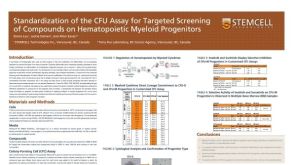 科学海报Standardization of the CFU Assay for Targeted Screening of Compounds on Hematopoietic Myeloid Progenitors
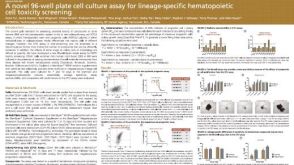 科学海报A Novel 96-well Plate Cell Culture Assay for Lineage-Specific Hematopoietic Cell Toxicity Screening

 沪公网安备31010102008431号