Aksoy I et al. (DEC 2013)
Stem Cells 31 12 2632--2646
Sox Transcription Factors Require Selective Interactions with Oct4 and Specific Transactivation Functions to Mediate Reprogramming
The unique ability of Sox2 to cooperate with Oct4 at selective binding sites in the genome is critical for reprogramming somatic cells into induced pluripotent stem cells (iPSCs). We have recently demonstrated that Sox17 can be converted into a reprogramming factor by alteration of a single amino acid (Sox17EK) within its DNA binding HMG domain. Here we expanded this study by introducing analogous mutations to 10 other Sox proteins and interrogated the role of N-and C-termini on the reprogramming efficiency. We found that point-mutated Sox7 and Sox17 can convert human and mouse fibroblasts into iPSCs,but Sox4,Sox5,Sox6,Sox8,Sox9,Sox11,Sox12,Sox13,and Sox18 cannot. Next we studied regions outside the HMG domain and found that the C-terminal transactivation domain of Sox17 and Sox7 enhances the potency of Sox2 in iPSC assays and confers weak reprogramming potential to the otherwise inactive Sox4EK and Sox18EK proteins. These results suggest that the glutamate (E) to lysine (K) mutation in the HMG domain is necessary but insufficient to swap the function of Sox factors. Moreover,the HMG domain alone fused to the VP16 transactivation domain is able to induce reprogramming,albeit at low efficiency. By molecular dissection of the C-terminus of Sox17,we found that the β-catenin interaction region contributes to the enhanced reprogramming efficiency of Sox17EK. To mechanistically understand the enhanced reprogramming potential of Sox17EK,we analyzed ChIP-sequencing and expression data and identified a subset of candidate genes specifically regulated by Sox17EK and not by Sox2.
View Publication
产品号#:
05850
05857
05870
05875
85850
85857
85870
85875
产品名:
mTeSR™1
mTeSR™1
Krueger WH et al. (JUL 2013)
PLoS ONE 8 7 e67296
Cholesterol-Secreting and Statin-Responsive Hepatocytes from Human ES and iPS Cells to Model Hepatic Involvement in Cardiovascular Health
Hepatocytes play a central and crucial role in cholesterol and lipid homeostasis,and their proper function is of key importance for cardiovascular health. In particular,hepatocytes (especially periportal hepatocytes) endogenously synthesize large amounts of cholesterol and secrete it into circulating blood via apolipoprotein particles. Cholesterol-secreting hepatocytes are also the clinically-relevant cells targeted by statin treatment in vivo. The study of cholesterol homeostasis is largely restricted to the use of animal models and immortalized cell lines that do not recapitulate those key aspects of normal human hepatocyte function that result from genetic variation of individuals within a population. Hepatocyte-like cells (HLCs) derived from human embryonic and induced pluripotent stem cells can provide a cell culture model for the study of cholesterol homeostasis,dyslipidemias,the action of statins and other pharmaceuticals important for cardiovascular health. We have analyzed expression of core components for cholesterol homeostasis in untreated human iPS cells and in response to pravastatin. Here we show the production of differentiated cells resembling periportal hepatocytes from human pluripotent stem cells. These cells express a broad range of apolipoproteins required for secretion and elimination of serum cholesterol,actively secrete cholesterol into the medium,and respond functionally to statin treatment by reduced cholesterol secretion. Our research shows that HLCs derived from human pluripotent cells provide a robust cell culture system for the investigation of the hepatic contribution to human cholesterol homeostasis at both cellular and molecular levels. Importantly,it permits for the first time to also functionally assess the impact of genetic polymorphisms on cholesterol homeostasis. Finally,the system will also be useful for mechanistic studies of heritable dyslipidemias,drug discovery,and investigation of modes of action of cholesterol-modulatory drugs.
View Publication
产品号#:
05850
05857
05870
05875
85850
85857
85870
85875
产品名:
mTeSR™1
mTeSR™1
Jiang P et al. (JUL 2013)
Nature communications 4 2196
hESC-derived Olig2+ progenitors generate a subtype of astroglia with protective effects against ischaemic brain injury.
Human pluripotent stem cells (hPSCs) have been differentiated to astroglia,but the utilization of hPSC-derived astroglia as cell therapy for neurological diseases has not been well studied. Astroglia are heterogeneous,and not all astroglia are equivalent in promoting neural repair. A prerequisite for cell therapy is to derive defined cell populations with superior therapeutic effects. Here we use an Olig2-GFP human embryonic stem cell (hESC) reporter to demonstrate that hESC-derived Olig2(+) progenitors generate a subtype of previously uncharacterized astroglia (Olig2PC-Astros). These Olig2PC-Astros differ substantially from astroglia differentiated from Olig2-negative hESC-derived neural progenitor cells (NPC-Astros),particularly in their neuroprotective properties. When grafted into brains subjected to global ischaemia,Olig2PC-Astros exhibit superior neuroprotective effects and improved behavioural outcome compared to NPC-Astros. Thus,this new paradigm of human astroglial differentiation is useful for studying the heterogeneity of human astroglia,and the unique Olig2PC-Astros may constitute a new cell therapy for treating cerebral ischaemia and other neurological diseases.
View Publication
产品号#:
05850
05857
05870
05875
85850
85857
85870
85875
产品名:
mTeSR™1
mTeSR™1
Deng Y et al. (NOV 2013)
Acta Biomaterialia 9 11 8840--8850
Long-term self-renewal of human pluripotent stem cells on peptide-decorated poly(OEGMA-co-HEMA) brushes under fully defined conditions
Realization of the full potential of human induced pluripotent stem cells (hiPSC) in clinical applications requires the development of well-defined culture conditions for their long-term growth and directed differentiation. This paper describes a novel fully defined synthetic peptide-decorated substrate that supports self-renewal of hiPSC in commercially available xeno-free,chemically defined medium. The Au surface was deposited by a poly(OEGMA-co-HEMA) film,using the surface-initiated polymerization method (SIP) with the further step of carboxylation. The hiPSC generated from umbilical cord mesenchymal cells were successfully cultured for 10 passages on the peptide-tethered poly(OEGMA-co-HEMA) brushes for the first time. Cells maintained their characteristic morphology,proliferation and expressed high levels of markers of pluripotency,similar to the cells cultured on Matrigel???. Moreover,the cell adhesion could be tuned by the pattern and peptide concentration on the substrate. This well-defined,xeno-free and safe substrate,which supports long-term proliferation and self-renewal of hiPSC,will not only help to accelerate the translational perspectives of hiPSC,but also provide a platform to elucidate the underlying molecular mechanisms that regulate stem cell proliferation and differentiation via SIP technology. ?? 2013 Acta Materialia Inc. Published by Elsevier Ltd. All rights reserved.
View Publication
产品号#:
05850
05857
05870
05875
85850
85857
85870
85875
产品名:
mTeSR™1
mTeSR™1
Legartová et al. (AUG 2013)
Epigenomics 5 4 379--396
Basic nuclear processes affected by histone acetyltransferases and histone deacetylase inhibitors
AIM The optimal balance between histone acetylation and deacetylation is important for proper gene function. Therefore,we addressed how inhibitors of histone-modifying enzymes can modulate nuclear events,including replication,transcription,splicing and DNA repair. MATERIALS & METHODS Changes in cell signaling pathways upon treatment with histone acetyltransferases and/or histone deacetylase inhibitors were studied by cDNA microarrays and western blots. RESULTS We analyzed the effects of the histone deacetylase inhibitor suberoylanilide hydroxamic acid (SAHA) and the histone acetylase inhibitor MG149. SAHA altered the expression of factors involved in DNA replication complexes,basal transcription and the spliceosome pathway. DNA repair-related genes,including Rad51,Rad54 and BRCA2,were significantly downregulated by SAHA. However,MG149 had no effect on the investigated nuclear processes,with the exception of the spliceosome network and Sestrins,involved in DNA repair. CONCLUSION Based on our results,we propose that the studied epigenetic drugs have the distinct potential to affect specific cell signaling pathways depending on their respective molecular targets.
View Publication
产品号#:
05850
05857
05870
05875
85850
85857
85870
85875
产品名:
mTeSR™1
mTeSR™1
Ng S-YY et al. (AUG 2013)
Molecular Cell 51 3 349--359
The Long Noncoding RNA RMST Interacts with SOX2 to Regulate Neurogenesis
Long noncoding RNAs (lncRNAs) are abundant in the mammalian transcriptome,and many are specifically expressed in the brain. We have identified a group of lncRNAs,including rhabdomyosarcoma 2-associated transcript (RMST),which are indispensable for neurogenesis. Here,we provide mechanistic insight into the role of human RMST in modulating neurogenesis. RMST expression is specific to the brain,regulated by the transcriptional repressor REST,and increases during neuronal differentiation,indicating a role in neurogenesis. RMST physically interacts with SOX2,a transcription factor known to regulate neural fate. RMST and SOX2 coregulate a large pool of downstream genes implicated in neurogenesis. Through RNA interference and genome-wide SOX2 binding studies,we found that RMST is required for the binding of SOX2 to promoter regions of neurogenic transcription factors. These results establish the role of RMST as a transcriptional coregulator of SOX2 and a key player in the regulation of neural stem cell fate. ?? 2013 Elsevier Inc.
View Publication
产品号#:
05850
05857
05870
05875
85850
85857
85870
85875
产品名:
mTeSR™1
mTeSR™1
Suissa Y et al. (AUG 2013)
PLoS ONE 8 8 e70397
Gastrin: A Distinct Fate of Neurogenin3 Positive Progenitor Cells in the Embryonic Pancreas
Neurogenin3+ (Ngn3+) progenitor cells in the developing pancreas give rise to five endocrine cell types secreting insulin,glucagon,somatostatin,pancreatic polypeptide and ghrelin. Gastrin is a hormone produced primarily by G-cells in the stomach,where it functions to stimulate acid secretion by gastric parietal cells. Gastrin is expressed in the embryonic pancreas and is common in islet cell tumors,but the lineage and regulators of pancreatic gastrin+ cells are not known. We report that gastrin is abundantly expressed in the embryonic pancreas and disappears soon after birth. Some gastrin+ cells in the developing pancreas co-express glucagon,ghrelin or pancreatic polypeptide,but many gastrin+ cells do not express any other islet hormone. Pancreatic gastrin+ cells express the transcription factors Nkx6.1,Nkx2.2 and low levels of Pdx1,and derive from Ngn3+ endocrine progenitor cells as shown by genetic lineage tracing. Using mice deficient for key transcription factors we show that gastrin expression depends on Ngn3,Nkx2.2,NeuroD1 and Arx,but not Pax4 or Pax6. Finally,gastrin expression is induced upon differentiation of human embryonic stem cells to pancreatic endocrine cells expressing insulin. Thus,gastrin+ cells are a distinct endocrine cell type in the pancreas and an alternative fate of Ngn3+ cells.
View Publication
Bruin JE et al. (SEP 2013)
Diabetologia 56 9 1987--1998
Maturation and function of human embryonic stem cell-derived pancreatic progenitors in macroencapsulation devices following transplant into mice
AIMS/HYPOTHESIS: Islet transplantation is a promising cell therapy for patients with diabetes,but it is currently limited by the reliance upon cadaveric donor tissue. We previously demonstrated that human embryonic stem cell (hESC)-derived pancreatic progenitor cells matured under the kidney capsule in a mouse model of diabetes into glucose-responsive insulin-secreting cells capable of reversing diabetes. However,the formation of cells resembling bone and cartilage was a major limitation of that study. Therefore,we developed an improved differentiation protocol that aimed to prevent the formation of off-target mesoderm tissue following transplantation. We also examined how variation within the complex host environment influenced the development of pancreatic progenitors in vivo.backslashnbackslashnMETHODS: The hESCs were differentiated for 14 days into pancreatic progenitor cells and transplanted either under the kidney capsule or within Theracyte (TheraCyte,Laguna Hills,CA,USA) devices into diabetic mice.backslashnbackslashnRESULTS: Our revised differentiation protocol successfully eliminated the formation of non-endodermal cell populations in 99% of transplanted mice and generated grafts containing textgreater80% endocrine cells. Progenitor cells developed efficiently into pancreatic endocrine tissue within macroencapsulation devices,despite lacking direct contact with the host environment,and reversed diabetes within 3 months. The preparation of cell aggregates pre-transplant was critical for the formation of insulin-producing cells in vivo and endocrine cell development was accelerated within a diabetic host environment compared with healthy mice. Neither insulin nor exendin-4 therapy post-transplant affected the maturation of macroencapsulated cells.backslashnbackslashnCONCLUSIONS/INTERPRETATION: Efficient differentiation of hESC-derived pancreatic endocrine cells can occur in a macroencapsulation device,yielding glucose-responsive insulin-producing cells capable of reversing diabetes.
View Publication


 EasySep™小鼠TIL(CD45)正选试剂盒




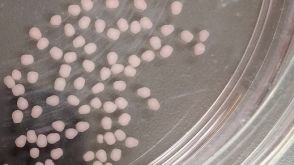 实验方案How to Dissociate 3D Neural Organoids into a Single-Cell Suspension

 沪公网安备31010102008431号