Matsumoto K et al. (JAN 2000)
Stem cells (Dayton,Ohio) 18 3 196--203
In vitro proliferation potential of AC133 positive cells in peripheral blood.
AC133 antigen is a novel marker for human hematopoietic stem/progenitor cells. In this study,we examined the expression and proliferation potential of AC133(+) cells obtained from steady-state peripheral blood (PB). The proportion of AC133(+) cells in the CD34(+) subpopulation of steady-state PB was significantly lower than that of cord blood (CB),although that of cytokine-mobilized PB was higher than that of CB. The proliferation potential of AC133(+)CD34(+) and AC133(-)CD34(+) cells was examined by colony-forming analysis and analysis of long-term culture-initiating cells (LTC-IC). Although the total number of colony-forming cells was essentially the same in the AC133(+)CD34(+) fraction as in the AC133(-)CD34(+) fraction,the proportion of LTC-IC was much higher in the AC133(+)CD34(+) fraction. Virtually no LTC-IC were detected in the AC133(-)CD34(+) fraction. In addition,the features of the colonies grown from these two fractions were quite different. Approximately 70% of the colonies derived from the AC133(+)CD34(+) fraction were granulocyte-macrophage colonies,whereas more than 90% of the colonies derived from the AC133(-)CD34(+) fraction were erythroid colonies. Furthermore,an ex vivo expansion study observed expansion of colony-forming cells only in the AC133(+)CD34(+) population,and not in the AC133(-)CD34(+) population. These findings suggest that to isolate primitive hematopoietic cells from steady-state PB,selection by AC133 expression is better than selection by CD34 expression.
View Publication
Boheler KR et al. (AUG 2002)
Circulation research 91 3 189--201
Differentiation of pluripotent embryonic stem cells into cardiomyocytes.
Embryonic stem (ES) cells have been established as permanent lines of undifferentiated pluripotent cells from early mouse embryos. ES cells provide a unique system for the genetic manipulation and the creation of knockout strains of mice through gene targeting. By cultivation in vitro as 3D aggregates called embryoid bodies,ES cells can differentiate into derivatives of all 3 primary germ layers,including cardiomyocytes. Protocols for the in vitro differentiation of ES cells into cardiomyocytes representing all specialized cell types of the heart,such as atrial-like,ventricular-like,sinus nodal-like,and Purkinje-like cells,have been established. During differentiation,cardiac-specific genes as well as proteins,receptors,and ion channels are expressed in a developmental continuum,which closely recapitulates the developmental pattern of early cardiogenesis. Exploitation of ES cell-derived cardiomyocytes has facilitated the analysis of early cardiac development and has permitted in vitro gain-of-function" or "loss-of-function" genetic studies. Recently�
View Publication
产品号#:
06902
06952
00321
00322
00323
00324
00325
产品名:
Li B et al. (MAR 2003)
Blood 101 5 1769--76
Enforced expression of CUL-4A interferes with granulocytic differentiation and exit from the cell cycle.
The cullin family of proteins is involved in the ubiquitin-mediated degradation of cell cycle regulators. Relatively little is known about the function of the CUL-4A cullin,but its overexpression in breast cancer suggests CUL-4A might also regulate the cell cycle. In addition,since other cullins are required for normal development,we hypothesized that CUL-4A is involved in regulating cell cycle progression during differentiation. We observed that CUL-4A mRNA and protein levels decline 2.5-fold during the differentiation of PLB-985 myeloid cells into granulocytes. To examine the significance of this observation,we overexpressed CUL-4A in these cells and found that modest (textless 2-fold),enforced expression of CUL-4A attenuates terminal granulocytic differentiation and instead promotes proliferation. This overexpression similarly affects the differentiation of these cells into macrophages. We recently reported that nearly one half of CUL-4A+/- mice are nonviable,and in this report,we show that the viable heterozygous mice,which have reduced CUL-4A expression,have dramatically fewer erythroid and multipotential progenitors than normal controls. Together these results indicate that appropriate CUL-4A expression is essential for embryonic development and for cell cycle regulation during granulocytic differentiation and suggest this gene plays a broader role in hematopoiesis. Since enforced CUL-4A expression does not alter the cell cycle distribution of uninduced cells but dramatically increases the proportion of induced cells that remains in S-phase and reduces the proportion that accumulates in G0/G1,our results show that this CUL-4A regulatory function is interconnected with differentiation,a novel finding for mammalian cullins.
View Publication
产品号#:
03134
产品名:
MethoCult™ M3134
Ito CY et al. (JAN 2003)
Blood 101 2 517--23
Hematopoietic stem cell and progenitor defects in Sca-1/Ly-6A-null mice.
Despite its wide use as a marker for hematopoietic stem cells (HSCs),the function of stem cell antigen-1 (Sca-1) (also known as lymphocyte activation protein-6A [Ly-6A]) in hematopoiesis remains poorly defined. We have previously established that Sca-1(-/-) T cells develop normally,although they are hyperresponsive to antigen. Here,we report detailed analysis of hematopoiesis in Sca-1-deficient animals. The differentiation potential of Sca-1-null bone marrow was determined from examination of the most mature precursors (culture colony-forming units [CFU-Cs]) to less committed progenitors (spleen CFUs [CFU-Ss]) to long-term repopulating HSCs. Sca-1-null mice are mildly thrombocytopenic with a concomitant decrease in megakaryocytes and their precursors. Bone marrow cells derived from Sca-1(-/-) mice also have decreased multipotential granulocyte,erythroid,macrophage,and megakaryocyte CFU (GEMM-CFU) and CFU-S progenitor activity. Competitive repopulation assays demonstrated that Sca-1(-/-) HSCs are at a competitive disadvantage compared with wild-type HSCs. To further analyze the potential of Sca-1(-/-) HSCs,serial transplantations were performed. While secondary repopulations using wild-type bone marrow completely repopulated Sca-1(-/-) mice,Sca-1(-/-) bone marrow failed to rescue one third of lethally irradiated wild-type mice receiving secondary bone marrow transplants from irradiation-induced anemia and contributed poorly to the surviving transplant recipients. These data strongly suggest that Sca-1 is required for regulating HSC self-renewal and the development of committed progenitor cells,megakaryocytes,and platelets. Thus,our studies conclusively demonstrate that Sca-1,in addition to being a marker of HSCs,regulates the developmental program of HSCs and specific progenitor populations.
View Publication
产品号#:
03434
03444
04960
04902
04900
04961
04901
04963
04962
04970
04971
产品名:
MethoCult™ GF M3434
MethoCult™ GF M3434
MegaCult™-C胶原和无细胞因子培养基
胶原蛋白溶液
MegaCult™-C无细胞因子培养基
MegaCult™-C胶原和含细胞因子培养基
MegaCult™-C含细胞因子培养基
双室载玻片套件
MegaCult™-C CFU-Mk染色试剂盒
MegaCult™-C无细胞因子全套试剂盒
MegaCult™-C含细胞因子全套试剂盒
El Ouriaghli F et al. (MAR 2003)
Blood 101 5 1752--8
Neutrophil elastase enzymatically antagonizes the in vitro action of G-CSF: implications for the regulation of granulopoiesis.
There is evidence that neutrophil production is a balance between the proliferative action of granulocyte-colony-stimulating factor (G-CSF) and a negative feedback from mature neutrophils (the chalone). Two neutrophil serine proteases have been implicated in granulopoietic regulation: pro-proteinase 3 inhibits granulocyte macrophage-colony-forming unit (CFU-GM) growth,and elastase mutations cause cyclic and congenital neutropenia. We further studied the action of the neutrophil serine proteases (proteinase 3,elastase,azurocidin,and cathepsin G) on granulopoiesis in vitro. Elastase inhibited CFU-GM in methylcellulose culture. In serum-free suspension cultures of CD34+ cells,elastase completely abrogated the proliferation induced by G-CSF but not that of GM-CSF or stem cell factor (SCF). The blocking effect of elastase was prevented by inhibition of its enzymatic activity with phenylmethylsulfonyl fluoride (PMSF) or heat treatment. When exposed to enzymatically active elastase,G-CSF,but not GM-CSF or SCF,was rapidly cleaved and rendered inactive. These results support a role for neutrophil elastase in providing negative feedback to granulopoiesis by direct antagonism of G-CSF.
View Publication
产品号#:
04230
09500
09600
09650
产品名:
MethoCult™ H4230
BIT 9500血清替代物
StemSpan™ SFEM
StemSpan™ SFEM
Khaldoyanidi S et al. (FEB 2003)
Blood 101 3 863--8
Constitutive overexpression of IL-5 induces extramedullary hematopoiesis in the spleen.
The differentiation of eosinophils from hematopoietic precursors and their subsequent maturation,chemotaxis,and activation is primarily regulated by interleukin-5 (IL-5). To examine the effect of chronic IL-5 exposure on hematopoiesis,IL-5 transgenic (IL-5trg) mice and wild-type BALB/c (WT) mice were examined. In comparison to WT mice,a significant alteration in bone marrow hematopoiesis was observed in IL-5trg mice. Although the total number of myeloid progenitors in the bone marrow of IL-5trg mice was not significantly altered,the number of long-term culture-initiating cells (LTC-ICs) was 1.5-fold lower than that observed in WT mice. Furthermore,IL-5trg mice failed to demonstrate hematopoietic activity in long-term bone marrow cultures,which correlated with a significant decrease in the number of bone marrow mesenchymal/stromal progenitor (MSP) cells in these mice. In comparison to WT mice,a 10-fold decrease was observed in the number of fibroblast colony-forming units (CFU-Fs) in IL-5trg bone marrow. Hematopoietic activity of IL-5trg bone marrow cells was rescued by cultivation on preestablished layers of bone marrow-derived stromal cells. However,in contrast to bone marrow,increased hematopoietic activity was observed in the spleen and peripheral blood of IL-5trg mice. Likewise,the numbers of LTC-ICs and granulocyte-macrophage,macrophage,eosinophil,B-lymphocyte progenitors in the peripheral blood and spleen of IL-5trg mice were approximately 20-fold higher than in WT mice. A significant increase in CFU-F numbers was also observed in the spleens of IL-5trg mice compared with WT mice. Overall,our results suggest that constitutive overexpression of IL-5 can potentially induce colonization of spleen with MSP cells,which provides the necessary microenvironment for establishment of hematopoiesis in extramedullary sites.
View Publication
产品号#:
03231
产品名:
MethoCult™ M3231
Kuç et al. (FEB 2003)
Blood 101 3 869--76
Identification of a novel class of human adherent CD34- stem cells that give rise to SCID-repopulating cells.
Here we describe the in vitro generation of a novel adherent cell fraction derived from highly enriched,mobilized CD133(+) peripheral blood cells after their culture with Flt3/Flk2 ligand and interleukin-6 for 3 to 5 weeks. These cells lack markers of hematopoietic stem cells,endothelial cells,mesenchymal cells,dendritic cells,and stromal fibroblasts. However,all adherent cells expressed the adhesion molecules VE-cadherin,CD54,and CD44. They were also positive for CD164 and CD172a (signal regulatory protein-alpha) and for a stem cell antigen defined by the recently described antibody W7C5. Adherent cells can either spontaneously or upon stimulation with stem cell factor give rise to a transplantable,nonadherent CD133(+)CD34(-) stem cell subset. These cells do not generate in vitro hematopoietic colonies. However,their transplantation into nonobese diabetic/severe combined immunodeficiency (NOD/SCID) mice induced substantially higher long-term multilineage engraftment compared with that of freshly isolated CD34(+) cells,suggesting that these cells are highly enriched in SCID-repopulating cells. In addition to cells of the myeloid lineage,nonadherent CD34(-) cells were able to give rise to human cells with B-,T-,and natural killer-cell phenotype. Hence,these cells possess a distinct in vivo differentiation potential compared with that of CD34(+) stem cells and may therefore provide an alternative to CD34(+) progenitor cells for transplantation.
View Publication
产品号#:
09500
09600
09650
产品名:
BIT 9500血清替代物
StemSpan™ SFEM
StemSpan™ SFEM
Rebel VI et al. (NOV 2002)
Proceedings of the National Academy of Sciences of the United States of America 99 23 14789--94
Distinct roles for CREB-binding protein and p300 in hematopoietic stem cell self-renewal.
Hematopoietic stem cells (HSC) are tightly regulated through,as yet,undefined mechanisms that balance self-renewal and differentiation. We have identified a role for the transcriptional coactivators CREB-binding protein (CBP) and p300 in such HSC fate decisions. A full dose of CBP,but not p300,is crucial for HSC self-renewal. Conversely,p300,but not CBP,is essential for proper hematopoietic differentiation. Furthermore,in chimeric mice,hematologic malignancies emerged from both CBP(-/-) and p300(-/-) cell populations. Thus,CBP and p300 play essential but distinct roles in maintaining normal hematopoiesis,and,in mice,both are required for preventing hematologic tumorigenesis.
View Publication
产品号#:
06902
06952
00321
00322
00323
00324
00325
产品名:
Ketteler R et al. (JAN 2003)
The Journal of biological chemistry 278 4 2654--60
The cytokine-inducible Scr homology domain-containing protein negatively regulates signaling by promoting apoptosis in erythroid progenitor cells.
The small cytokine-inducible SH2 domain-containing protein (CIS) has been implicated in the negative regulation of signaling through cytokine receptors. CIS reduces growth of erythropoietin receptor (EpoR)-dependent cell lines,but its role in proliferation,differentiation,and survival of erythroid progenitor cells has not been resolved. To dissect the function of CIS in cell lines and erythroid progenitor cells,we generated green fluorescent protein (GFP)-tagged versions of wild type CIS,a mutant harboring an inactivated SH2 domain (CIS R107K),and a mutant with a deletion of the SOCS Box (CISDeltaBox). Retroviral expression of the GFP fusion proteins in BaF3-EpoR cells revealed that both Tyr-401 in the EpoR and an intact SH2 domain within CIS are prerequisites for receptor recruitment. As a consequence,both are essential for the growth inhibitory effect of CIS,whereas the CIS SOCS box is dispensable. Accordingly,the retroviral expression of GFP-CIS but not GFP-CIS R107K impaired proliferation of erythroid progenitor cells in colony assays. Erythroid differentiation was unaffected by either protein. Interestingly,apoptosis of erythroid progenitor cells was increased upon GFP-CIS expression and this required the presence both of an intact SH2 domain and the SOCS box. Thus,CIS negatively regulates signaling at two levels,apoptosis and proliferation,and thereby sets a threshold for signal transduction.
View Publication


 EasySep™小鼠TIL(CD45)正选试剂盒




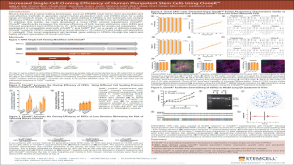 科学海报Increased Single-Cell Cloning Efficiency of Human Pluripotent Stem Cells Using CloneR™

 沪公网安备31010102008431号