Lee AS et al. (AUG 2009)
Cell Cycle 8 16 2608--2612
Effects of cell number on teratoma formation by human embryonic stem cells
Teratoma formation is a critical obstacle to safe clinical translation of human embryonic stem (ES) cell-based therapies in the future. As current methods of isolation are unable to yield 100% pure population of differentiated cells from a pluripotent donor source,potential development of these tumors is a significant concern. Here we used non-invasive reporter gene imaging to investigate the relationship between human ES cell number and teratoma formation in a xenogenic model of ES cell transplantation. Human ES cells (H9 line) were stably transduced with a double fusion (DF) reporter construct containing firefly luciferase and enhanced green fluorescent protein (Fluc- eGFP) driven by a human ubiquitin promoter. Immunodeficient mice received intramyocardial (n = 35) or skeletal muscle (n = 35) injection of 1 × 102,1 × 103,1 × 104,1 × 105 or 1 × 10⁶ DF positive ES cells suspended in saline for myocardium and Matrigel for skeletal muscle. Cell survival and proliferation were monitored via bioluminescence imaging (BLI) for an 8 week period following transplantation. Mice negative for Fluc signal after 8 weeks were followed out to day 365 to confirm tumor absence. Significantly,in this study,a minimum of 1 × 10⁵ ES cells in the myocardium and 1 × 10⁴ cells in the skeletal muscle was observed to be requisite for teratoma development,suggesting that human ES cell number may be a critical factor in teratoma formation. Engraftment and tumor occurrence were also observed to be highly dependent on ES cell number. We anticipate these results should yield useful insights to the safe and reliable application of human ES cell derivatives in the clinic. Keywords
View Publication
产品号#:
05850
05857
05870
05875
85850
85857
85870
85875
产品名:
mTeSR™1
mTeSR™1
Lee S-HH et al. (JUN 2000)
Nature biotechnology 18 6 675--9
Efficient generation of midbrain and hindbrain neurons from mouse embryonic stem cells.
Embryonic stem (ES) cells are clonal cell lines derived from the inner cell mass of the developing blastocyst that can proliferate extensively in vitro and are capable of adopting all the cell fates in a developing embryo. Clinical interest in the use of ES cells has been stimulated by studies showing that isolated human cells with ES properties from the inner cell mass or developing germ cells can provide a source of somatic precursors. Previous studies have defined in vitro conditions for promoting the development of specific somatic fates,specifically,hematopoietic,mesodermal,and neurectodermal. In this study,we present a method for obtaining dopaminergic (DA) and serotonergic neurons in high yield from mouse ES cells in vitro. Furthermore,we demonstrate that the ES cells can be obtained in unlimited numbers and that these neuron types are generated efficiently. We generated CNS progenitor populations from ES cells,expanded these cells and promoted their differentiation into dopaminergic and serotonergic neurons in the presence of mitogen and specific signaling molecules. The differentiation and maturation of neuronal cells was completed after mitogen withdrawal from the growth medium. This experimental system provides a powerful tool for analyzing the molecular mechanisms controlling the functions of these neurons in vitro and in vivo,and potentially for understanding and treating neurodegenerative and psychiatric diseases.
View Publication
Differentiation of osteoblasts and in vitro bone formation from murine embryonic stem cells.
Pluripotent embryonic stem (ES) cells have the potential to differentiate to all fetal and adult cell types and might represent a useful cell source for tissue engineering and repair. Here we show that differentiation of ES cells toward the osteoblast lineage can be enhanced by supplementing serum-containing media with ascorbic acid,beta-glycerophosphate,and/or dexamethasone/retinoic acid or by co-culture with fetal murine osteoblasts. ES cell differentiation into osteoblasts was characterized by the formation of discrete mineralized bone nodules that consisted of 50-100 cells within an extracellular matrix of collagen-1 and osteocalcin. Dexamethasone in combination with ascorbic acid and beta-glycerophosphate induced the greatest number of bone nodules and was dependent on time of stimulation with a sevenfold increase when added to ES cultures after,but not before,14 days. Co-culture with fetal osteoblasts also provided a potent stimulus for osteogenic differentiation inducing a fivefold increase in nodule number relative to ES cells cultured alone. These data demonstrate the application of a quantitative assay for the derivation of osteoblast lineage progenitors from pluripotent ES cells. This could be applied to obtain purified osteoblasts to analyze mechanisms of osteogenesis and for use of ES cells in skeletal tissue repair.
View Publication
产品号#:
06902
06952
00321
00322
00323
00324
00325
产品名:
Marchetti S et al. (MAY 2002)
Journal of cell science 115 Pt 10 2075--85
Endothelial cells genetically selected from differentiating mouse embryonic stem cells incorporate at sites of neovascularization in vivo.
Large scale purification of endothelial cells is of great interest as it could improve tissue transplantation,reperfusion of ischemic tissues and treatment of pathologies in which an endothelial cell dysfunction exists. In this study,we describe a novel genetic approach that selects for endothelial cells from differentiating embryonic stem (ES) cells. Our strategy is based on the establishment of ES-cell clones that carry an integrated puromycin resistance gene under the control of a vascular endothelium-specific promoter,tie-1. Using EGFP as a reporter gene,we first confirmed the endothelial specificity of the tie-1 promoter in the embryoid body model and in cells differentiated in 2D cultures. Subsequently,tie-1-EGFP ES cells were used as recipients for the tie-1-driven puror transgene. The resulting stable clones were expanded and differentiated for seven days in the presence of VEGF before puromycin selection. As expected,puromycin-resistant cells were positive for EGFP and also expressed several endothelial markers,including CD31,CD34,VEGFR-1,VEGFR-2,Tie-1,VE-cadherin and ICAM-2. Release from the puromycin selection resulted in the appearance of alpha-smooth muscle actin-positive cells. Such cells became more numerous when the population was cultured on laminin-1 or in the presence of TGF-beta1,two known inducers of smooth muscle cell differentiation. The hypothesis that endothelial cells or their progenitors may differentiate towards a smooth muscle cell phenotype was further supported by the presence of cells expressing both CD31 and alpha-smooth muscle actin markers. Finally,we show that purified endothelial cells can incorporate into the neovasculature of transplanted tumors in nude mice. Taken together,these results suggest that application of endothelial lineage selection to differentiating ES cells may become a useful approach for future pro-angiogenic and endothelial cell replacement therapies.
View Publication
产品号#:
06902
06952
00321
00322
00323
00324
00325
产品名:
Lin H et al. (JAN 2003)
Stem cells (Dayton,Ohio) 21 2 152--61
Multilineage potential of homozygous stem cells derived from metaphase II oocytes.
Human stem cells derived from human fertilized oocytes,fetal primordial germ cells,umbilical cord blood,and adult tissues provide potential cell-based therapies for repair of degenerating or damaged tissues. However,the diversity of major histocompatibility complex (MHC) antigens in the general population and the resultant risk of immune-mediated rejection complicates the allogenic use of established stem cells. We assessed an alternative approach,employing chemical activation of nonfertilized metaphase II oocytes for producing stem cells homozygous for MHC. By using F1 hybrid mice (H-2-B/D),we established stem cell lines homozygous for H-2-B and H-2-D,respectively. The undifferentiated cells retained a normal karyotype,expressed stage-specific embryonic antigen-1 and Oct4,and were positive for alkaline phosphatase and telomerase. Teratomatous growth of these cells displayed the development of a variety of tissue types encompassing all three germ layers. In addition,these cells demonstrated the potential for in vitro differentiation into endoderm,neuronal,and hematopoietic lineages. We also evaluated this homozygous stem cell approach in human tissue. Five unfertilized blastocysts were derived from a total of 25 human oocytes,and cells from one of the five hatched blastocysts proliferated and survived beyond two passages. Our studies demonstrate a plausible homozygous stem cell" approach for deriving pluripotent stem cells that can overcome the immune-mediated rejection response common in allotransplantation�
View Publication
产品号#:
03434
03444
产品名:
MethoCult™ GF M3434
MethoCult™ GF M3434
Xu X et al. ( 2010)
Biotechnology Progress 26 3 827--837
The roles of apoptotic pathways in the low recovery rate after cryopreservation of dissociated human embryonic stem cells
Human embryonic stem (hES) cells have enormous potential for clinical applications. However,one major challenge is to achieve high cell recovery rate after cryopreservation. Understanding how the conventional cryopreservation protocol fails to protect the cells is a prerequisite for developing efficient and successful cryopreservation methods for hES cell lines and banks. We investigated how the stimuli from cryopreservation result in apoptosis,which causes the low cell recovery rate after cryopreservation. The level of reactive oxygen species (ROS) is significantly increased,F-actin content and distribution is altered,and caspase-8 and caspase-9 are activated after cryopreservation. p53 is also activated and translocated into nucleus. During cryopreservation apoptosis is induced by activation of both caspase-8 through the extrinsic pathway and caspase-9 through the intrinsic pathway. However,exactly how the extrinsic pathway is activated is still unclear and deserves further investigation.
View Publication


 EasySep™小鼠TIL(CD45)正选试剂盒




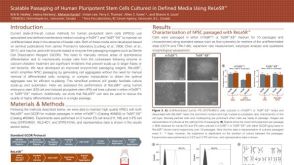 科学海报Scalable Passaging of Human Pluripotent Stem Cells Cultured in Defined Media Using ReLeSR™



 沪公网安备31010102008431号