Shi X et al. (MAY 2011)
Infection and immunity 79 5 2031--42
Thymopoietic and bone marrow response to murine Pneumocystis pneumonia.
CD4(+) T cells play a key role in host defense against Pneumocystis infection. To define the role of naïve CD4(+) T cell production through the thymopoietic response in host defense against Pneumocystis infection,Pneumocystis murina infection in the lung was induced in adult male C57BL/6 mice with and without prior thymectomy. Pneumocystis infection caused a significant increase in the number of CCR9(+) multipotent progenitor (MPP) cells in the bone marrow and peripheral circulation,an increase in populations of earliest thymic progenitors (ETPs) and double negative (DN) thymocytes in the thymus,and recruitment of naïve and total CD4(+) T cells into the alveolar space. The level of murine signal joint T cell receptor excision circles (msjTRECs) in spleen CD4(+) cells was increased at 5 weeks post-Pneumocystis infection. In thymectomized mice,the numbers of naïve,central memory,and total CD4(+) T cells in all tissues examined were markedly reduced following Pneumocystis infection. This deficiency of naïve and central memory CD4(+) T cells was associated with delayed pulmonary clearance of Pneumocystis. Extracts of Pneumocystis resulted in an increase in the number of CCR9(+) MPPs in the cultured bone marrow cells. Stimulation of cultured bone marrow cells with ligands to Toll-like receptor 2 ([TLR-2] zymosan) and TLR-9 (ODN M362) each caused a similar increase in CCR9(+) MPP cells via activation of the Jun N-terminal protein kinase (JNK) pathway. These results demonstrate that enhanced production of naïve CD4(+) T lymphocytes through the thymopoietic response and enhanced delivery of lymphopoietic precursors from the bone marrow play an important role in host defense against Pneumocystis infection.
View Publication
产品号#:
09600
09650
产品名:
StemSpan™ SFEM
StemSpan™ SFEM
Abdelwahab SF et al. (DEC 2003)
Proceedings of the National Academy of Sciences of the United States of America 100 25 15006--10
HIV-1-suppressive factors are secreted by CD4+ T cells during primary immune responses.
CD4+ T cells are required for immunity against many viral infections,including HIV-1 where a positive correlation has been observed between strong recall responses and low HIV-1 viral loads. Some HIV-1-specific CD4+ T cells are preferentially infected with HIV-1,whereas others escape infection by unknown mechanisms. One possibility is that some CD4+ T cells are protected from infection by the secretion of soluble HIV-suppressive factors,although it is not known whether these factors are produced during primary antigen-specific responses. Here,we show that soluble suppressive factors are produced against CXCR4 and CCR5 isolates of HIV-1 during the primary immune response of human CD4+ T cells. This activity requires antigenic stimulation of naïve CD4+ T cells. One anti-CXCR4 factor is macrophage-derived chemokine (chemokine ligand 22,CCL22),and anti-CCR5 factors include macrophage inflammatory protein-1 alpha (CCL3),macrophage inflammatory protein-1 beta (CCL4),and RANTES (regulated upon activation of normal T cells expressed and secreted) (CCL5). Intracellular staining confirms that CD3+CD4+ T cells are the source of the prototype HIV-1-inhibiting chemokines CCL22 and CCL4. These results show that CD4+ T cells secrete an evolving HIV-1-suppressive activity during the primary immune response and that this activity is comprised primarily of CC chemokines. The data also suggest that production of such factors should be considered in the design of vaccines against HIV-1 and as a mechanism whereby the host can control infections with this virus.
View Publication


 EasySep™小鼠TIL(CD45)正选试剂盒




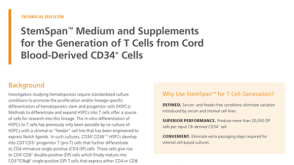 技术公告StemSpan™ Medium and Supplements for the Generation of T Cells from Cord Blood-Derived CD34+ Cells


 沪公网安备31010102008431号