Uenishi G et al. (DEC 2014)
Stem Cell Reports 3 6 1073--1084
Tenascin C promotes hematoendothelial development and T lymphoid commitment from human pluripotent stem cells in chemically defined conditions
The recent identification of hemogenic endothelium (HE) in human pluripotent stem cell (hPSC) cultures presents opportunities to investigate signaling pathways that are essential for blood development from endothelium and provides an exploratory platform for de novo generation of hematopoietic stem cells (HSCs). However,the use of poorly defined human or animal components limits the utility of the current differentiation systems for studying specific growth factors required for HE induction and manufacturing clinical-grade therapeutic blood cells. Here,we identified chemically defined conditions required to produce HE from hPSCs growing in Essential 8 (E8) medium and showed that Tenascin C (TenC),an extracellular matrix protein associated with HSC niches,strongly promotes HE and definitive hematopoiesis in this system. hPSCs differentiated in chemically defined conditions undergo stages of development similar to those previously described in hPSCs cocultured on OP9 feeders,including the formation of VE-Cadherin(+)CD73(-)CD235a/CD43(-) HE and hematopoietic progenitors with myeloid and T lymphoid potential.
View Publication
Levay K and Slepak VZ (SEP 2007)
The Journal of clinical investigation 117 9 2672--83
Tescalcin is an essential factor in megakaryocytic differentiation associated with Ets family gene expression.
We show here that the process of megakaryocytic differentiation requires the presence of the recently discovered protein tescalcin. Tescalcin is dramatically upregulated during the differentiation and maturation of primary megakaryocytes or upon PMA-induced differentiation of K562 cells. This upregulation requires sustained signaling through the ERK pathway. Overexpression of tescalcin in K562 cells initiates events of spontaneous megakaryocytic differentiation,such as expression of specific cell surface antigens,inhibition of cell proliferation,and polyploidization. Conversely,knockdown of this protein in primary CD34+ hematopoietic progenitors and cell lines by RNA interference suppresses megakaryocytic differentiation. In cells lacking tescalcin,the expression of Fli-1,Ets-1,and Ets-2 transcription factors,but not GATA-1 or MafB,is blocked. Thus,tescalcin is essential for the coupling of ERK cascade activation with the expression of Ets family genes in megakaryocytic differentiation.
View Publication
Keskin DB et al. (FEB 2007)
Proceedings of the National Academy of Sciences of the United States of America 104 9 3378--83
TGFbeta promotes conversion of CD16+ peripheral blood NK cells into CD16- NK cells with similarities to decidual NK cells.
During pregnancy the uterine decidua is populated by large numbers of natural killer (NK) cells with a phenotype CD56(superbright)CD16(-)CD9(+)KIR(+) distinct from both subsets of peripheral blood NK cells. Culture of highly purified CD16(+)CD9(-) peripheral blood NK cells in medium containing TGFbeta1 resulted in a transition to CD16(-)CD9(+) NK cells resembling decidual NK cells. Decidual stromal cells,when isolated and cultured in vitro,were found to produce TGFbeta1. Incubation of peripheral blood NK cells with conditioned medium from decidual stromal cells mirrored the effects of TGFbeta1. Similar changes may occur upon NK cell entry into the decidua or other tissues expressing substantial TGFbeta. In addition,Lin(-)CD34(+)CD45(+) hematopoietic stem/progenitor cells could be isolated from decidual tissue. These progenitors also produced NK cells when cultured in conditioned medium from decidual stromal cells supplemented with IL-15 and stem cell factor.
View Publication
Ito CY et al. (JAN 2010)
Blood 115 2 257--60
The AC133+CD38-, but not the rhodamine-low, phenotype tracks LTC-IC and SRC function in human cord blood ex vivo expansion cultures.
Phenotypic markers associated with human hematopoietic stem cells (HSCs) were developed and validated using uncultured cells. Because phenotype and function can be dissociated during culture,better markers to prospectively track and isolate HSCs in ex vivo cultures could be instrumental in advancing HSC-based therapies. Using an expansion system previously shown to increase hematopoietic progenitors and SCID-repopulating cells (SRCs),we demonstrated that the rhodamine-low phenotype was lost,whereas AC133 expression was retained throughout culture. Furthermore,the AC133(+)CD38(-) subpopulation was significantly enriched in long-term culture-initiating cells (LTC-IC) and SRCs after culture. Preculture and postculture analysis of total nucleated cell and LTC-IC number,and limiting dilution analysis in NOD/SCID mice,showed a 43-fold expansion of the AC133(+)CD38(-) subpopulation that corresponded to a 7.3-fold and 4.4-fold expansion of LTC-ICs and SRCs in this subpopulation,respectively. Thus,AC133(+)CD38(-) is an improved marker that tracks and enriches for LTC-IC and SRC in ex vivo cultures.
View Publication
Webb CF et al. (MAR 2011)
Molecular and cellular biology 31 5 1041--53
The ARID family transcription factor bright is required for both hematopoietic stem cell and B lineage development.
Bright/Arid3a has been characterized both as an activator of immunoglobulin heavy-chain transcription and as a proto-oncogene. Although Bright expression is highly B lineage stage restricted in adult mice,its expression in the earliest identifiable hematopoietic stem cell (HSC) population suggests that Bright might have additional functions. We showed that textgreater99% of Bright(-/-) embryos die at midgestation from failed hematopoiesis. Bright(-/-) embryonic day 12.5 (E12.5) fetal livers showed an increase in the expression of immature markers. Colony-forming assays indicated that the hematopoietic potential of Bright(-/-) mice is markedly reduced. Rare survivors of lethality,which were not compensated by the closely related paralogue Bright-derived protein (Bdp)/Arid3b,suffered HSC deficits in their bone marrow as well as B lineage-intrinsic developmental and functional deficiencies in their peripheries. These include a reduction in a natural antibody,B-1 responses to phosphocholine,and selective T-dependent impairment of IgG1 class switching. Our results place Bright/Arid3a on a select list of transcriptional regulators required to program both HSC and lineage-specific differentiation.
View Publication
Mortensen M et al. (MAR 2011)
The Journal of experimental medicine 208 3 455--67
The autophagy protein Atg7 is essential for hematopoietic stem cell maintenance.
The role of autophagy,a lysosomal degradation pathway which prevents cellular damage,in the maintenance of adult mouse hematopoietic stem cells (HSCs) remains unknown. Although normal HSCs sustain life-long hematopoiesis,malignant transformation of HSCs leads to leukemia. Therefore,mechanisms protecting HSCs from cellular damage are essential to prevent hematopoietic malignancies. In this study,we crippled autophagy in HSCs by conditionally deleting the essential autophagy gene Atg7 in the hematopoietic system. This resulted in the loss of normal HSC functions,a severe myeloproliferation,and death of the mice within weeks. The hematopoietic stem and progenitor cell compartment displayed an accumulation of mitochondria and reactive oxygen species,as well as increased proliferation and DNA damage. HSCs within the Lin(-)Sca-1(+)c-Kit(+) (LSK) compartment were significantly reduced. Although the overall LSK compartment was expanded,Atg7-deficient LSK cells failed to reconstitute the hematopoietic system of lethally irradiated mice. Consistent with loss of HSC functions,the production of both lymphoid and myeloid progenitors was impaired in the absence of Atg7. Collectively,these data show that Atg7 is an essential regulator of adult HSC maintenance.
View Publication
The c-myb proto-oncogene and microRNA-15a comprise an active autoregulatory feedback loop in human hematopoietic cells.
The c-myb proto-oncogene encodes an obligate hematopoietic cell transcription factor important for lineage commitment,proliferation,and differentiation. Given its critical functions,c-Myb regulatory factors are of great interest but remain incompletely defined. Herein we show that c-Myb expression is subject to posttranscriptional regulation by microRNA (miRNA)-15a. Using a luciferase reporter assay,we found that miR-15a directly binds the 3'-UTR of c-myb mRNA. By transfecting K562 myeloid leukemia cells with a miR-15a mimic,functionality of binding was shown. The mimic decreased c-Myb expression,and blocked the cells in the G(1) phase of cell cycle. Exogenous expression of c-myb mRNA lacking the 3'-UTR partially rescued the miR-15a induced cell-cycle block. Of interest,the miR-15a promoter contained several potential c-Myb protein binding sites. Occupancy of one canonical c-Myb binding site was demonstrated by chromatin immunoprecipitation analysis and shown to be required for miR-15a expression in K562 cells. Finally,in studies using normal human CD34(+) cells,we showed that c-Myb and miR-15a expression were inversely correlated in cells undergoing erythroid differentiation,and that overexpression of miR-15a blocked both erythroid and myeloid colony formation in vitro. In aggregate,these findings suggest the presence of a c-Myb-miR-15a autoregulatory feedback loop of potential importance in human hematopoiesis.
View Publication
Gambone JE et al. (MAY 2011)
Blood 117 21 5733--43
The c-Myb target gene neuromedin U functions as a novel cofactor during the early stages of erythropoiesis.
The requirement of c-Myb during erythropoiesis spurred an interest in identifying c-Myb target genes that are important for erythroid development. Here,we determined that the neuropeptide neuromedin U (NmU) is a c-Myb target gene. Silencing NmU,c-myb,or NmU's cognate receptor NMUR1 expression in human CD34(+) cells impaired burst-forming unit-erythroid (BFU-E) and colony-forming unit-erythroid (CFU-E) formation compared with control. Exogenous addition of NmU peptide to NmU or c-myb siRNA-treated CD34(+) cells rescued BFU-E and yielded a greater number of CFU-E than observed with control. No rescue of BFU-E and CFU-E growth was observed when NmU peptide was exogenously added to NMUR1 siRNA-treated cells compared with NMUR1 siRNA-treated cells cultured without NmU peptide. In K562 and CD34(+) cells,NmU activated protein kinase C-βII,a factor associated with hematopoietic differentiation-proliferation. CD34(+) cells cultured under erythroid-inducing conditions,with NmU peptide and erythropoietin added at day 6,revealed an increase in endogenous NmU and c-myb gene expression at day 8 and a 16% expansion of early erythroblasts at day 10 compared to cultures without NmU peptide. Combined,these data strongly support that the c-Myb target gene NmU functions as a novel cofactor for erythropoiesis and expands early erythroblasts.
View Publication
Pearce DJ and Bonnet D (SEP 2007)
Experimental hematology 35 9 1437--46
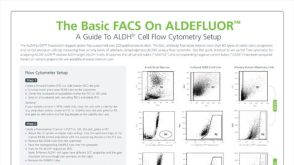
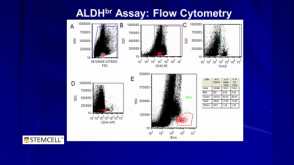
The combined use of Hoechst efflux ability and aldehyde dehydrogenase activity to identify murine and human hematopoietic stem cells.
OBJECTIVE: In murine hematopoietic tissue,direct repopulation experiments have demonstrated that the side population (SP) represents a remarkable enrichment of hematopoietic stem cells. Human SP has been phenotyped as negative for lineage antigens as well as CD34. However,in the 9 years since the original publication,no long-term hematopoietic reconstitution has been reported for the adult human SP/CD34(-) subset. Elevated levels of aldehyde dehydrogenase (ALDH) have been demonstrated in murine and human progenitor cells when compared to other hematopoietic cells. METHODS: Here,we report the phenotype of human cord blood SP cells. We established the technique of simultaneous phenotyping,Hoechst exclusion,and ALDH labeling on murine tissues. We then performed the simultaneous analysis of phenotype,SP,and ALDH activity on human cord blood and bone marrow cells. Finally,we analyzed the phenotype and functional potential of human cord blood ALDH(+) cells to determine whether Lin(-)/CD34(-) cells are identified via this technique. RESULTS: We demonstrate that human Lin(-)/CD34(-)/ALDH(+) cells are capable of long-term repopulation. Although the SP technique identifies cells that overlap with the ALDH(+) cell population,this is restricted to the CD34(+) cell subset. CONCLUSION: Hoechst exclusion ability does not seem to be the method of choice for the isolation of human hematopoietic stem cells.
View Publication
Ketteler R et al. (JAN 2003)
The Journal of biological chemistry 278 4 2654--60
The cytokine-inducible Scr homology domain-containing protein negatively regulates signaling by promoting apoptosis in erythroid progenitor cells.
The small cytokine-inducible SH2 domain-containing protein (CIS) has been implicated in the negative regulation of signaling through cytokine receptors. CIS reduces growth of erythropoietin receptor (EpoR)-dependent cell lines,but its role in proliferation,differentiation,and survival of erythroid progenitor cells has not been resolved. To dissect the function of CIS in cell lines and erythroid progenitor cells,we generated green fluorescent protein (GFP)-tagged versions of wild type CIS,a mutant harboring an inactivated SH2 domain (CIS R107K),and a mutant with a deletion of the SOCS Box (CISDeltaBox). Retroviral expression of the GFP fusion proteins in BaF3-EpoR cells revealed that both Tyr-401 in the EpoR and an intact SH2 domain within CIS are prerequisites for receptor recruitment. As a consequence,both are essential for the growth inhibitory effect of CIS,whereas the CIS SOCS box is dispensable. Accordingly,the retroviral expression of GFP-CIS but not GFP-CIS R107K impaired proliferation of erythroid progenitor cells in colony assays. Erythroid differentiation was unaffected by either protein. Interestingly,apoptosis of erythroid progenitor cells was increased upon GFP-CIS expression and this required the presence both of an intact SH2 domain and the SOCS box. Thus,CIS negatively regulates signaling at two levels,apoptosis and proliferation,and thereby sets a threshold for signal transduction.
View Publication
Sun J et al. (APR 2009)
The Journal of biological chemistry 284 17 11039--47
The D816V mutation of c-Kit circumvents a requirement for Src family kinases in c-Kit signal transduction.
The receptor tyrosine kinase c-Kit plays a critical role in hematopoiesis,and gain-of-function mutations of the receptor are frequently seen in several malignancies,including acute myeloid leukemia,gastrointestinal stromal tumors,and testicular carcinoma. The most common mutation of c-Kit in these disorders is a substitution of the aspartic acid residue in position 816 to a valine (D816V),leading to constitutive activation of the receptor. In this study,we aimed to investigate the role of Src family kinases in c-Kit/D816V signaling. Src family kinases are necessary for the phosphorylation of wild-type c-Kit as well as of activation of downstream signaling pathways including receptor ubiquitination and the Ras/Mek/Erk pathway. Our data demonstrate that,unlike wild-type c-Kit,the phosphorylation of c-Kit/D816V is not dependent on Src family kinases. In addition,we found that neither receptor ubiquitination nor Erk activation by c-Kit/D816V required activation of Src family kinases. In vitro kinase assay using synthetic peptides revealed that c-Kit/D816V had an altered substrate specificity resembling Src and Abl tyrosine kinases. We further present evidence that,in contrast to wild-type c-Kit,Src family kinases are dispensable for c-Kit/D816V cell survival,proliferation,and colony formation. Taken together,we demonstrate that the signal transduction pathways mediated by c-Kit/D816V are markedly different from those activated by wild-type c-Kit and that altered substrate specificity of c-Kit circumvents a need for Src family kinases in signaling of growth and survival,thereby contributing to the transforming potential of c-Kit/D816V.
View Publication