Chua SJ et al. (FEB 2009)
Biochemical and biophysical research communications 379 2 217--21
Neural progenitors, neurons and oligodendrocytes from human umbilical cord blood cells in a serum-free, feeder-free cell culture.
We have previously demonstrated that lineage negative cells (Lin(neg)) from umbilical cord blood (UCB) develop into multipotent cells capable of differentiation into bone,muscle,endothelial and neural cells. The objective of this study was to determine the optimal conditions required for Lin(neg) UCB cells to differentiate into neuronal cells and oligodendrocytes. We demonstrate that early neural stage markers (nestin,neurofilament,A2B5 and Sox2) are expressed in Lin(neg) cells cultured in FGF4,SCF,Flt3-ligand reprogramming culture media followed by the early macroglial cell marker O4. Early stage oligodendrocyte markers CNPase,GalC,Olig2 and the late-stage marker MOSP are observed,as is the Schwann cell marker PMP22. In summary,Lin(neg) UCB cells,when appropriately cultured,are able to exhibit characteristics of neuronal and macroglial cells that can specifically differentiate into oligodendrocytes and Schwann cells and express proteins associated with myelin production after in vitro differentiation.
View Publication
产品号#:
09600
09650
产品名:
StemSpan™ SFEM
StemSpan™ SFEM
Cheng L et al. (JUN 2014)
Cell Research 24 6 665--679
Generation of neural progenitor cells by chemical cocktails and hypoxia
Neural progenitor cells (NPCs) can be induced from somatic cells by defined factors. Here we report that NPCs can be generated from mouse embryonic fibroblasts by a chemical cocktail,namely VCR (V,VPA,an inhibitor of HDACs; C,CHIR99021,an inhibitor of GSK-3 kinases and R,Repsox,an inhibitor of TGF-β pathways),under a physiological hypoxic condition. These chemical-induced NPCs (ciNPCs) resemble mouse brain-derived NPCs re- garding their proliferative and self-renewing abilities,gene expression profiles,and multipotency for different neu- roectodermal lineages in vitro and in vivo. Further experiments reveal that alternative cocktails with inhibitors of histone deacetylation,glycogen synthase kinase,and TGF-β pathways show similar efficacies for ciNPC induction. Moreover,ciNPCs can also be induced from mouse tail-tip fibroblasts and human urinary cells with the same chemi- cal cocktail VCR. Thus our study demonstrates that lineage-specific conversion of somatic cells to NPCs could be achieved by chemical cocktails without introducing exogenous factors.
View Publication
产品号#:
05850
05857
05870
05875
85850
85857
85870
85875
产品名:
mTeSR™1
mTeSR™1
Abuljadayel IS (JAN 2003)
Current medical research and opinion 19 5 355--75
Induction of stem cell-like plasticity in mononuclear cells derived from unmobilised adult human peripheral blood.
Undifferentiated pluripotent stem cells with flexible developmental potentials are not normally found in peripheral blood. However,such cells have recently been reported to reside in the bone marrow. Herein are reported methods of inducing pluripotency in cells derived from unmobilised adult human peripheral blood. In response to the inclusion of purified CR3/43 monoclonal antibody (mAb) to well-established culture conditions,mononuclear cells (MNC) obtained from a single blood donor are converted into pluripotent haematopoietic,neuronal and cardiomyogenic progenitor stem cells or undifferentiated stem cells. The haematopoietic stem cells are CD34+,clonogenic and have been shown to repopulate non-obese diabetic/severe combined immunodeficient (NOD/SCID) mice. The neuronal precursors transcribe the primitive stem cell markers OCT-4 and nestin,and on maturation,differentially stain positive for neuronal,glial or oligodendrocyte-specific antigens. The cardiomyogenic progenitor stem cells form large bodies of asynchronously beating cells and differentiate into mature cardiomyocytes which transcribe GATA-4. The undifferentiated stem cells do not express haematopoietic-associated markers,are negative for major histocompatibility complex (MHC) class I and II antigens,transcribe high levels of OCT-4 and form embryoid body (EB)-like structures. This induction of stem cell-like plasticity in MNC may have proceeded by a process of retrodifferentiation but,in any case,could have profound clinical and pharmacological implications. Finally,the flexibility and the speed by which a variety of stem cell classes can be generated ex vivo from donor blood could potentially transfer this novel process into a less invasive automated clinical procedure.
View Publication
产品号#:
04434
04444
产品名:
MethoCult™H4434经典
MethoCult™H4434经典
Lee S-HH et al. (JUN 2000)
Nature biotechnology 18 6 675--9
Efficient generation of midbrain and hindbrain neurons from mouse embryonic stem cells.
Embryonic stem (ES) cells are clonal cell lines derived from the inner cell mass of the developing blastocyst that can proliferate extensively in vitro and are capable of adopting all the cell fates in a developing embryo. Clinical interest in the use of ES cells has been stimulated by studies showing that isolated human cells with ES properties from the inner cell mass or developing germ cells can provide a source of somatic precursors. Previous studies have defined in vitro conditions for promoting the development of specific somatic fates,specifically,hematopoietic,mesodermal,and neurectodermal. In this study,we present a method for obtaining dopaminergic (DA) and serotonergic neurons in high yield from mouse ES cells in vitro. Furthermore,we demonstrate that the ES cells can be obtained in unlimited numbers and that these neuron types are generated efficiently. We generated CNS progenitor populations from ES cells,expanded these cells and promoted their differentiation into dopaminergic and serotonergic neurons in the presence of mitogen and specific signaling molecules. The differentiation and maturation of neuronal cells was completed after mitogen withdrawal from the growth medium. This experimental system provides a powerful tool for analyzing the molecular mechanisms controlling the functions of these neurons in vitro and in vivo,and potentially for understanding and treating neurodegenerative and psychiatric diseases.
View Publication


 EasySep™小鼠TIL(CD45)正选试剂盒




 技术窍门组织解离方法指南
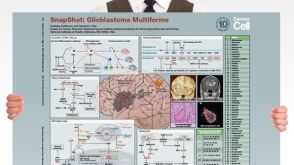 挂图SnapShot: Glioblastoma Multiforme Overview of the key concepts and mechanisms in glioblastoma multiforme biology
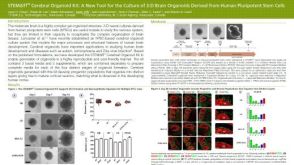 科学海报STEMdiff™ Cerebral Organoid Kit: A New Tool for the Culture of 3D Brain Organoids Derived from hPSCs

 沪公网安备31010102008431号