Byun H-M et al. (JUL 2005)
Biochemical and biophysical research communications 332 2 518--23
Plasmid vectors harboring cellular promoters can induce prolonged gene expression in hematopoietic and mesenchymal progenitor cells.
Although prolonged transgene expression in progenitor cells might be desirable for modified cell therapy,the viral promoter-based expression vector tends to promote transgene expression only for a limited period. Here,we examined the ability of cellular promoters from elongation factor-1alpha (EF-1alpha) and ubiquitin C to drive gene expression in hematopoietic TF-1 and mesenchymal progenitor cells. We compared the expression levels and duration of a model gene,interleukin-2,generated by the cellular promoters to those by the cytomegalovirus (CMV) promoter. The EF-1alpha and ubiquitin C promoters drove prolonged gene expression in hematopoietic TF-1 and mesenchymal progenitor cells,whereas the CMV promoter did not. At day 7 after transfection in TF-1 cells,the mRNA expression levels of interleukin-2 driven by the EF-1alpha and ubiquitin C promoters were 118- and 56-fold higher,respectively,than those driven by the CMV promoter. Similarly,in mesenchymal progenitor cells,the expression levels of interleukin-2 driven by the EF-1alpha and ubiquitin C promoters were 98- and 20-fold higher,respectively,than that driven by the CMV promoter-encoding plasmid. Moreover,the ubiquitin C promoter directed higher levels of green fluorescence protein expression in mesenchymal progenitor cells than did the CMV promoter. These results indicate that the use of cellular promoters such as those for EF-1alpha and ubiquitin C might direct prolonged gene expression in hematopoietic and mesenchymal progenitor cells.
View Publication
Dí et al. (DEC 2007)
Cardiovascular research 76 3 517--27
Plasticity of CD133+ cells: role in pulmonary vascular remodeling.
OBJECTIVE: Studies in pulmonary arteries (PA) of patients with chronic obstructive pulmonary disease (COPD) suggest that bone marrow-derived endothelial progenitor cells (CD133(+)) may infiltrate the intima and differentiate into smooth muscle cells (SMC). This study aimed to evaluate the plasticity of CD133(+) cells to differentiate into SMC and endothelial cells (EC) in both cell culture and human isolated PA. METHODS: Plasticity of granulocyte-colony stimulator factor (G-CSF)-mobilized peripheral blood CD133(+) cells was assessed in co-cultures with primary lines of human PA endothelial cells (PAEC) or SMC (PASMC) and in isolated human PA. We also evaluated if the phenotype of differentiated progenitor cells was acquired by fusion or differentiation. RESULTS: The in vitro studies demonstrated CD133(+) cells may acquire the morphology and phenotype of the cells they were co-cultured with. CD133(+) cells co-incubated with human isolated PA were able to migrate into the intima and differentiate into SMC. Progenitor cell differentiation was produced without fusion with mature cells. CONCLUSIONS: We provide evidence of plasticity of CD133(+) cells to differentiate into both endothelial cells and SMC,reinforcing the idea of their potential role in the remodeling process of PA in COPD. This process was conducted by transdifferentiation and not by cell fusion.
View Publication
Lambert MP et al. (SEP 2009)
Blood 114 11 2290--8
Platelet factor 4 regulates megakaryopoiesis through low-density lipoprotein receptor-related protein 1 (LRP1) on megakaryocytes.
Platelet factor 4 (PF4) is a negative regulator of megakaryopoiesis,but its mechanism of action had not been addressed. Low-density lipoprotein (LDL) receptor-related protein-1 (LRP1) has been shown to mediate endothelial cell responses to PF4 and so we tested this receptor's importance in PF4's role in megakaryopoiesis. We found that LRP1 is absent from megakaryocyte-erythrocyte progenitor cells,is maximally present on large,polyploidy megakaryocytes,and near absent on platelets. Blocking LRP1 with either receptor-associated protein (RAP),an antagonist of LDL family member receptors,or specific anti-LRP1 antibodies reversed the inhibition of megakaryocyte colony growth by PF4. In addition,using shRNA to reduce LRP1 expression was able to restore megakaryocyte colony formation in bone marrow isolated from human PF4-overexpressing mice (hPF4(High)). Further,shRNA knockdown of LRP1 expression was able to limit the effects of PF4 on megakaryopoiesis. Finally,infusion of RAP into hPF4(High) mice was able to increase baseline platelet counts without affecting other lineages,suggesting that this mechanism is important in vivo. These studies extend our understanding of PF4's negative paracrine effect in megakaryopoiesis and its potential clinical implications as well as provide insights into the biology of LRP1,which is transiently expressed during megakaryopoiesis.
View Publication
Yap MS et al. (DEC 2016)
Virology journal 13 1 5
Pluripotent Human embryonic stem cell derived neural lineages for in vitro modelling of enterovirus 71 infection and therapy.
BACKGROUND The incidence of neurological complications and fatalities associated with Hand,Foot & Mouth disease has increased over recent years,due to emergence of newly-evolved strains of Enterovirus 71 (EV71). In the search for new antiviral therapeutics against EV71,accurate and sensitive in vitro cellular models for preliminary studies of EV71 pathogenesis is an essential prerequisite,before progressing to expensive and time-consuming live animal studies and clinical trials. METHODS This study thus investigated whether neural lineages derived from pluripotent human embryonic stem cells (hESC) can fulfil this purpose. EV71 infection of hESC-derived neural stem cells (NSC) and mature neurons (MN) was carried out in vitro,in comparison with RD and SH-SY5Y cell lines. RESULTS Upon assessment of post-infection survivability and EV71 production by the various types,it was observed that NSC were significantly more susceptible to EV71 infection compared to MN,RD (rhabdomyosarcoma) and SH-SY5Y cells,which was consistent with previous studies on mice. The SP81 peptide had significantly greater inhibitory effect on EV71 production by NSC and MN compared to the cancer-derived RD and SH-SY5Y cell lines. CONCLUSIONS Hence,this study demonstrates that hESC-derived neural lineages can be utilized as in vitro models for studying EV71 pathogenesis and for screening of antiviral therapeutics.
View Publication
Pluripotent male germline stem cells from goat fetal testis and their survival in mouse testis.
Male germline stem cells (mGSCs) are stem cells present in male testis responsible for spermatogenesis during their whole life. Studies have shown that mGSCs can be derived in vitro and resemble embryonic stem cells (ESCs) properties both in the mouse and humans. However,little is know about these cells in domestic animals. Here we report the first successful establishment of goat GSCs derived from 2-5-month fetal testis,and developmental potential assay of these cells both in vitro and in vivo. These cells express pluripotent markers such as Oct4,Sox2,C-myc,and Tert when cultured as human ESCs conditions. Embryoid bodies (EBs) formed by goat mGSCs were induced with 2 × 10(-6) M retinoic acid (RA). Immunofluorescence analysis showed that some cells inside of the EBs were positive for meiosis marker-SCP3,STRA8,and germ cell marker-VASA,and haploid marker-FE-J1,PRM1,indicating their germ cell lineage differentiation. Some cells become elongated sperm-like cells after induction. Approximately 34.88% (30/86) embryos showed cleavage and four embryos were cultured on murine fibroblast feeder and formed small embryonic stem like colonies. However,most stalled at four-cell stage after intracytoplasmic sperm injection (ICSI) of these cells. Transplantation of DAPI labeled mGSCs into the seminiferous tubules of busulfan-treated mice,and showed that mGSCs can colonize,self-renew,and differentiate into germ cells. Thus,we have established a goat GSC cell line and these cells could be differentiated into sperm-like cells in vivo and sperms in vitro,providing a promising platform for generation of transgenic goat for production of specific humanized proteins.
View Publication
Picanç et al. (JAN 2011)
Stem cells and development 20 1 169--80
Pluripotent reprogramming of fibroblasts by lentiviral mediated insertion of SOX2, C-MYC, and TCL-1A.
Reprogramming of somatic cells to pluripotency promises to boost cellular therapy. Most instances of direct reprogramming have been achieved by forced expression of defined exogenous factors using multiple viral vectors. The most used 4 transcription factors,octamer-binding transcription factor 4 (OCT4),(sex determining region Y)-box 2 (SOX2),Kruppel-like factor 4 (KLF4),and v-myc myelocytomatosis viral oncogene homolog (C-MYC),can induce pluripotency in mouse and human fibroblasts. Here,we report that forced expression of a new combination of transcription factors (T-cell leukemia/lymphoma protein 1A [TCL-1A],C-MYC,and SOX2) is sufficient to promote the reprogramming of human fibroblasts into pluripotent cells. These 3-factor pluripotent cells are similar to human embryonic stem cells in morphology,in the ability to differentiate into cells of the 3 embryonic layers,and at the level of global gene expression. Induced pluripotent human cells generated by a combination of other factors will be of great help for the understanding of reprogramming pathways. This,in turn,will allow us to better control cell-fate and apply this knowledge to cell therapy.
View Publication
Pluripotent Stem Cell Course
Learn how to maintain human pluripotent stem cells (hPSCs) and assess their quality and characteristics.
Yan Y et al. (FEB 2017)
Acta biomaterialia 49 192--203
Pluripotent stem cell expansion and neural differentiation in 3-D scaffolds of tunable Poisson's ratio.
Biophysical properties of the scaffolds such as the elastic modulus,have been recently shown to impact stem cell lineage commitment. On the other hand,the contribution of the Poisson's ratio,another important biophysical property,to the stem cell fate decision,has not been studied. Scaffolds with tunable Poisson's ratio (ν) (termed as auxetic scaffolds when Poisson's ratio is zero or negative) are anticipated to provide a spectrum of unique biophysical 3-D microenvironments to influence stem cell fate. To test this hypothesis,in the present work we fabricated auxetic polyurethane scaffolds (ν=0 to -0.45) and evaluated their effects on neural differentiation of mouse embryonic stem cells (ESCs) and human induced pluripotent stem cells (hiPSCs). Compared to the regular scaffolds (ν=+0.30) before auxetic conversion,the auxetic scaffolds supported smaller aggregate formation and higher expression of β-tubulin III upon neural differentiation. The influences of pore structure,Poisson's ratio,and elastic modulus on neural lineage commitment were further evaluated using a series of auxetic scaffolds. The results indicate that Poisson's ratio may confound the effects of elastic modulus,and auxetic scaffolds with proper pore structure and Poisson's ratio enhance neural differentiation. This study demonstrates that tuning the Poisson's ratio of the scaffolds together with elastic modulus and microstructure would enhance the capability to generate broader,more diversified ranges of biophysical 3-D microenvironments for the modulation of cellular differentiation. STATEMENT OF SIGNIFICANCE Biophysical signaling from the substrates and scaffolds plays a critical role in neural lineage commitment of pluripotent stem cells. While the contribution of elastic modulus has been well studied,the influence of Poisson's ratio along with microstructure of the scaffolds remains unknown largely due to the lack of technology to produce materials with tailorable Poisson's ratio. This study fabricated auxetic polyurethane scaffolds with different elastic modulus,Poisson's ratio and microstructure and evaluated neural differentiation of pluripotent stem cells. The findings add a novel angle to understand the impact of biophysical microenvironment on stem cell fate decisions.
View Publication
Palakkan AA et al. (SEP 2015)
Biomedical reports 3 5 626--636
Polarisation and functional characterisation of hepatocytes derived from human embryonic and mesenchymal stem cells.
Adult hepatocytes are polarised with their apical and basolateral membranes separated from neighbouring cells by tight junction proteins. Although efficient differentiation of pluripotent stem cells to hepatocytes has been achieved,the formation of proper polarisation in these cells has not been thoroughly investigated. In the present study,human embryonic stem cells (hESCs) and human mesenchymal stem cells (hMSCs) were differentiated to hepatocyte-like cells and the derived hepatocytes were characterised for mature hepatocyte markers. The secretion of hepatic proteins,expression of hepatic genes and the functional hepatic polarisation of stem cell-derived hepatocytes,foetal hepatocytes and the HepG2 hepatic cell line were evaluated and the different lines were compared. The results indicate that hESC-derived hepatocytes are phenotypically more robust and functionally more efficient compared with the hMSC-derived hepatocytes,suggesting their suitability for toxicity studies.
View Publication


 EasySep™小鼠TIL(CD45)正选试剂盒




 挂图Pluripotent Stem Cell Biology Nuclear transfer, reprogramming and cell fusion to induce pluripotency in somatic cells
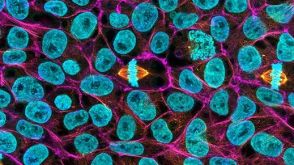 点播Pluripotent Stem Cell Course Learn how to maintain human pluripotent stem cells (hPSCs) and assess their quality and characteristics.

 沪公网安备31010102008431号