Thein SL et al. (JUL 2007)
Proceedings of the National Academy of Sciences of the United States of America 104 27 11346--51
Intergenic variants of HBS1L-MYB are responsible for a major quantitative trait locus on chromosome 6q23 influencing fetal hemoglobin levels in adults.
Individual variation in fetal hemoglobin (HbF,alpha(2)gamma(2)) response underlies the remarkable diversity in phenotypic severity of sickle cell disease and beta thalassemia. HbF levels and HbF-associated quantitative traits (e.g.,F cell levels) are highly heritable. We have previously mapped a major quantitative trait locus (QTL) controlling F cell levels in an extended Asian-Indian kindred with beta thalassemia to a 1.5-Mb interval on chromosome 6q23,but the causative gene(s) are not known. The QTL encompasses several genes including HBS1L,a member of the GTP-binding protein family that is expressed in erythroid progenitor cells. In this high-resolution association study,we have identified multiple genetic variants within and 5' to HBS1L at 6q23 that are strongly associated with F cell levels in families of Northern European ancestry (P = 10(-75)). The region accounts for 17.6% of the F cell variance in northern Europeans. Although mRNA levels of HBS1L and MYB in erythroid precursors grown in vitro are positively correlated,only HBS1L expression correlates with high F cell alleles. The results support a key role for the HBS1L-related genetic variants in HbF control and illustrate the biological complexity of the mechanism of 6q QTL as a modifier of fetal hemoglobin levels in the beta hemoglobinopathies.
View Publication
产品号#:
09600
09650
产品名:
StemSpan™ SFEM
StemSpan™ SFEM
Dí et al. (DEC 2007)
Cardiovascular research 76 3 517--27
Plasticity of CD133+ cells: role in pulmonary vascular remodeling.
OBJECTIVE: Studies in pulmonary arteries (PA) of patients with chronic obstructive pulmonary disease (COPD) suggest that bone marrow-derived endothelial progenitor cells (CD133(+)) may infiltrate the intima and differentiate into smooth muscle cells (SMC). This study aimed to evaluate the plasticity of CD133(+) cells to differentiate into SMC and endothelial cells (EC) in both cell culture and human isolated PA. METHODS: Plasticity of granulocyte-colony stimulator factor (G-CSF)-mobilized peripheral blood CD133(+) cells was assessed in co-cultures with primary lines of human PA endothelial cells (PAEC) or SMC (PASMC) and in isolated human PA. We also evaluated if the phenotype of differentiated progenitor cells was acquired by fusion or differentiation. RESULTS: The in vitro studies demonstrated CD133(+) cells may acquire the morphology and phenotype of the cells they were co-cultured with. CD133(+) cells co-incubated with human isolated PA were able to migrate into the intima and differentiate into SMC. Progenitor cell differentiation was produced without fusion with mature cells. CONCLUSIONS: We provide evidence of plasticity of CD133(+) cells to differentiate into both endothelial cells and SMC,reinforcing the idea of their potential role in the remodeling process of PA in COPD. This process was conducted by transdifferentiation and not by cell fusion.
View Publication
产品号#:
产品名:
Raffaghello L et al. (JAN 2008)
Stem cells (Dayton,Ohio) 26 1 151--62
Human mesenchymal stem cells inhibit neutrophil apoptosis: a model for neutrophil preservation in the bone marrow niche.
Mesenchymal stem cells (MSC) establish close interactions with bone marrow sinusoids in a putative perivascular niche. These vessels contain a large storage pool of mature nonproliferating neutrophils. Here,we have investigated the effects of human bone marrow MSC on neutrophil survival and effector functions. MSC from healthy donors,at very low MSC:neutrophil ratios (up to 1:500),significantly inhibited apoptosis of resting and interleukin (IL)-8-activated neutrophils and dampened N-formyl-l-methionin-l-leucyl-l-phenylalanine (f-MLP)-induced respiratory burst. The antiapoptotic activity of MSC did not require cell-to-cell contact,as shown by transwell experiments. Antibody neutralization experiments demonstrated that the key MSC-derived soluble factor responsible for neutrophil protection from apoptosis was IL-6,which signaled by activating STAT-3 transcription factor. Furthermore,IL-6 expression was detected in MSC by real-time reverse transcription-polymerase chain reaction and enzyme-linked immunosorbent assay. Finally,recombinant IL-6 was found to protect neutrophils from apoptosis in a dose-dependent manner. MSC had no effect on neutrophil phagocytosis,expression of adhesion molecules,and chemotaxis in response to IL-8,f-MLP,or C5a. These results support the following conclusions: (a) in the bone marrow niche,MSC likely protect neutrophils of the storage pool from apoptosis,preserving their effector functions and preventing the excessive or inappropriate activation of the oxidative metabolism,and (b) a novel mechanism whereby the inflammatory potential of activated neutrophils is harnessed by inhibition of apoptosis and reactive oxygen species production without impairing phagocytosis and chemotaxis has been identified.
View Publication
产品号#:
05401
05402
05411
产品名:
MesenCult™ MSC 基础培养基(人)
MesenCult™ MSC 刺激补充剂(人)
MesenCult™ 增殖试剂盒(人)
Porayette P et al. (DEC 2007)
Biochemical and biophysical research communications 364 3 522--527
Amyloid-?? precursor protein expression and modulation in human embryonic stem cells: A novel role for human chorionic gonadotropin
The amyloid-beta precursor protein (AbetaPP) is a ubiquitously expressed adhesion and neuritogenic protein whose processing has previously been shown to be regulated by reproductive hormones including the gonadotropin luteinizing hormone (LH) in human neuroblastoma cells. We report for the first time the expression of AbetaPP in human embryonic stem (hES) cells at the mRNA and protein levels. Using N- and C-terminal antibodies against AbetaPP,we detected both the mature and immature forms of AbetaPP as well as truncated variants ( approximately 53kDa,47kDa,and 29kDa) by immunoblot analyses. Expression of AbetaPP is regulated by both the stemness of the cells and pregnancy-associated hormones. Addition of human chorionic gonadotropin,the fetal equivalent of LH that is dramatically elevated during pregnancy,markedly increased the expression of all AbetaPP forms. These results indicate a critical molecular signaling link between the hormonal environment of pregnancy and the expression of AbetaPP in hES cells that is suggestive of an important function for this protein during early human embryogenesis prior to the formation of neural precursor cells.
View Publication
产品号#:
05850
05857
05870
05875
85850
85857
85870
85875
产品名:
mTeSR™1
mTeSR™1
Qiu C et al. (FEB 2008)
Blood 111 4 2400--8
Globin switches in yolk sac-like primitive and fetal-like definitive red blood cells produced from human embryonic stem cells.
We have previously shown that coculture of human embryonic stem cells (hESCs) for 14 days with immortalized fetal hepatocytes yields CD34(+) cells that can be expanded in serum-free liquid culture into large numbers of megaloblastic nucleated erythroblasts resembling yolk sac-derived cells. We show here that these primitive erythroblasts undergo a switch in hemoglobin (Hb) composition during late terminal erythroid maturation with the basophilic erythroblasts expressing predominantly Hb Gower I (zeta(2)epsilon(2)) and the orthochromatic erythroblasts hemoglobin Gower II (alpha(2)epsilon(2)). This suggests that the switch from Hb Gower I to Hb Gower II,the first hemoglobin switch in humans is a maturation switch not a lineage switch. We also show that extending the coculture of the hESCs with immortalized fetal hepatocytes to 35 days yields CD34(+) cells that differentiate into more developmentally mature,fetal liver-like erythroblasts,that are smaller,express mostly fetal hemoglobin,and can enucleate. We conclude that hESC-derived erythropoiesis closely mimics early human development because the first 2 human hemoglobin switches are recapitulated,and because yolk sac-like and fetal liver-like cells are sequentially produced. Development of a method that yields erythroid cells with an adult phenotype remains necessary,because the most mature cells that can be produced with current systems express less than 2% adult beta-globin mRNA.
View Publication


 EasySep™小鼠TIL(CD45)正选试剂盒




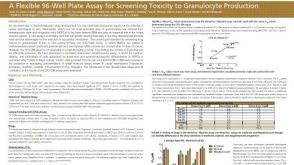 科学海报A Flexible 96-Well Plate Assay for Screening Toxicity to Granulocyte Production
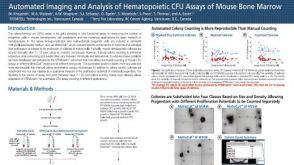 科学海报Automated Imaging and Analysis of Hematopoietic CFU Assays of Mouse Bone Marrow
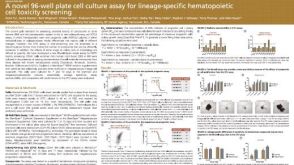 科学海报A Novel 96-well Plate Cell Culture Assay for Lineage-Specific Hematopoietic Cell Toxicity Screening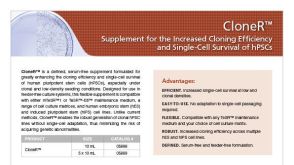
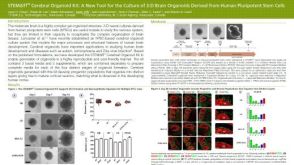 科学海报STEMdiff™ Cerebral Organoid Kit: A New Tool for the Culture of 3D Brain Organoids Derived from hPSCs
 沪公网安备31010102008431号