N. J. Ronaghan et al. ( 2022)
PloS one 17 10 e0276013
M1-like, but not M0- or M2-like, macrophages, reduce RSV infection of primary bronchial epithelial cells in a media-dependent fashion.
Respiratory syncytial virus (RSV) is a common childhood infection that in young infants can progress into severe bronchiolitis and pneumonia. Disease pathogenesis results from both viral mediated and host immune processes of which alveolar macrophages play an important part. Here,we investigated the role of different types of alveolar macrophages on RSV infection using an in vitro co-culture model involving primary tissue-derived human bronchial epithelial cells (HBECs) and human blood monocyte-derived M0-like,M1-like,or M2-like macrophages. It was hypothesized that the in vitro model would recapitulate previous in vivo findings of a protective effect of macrophages against RSV infection. It was found that macrophages maintained their phenotype for the 72-hour co-culture time period and the bronchial epithelial cells were unaffected by the macrophage media. HBEC infection with RSV was decreased by M1-like macrophages but enhanced by M0- or M2-like macrophages. The medium used during the co-culture also impacted the outcome of the infection. This work demonstrates that alveolar macrophage phenotypes may have differential roles during epithelial RSV infection,and demonstrates that an in vitro co-culture model could be used to further investigate the roles of macrophages during bronchial viral infection.
View Publication
产品号#:
05040
100-1079
19359
100-0697
19359RF
产品名:
PneumaCult™-Ex Plus 培养基
EasySep™ 总核酸提取试剂盒
EasySep™人单核细胞分选试剂盒
EasySep™人单核细胞分选试剂盒
RoboSep™ 人单核细胞分选试剂盒
A. Reuter et al. ( 2015)
The Journal of Immunology 194 2696-2705
Criteria for Dendritic Cell Receptor Selection for Efficient Antibody-Targeted Vaccination
Ab-targeted vaccination involves targeting a receptor of choice expressed by dendritic cells (DCs) with Ag-coupled Abs. Currently,there is little consensus as to which criteria determine receptor selection to ensure superior Ag presentation and immunity. In this study,we investigated parameters of DC receptor internalization and determined how they impact Ag presentation outcomes. First,using mixed bone marrow chimeras,we established that Ag-targeted,but not nontargeted,DCs are responsible for Ag presentation in settings of Ab-targeted vaccination in vivo. Next,we analyzed parameters of DEC205 (CD205),Clec9A,CD11c,CD11b,and CD40 endocytosis and obtained quantitative measurements of internalization speed,surface turnover,and delivered Ag load. Exploiting these parameters in MHC class I (MHC I) and MHC class II (MHC II) Ag presentation assays,we showed that receptor expression level,proportion of surface turnover,or speed of receptor internalization did not impact MHC I or MHC II Ag presentation efficiency. Furthermore,the Ag load delivered to DCs did not correlate with the efficiency of MHC I or MHC II Ag presentation. In contrast,targeting Ag to CD8(+) or CD8(-) DCs enhanced MHC I or MHC II Ag presentation,respectively. Therefore,receptor expression levels,speed of internalization,and/or the amount of Ag delivered can be excluded as major determinants that dictate Ag presentation efficiency in setting of Ab-targeted vaccination.
View Publication
产品号#:
19251
19251RF
产品名:
EasySep™人Pan-DC预富集试剂盒
RoboSep™ 人Pan-DC预富集试剂盒含滤芯吸头
S. Jaleco et al. (Jul 2003)
The Journal of Immunology 171 61-68
Homeostasis of Naive and Memory CD4 + T Cells: IL-2 and IL-7 Differentially Regulate the Balance Between Proliferation and Fas-Mediated Apoptosis
Cytokines play a crucial role in the maintenance of polyclonal naive and memory T cell populations. It has previously been shown that ex vivo,the IL-7 cytokine induces the proliferation of naive recent thymic emigrants (RTE) isolated from umbilical cord blood but not mature adult-derived naive and memory human CD4(+) T cells. We find that the combination of IL-2 and IL-7 strongly promotes the proliferation of RTE,whereas adult CD4(+) T cells remain relatively unresponsive. Immunological activity is controlled by a balance between proliferation and apoptotic cell death. However,the relative contributions of IL-2 and IL-7 in regulating these processes in the absence of MHC/peptide signals are not known. Following exposure to either IL-2 or IL-7 alone,RTE,as well as mature naive and memory CD4(+) T cells,are rendered only minimally sensitive to Fas-mediated cell death. However,in the presence of the two cytokines,Fas engagement results in a high level of caspase-dependent apoptosis in both RTE as well as naive adult CD4(+) T cells. In contrast,equivalently treated memory CD4(+) T cells are significantly less sensitive to Fas-induced cell death. The increased susceptibility of RTE and naive CD4(+) T cells to Fas-induced apoptosis correlates with a significantly higher IL-2/IL-7-induced Fas expression on these T cell subsets than on memory CD4(+) T cells. Thus,IL-2 and IL-7 regulate homeostasis by modulating the equilibrium between proliferation and apoptotic cell death in RTE and mature naive and memory T cell subsets.
View Publication
Zhang L et al. (FEB 2016)
Cell Reports 14 5 1206--17
Mammalian Target of Rapamycin Complex 2 Controls CD8 T Cell Memory Differentiation in a Foxo1-Dependent Manner.
Upon infection,antigen-specific naive CD8 T cells are activated and differentiate into short-lived effector cells (SLECs) and memory precursor cells (MPECs). The underlying signaling pathways remain largely unresolved. We show that Rictor,the core component of mammalian target of rapamycin complex 2 (mTORC2),regulates SLEC and MPEC commitment. Rictor deficiency favors memory formation and increases IL-2 secretion capacity without dampening effector functions. Moreover,mTORC2-deficient memory T cells mount more potent recall responses. Enhanced memory formation in the absence of mTORC2 was associated with Eomes and Tcf-1 upregulation,repression of T-bet,enhanced mitochondrial spare respiratory capacity,and fatty acid oxidation. This transcriptional and metabolic reprogramming is mainly driven by nuclear stabilization of Foxo1. Silencing of Foxo1 reversed the increased MPEC differentiation and IL-2 production and led to an impaired recall response of Rictor KO memory T cells. Therefore,mTORC2 is a critical regulator of CD8 T cell differentiation and may be an important target for immunotherapy interventions.
View Publication


 EasySep™小鼠TIL(CD45)正选试剂盒




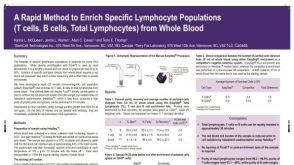 科学海报Cell Enrichment of Specific Lymphocyte Populations (T Cells, B Cells, Total Lymphocytes) from Whole Blood
 实验方案How to Measure NK Cell Killing Activity with a Standardized Potency Assay



 沪公网安备31010102008431号