Grimaldi JC et al. (JUN 1999)
Journal of Leukocyte Biology 65 6 846--53
Depletion of eosinophils in mice through the use of antibodies specific for C-C chemokine receptor 3 (CCR3).
We have generated rat monoclonal antibodies specific for the mouse eotaxin receptor,C-C chemokine receptor 3 (CCR3). Several anti-CCR3 mAbs proved to be useful for in vivo depletion of CCR3-expressing cells and immunofluorescent staining. In vivo CCR3 mAbs of the IgG2b isotype substantially depleted blood eosinophil levels in Nippostrongyus brasiliensis-infected mice. Repeated anti-CCR3 mAb treatment in these mice significantly reduced tissue eosinophilia in the lung tissue and bronchoalveolar lavage fluid. Flow cytometry revealed that mCCR3 was expressed on eosinophils but not on stem cells,dendritic cells,or cells from the thymus,lymph node,or spleen of normal mice. Unlike human Th2 cells,mouse Th2 cells did not express detectable levels of CCR3 nor did they give a measurable response to eotaxin. None of the mAbs were antagonists or agonists of CCR3 calcium mobilization. To our knowledge,the antibodies described here are the first mAbs reported to be specific for mouse eosinophils and to be readily applicable for the detection,isolation,and in vivo depletion of eosinophils.
View Publication
产品号#:
03800
03801
03802
03803
03804
03805
03806
产品名:
ClonaCell™-HY杂交瘤试剂盒
ClonaCell™-HY培养基A
ClonaCell™-HY 培养基 B
ClonaCell™-HY 培养基 C
ClonaCell™-HY 培养基 D
ClonaCell™-HY 培养基 E
ClonaCell™-HY PEG
Hamot G et al. (JUN 2015)
Biopreservation and biobanking 13 3 152--63
Method validation for automated isolation of viable peripheral blood mononuclear cells.
BACKGROUND This article is part of a series of publications providing formal method validation for biospecimen processing in the context of accreditation in laboratories and biobanks. We report the optimization and validation for fitness-for-purpose of automated and manual protocols for isolating peripheral blood mononuclear cells (PBMCs) from whole blood,and compare the two methods. METHODS The manual method was optimized for whole blood centrifugation speed,gradient type (Ficoll,Leucosep,CPT),and freezing method (Mr Frosty,Controlled Rate Freezing). Various parameters of the automated protocol using a CPT gradient on a Tecan liquid handler were optimized. Optimal protocols were validated in parallel for reproducibility and robustness. Optimization and validation were assessed in terms of cell yield,viability,recovery,white blood cell (WBC) subpopulation distribution,gene expression,and lymphoblastoid cell line (LCL) transformation. RESULTS An initial centrifugation of whole blood at 2000 g was considered optimal for further processing,allowing isolation of plasma and PBMCs from a single sample. The three gradients gave similar outcomes in terms of cell yield,viability,and WBC subpopulation distribution. Ficoll showed some advantages and was selected for further evaluations. Optimization of the automated protocol script using a CPT gradient gave 61% cell recovery. No significant differences in quality,quantity,and WBC subpopulation distribution were seen between the two freezing methods,and Mr. Frosty was selected. The manual and automated protocols were reproducible in terms of quantity,recovery,viability,WBC subpopulation distribution,gene expression,and LCL transformation. Most (75%-100%) of the 13 robustness parameters were accepted for both methods with an 8 h pre-centrifugation delay versus 38%-85% after 24 h. Differences identified between the automated and manual methods were not considered consequential. CONCLUSIONS We validated the first fully automated method for isolating viable PBMCs,including RNA analysis and generation of LCLs. We recommend processing within 8 h of blood collection.
View Publication
产品号#:
07930
07931
07940
07955
07956
07959
07954
100-1061
07952
产品名:
CryoStor® CS10
CryoStor® CS10
CryoStor® CS10
CryoStor® CS10
CryoStor® CS10
CryoStor® CS10
CryoStor® CS10
Vessillier S et al. (SEP 2015)
Journal of immunological methods 424 43--52
Cytokine release assays for the prediction of therapeutic mAb safety in first-in man trials--Whole blood cytokine release assays are poorly predictive for TGN1412 cytokine storm.
The therapeutic monoclonal antibody (mAb) TGN1412 (anti-CD28 superagonist) caused near-fatal cytokine release syndrome (CRS) in all six volunteers during a phase-I clinical trial. Several cytokine release assays (CRAs) with reported predictivity for TGN1412-induced CRS have since been developed for the preclinical safety testing of new therapeutic mAbs. The whole blood (WB) CRA is the most widely used,but its sensitivity for TGN1412-like cytokine release was recently criticized. In a comparative study,using group size required for 90% power with 5% significance as a measure of sensitivity,we found that WB and 10% (v/v) WB CRAs were the least sensitive for TGN1412 as these required the largest group sizes (n = 52 and 79,respectively). In contrast,the peripheral blood mononuclear cell (PBMC) solid phase (SP) CRA was the most sensitive for TGN1412 as it required the smallest group size (n = 4). Similarly,the PBMC SP CRA was more sensitive than the WB CRA for muromonab-CD3 (anti-CD3) which stimulates TGN1412-like cytokine release (n = 4 and 4519,respectively). Conversely,the WB CRA was far more sensitive than the PBMC SP CRA for alemtuzumab (anti-CD52) which stimulates FcγRI-mediated cytokine release (n = 8 and 180,respectively). Investigation of potential factors contributing to the different sensitivities revealed that removal of red blood cells (RBCs) from WB permitted PBMC-like TGN1412 responses in a SP CRA,which in turn could be inhibited by the addition of the RBC membrane protein glycophorin A (GYPA); this observation likely underlies,at least in part,the poor sensitivity of WB CRA for TGN1412. The use of PBMC SP CRA for the detection of TGN1412-like cytokine release is recommended in conjunction with adequately powered group sizes for dependable preclinical safety testing of new therapeutic mAbs.
View Publication
产品号#:
18352
18352RF
产品名:
Nijhof IS et al. (OCT 2015)
Leukemia 29 10 2039--49
Upregulation of CD38 expression on multiple myeloma cells by all-trans retinoic acid improves the efficacy of daratumumab.
Daratumumab is an anti-CD38 monoclonal antibody with lytic activity against multiple myeloma (MM) cells,including ADCC (antibody-dependent cellular cytotoxicity) and CDC (complement-dependent cytotoxicity). Owing to a marked heterogeneity of response to daratumumab therapy in MM,we investigated determinants of the sensitivity of MM cells toward daratumumab-mediated ADCC and CDC. In bone marrow samples from 144 MM patients,we observed no difference in daratumumab-mediated lysis between newly diagnosed or relapsed/refractory patients. However,we discovered,next to an expected effect of effector (natural killer cells/monocytes) to target (MM cells) ratio on ADCC,a significant association between CD38 expression and daratumumab-mediated ADCC (127 patients),as well as CDC (56 patients). Similarly,experiments with isogenic MM cell lines expressing different levels of CD38 revealed that the level of CD38 expression is an important determinant of daratumumab-mediated ADCC and CDC. Importantly,all-trans retinoic acid (ATRA) increased CD38 expression levels but also reduced expression of the complement-inhibitory proteins CD55 and CD59 in both cell lines and primary MM samples. This resulted in a significant enhancement of the activity of daratumumab in vitro and in a humanized MM mouse model as well. Our results provide the preclinical rationale for further evaluation of daratumumab combined with ATRA in MM patients.
View Publication
产品号#:
15621
15661
产品名:
RosetteSep™人CD3去除抗体混合物
RosetteSep™人CD3去除抗体混合物
Vogel I et al. ( 2015)
The European Journal of Immunology 45 6 1832--1841
CD28/CTLA-4/B7 costimulatory pathway blockade affects regulatory T-cell function in autoimmunity
Naïve T cells require B7/CD28 costimulation in order to be fully activated. Attempts to block this pathway have been effective in preventing unwanted immune reactions. As B7 blockade might also affect Treg cells and interfere with negative signaling through membrane CTLA-4 on effector T (Teff) cells,its immune-modulatory effects are potentially more complex. Here,we used the mouse model of multiple sclerosis (MS),EAE,to study the effect of B7 blockade. An effective therapy for MS patients has to interfere with ongoing inflammation,and therefore we injected CTLA-4Ig at day 7 and 9 after immunization,when myelin-reactive T cells have been primed and start migrating toward the CNS. Surprisingly,B7 blockade exacerbated disease signs and resulted in more severe CNS inflammation and demyelination,and was associated with an enhanced production of the inflammatory cytokines IL-17 and IFN-γ. Importantly,CTLA-4Ig treatment resulted in a transient reduction of Ki67 and CTLA-4 expression and function of peripheral Treg cells. Taken together,B7 blockade at a particular stage of the autoimmune response can result in the suppression of Treg cells,leading to a more severe disease.
View Publication


 EasySep™小鼠TIL(CD45)正选试剂盒




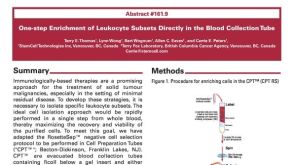 科学海报One-Step Enrichment of Leukocyte Subsets Directly in the Blood Collection Tube

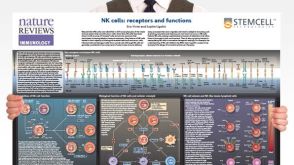 挂图Natural Killer Cells Overview of NK cell receptors, subsets, activation and function
 沪公网安备31010102008431号