Grimaldi JC et al. (JUN 1999)
Journal of Leukocyte Biology 65 6 846--53
Depletion of eosinophils in mice through the use of antibodies specific for C-C chemokine receptor 3 (CCR3).
We have generated rat monoclonal antibodies specific for the mouse eotaxin receptor,C-C chemokine receptor 3 (CCR3). Several anti-CCR3 mAbs proved to be useful for in vivo depletion of CCR3-expressing cells and immunofluorescent staining. In vivo CCR3 mAbs of the IgG2b isotype substantially depleted blood eosinophil levels in Nippostrongyus brasiliensis-infected mice. Repeated anti-CCR3 mAb treatment in these mice significantly reduced tissue eosinophilia in the lung tissue and bronchoalveolar lavage fluid. Flow cytometry revealed that mCCR3 was expressed on eosinophils but not on stem cells,dendritic cells,or cells from the thymus,lymph node,or spleen of normal mice. Unlike human Th2 cells,mouse Th2 cells did not express detectable levels of CCR3 nor did they give a measurable response to eotaxin. None of the mAbs were antagonists or agonists of CCR3 calcium mobilization. To our knowledge,the antibodies described here are the first mAbs reported to be specific for mouse eosinophils and to be readily applicable for the detection,isolation,and in vivo depletion of eosinophils.
View Publication
Renn CN et al. (JUL 2006)
Journal of immunology (Baltimore,Md. : 1950) 177 1 298--305
TLR activation of Langerhans cell-like dendritic cells triggers an antiviral immune response.
Langerhans cells (LC) are a unique subset of dendritic cells (DC),present in the epidermis and serving as the first line of defense against pathogens invading the skin. To investigate the role of human LCs in innate immune responses,we examined TLR expression and function of LC-like DCs derived from CD34+ progenitor cells and compared them to DCs derived from peripheral blood monocytes (monocyte-derived DC; Mo-DC). LC-like DCs and Mo-DCs expressed TLR1-10 mRNAs at comparable levels. Although many of the TLR-induced cytokine patterns were similar between the two cell types,stimulation with the TLR3 agonist poly(I:C) triggered significantly higher amounts of the IFN-inducible chemokines CXCL9 (monokine induced by IFN-gamma) and CXCL11 (IFN-gamma-inducible T cell alpha chemoattractant) in LC-like DCs as compared with Mo-DCs. Supernatants from TLR3-activated LC-like DCs reduced intracellular replication of vesicular stomatitis virus in a type I IFN-dependent manner. Finally,CXCL9 colocalized with LCs in skin biopsy specimens from viral infections. Together,our data suggest that LCs exhibit a direct antiviral activity that is dependent on type I IFN as part of the innate immune system.
View Publication
Liu W et al. (JUL 2006)
The Journal of experimental medicine 203 7 1701--11
CD127 expression inversely correlates with FoxP3 and suppressive function of human CD4+ T reg cells.
Regulatory T (T reg) cells are critical regulators of immune tolerance. Most T reg cells are defined based on expression of CD4,CD25,and the transcription factor,FoxP3. However,these markers have proven problematic for uniquely defining this specialized T cell subset in humans. We found that the IL-7 receptor (CD127) is down-regulated on a subset of CD4(+) T cells in peripheral blood. We demonstrate that the majority of these cells are FoxP3(+),including those that express low levels or no CD25. A combination of CD4,CD25,and CD127 resulted in a highly purified population of T reg cells accounting for significantly more cells that previously identified based on other cell surface markers. These cells were highly suppressive in functional suppressor assays. In fact,cells separated based solely on CD4 and CD127 expression were anergic and,although representing at least three times the number of cells (including both CD25(+)CD4(+) and CD25(-)CD4(+) T cell subsets),were as suppressive as the classic" CD4(+)CD25(hi) T reg cell subset. Finally�
View Publication


 EasySep™小鼠TIL(CD45)正选试剂盒




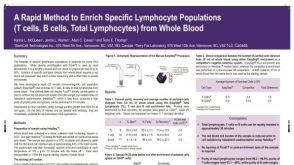 科学海报Cell Enrichment of Specific Lymphocyte Populations (T Cells, B Cells, Total Lymphocytes) from Whole Blood

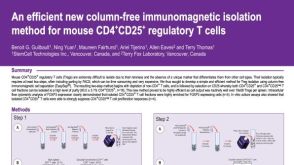 科学海报Immunomagnetic Isolation Method for Mouse CD4+CD25+ Regulatory T Cells
 科学海报One-Step Enrichment of Leukocyte Subsets Directly in the Blood Collection Tube
 沪公网安备31010102008431号