Kortylewski M et al. (MAR 2009)
Cancer research 69 6 2497--505
Toll-like receptor 9 activation of signal transducer and activator of transcription 3 constrains its agonist-based immunotherapy.
Although toll-like receptor (TLR) agonists,such as CpG,are used as immunotherapeutic agents in clinical trials for cancer and infectious diseases,their effects are limited and the underlying mechanism(s) that restrains CpG efficacy remains obscure. Here,we show that signal transducer and activator of transcription 3 (Stat3) plays a key role in down-modulating immunostimulatory effects of CpG. In the absence of interleukin-6 (IL-6) and IL-10 induction,CpG directly activates Stat3 within minutes through TLR9. Ablating Stat3 in hematopoietic cells results in rapid activation of innate immunity by CpG,with enhanced production of IFN-gamma,tumor necrosis factor-alpha,IL-12,and activation of macrophages,neutrophils,and natural killer cells marked with Stat1 activation. Innate immune responses induced by CpG in mice with a Stat3-ablated hematopoietic system cause potent antitumor effects,leading to eradication of large (textgreater1 cm) B16 melanoma tumors within 72 h. Moreover,ablating Stat3 in myeloid cells increases CpG-induced dendritic cell maturation,T-cell activation,generation of tumor antigen-specific T cells,and long-lasting antitumor immunity. A critical role of Stat3 in mediating immunosuppression by certain cytokines and growth factors in the tumor microenvironment has been recently documented. By demonstrating direct and rapid activation of Stat3 by TLR agonists,we identify a second level of Stat3-mediated immunosuppression. Our results further suggest that targeting Stat3 can drastically improve CpG-based immunotherapeutic approaches.
View Publication
产品号#:
18770
18770RF
18758
18758RF
18768
18768RF
产品名:
Pende D et al. (MAR 2009)
Blood 113 13 3119--29
Anti-leukemia activity of alloreactive NK cells in KIR ligand-mismatched haploidentical HSCT for pediatric patients: evaluation of the functional role of activating KIR and redefinition of inhibitory KIR specificity.
We analyzed 21 children with leukemia receiving haploidentical hematopoietic stem cell transplantation (haplo-HSCT) from killer immunoglobulin (Ig)-like receptors (KIR) ligand-mismatched donors. We showed that,in most transplantation patients,variable proportions of donor-derived alloreactive natural killer (NK) cells displaying anti-leukemia activity were generated and maintained even late after transplantation. This was assessed through analysis of donor KIR genotype,as well as through phenotypic and functional analyses of NK cells,both at the polyclonal and clonal level. Donor-derived KIR2DL1(+) NK cells isolated from the recipient displayed the expected capability of selectively killing C1/C1 target cells,including patient leukemia blasts. Differently,KIR2DL2/3(+) NK cells displayed poor alloreactivity against leukemia cells carrying human leukocyte antigen (HLA) alleles belonging to C2 group. Unexpectedly,this was due to recognition of C2 by KIR2DL2/3,as revealed by receptor blocking experiments and by binding assays of soluble KIR to HLA-C transfectants. Remarkably,however,C2/C2 leukemia blasts were killed by KIR2DL2/3(+) (or by NKG2A(+)) NK cells that coexpressed KIR2DS1. This could be explained by the ability of KIR2DS1 to directly recognize C2 on leukemia cells. A role of the KIR2DS2 activating receptor in leukemia cell lysis could not be demonstrated. Altogether,these results may have important clinical implications for the selection of optimal donors for haplo-HSCT.
View Publication
产品号#:
15025
15065
产品名:
RosetteSep™人NK细胞富集抗体混合物
RosetteSep™人NK细胞富集抗体混合物
Muthuswamy R et al. (JUL 2008)
Cancer research 68 14 5972--8
Ability of mature dendritic cells to interact with regulatory T cells is imprinted during maturation.
Preferential activation of regulatory T (Treg) cells limits autoimmune tissue damage during chronic immune responses but can also facilitate tumor growth. Here,we show that tissue-produced inflammatory mediators prime maturing dendritic cells (DC) for the differential ability of attracting anti-inflammatory Treg cells. Our data show that prostaglandin E(2) (PGE(2)),a factor overproduced in chronic inflammation and cancer,induces stable Treg-attracting properties in maturing DC,mediated by CCL22. The elevated production of CCL22 by PGE(2)-matured DC persists after the removal of PGE(2) and is further elevated after secondary stimulation of DC in a neutral environment. This PGE(2)-induced overproduction of CCL22 and the resulting attraction of FOXP3(+) Tregs are counteracted by IFN alpha,a mediator of acute inflammation,which also restores the ability of the PGE(2)-exposed DC to secrete the Th1-attracting chemokines: CXCL9,CXCL10,CXCL11,and CCL5. In accordance with these observations,different DCs clinically used as cancer vaccines show different Treg-recruiting abilities,with PGE(2)-matured DC,but not type 1-polarized DC,generated in the presence of type I and type II IFNs,showing high Treg-attracting activity. The current data,showing that the ability of mature DC to interact with Treg cells is predetermined at the stage of DC maturation,pave the way to preferentially target the regulatory versus proinflammatory T cells in autoimmunity and transplantation,as opposed to intracellular infections and cancer.
View Publication
产品号#:
19052
19052RF
产品名:
EasySep™人CD4+ T细胞富集试剂盒
RoboSep™ 人CD4+ T细胞富集试剂盒含滤芯吸头
Saresella M et al. (OCT 2008)
FASEB journal : official publication of the Federation of American Societies for Experimental Biology 22 10 3500--8
CD4+CD25+FoxP3+PD1- regulatory T cells in acute and stable relapsing-remitting multiple sclerosis and their modulation by therapy.
The intracellular expression of the programmed death receptor 1 (PD1) identifies a subset of naive T(reg) cells with enhanced suppressive ability; antigen stimulation results in the surface expression of PD1. Because the role of T(reg) impairments in multiple sclerosis (MS) is still contradictory,we analyzed naive PD1- and PD1+ T(reg) cells in peripheral blood and cerebrospinal fluid (CSF) of relapsing-remitting multiple sclerosis (RR-MS) patients and of healthy control subjects. Results showed that 1) CSF PD1- T(reg) cells were significantly augmented in MS patients; 2) PD1- T(reg) cells were significantly increased in the peripheral blood of patients with stable disease (SMS) compared to those with acute (AMS) disease,and in patients responding to glatiramer acetate (COPA) compared to AMS- and COPA-unresponsive patients; and 3) PD1+ T(reg) cells were similar in CSF and peripheral blood of all groups analyzed. PD1- T(reg) cells were not increased in the peripheral blood of interferon-beta (IFNbeta) -responsive patients,but the suppressive ability of T(reg) cells was significantly higher in SMS and in COPA- or IFNbeta-responsive compared to AMS- and COPA-unresponsive individuals. The data herein suggest that PD1- T(reg) cells play a pivotal role in MS and offer a biological explanation for disease relapse and for the mechanism associated with response to COPA and IFNbeta.
View Publication
产品号#:
19052
19052RF
产品名:
EasySep™人CD4+ T细胞富集试剂盒
RoboSep™ 人CD4+ T细胞富集试剂盒含滤芯吸头
De Sarno P et al. (JUL 2008)
Journal of immunology (Baltimore,Md. : 1950) 181 1 338--45
Lithium prevents and ameliorates experimental autoimmune encephalomyelitis.
Experimental autoimmune encephalomyelitis (EAE) models,in animals,many characteristics of multiple sclerosis,for which there is no adequate therapy. We investigated whether lithium,an inhibitor of glycogen synthase kinase-3 (GSK3),can ameliorate EAE in mice. Pretreatment with lithium markedly suppressed the clinical symptoms of EAE induced in mice by myelin oligodendrocyte glycoprotein peptide (MOG35-55) immunization and greatly reduced demyelination,microglia activation,and leukocyte infiltration in the spinal cord. Lithium administered postimmunization,after disease onset,reduced disease severity and facilitated partial recovery. Conversely,in knock-in mice expressing constitutively active GSK3,EAE developed more rapidly and was more severe. In vivo lithium therapy suppressed MOG35-55-reactive effector T cell differentiation,greatly reducing in vitro MOG35-55- stimulated proliferation of mononuclear cells from draining lymph nodes and spleens,and MOG35-55-induced IFN-gamma,IL-6,and IL-17 production by splenocytes isolated from MOG35-55-immunized mice. In relapsing/remitting EAE induced with proteolipid protein peptide139-151,lithium administered after the first clinical episode maintained long-term (90 days after immunization) protection,and after lithium withdrawal the disease rapidly relapsed. These results demonstrate that lithium suppresses EAE and identify GSK3 as a new target for inhibition that may be useful for therapeutic intervention of multiple sclerosis and other autoimmune and inflammatory diseases afflicting the CNS.
View Publication
产品号#:
19782
19792
产品名:
Lambert AA et al. (AUG 2008)
Blood 112 4 1299--307
The C-type lectin surface receptor DCIR acts as a new attachment factor for HIV-1 in dendritic cells and contributes to trans- and cis-infection pathways.
The dynamic interplay between dendritic cells (DCs) and human immunodeficiency virus type-1 (HIV-1) is thought to result in viral dissemination and evasion of antiviral immunity. Although initial observations suggested that the C-type lectin receptor (CLR) DC-SIGN was responsible for the trans-infection function of the virus,subsequent studies demonstrated that trans-infection of CD4(+) T cells with HIV-1 can also occur through DC-SIGN-independent mechanisms. We demonstrate that a cell surface molecule designated DCIR (for DC immunoreceptor),a member of a recently described family of DC-expressing CLRs,can participate in the capture of HIV-1 and promote infection in trans and in cis of autologous CD4(+) T cells from human immature monocyte-derived DCs. The contribution of DCIR to these processes was revealed using DCIR-specific siRNAs and a polyclonal antibody specific for the carbohydrate recognition domain of DCIR. Data from transfection experiments indicated that DCIR acts as a ligand for HIV-1 and is involved in events leading to productive virus infection. Finally,we show that the neck domain of DCIR is important for the DCIR-mediated effect on virus binding and infection. These results point to a possible role for DCIR in HIV-1 pathogenesis by supporting the productive infection of DCs and promoting virus propagation.
View Publication
产品号#:
18058
18058RF
19052
19052RF
产品名:
EasySep™人CD4+ T细胞富集试剂盒
RoboSep™ 人CD4+ T细胞富集试剂盒含滤芯吸头
Grimaldi JC et al. (JUN 1999)
Journal of Leukocyte Biology 65 6 846--53
Depletion of eosinophils in mice through the use of antibodies specific for C-C chemokine receptor 3 (CCR3).
We have generated rat monoclonal antibodies specific for the mouse eotaxin receptor,C-C chemokine receptor 3 (CCR3). Several anti-CCR3 mAbs proved to be useful for in vivo depletion of CCR3-expressing cells and immunofluorescent staining. In vivo CCR3 mAbs of the IgG2b isotype substantially depleted blood eosinophil levels in Nippostrongyus brasiliensis-infected mice. Repeated anti-CCR3 mAb treatment in these mice significantly reduced tissue eosinophilia in the lung tissue and bronchoalveolar lavage fluid. Flow cytometry revealed that mCCR3 was expressed on eosinophils but not on stem cells,dendritic cells,or cells from the thymus,lymph node,or spleen of normal mice. Unlike human Th2 cells,mouse Th2 cells did not express detectable levels of CCR3 nor did they give a measurable response to eotaxin. None of the mAbs were antagonists or agonists of CCR3 calcium mobilization. To our knowledge,the antibodies described here are the first mAbs reported to be specific for mouse eosinophils and to be readily applicable for the detection,isolation,and in vivo depletion of eosinophils.
View Publication
Brandl M et al. (AUG 1999)
Experimental hematology 27 8 1264--70
Bispecific antibody fragments with CD20 X CD28 specificity allow effective autologous and allogeneic T-cell activation against malignant cells in peripheral blood and bone marrow cultures from patients with B-cell lineage leukemia and lymphoma.
Bispecific antibodies directed against tumor-associated target antigens and to surface receptors mediating T-cell activation,such as the TCR/CD3 complex and the costimulatory receptor CD28,are capable of mediating T-cell activation resulting in tumor cell killing. In this study,we used the B-cell-associated antigens CD19 and CD20 as target structures on human leukemic cells. We found that a combination of bispecific antibody fragments (bsFab2) with target x CD3 and target x CD28 specificity induces vigorous autologous T-cell activation and killing of malignant cells in peripheral blood and bone marrow cultures from patients with chronic lymphocytic leukemia and follicular lymphoma. The bsFab2 targeting CD20 were considerably more effective than those binding to CD19. The colony-forming capacity of treated bone marrow was impaired due to large amounts of tumor necrosis factor alpha produced during bsFab2-induced T-cell activation. Neutralizing tumor necrosis factor alpha antibodies were found to reverse this negative effect without affecting T-cell activation and tumor cell killing. CD20 x CD28 bsFab2,when used alone rather than in combination,markedly improved the recognition of leukemic cells by allogeneic T cells. Therefore,these reagents may be capable of enhancing the immunogenicity of leukemic cells in general and,in particular,of increasing the antileukemic activity of allogeneic donor buffy coat cells in relapsed bone marrow transplanted patients.
View Publication


 EasySep™小鼠TIL(CD45)正选试剂盒




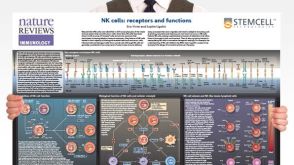 挂图Natural Killer Cells Overview of NK cell receptors, subsets, activation and function

 沪公网安备31010102008431号